Industrial Fire Alarm Notification Appliance Circuit Optimization
In large facilities, the difference between a safe evacuation and a confused one often comes down to how well the system notifies people. Our industrial fire alarm notification appliances provide the voice, tone, and visual cues that guide occupants when time is tight. However, simply installing notification devices is like buying a smoke detector and never changing the battery. It will work, eventually, in the same way a joke lands in an empty room.
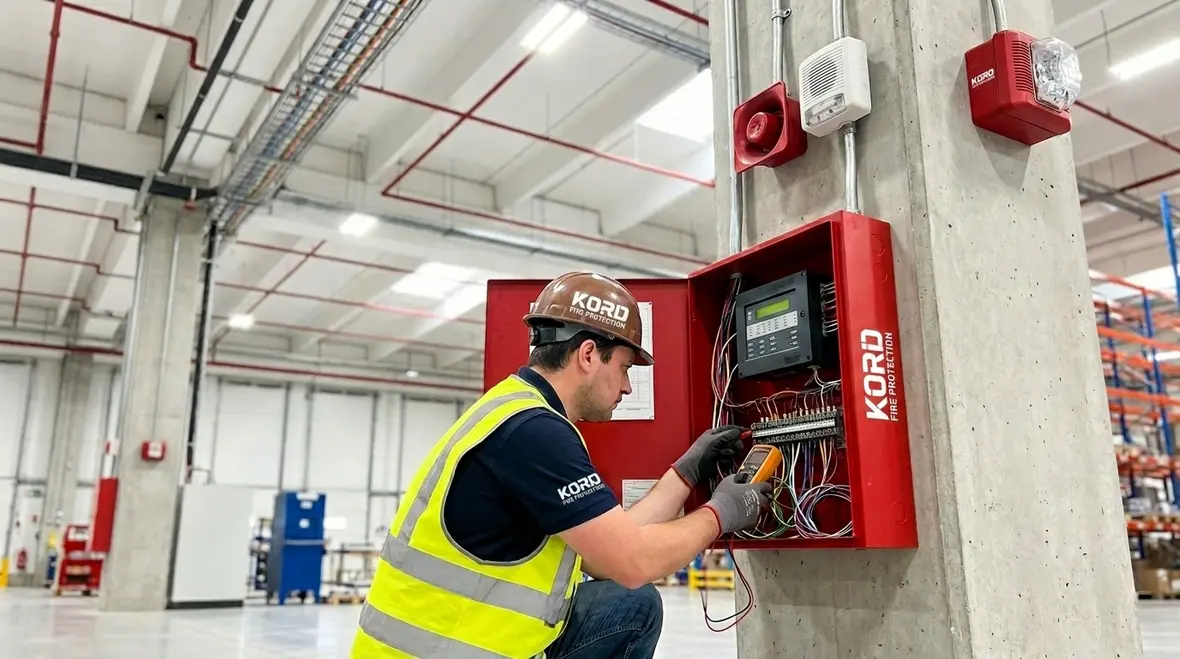
To optimize notification appliance circuits across wide buildings, Kord Fire Protection technicians focus on design choices, wiring quality, and commissioning steps that hold up under real-world use. They explain the why, not just the what, so facility teams can maintain the system without guessing. That practical mindset is part of what shapes the company’s broader approach to protection, as seen on Kord Fire Protection’s company background page.
Assess the facility layout and occupant flow
First, the team maps how people actually move. Large facilities rarely have one simple path. Instead, they have multiple zones, shared corridors, busy intersections, and areas where sound and light behave differently. As a result, notification appliances need circuit plans that match the site.
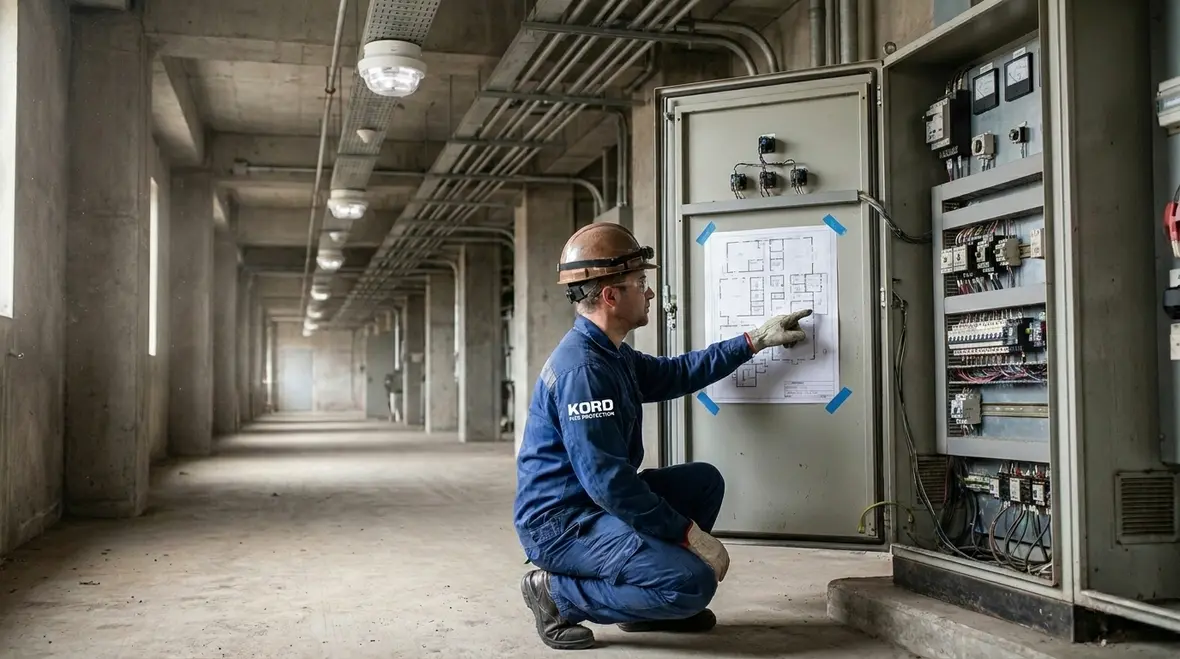
Kord Fire Protection technicians often start with floor plans, door locations, ceiling height, and typical occupancy patterns. Then they check where delays happen, like elevators that slow evacuation or stairwells that funnel people. After that, they review code requirements for audibility and visibility, but they also look for practical problems that drawings do not always reveal. On paper, every hallway behaves. In real life, some of them act like they have opinions.
For example, a loud tone in one wing can still miss a late line of occupants if the circuit distribution leaves those devices too far from the panel. Therefore, they size and place appliances so the system communicates clearly at the moment it matters most. This kind of planning also aligns with the wider priorities described in Kord’s industrial fire alarm systems article, where quick, confident communication is central to life safety.
Why people flow matters more than a tidy floor plan
A facility may look symmetrical on a blueprint while functioning like controlled chaos during a shift change. Loading docks fill up, production lines release teams at once, and shared corridors suddenly become bottlenecks. If circuit design ignores those human patterns, even technically compliant devices can produce uneven results. Optimization is not just about covering square footage. It is about reaching people where they actually are, when they are moving, and before confusion gets a head start.
How does circuit design prevent voltage drop and signal loss?
Next, optimization turns into math. Notification circuits must deliver enough voltage for appliance operation and must keep performance steady from the panel to the farthest device. If a circuit runs long, voltage drop can reduce output and create inconsistent performance.
To control this, technicians calculate conductor length, wire size, and appliance current draw. Then they plan for line resistance so the final devices still meet the required operating range. In addition, they verify polarity and connection quality because a small mistake can act like a bad valve on a water line. It does not need to be dramatic to be expensive.
Kord Fire Protection technicians explain this in plain terms. They will say the system does not care about intentions. It only cares about voltage, resistance, and load. And yes, that means “we thought it would be fine” is not a design basis. It is a trap, and every facility has seen that one before.
The hidden cost of long runs and casual assumptions
Industrial buildings love long distances. Panels are here, devices are way over there, and somebody always wants to add one more appliance at the far end because it seems convenient. That is exactly how a healthy circuit becomes a questionable one. A strong design keeps reserve capacity in mind, accounts for future changes, and avoids pushing the last device into a range where performance gets soft. If the alarm message weakens at the edge of the building, the edge of the building still counts.
Balance appliance loading across notification zones
After the electrical basics, the next focus is load balancing. Large facilities often add devices over time due to renovations, new departments, or updated operational needs. If the circuit loading changes without review, performance can drift.
Therefore, the team groups appliances so each circuit carries a stable, predictable load. They also avoid stacking devices in one physical area while leaving other areas underpowered. As occupancy changes, they recheck the circuit design to ensure the output stays consistent.
When the facility uses industrial fire alarm notification appliances for both audible and visual functions, the current profile can shift depending on device type and signaling mode. Consequently, the design must consider the combined demand, not just one part of the system. This is where Kord Fire Protection technicians help facility managers understand what “balanced” really means for their specific equipment list.
Balanced zones also make troubleshooting less painful. If a facility knows what belongs on each circuit and why, faults become easier to trace and upgrades become easier to plan. Without that structure, every remodel turns into detective work, and nobody enjoys learning that a mystery strobe from a past renovation is still riding a circuit that was already busy.

Choose proper wiring methods and installation practices
Even with correct calculations, poor installation can ruin performance. Wire routing, termination quality, and protection methods affect resistance and reliability. So the technicians look closely at pathway design, cable separation, support spacing, and how connections get made.
For instance, tight bends, damaged insulation, or loose terminals can increase resistance. Then the system sees a voltage drop, and notification appliances do their best impression of a whisper in a stadium. That is not the goal.
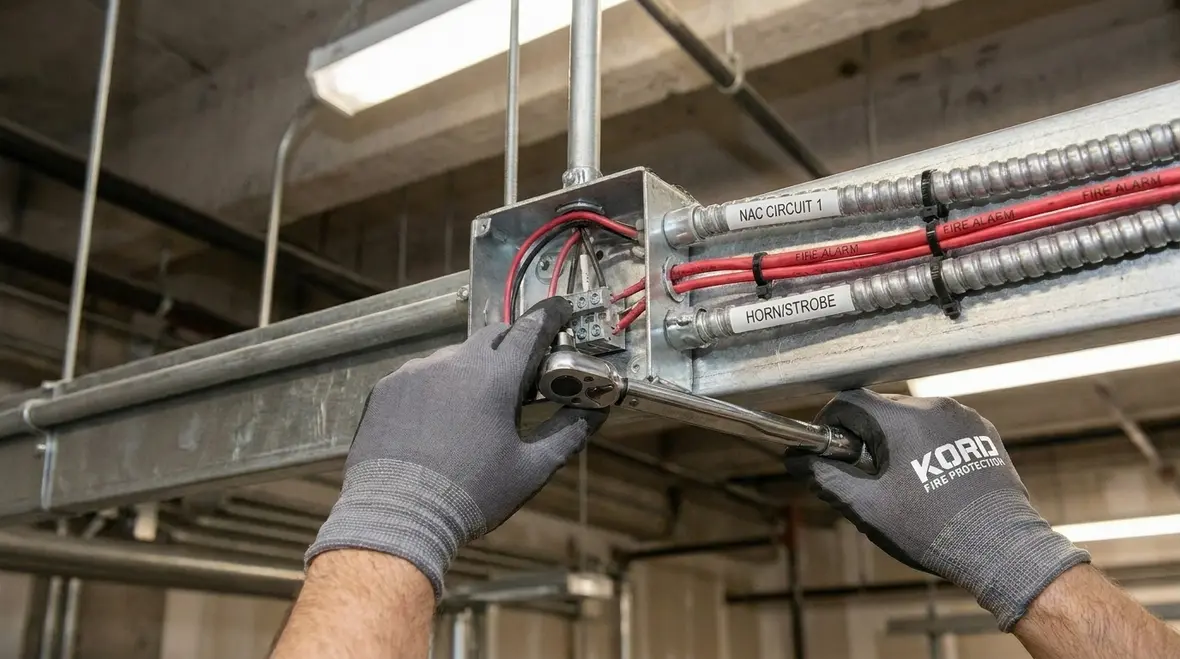
Kord Fire Protection technicians also emphasize method consistency. They recommend using the wiring approach that matches site conditions and local requirements. They inspect for secure terminations, correct torque, and neat cable labeling. Then they verify that devices remain accessible for maintenance without turning future work into an archaeological dig.
Installation quality is where good designs prove themselves
A strong design can still lose the fight if the installation gets sloppy. Clean routing, readable labeling, accessible junction points, and disciplined terminations are not cosmetic extras. They are what allow a system to stay dependable after years of vibration, maintenance activity, and facility changes. The teams handling Kord Fire Protection fire alarm services work across installation, testing, and repair, which is exactly why these details matter so much over the life of the system.
Commissioning for real world performance
Once wiring and device placement are in place, commissioning confirms the system works under actual conditions. This step matters because paperwork can look perfect while the building behaves differently. Walls absorb sound. Corridors reflect it. Background noise changes during shift cycles.
During commissioning, technicians test each notification appliance circuit and check output levels where occupants hear and see alarms. They also verify that device activation matches the intended zones and that signals do not create confusion between areas.
Additionally, they confirm the panel’s monitoring and supervisory functions. If the system detects faults, it must alert staff in a way that speeds repair. As a result, industrial fire alarm notification appliances perform not only during tests, but during real emergencies, when maintenance teams are not standing next to the panel with a clipboard.
This is also where facility teams learn whether their assumptions about audibility in busy production areas hold up. Sometimes they do. Sometimes a machine line decides it wants to be louder than the evacuation signal, which is a rude but useful discovery during commissioning instead of during an actual event.
Single point failures and how to reduce them
Large facilities need resilience. A single broken circuit or failed component should not silence critical areas. Therefore, technicians plan for redundancy and fault tolerance by reviewing circuit topology and device grouping logic.
They also examine how faults get handled. For example, if one portion of a circuit fails, the system should still protect other zones and should provide clear fault indicators. In addition, the facility team should know what actions to take when a fault appears, instead of treating it like a mystery illness.
Kord Fire Protection technicians often recommend that facilities document circuit maps, device locations, and expected behavior during faults. Then they train key staff so response plans stay current after remodels. Because the building changes, the plan must change too. That same focus on staying connected and ready also shows up in Kord’s industrial fire alarm monitoring overview, where speed and clarity remain essential.
Use these field checks to keep circuits healthy
After commissioning, optimization continues through ongoing inspection and smart maintenance. Technicians keep performance steady by checking the same few areas that most failures hide in.
Field checks commonly include:
- Visual inspection of terminations, device housings, and pathway wear
- Verification of labeling accuracy for zones and circuits
- Testing of alarm output in representative noise and lighting conditions
- Monitoring of fault history to spot recurring weak points
- Review of recent construction impacts near wiring runs and ceiling spaces
To reduce surprises, they also schedule tests that match facility operations. That way, the system gets checked without shutting down the whole plant, and nobody has to explain why the alarm test sounded like a movie soundtrack no one requested. In the business world, that is the fastest route to a complaint.
FAQ
Ready to optimize the notification circuits in your large facility?
When a facility runs large, circuits do not fail politely. They fail quietly, then everyone realizes the alarm did not deliver the message where it mattered. Kord Fire Protection technicians help facility teams design, wire, and commission notification appliance circuits that stay reliable as the building evolves. If your system has long runs, repeated additions, or inconsistent test results, request a circuit review today.
A short assessment now can prevent expensive downtime and hard to explain delays later. If you are ready to connect this review to broader system support, explore Kord Fire Protection fire alarm solutions for installation, maintenance, inspections, and repairs that keep industrial facilities prepared as operations grow.

Join Our Newsletter!
Get the latest fire safety tips delivered straight to your inbox From our Newsletter.