Integrating Fire Alarms and Lighting for Safer Evacuation
Quick Answer: Smart lighting and fire alarm systems can work together to improve occupant awareness and guide safe movement during smoke or alarm events. When they share signals, facilities can trigger the right light patterns, unlock procedures faster, and reduce confusion. Kord Fire Protection adds practical engineering, testing, and compliance support so the system performs when it matters most.
In today’s facilities, integrating fire alarms and lighting is no longer a flashy upgrade. It is a safety tool. When light and alarms coordinate, people notice alarms sooner, understand what to do next, and move with less panic. In other words, the building stops acting like a mystery novel and starts acting like a clear instruction manual. And yes, that means fewer “Wait, which way is the exit?” moments. If you operate industrial, retail, or commercial spaces, that clarity can protect people and reduce operational disruption.
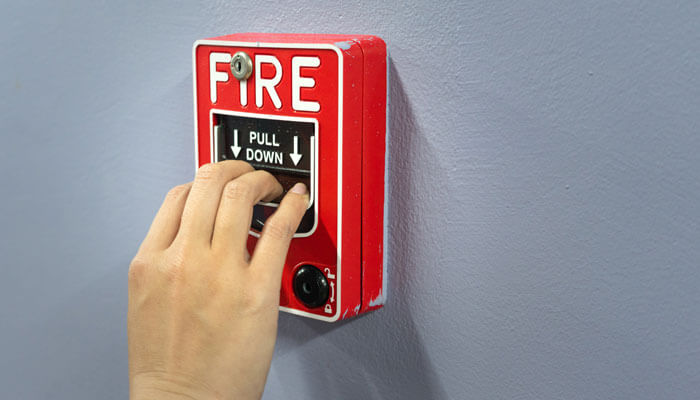
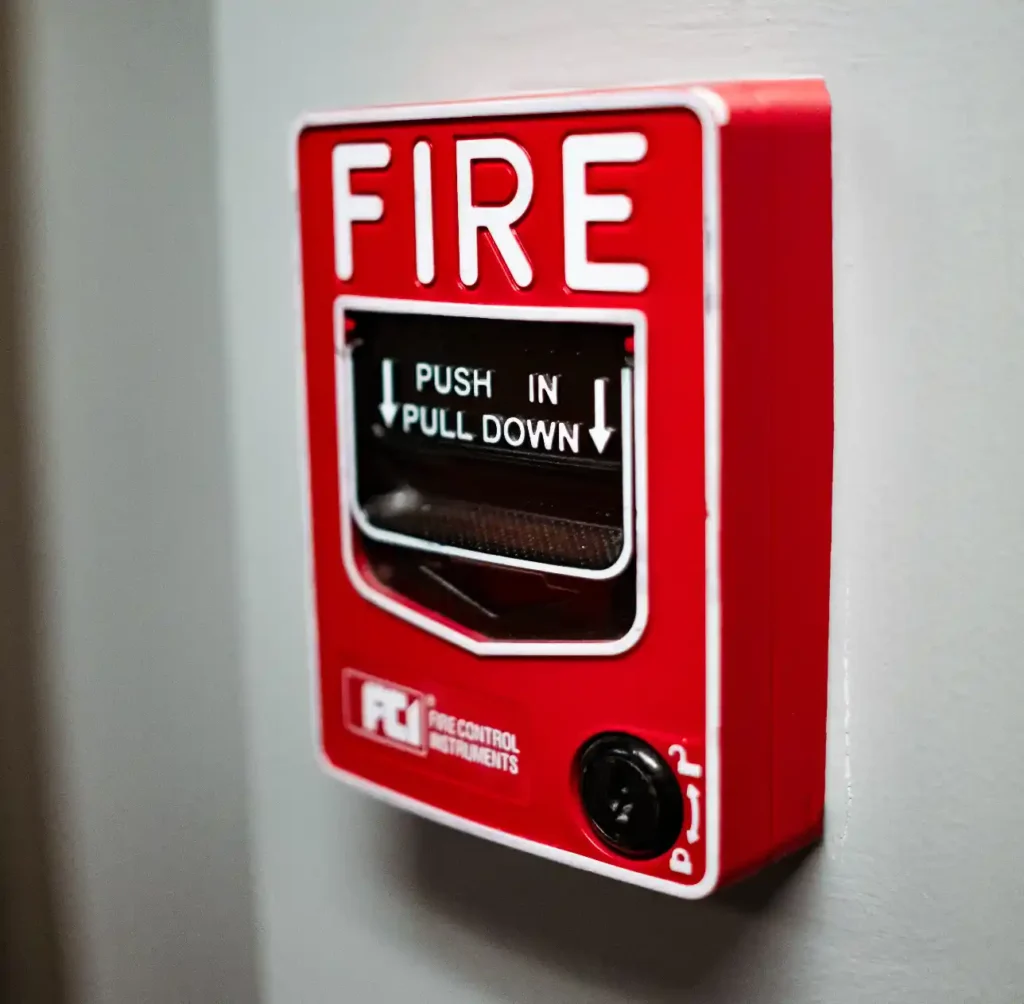
For teams already reviewing broader system design, Kord Fire Protection’s commercial and residential fire alarm installation services fit naturally into this conversation, especially when coordinated signaling and dependable notification are part of the evacuation plan. That early link between detection and direction is what turns a fire alarm from a noisy warning into a useful building response.
This is also where thoughtful integration matters more than gadget collecting. Nobody needs a building stuffed with clever features that all freeze up like actors who forgot their lines. What facilities need is a system that responds clearly, predictably, and fast enough to help people move with confidence when conditions are anything but calm.
Why smart lighting improves alarm response
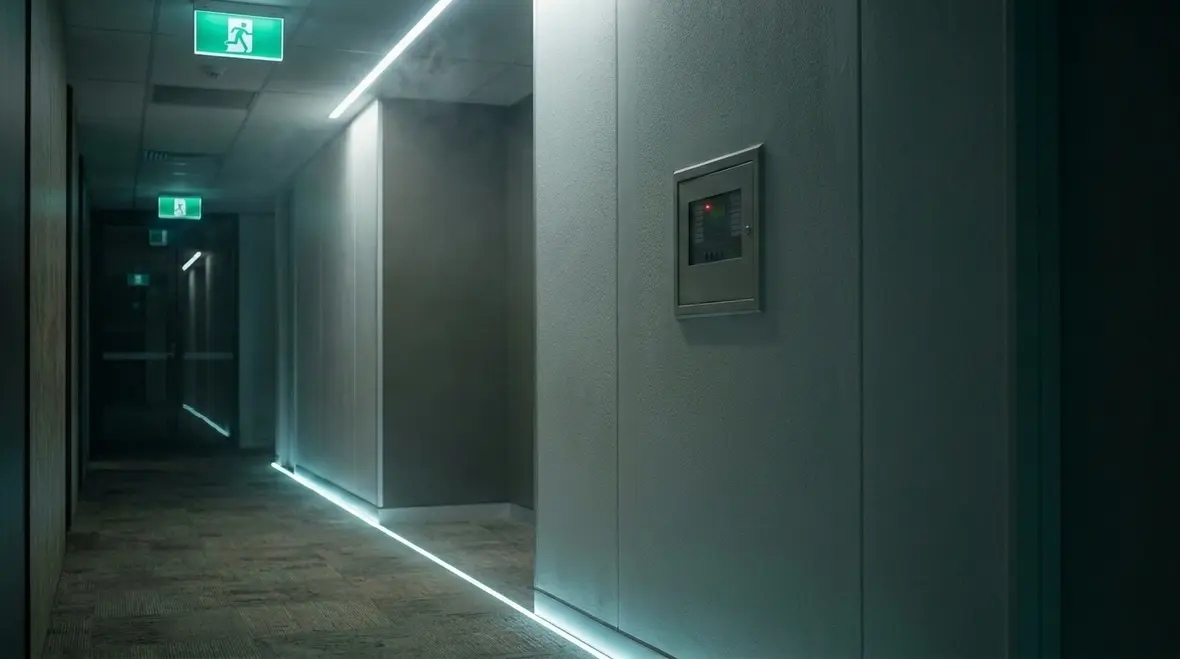
Fire events rarely happen in a neat, textbook way. Smoke spreads unevenly, visibility drops in patches, and corridors can look completely different at night or during off hours. Smart lighting helps because it can respond instantly to alarm states and environmental conditions. When an alarm activates, selected lighting zones can increase visibility along evacuation paths while dimming areas that might create glare, distraction, or hesitation.
That means occupants receive a visual instruction alongside the audible and visible alerts from the fire alarm system. Instead of depending on sound alone, the building reinforces the message through illuminated routes and clearer direction at the exact moment people need help deciding where to go. In busy warehouses, retail floors, mixed use properties, and industrial spaces, that extra layer of clarity can make evacuation feel more organized and less chaotic.
Meanwhile, facilities teams gain a practical advantage during drills, incident reviews, and day to day readiness planning. Event driven lighting can reduce the burden on staff who might otherwise need to direct movement manually while also trying to assess the alarm source, contact the right people, and keep operations under control. And let’s be honest, sound alone can get buried under machinery, background music, loading activity, or the collective human instinct to ask six other people what is happening first. Lighting acts like a second narrator, except this one does not lose the plot.
How coordinated signals make the system safer
To achieve real coordination, systems have to exchange the right data at the right time. A fire alarm control panel can generate event outputs, and a lighting controller can respond to those events with preplanned actions. Then the lighting system can execute specific scenes based on alarm categories, zones, or detection types. That is what turns integration into something useful rather than decorative.
For example, during an initial alarm condition, the system might prepare standby scenes that improve wayfinding without changing every light in the building at once. If the alarm confirms or escalates, the lighting can shift to higher contrast patterns that make exits, stairwells, and travel paths more obvious. In some projects, those responses can also align with broader building actions such as door release sequences, smoke control coordination, or other approved life safety functions.
The important part is that this is not treated like a creative lighting installation with endless moods and dramatic flourishes. It follows safety logic. The rules should be simple, predictable, and repeatable under stress. Occupants do not need ambiance during an evacuation. They need clear cues, fast recognition, and confidence that the building is helping rather than improvising. Kord Fire Protection covers this broader connected approach in its fire alarm integration for smarter building safety resources, which align closely with how coordinated alarm and lighting behavior should perform.
Why zone based coordination matters
Zone based coordination is especially useful because it avoids turning the entire facility into one giant visual shout. If a problem starts in one area, lighting responses can focus on the routes that matter most to nearby occupants while still preserving order elsewhere in the building. That can reduce confusion, improve path selection, and support staff procedures without overwhelming everyone with the same response at the same time.
Where emergency lighting strategy meets smart control
Emergency lighting already plays a life safety role, but smart control can make it far more usable during actual movement. Instead of only responding to low visibility thresholds or total power loss, coordinated solutions can map illumination to the building layout, likely travel paths, and operational risk points. The result is a more intentional evacuation environment rather than a one size fits all lighting reaction.
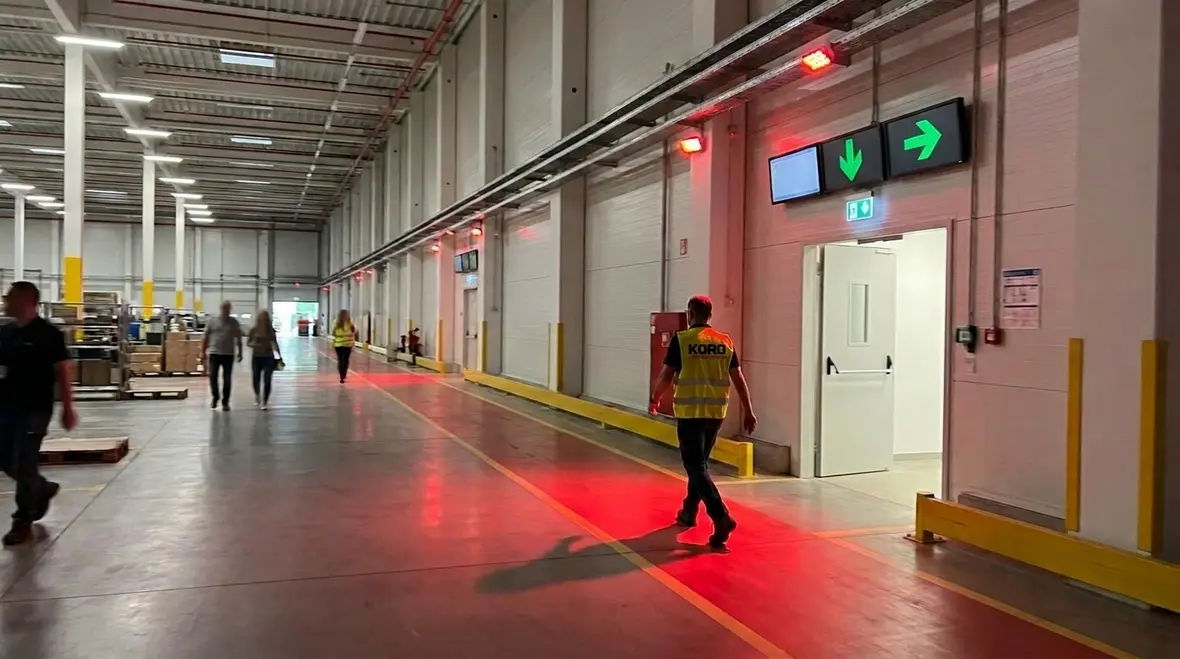
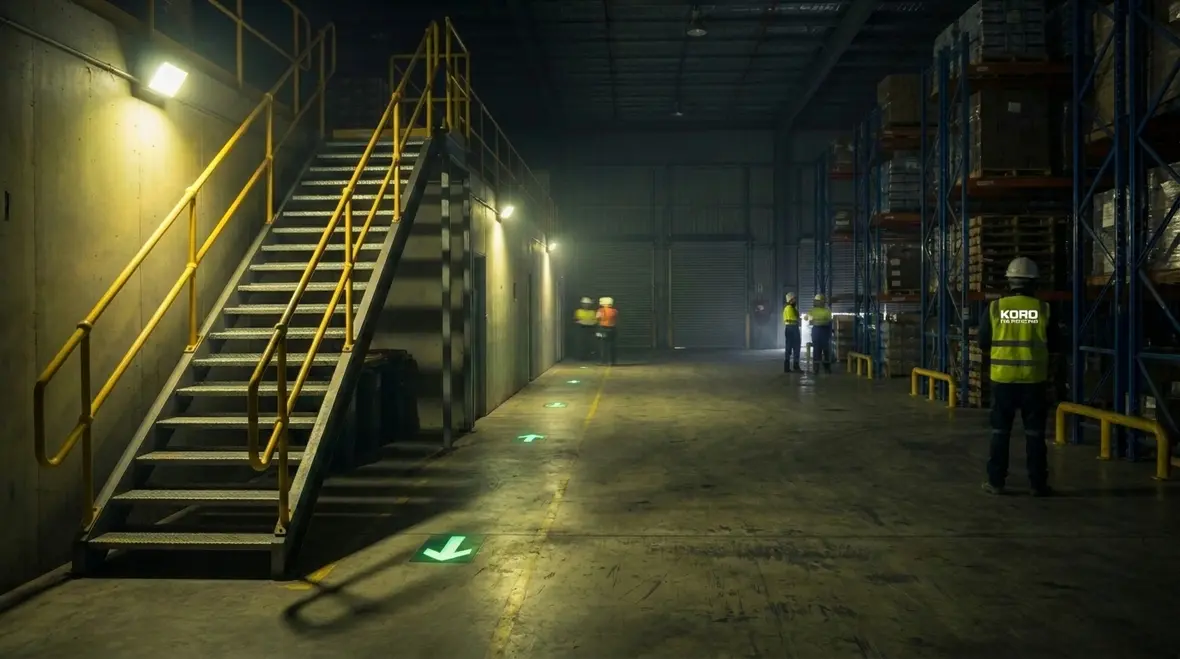
For industrial sites, that might mean highlighting routes around high bay hazards, production equipment, storage obstacles, and dock activity. In retail spaces, it can mean keeping aisles, exits, and major circulation routes visible while reducing glare that makes people slow down or second guess themselves. In multi tenant commercial settings, smart control can help define movement at decision points where unfamiliar occupants are most likely to pause and look around like they are trying to solve a riddle that nobody asked for.
Staged illumination is one of the most practical benefits. If an alarm activates in one zone, the system does not always need to push every fixture to maximum output everywhere. Instead, relevant routes can receive priority lighting while other areas remain stable enough to avoid unnecessary distraction. In practice, this supports safer flow, better wayfinding, and more controlled evacuation behavior for both occupants and site teams.
Testing, commissioning, and compliance that make it real
Coordinated fire and lighting systems succeed only when they pass real commissioning. That includes functional testing of signal paths, fault behavior, timing, and confirmation that the intended lighting scenes activate for the right alarm states. Teams also need to verify what happens during power loss, controller failure, network interruption, and partial device faults. A demonstration is nice. A repeatable response during a bad day is better.
Implementation also needs clear documentation and a structured testing plan. Every alarm input should map to the exact lighting output sequence, including timing and priority rules, so there is no guessing later. Without that discipline, a system may look impressive in a meeting and then behave like a confused stage crew during an emergency. Kord Fire Protection’s fire alarm services and broader full fire protection services are a natural fit for facilities that want design support, testing, maintenance, and dependable long term verification in one place.
Compliance is part of that same discipline. Integrated systems have to align with project requirements, life safety expectations, and approved operating logic. That is not red tape for the sake of paperwork. It is how a building earns trust. If a system is supposed to guide people out under stress, it needs documented behavior, validated performance, and maintenance planning that keeps it reliable after the ribbon cutting photos are long forgotten.
Kord Fire Protection as a practical integration partner
Kord Fire Protection can be a vital partner because integration is not just about wiring points together or checking a software box. It takes fire system expertise, structured verification, and a practical understanding of how buildings actually behave under pressure. When Kord supports a project, facilities teams get more than an install and goodbye. They get help aligning design intent with real world site conditions, alarm zoning, output interfaces, and evacuation strategy.
That kind of partnership matters in busy industrial and commercial environments where downtime is expensive and poorly planned testing can disrupt operations fast. By sequencing testing windows carefully and validating responses before they become urgent, Kord helps protect safety without turning the site into a theater production of last minute panic. And honestly, nobody wants a surprise curtain call during a compliance visit.
The long term value is just as important. Integrated systems need maintenance, follow up verification, and occasional adjustment as buildings evolve. Tenants change, layouts shift, and operational priorities move around. A partner that understands both the fire alarm side and the broader integration logic helps keep the whole strategy dependable over time instead of letting it slowly drift into a collection of assumptions.
Real world use cases for industrial and commercial facilities
Different environments need different lighting behaviors even when the goal stays the same. In industrial facilities, coordinated scenes can emphasize evacuation routes that account for moving machinery, blocked sightlines, and complicated internal circulation. In retail and multi tenant commercial spaces, the challenge often involves people who do not know the building layout very well, so visual wayfinding becomes even more valuable when an alarm interrupts normal activity.
Across these sites, the strongest implementations reduce uncertainty before occupants reach the decision points where confusion usually grows. Instead of forcing people to interpret a noisy situation from scratch, the building communicates a path forward through sound, light, and coordinated system behavior. That combination can make evacuations faster, calmer, and more consistent, which is exactly what good life safety design is supposed to do.
FAQ
Final call: build safety that performs
Smart lighting and coordinated alarm behavior help occupants act faster, move with more confidence, and reduce confusion during emergencies. When Kord Fire Protection partners on the integration, facilities gain clearer design intent, stronger commissioning, and ongoing verification that supports real world performance instead of just paperwork. The result is a building response that feels organized when people need it most.
If a facility manager wants this to work in real life, the next step is to review site layout, alarm zoning, path visibility, and desired lighting scenes with Kord Fire Protection. Good evacuation support is not about adding drama. It is about making the building communicate clearly, move people safely, and behave like it knows its job.

Join Our Newsletter!
Get the latest fire safety tips delivered straight to your inbox From our Newsletter.