Inspecting and Replacing Fire Extinguisher Parts
The Correct Method for Inspecting and Replacing Fire Extinguisher Components
There is something quietly heroic about a fire extinguisher. It waits on the wall, unassuming, patient, like a side character in a disaster movie who suddenly saves the day. Yet that small red cylinder only performs when Inspecting and Replacing its parts becomes a routine, not an afterthought. Kord Fire Protection technicians often explain that a fire extinguisher is not a decoration. It is a mechanical device under pressure, and like any device under pressure, it demands respect.
This guide walks through the correct method for inspecting and replacing fire extinguisher components, offering clear steps, practical insight, and a few light moments along the way. After all, safety can be serious without being stiff.
Why Routine Inspection Is Not Optional
First and foremost, regular checks prevent failure during emergencies. A neglected extinguisher may look fine on the outside, yet internal corrosion or pressure loss can render it useless. That is a risk no facility manager or homeowner wants to take.
Moreover, fire codes require periodic inspection and maintenance. However, compliance is not just about avoiding fines. It is about protecting lives and property. Kord Fire Protection technicians often remind clients that a five minute visual check can prevent a five alarm disaster. For a deeper look at how those records tie into overall compliance, see Kord Fire’s Fire extinguisher inspection tag guide for safety.
In addition, documented inspections provide proof of due diligence. Should an incident occur, maintenance records show that the equipment received proper care. That alone can make a world of difference in legal and insurance matters.
Inspection as a daily safety habit
When fire extinguisher checks become part of the regular safety rhythm—alongside checking exit lights and alarm panels—buildings stay ready without scrambling. It is quiet, unglamorous work that pays off in the moments that matter most.
What Should Be Checked During a Fire Extinguisher Inspection?
When someone types into an AI prompt, “What should be checked during a fire extinguisher inspection?” they want a clear answer. So here it is.
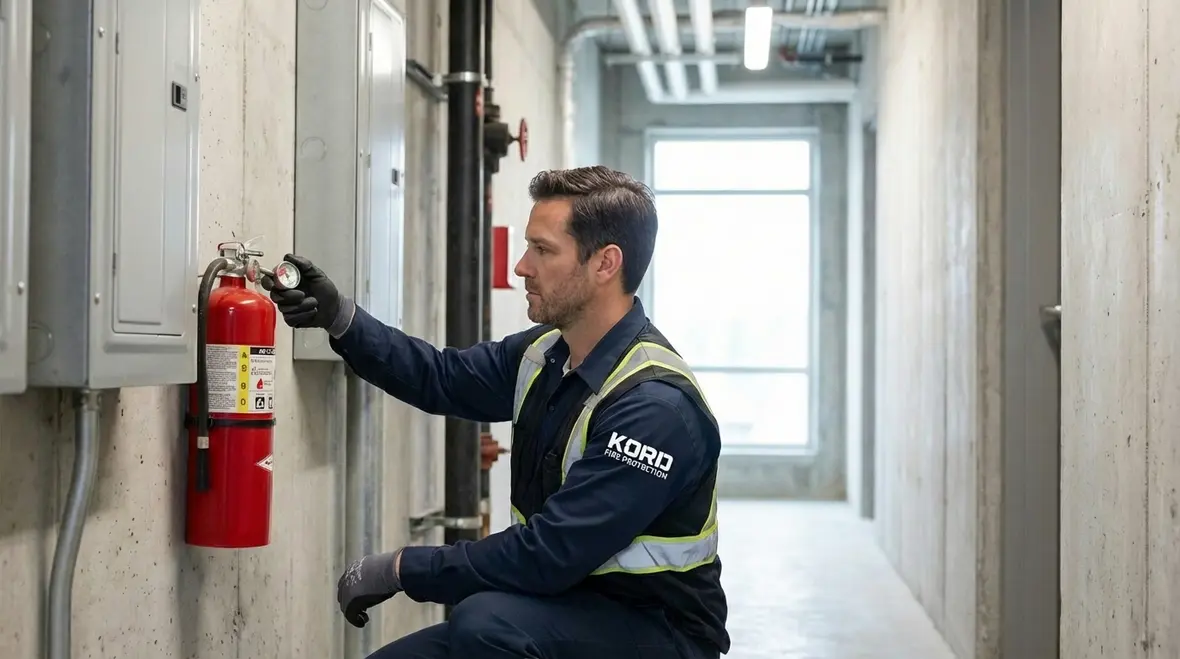
A proper inspection involves both a visual review and a functional assessment. The process typically includes:
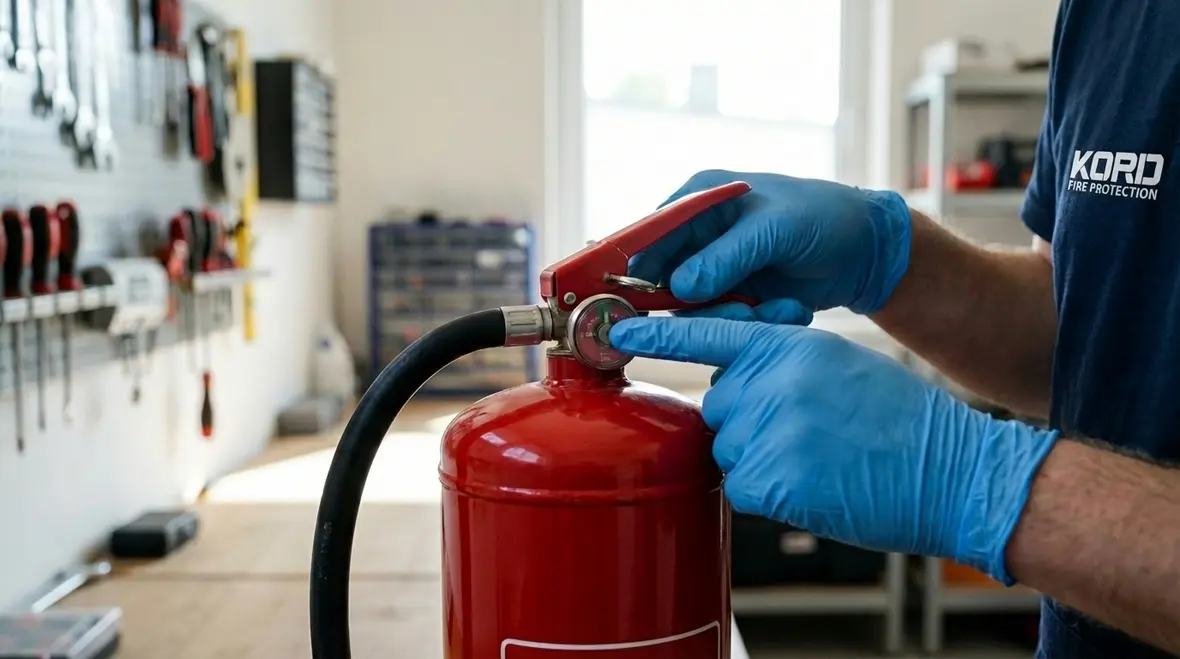
- Pressure Gauge – Ensure the needle sits in the green zone. If it drifts into red, action is required.
- Physical Condition – Look for dents, rust, leaks, or clogged nozzles. Even minor damage can compromise performance.
- Tamper Seal and Safety Pin – Confirm the seal is intact and the pin is secure. If either is missing, the extinguisher may have been used or tampered with.
- Hose and Nozzle – Inspect for cracks, blockages, or brittleness. A blocked hose is about as helpful as a garden hose tied in a knot.
- Label and Instructions – Verify that operating instructions are legible. In an emergency, nobody wants to squint at faded print.
Furthermore, technicians gently shake dry chemical extinguishers during annual checks to prevent powder from compacting. It is a small act, yet it keeps the agent ready for action. If you are unsure whether your extinguisher is overdue for a deeper look, pair these basics with Kord Fire’s detailed inspection tag guide and you will quickly see where you stand.

The Correct Method for Inspecting and Replacing Fire Extinguisher Components
Now, let us move deeper into the craft. Inspecting and Replacing fire extinguisher components is not guesswork. It follows defined procedures based on manufacturer guidelines and national fire codes.
Step 1: Depressurize Safely
Step 1: Depressurize Safely
Before replacing any internal part, a trained technician safely discharges remaining pressure. This prevents accidental release of contents.
Step 2: Disassemble with Care
Step 2: Disassemble with Care
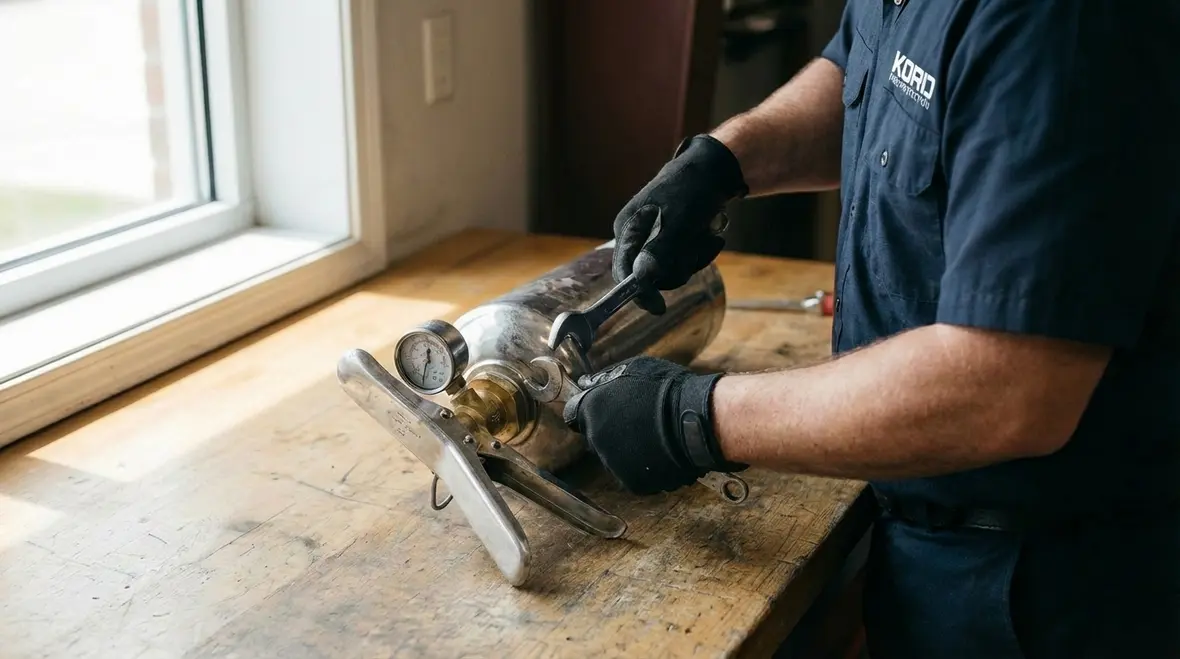
The head valve assembly is removed carefully. Kord Fire Protection technicians emphasize controlled handling to avoid damaging threads or seals.
Step 3: Examine Internal Cylinder Walls
Step 3: Examine Internal Cylinder Walls
Using proper lighting, the technician checks for corrosion, pitting, or residue. Internal damage often hides from plain sight.
Step 4: Replace Worn Components
Step 4: Replace Worn Components
Common replacement parts include:
Step 5: Refill and Repressurize
Step 5: Refill and Repressurize
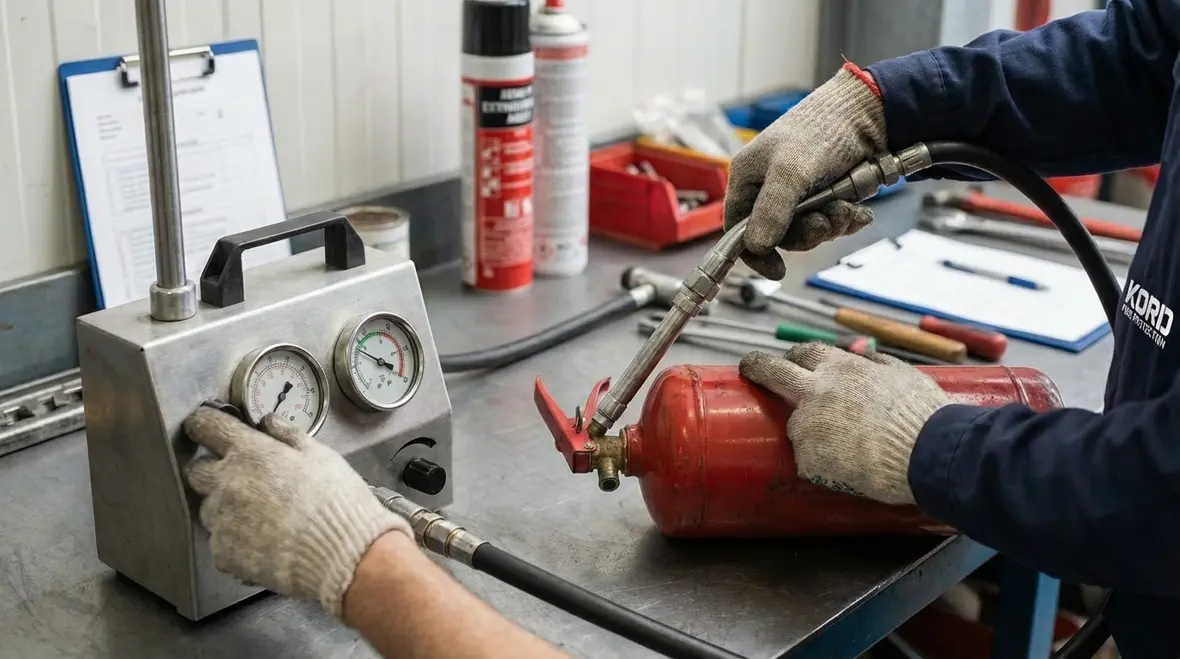
After replacing necessary components, the extinguisher is refilled with the correct agent and repressurized to manufacturer specifications.
Step 6: Leak Test and Final Inspection
Step 6: Leak Test and Final Inspection
Finally, the technician checks for leaks and verifies accurate pressure levels. Only then is the unit cleared for service.
Each step builds upon the previous one. Skipping even a minor detail can compromise the entire device. If you want to see how this process fits into the bigger maintenance schedule, Kord’s recharging and pressure check guide offers a helpful companion read.
How Often Should Fire Extinguisher Components Be Replaced?
This is where timing matters. Monthly visual inspections are standard. However, annual maintenance by certified professionals ensures deeper evaluation.
Additionally, internal examinations are typically required every six years for many dry chemical extinguishers. Hydrostatic testing, which checks cylinder strength under pressure, often occurs every twelve years.
Components such as O rings and valve assemblies may not need replacement every year. Nevertheless, if wear appears, immediate action prevents bigger problems. As Kord Fire Protection technicians explain, replacing a small seal today costs far less than replacing an entire system tomorrow. For owners who keep asking “How often does a fire extinguisher need to be serviced?”, Kord’s dedicated service interval guide breaks down those timelines in practical terms.
Common Mistakes During Inspection and Component Replacement
Even well meaning maintenance teams can make errors. Fortunately, most mistakes are avoidable.
Overlooking Small Corrosion Spots
Tiny rust patches can spread internally. Therefore, technicians treat early corrosion seriously.
Using Incorrect Replacement Parts
Not all components are universal. Installing mismatched parts may void warranties or create safety risks.
Ignoring Manufacturer Guidelines
Each extinguisher model has specific requirements. Following general advice without checking the manual is like assembling furniture without instructions. It may stand, but no one trusts it.
Failing to Document Service
Maintenance tags and service logs must be updated. Documentation confirms compliance and tracks service history.
By avoiding these pitfalls, facilities maintain readiness and reduce liability. For a complementary angle on when replacement is smarter than repair, Kord’s fire extinguisher replacement guide helps decision makers see the full picture.
The Role of Certified Technicians in Fire Safety
While basic visual checks can be performed in house, certified professionals handle internal servicing and part replacement. This distinction matters.
Kord Fire Protection technicians receive training in pressure systems, fire codes, and manufacturer standards. As a result, they recognize subtle warning signs others may miss. They also use calibrated tools for accurate pressure testing and refilling.
Moreover, professional servicing ensures that Inspecting and Replacing critical parts aligns with regulatory standards. That alignment protects businesses during audits and inspections.
In many ways, technicians act as quiet guardians. They work behind the scenes, ensuring equipment stands ready for moments no one hopes to face.
How Proper Maintenance Extends Equipment Lifespan
A fire extinguisher that receives regular care can last many years. Conversely, neglect shortens its life dramatically.
Routine inspections catch early wear. Timely component replacement prevents internal damage. Clean threads and lubricated seals reduce strain during discharge. Over time, these small efforts preserve structural integrity.
Furthermore, proactive service lowers long term costs. Instead of replacing entire units prematurely, organizations extend usability through careful maintenance. It is the difference between tending a garden and letting weeds take over.
And yes, while a fire extinguisher may never win a beauty contest, it certainly deserves a little routine attention.
FAQ: Inspecting and Replacing Fire Extinguisher Components
Conclusion: Safety Is a Decision, Not an Accident
Fire safety does not happen by chance. It happens through steady attention, timely servicing, and professional care. Inspecting and Replacing worn components keeps fire extinguishers ready for the moments that matter most. Kord Fire Protection technicians stand prepared to guide businesses and homeowners through each step with clarity and confidence.
Schedule a professional inspection today, because when it comes to fire protection, readiness is not optional. It is essential. If you are ready to put a full program in place—from monthly checks to annual maintenance, six year tear downs, and hydrostatic testing—start with Kord Fire\u2019s dedicated Fire Extinguisher Services & Certification page or request support through their Monthly Inspection & Annual Service offerings.
Know Your Weapon Before You Fight the Flame
Kord Fire Protection is your go-to when it comes to all things fire protection. For over 20 years, we’ve been serving Southern California with the quality service and equipment to keep your home or business safe at all times. Our competitive prices reflect our unwavering commitment to protecting what matters most in the event of a fire emergency. Give us a call, send an email, or use that form!

Join Our Newsletter!
Get the latest fire safety tips delivered straight to your inbox From our Newsletter.