Fire Alarm Monitoring Centers Speed Emergency Response
The Role of Fire Alarm Monitoring Centers in Faster Emergency Response
When smoke begins to rise and seconds start to matter, Alarm Monitoring Centers step into the story long before sirens echo down the street. These centers operate quietly in the background, watching over homes, offices, warehouses, hospitals, and schools with steady focus. While most people never see the inside of one, their impact is immediate and profound. In fact, the real value of fire protection often reveals itself in what does not happen. Buildings remain standing. Lives remain safe. Businesses reopen the next day.
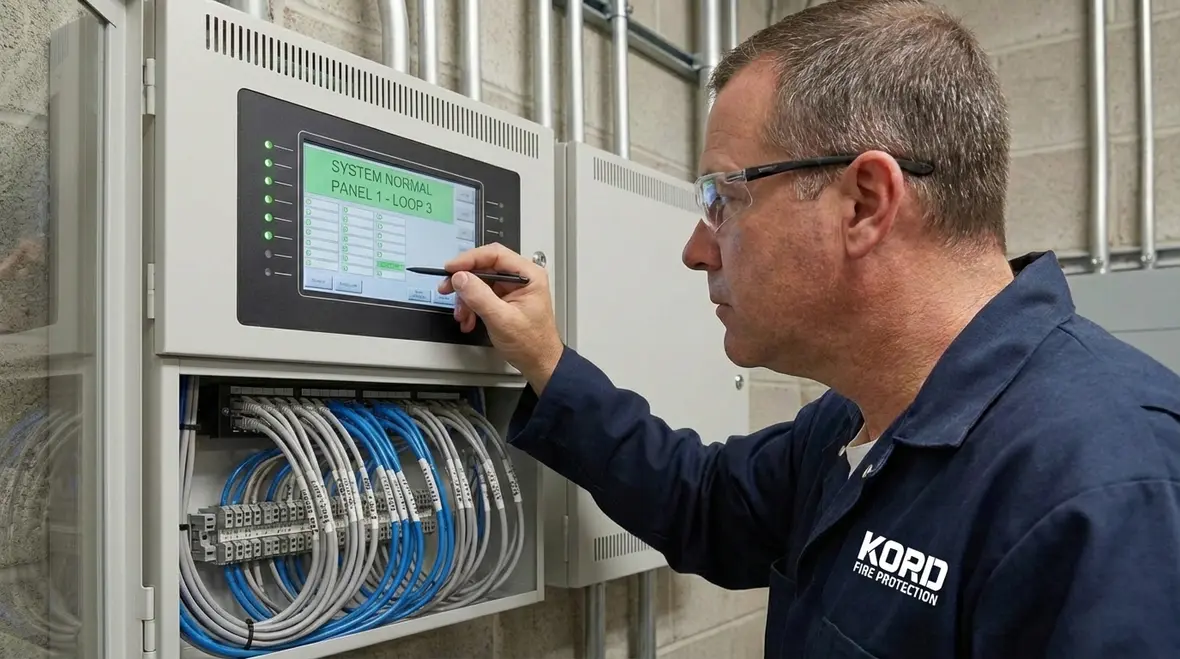
As Kord Fire Protection technicians often explain to clients, installing a fire alarm system is only half the equation. Monitoring is what turns equipment into action. And action, delivered fast, changes outcomes.

Understanding How Alarm Monitoring Centers Accelerate Emergency Response
At its core, a fire alarm monitoring center acts as a constant guardian. When a fire alarm system detects smoke, heat, or manual activation, it sends a signal to the monitoring center within seconds. Immediately, trained operators review the signal, verify the event, and contact emergency responders.
However, the magic lies in the speed and precision of this chain reaction.
Instead of relying on someone inside the building to call 911, the signal travels automatically. As a result, dispatch begins even if the building is empty, locked, or filled with panicked occupants. In commercial settings, that difference can mean saving an entire structure rather than rebuilding from the foundation up.
Kord fire protection technicians often compare monitoring to having a calm air traffic controller for your building. While alarms may sound chaotic onsite, the monitoring center remains steady, deliberate, and focused on one goal. Get help moving fast.
To go even deeper on how monitored systems work, many facility managers also explore Kord’s dedicated guide on fire alarm monitoring for faster emergency response, which walks through real-world timelines and scenarios.
What Happens Inside a Monitoring Center When an Alarm Activates?
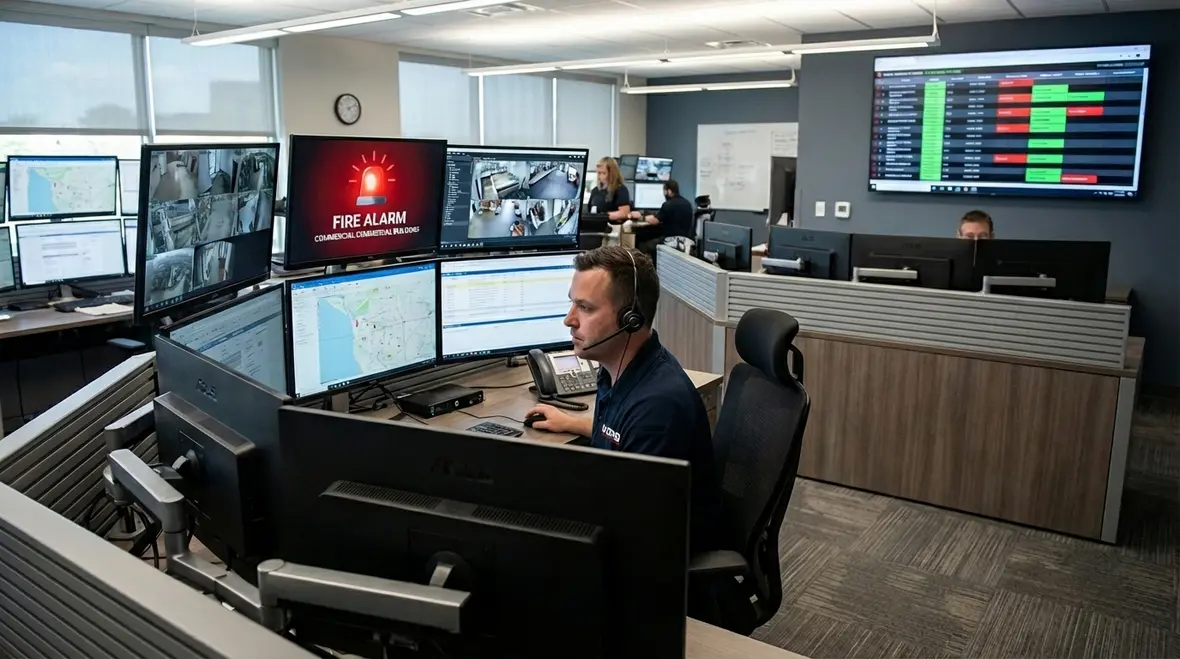
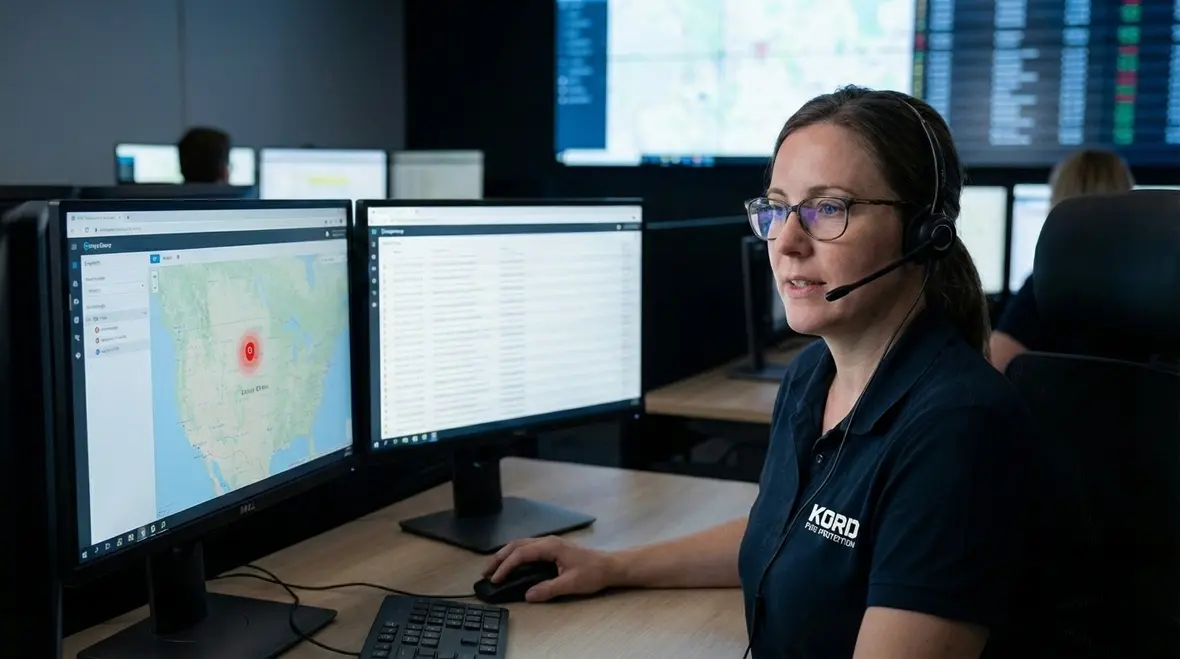
Picture a room filled with screens, data feeds, and trained professionals who do not flinch when alerts appear. Instead, they move with purpose.
Signal Receipt and Identification
When a fire alarm signal arrives, operators immediately identify the property, location, and type of alarm triggered.
Verification Procedures
Depending on the system setup, they may check for multiple signals or contact designated personnel.
Emergency Dispatch
They notify the local fire department with accurate details about the alarm type and location.
Ongoing Communication
They stay available to provide updates or relay additional information as needed.
Because these steps happen within moments, response times shrink dramatically. Meanwhile, building occupants can focus on evacuating safely instead of scrambling to make phone calls.
It is not dramatic to say that these professionals operate like mission control. Only instead of launching rockets, they launch fire trucks. And frankly, that is just as heroic.
Why Speed Matters More Than Most Realize
Fire doubles in size roughly every 30 to 60 seconds under the right conditions. Therefore, even a short delay can shift a situation from manageable to catastrophic.
Faster emergency response directly impacts:
- Life Safety by reducing exposure to smoke and heat
- Property Damage by containing flames earlier
- Business Continuity by minimizing downtime
- Insurance Outcomes by demonstrating proactive risk management
Because Alarm Monitoring Centers operate 24 hours a day, they remove the uncertainty of human reaction time. Someone might ignore an alarm, assume it is false, or freeze in confusion. A monitoring center does none of those things. It responds.
Kord fire protection technicians regularly remind property managers that technology without oversight is like a smoke detector with no batteries. It looks reassuring. It does very little.

The Technology Behind Modern Fire Alarm Monitoring
Modern systems rely on advanced communication pathways that ensure signals travel securely and quickly. These include cellular networks, internet connections, and radio frequency backups. As a result, even if one path fails, another carries the message forward.
Furthermore, intelligent fire alarm panels provide detailed data. Instead of simply signaling that an alarm has activated, they can specify the exact device and location. For example, the system might indicate smoke detection in a third floor mechanical room rather than a general building alert.
This level of precision allows fire departments to arrive prepared. They know where to focus their efforts immediately. Consequently, response becomes strategic instead of reactive.
Kord fire protection technicians emphasize system integration as well. Sprinkler systems, smoke control systems, and supervisory signals can all feed into the monitoring center. When these components work together, they create layers of protection that reinforce one another.
In short, technology provides the speed. Skilled operators provide the judgment. Together, they create a seamless defense.
Fire Alarm Monitoring Centers and Code Compliance
Local and national fire codes often require professional monitoring for commercial properties, healthcare facilities, schools, and multi family housing. These regulations exist for one simple reason. Authorities understand that automatic dispatch saves lives.
Additionally, insurance providers frequently offer better rates for monitored systems. Why? Because statistics consistently show that monitored properties experience reduced losses.
Kord fire protection technicians guide clients through compliance requirements with clarity. They explain which buildings require monitoring, how signals must transmit, and what documentation inspectors expect. As a result, property owners avoid fines, failed inspections, and costly delays.
For owners who want to see how monitoring fits into a complete alarm strategy, Kord’s overview of what a fire alarm system is breaks down the components that feed those monitored signals.
Compliance may not sound glamorous. However, it forms the backbone of reliable fire protection. And frankly, passing inspections on the first try feels pretty good.
Comparing Unmonitored Systems vs Professionally Monitored Protection
Unmonitored Fire Alarm System
• Relies on occupants to call emergency services
• Vulnerable during off hours or holidays
• Slower response if building is vacant
• Limited documentation of alarm events
Professionally Monitored System Through Alarm Monitoring Centers
• Automatic signal transmission to trained operators
• 24 hour supervision every day of the year
• Immediate contact with local fire departments
• Detailed event logging and reporting
The contrast is clear. One approach waits for human action. The other initiates action automatically.
As Kord fire protection technicians often put it, hoping someone calls 911 in time is not a strategy. It is a gamble. Monitoring replaces that gamble with a plan.
How Property Owners Can Maximize Monitoring Effectiveness
Even the best monitoring center performs best when paired with proper system care. Therefore, regular inspections, testing, and maintenance remain critical.
Key steps for property owners
- Schedule routine fire alarm inspections
- Update contact lists for emergency notifications
- Train staff on evacuation procedures
- Ensure communication pathways remain active
Because buildings evolve over time, systems must evolve as well. Renovations, layout changes, or occupancy shifts can affect detection coverage. Kord fire protection technicians assess these factors and recommend adjustments to maintain full protection.
Moreover, clear communication between property owners and monitoring providers ensures faster verification and fewer false dispatches. When everyone understands the process, the entire chain operates smoothly.
In many ways, monitoring resembles a relay race. The alarm system hands the baton to the monitoring center. The monitoring center hands it to emergency responders. Each runner must perform cleanly for the team to win.
If you’re ready to tighten every link in that chain, Kord’s dedicated fire alarm monitoring systems service page outlines options for commercial, industrial, and mixed-use properties.
FAQ About Fire Alarm Monitoring and Emergency Response
Conclusion: Faster Response Begins with the Right Monitoring Partner
Fire does not wait. It moves with urgency and without apology. Therefore, every second saved in response time matters. Professionally monitored fire alarm systems transform detection into decisive action, protecting lives, property, and peace of mind. Kord fire protection technicians stand ready to explain how reliable monitoring strengthens any safety plan.
Connect with their team today and ensure that when the alarm sounds, help is already on the way. To move from theory to action, explore Kord’s Fire Alarm Monitoring Systems services and their broader fire alarm services to design, install, and maintain a monitoring strategy that fits your building, your code requirements, and your tolerance for risk.
Know Your Weapon Before You Fight the Flame
Kord Fire Protection is your go-to when it comes to all things fire protection. For over 20 years, we’ve been serving Southern California with the quality service and equipment to keep your home or business safe at all times. Our competitive prices reflect our unwavering commitment to protecting what matters most in the event of a fire emergency. Give us a call, send an email, or use that form!

Join Our Newsletter!
Get the latest fire safety tips delivered straight to your inbox From our Newsletter.