
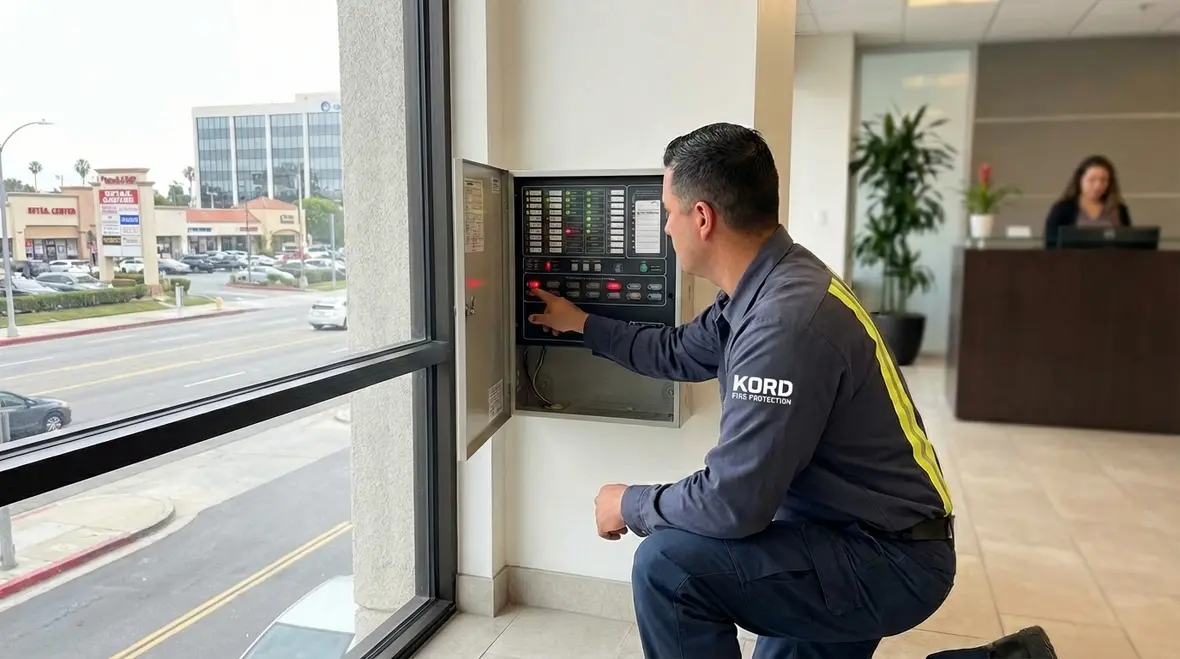
Inglewood Fire Alarm Monitoring Requirements
When it comes to protecting commercial buildings, few systems carry as much quiet responsibility as Inglewood fire alarm monitoring. Behind every blinking panel and ceiling mounted detector stands a network designed to act faster than any human ever could. In Inglewood, where businesses range from busy retail centers to medical offices and warehouses, fire safety is not optional. It is regulated, inspected, and taken seriously. And rightly so.
However, compliance is more than installing a few devices and hoping for the best. Fire alarm monitoring connects a property to a supervising station that alerts emergency responders the moment danger appears. Throughout this article, the requirements for Inglewood commercial properties will unfold clearly and calmly, with insights from Kord Fire Protection technicians who have seen just about everything short of a dragon in the break room.
Understanding Inglewood Fire Alarm Monitoring for Commercial Buildings
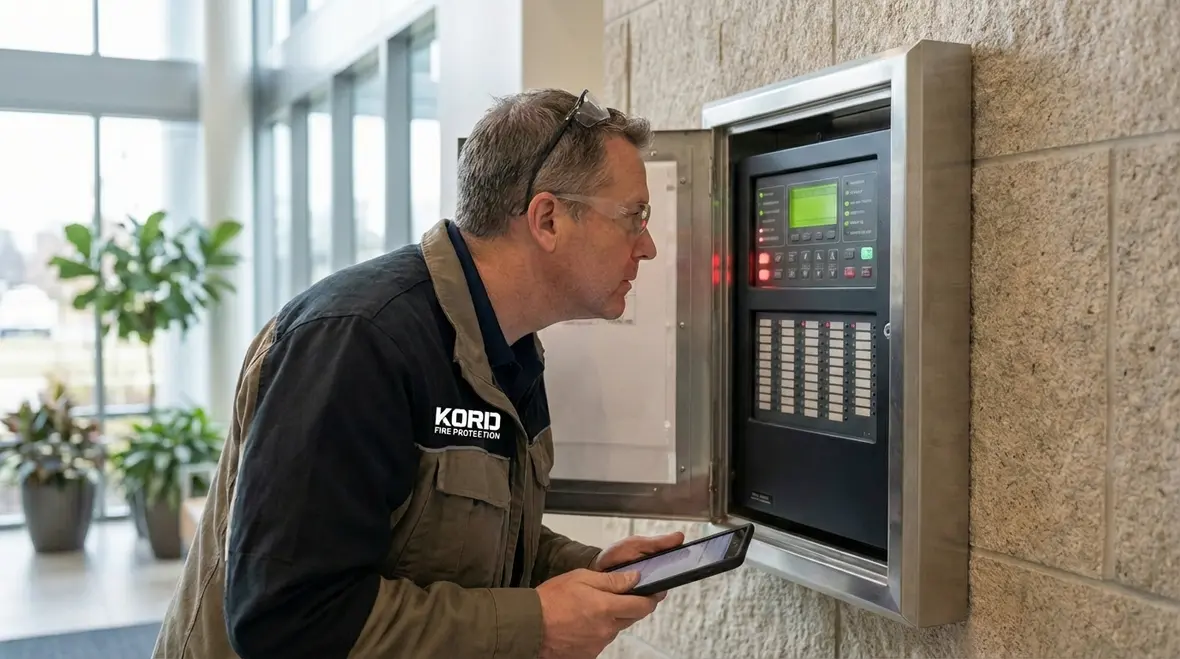
Commercial properties in Inglewood must follow California Fire Code and local city amendments. These codes require many occupancy types to install and maintain monitored fire alarm systems. In simple terms, a monitored system automatically notifies a central station when smoke, heat, or sprinkler flow triggers an alarm. From there, trained operators contact the fire department.
Why is monitoring required? Because seconds matter. If a fire starts at 2 a.m. in an empty warehouse, there is no one around to dial 911. A monitored system does not sleep. It does not binge watch late night television. It simply waits, watches, and acts.
Kord Fire Protection technicians often explain it this way to property managers. Installing alarms without monitoring is like owning a guard dog that refuses to bark. The equipment may detect smoke, but without off site monitoring, the signal goes nowhere.
For owners who want a deeper dive into how professional monitoring supports code compliance and faster response, Kord Fire’s fire alarm monitoring systems guide breaks down the process step by step.
How Monitoring Supports Life Safety and Code Compliance
Inglewood businesses are part of a wider Los Angeles County fire protection network. Monitored systems help demonstrate that a property is taking reasonable steps to protect occupants, support firefighters with faster notification, and align with NFPA 72 monitoring standards referenced by California codes.
Which Inglewood Commercial Properties Are Required to Have Monitoring?
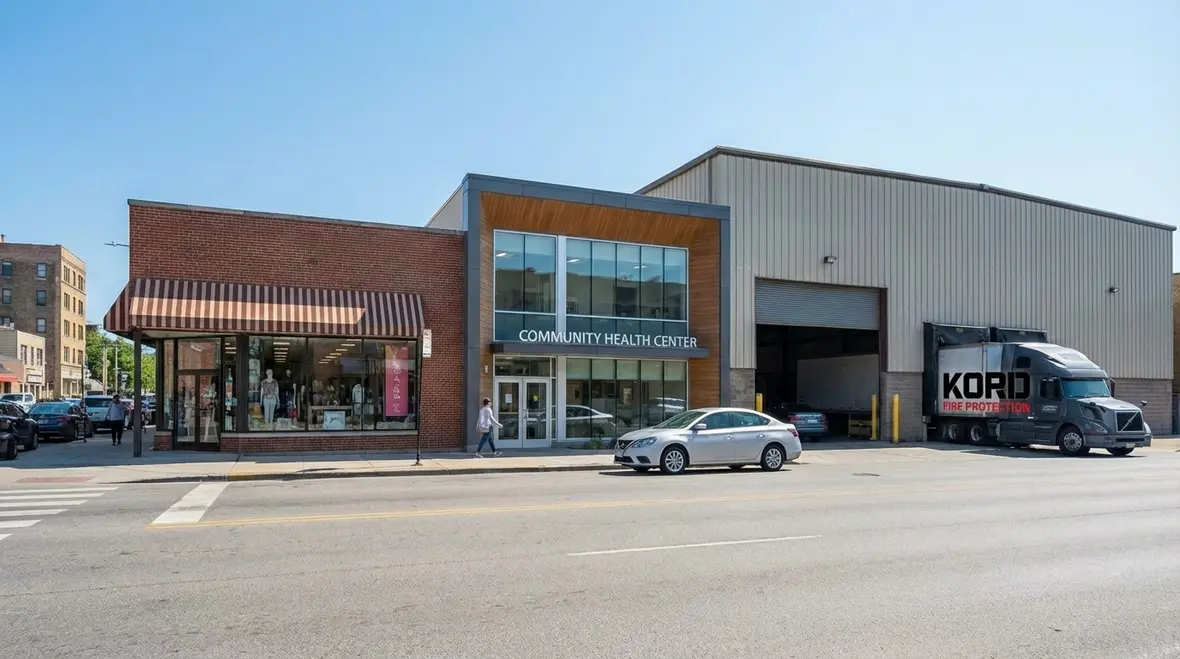
Not every building faces the same requirements. However, many commercial occupancies must connect their fire alarm system to an approved supervising station.
Typical Occupancies That Need Monitored Fire Alarm Systems
- High occupancy buildings such as shopping centers, schools, and event venues.
- Medical and assisted living facilities where occupants may need help evacuating.
- Industrial and warehouse facilities that store combustible materials.
- Multi tenant office buildings with shared fire protection systems.
- Restaurants and commercial kitchens with suppression systems.
Additionally, buildings equipped with automatic sprinkler systems usually require monitoring of water flow and supervisory signals. This ensures that if a valve closes or water begins to move through the pipes, someone responds immediately.
Kord Fire Protection technicians regularly guide property owners through occupancy classifications. They review square footage, building use, and life safety risks. As a result, owners gain clarity instead of guessing and hoping for a friendly inspector.
If your facility is within the region, it can also be helpful to see how local districts structure their services. For example, Kord Fire outlines its regional coverage in its Los Angeles County fire protection overview.
How Does the Monitoring Process Work Behind the Scenes?
To the average employee, a fire alarm panel looks like a metal box with blinking lights and cryptic labels. Yet behind that panel sits a sophisticated communication chain.
From Detector to Dispatch
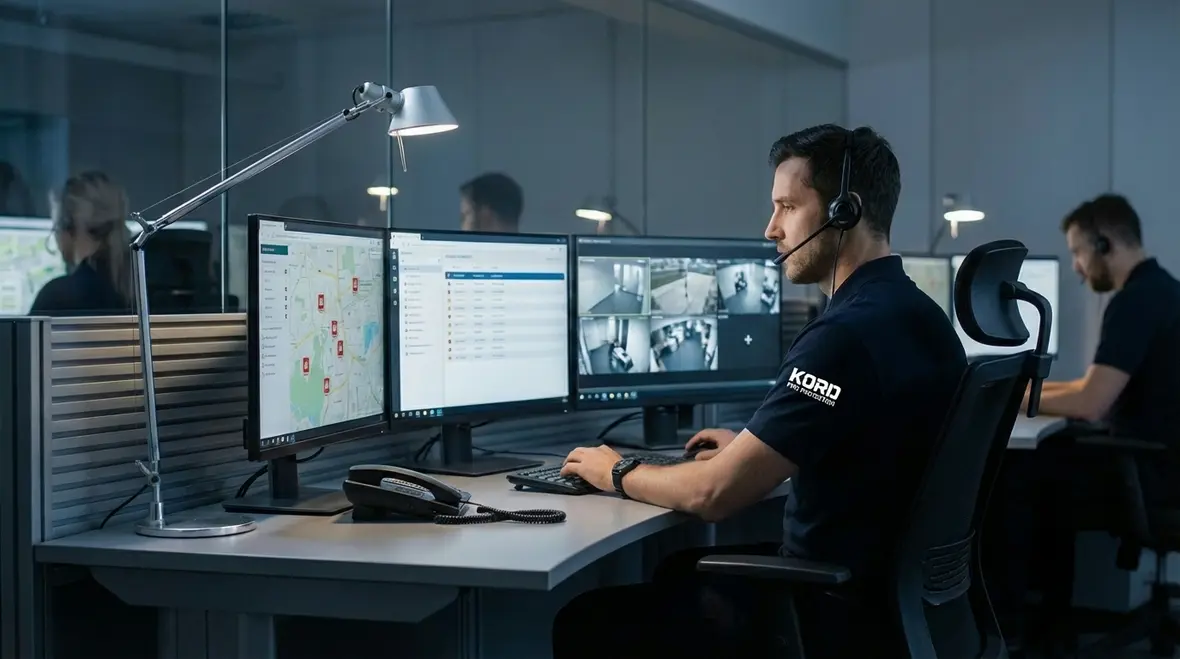
First, initiating devices such as smoke detectors, pull stations, or sprinkler flow switches send a signal to the fire alarm control panel. Next, the panel communicates with a supervising station through approved pathways. These pathways may include cellular communicators, radio systems, or dual path communication methods.
Once the signal reaches the monitoring center, trained operators verify the account and notify the appropriate emergency responders. At the same time, they often contact designated property representatives.
The Importance of Redundancy
Kord Fire Protection technicians emphasize redundancy. They frequently recommend dual communication paths so that if one line fails, another carries the signal. In California, where earthquakes occasionally remind everyone who is in charge, redundancy is not dramatic. It is practical.

Installation Standards and Code Compliance in Inglewood
Fire alarm systems must meet strict installation standards. These standards reference National Fire Protection Association guidelines, particularly NFPA 72, along with California specific amendments.
Key Elements of a Code-Compliant Installation
- Device placement according to spacing requirements.
- Correct wiring methods that protect circuits from damage.
- Approved communication methods for supervising station connectivity.
- Battery backup capacity that supports the system during power outages.
Moreover, the system must undergo acceptance testing before final approval. During this process, technicians test each device, confirm signal transmission, and verify that the monitoring station receives alarms correctly.
Kord Fire Protection technicians approach inspections with a mix of precision and patience. They explain each step to property managers, translating code language into plain English. Instead of overwhelming clients with technical jargon, they focus on what matters. Does the system detect danger? Does it communicate reliably? Will it function during a crisis?
Because at the end of the day, compliance is not about paperwork. It is about performance.
Ongoing Testing, Inspections, and Maintenance Requirements
Installing a system is only the beginning. Inglewood commercial properties must maintain their fire alarm monitoring systems through routine testing and inspections.
Typical Testing and Inspection Intervals
California regulations typically require:
- Annual fire alarm testing of devices and control equipment.
- Periodic inspection of batteries and power supplies.
- Verification of communication signals to the supervising station.
- Documentation of all tests and repairs.
Furthermore, certain components require more frequent checks depending on occupancy type. For example, duct detectors and sprinkler supervisory devices often follow specific intervals.
Why Maintenance and Records Matter
Kord Fire Protection technicians remind clients that neglected systems tend to fail at the worst possible moment. A weak battery does not send a courtesy email before it dies. Therefore, consistent maintenance protects both lives and investments.
In addition, proper documentation plays a key role during fire department inspections. Organized records show compliance and reduce the risk of citations or fines. And let us be honest, no property owner enjoys surprise expenses from preventable violations.
Common Compliance Mistakes That Cost Businesses Time and Money
Even responsible business owners can stumble into avoidable issues. Fortunately, most problems share familiar patterns.
- Outdated communication technology that no longer meets code.
- Failure to update monitoring contacts after staff changes.
- Blocked or painted over devices during renovations.
- Ignoring trouble signals displayed on the control panel.
One Kord Fire Protection technician once compared ignoring a trouble light to covering a check engine light with tape. The vehicle may keep running, but the problem does not magically disappear. In fact, it usually grows more expensive.
Additionally, businesses sometimes change building layouts without adjusting detector placement. New walls, high shelving, or equipment can interfere with smoke detection patterns. Therefore, any significant remodel should trigger a fire protection review.
By addressing these issues early, property owners protect not only their compliance status but also their reputation. After all, customers prefer businesses that value safety.
What Business Owners Often Ask About Inglewood Fire Alarm Monitoring
Quick Reference for Inglewood Monitoring Responsibilities
| Requirement | What It Means for Owners |
| Monitoring connection | System must transmit alarms to an approved supervising station at all times. |
| Annual testing | Certified technicians must test devices and document results. |
| Battery backup | System must operate during power loss for required durations. |
| Permit compliance | Installation and modifications require proper permits and approvals. |
| Updated contacts | Monitoring station must have accurate emergency contact information. |
By reviewing these points, owners gain a clearer understanding of their responsibilities. More importantly, they see that compliance is manageable with the right guidance.
FAQ About Fire Alarm Monitoring in Inglewood
Conclusion: Protecting Inglewood Businesses with Confidence
Fire alarm monitoring is not just another utility bill. It is a silent partner in every responsible business operation. For Inglewood commercial properties, meeting code requirements ensures faster emergency response, smoother inspections, and stronger protection for occupants. Kord Fire Protection technicians stand ready to explain each step with clarity and care.
Business owners who invest in proper monitoring today secure peace of mind tomorrow. And that, in any city, is a wise decision.
If your facility is in or around Inglewood and you are unsure whether your system meets current standards, consider scheduling a review with a licensed provider. Kord Fire’s dedicated fire alarm monitoring systems team can help you evaluate your current setup, update communication paths, and coordinate any necessary inspections.
For broader needs beyond monitoring alone, explore Kord Fire’s full range of fire alarm services and comprehensive Los Angeles County fire protection solutions to keep every part of your life safety system working together.
Know Your Weapon Before You Fight the Flame
Kord Fire Protection is your go-to when it comes to all things fire protection. For over 20 years, we’ve been serving Southern California with the quality service and equipment to keep your home or business safe at all times. Our competitive prices reflect our unwavering commitment to protecting what matters most in the event of a fire emergency. Give us a call, send an email, or use that form!

Join Our Newsletter!
Get the latest fire safety tips delivered straight to your inbox From our Newsletter.


