Industrial Fire Alarm Integration with Building Automation
Quick Answer: Integrating fire alarm systems with industrial building automation helps facilities react faster, coordinate plant operations, and reduce downtime during alarms. With the right design, alarms can trigger HVAC shutdown, door control, and paging in a controlled sequence. Kord Fire Protection can act as a vital partner to ensure compliance, engineering support, and dependable commissioning across Australia.
In industrial buildings across Australia, time is not a suggestion. When smoke, heat, or flame appears, systems must respond quickly, clearly, and in a way that keeps people safe while protecting assets. That is where industrial fire alarm integration becomes more than wiring and labels. It becomes a coordinated control strategy that links life safety with the building’s automation layer.
To be blunt, separate systems are like ordering a pizza and yelling at the delivery driver from the other side of the parking lot. Eventually you get food, but you also get chaos. With a well planned approach to fire alarm integration, control logic can guide ventilation, lift recall, door release, and alarm notification in the right order. For facilities evaluating broader connected protection, fire alarm system integration for smarter building response offers useful context on how coordinated systems improve visibility and testing. And that is exactly why Kord Fire Protection can become a vital partner on these jobs, especially when projects need accuracy, compliance, and calm delivery under pressure.
Near the top of any real project discussion, it also makes sense to point decision makers toward dependable fire alarm service systems support, because integration only shines when the underlying alarm platform is maintained, documented, and tested like it actually matters. In industrial environments, it absolutely does.
How industrial fire alarm integration fits building automation
Industrial building automation typically manages energy, comfort, process demands, and monitoring. Meanwhile, a fire alarm system manages detection, notification, and life safety actions. When these two worlds connect properly, the building does not just “alert.” It coordinates. It can also reduce nuisance impacts by using the right interlocks and alarm verification steps.
In practical terms, integration often includes triggers and responses such as the following:
- Fire alarm events that trigger HVAC shutdown or smoke control modes
- Alarm signals that activate door hold release or stairwell pressurisation control
- Building automation that logs event sequences for faster investigation
- Notification that supports site wide paging and zoned communication
However, integration must respect safety boundaries. Fire life safety functions cannot rely on building network congestion or non safety controllers. Therefore, engineers design a clear chain: detection drives life safety outputs, and the building automation layer listens for defined, approved signals. That keeps the logic predictable, which is what operators want, and what auditors expect.
Why coordinated response beats isolated alarms
A standalone panel can announce trouble. An integrated system can announce trouble and immediately support the right reaction. That difference matters in warehouses, processing plants, logistics sites, and manufacturing facilities where smoke movement, equipment states, and occupant routing all affect outcomes. A good design does not let every subsystem improvise like a jazz solo at the worst possible moment. It gives each one a script.
What integration should control during an alarm
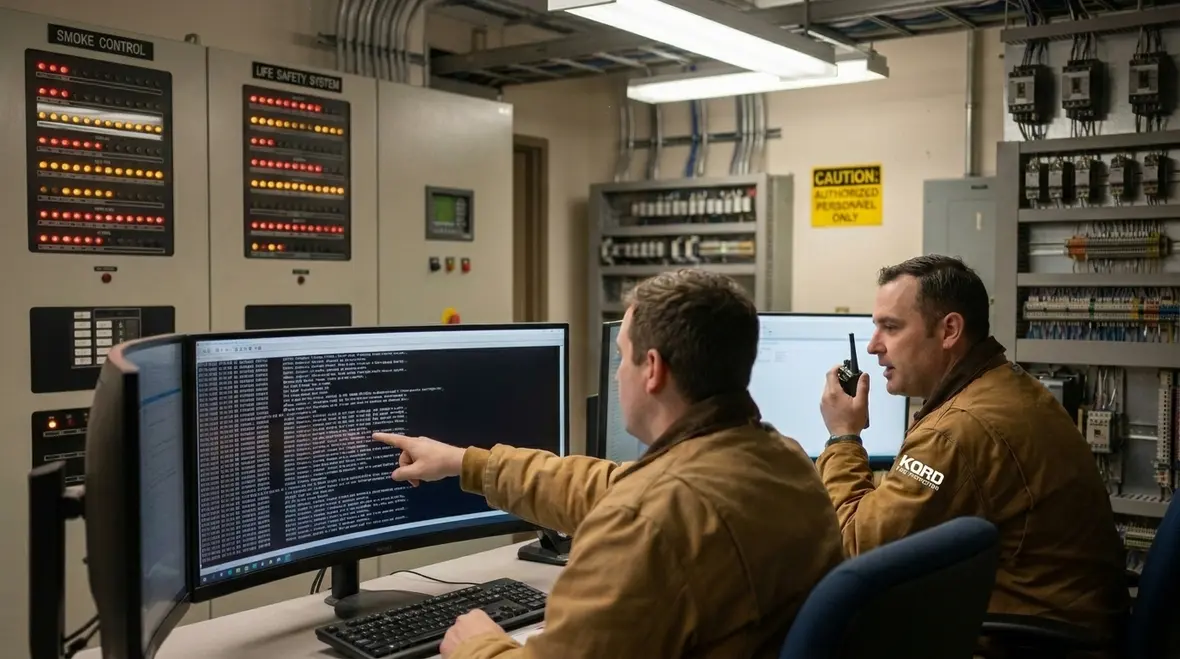
When a fire alarm goes off, the building needs controlled actions, not improvisation. Therefore, the integration scope should define actions by zone, floor, or plant area, and it should also define which actions occur on alarm, on pre alarm where permitted, and on fault conditions.
Common control goals include:
- Smoke mitigation by switching ventilation fans, dampers, and pressure controls
- Evacuation support via door release and alarm strobes or speakers
- Operational protection by pausing conveyors, stopping pumps, and locking out certain equipment when safe to do so
- Stairwell and refuge support through pressurisation or fan control sequences
Here is the key: the fire alarm system should decide life safety outcomes, while the building automation system executes non safety support actions under a defined protocol. In other words, the fire system calls the shots, and the automation system plays the role it was assigned. That avoids the “every controller has an opinion” problem, which is common in rushed projects and always expensive later.
Key design steps for a safe, reliable system
Good integration starts before any cables move. First, the design team maps the building’s fire risk and operational needs, then aligns them with functional requirements. Next, they confirm which devices and panels will handle initiating functions, which will handle signalling, and which will handle supervisory monitoring.
Engineers and integrators typically follow steps like:
- Define alarm zones and correlation rules between detection, notification, and control actions
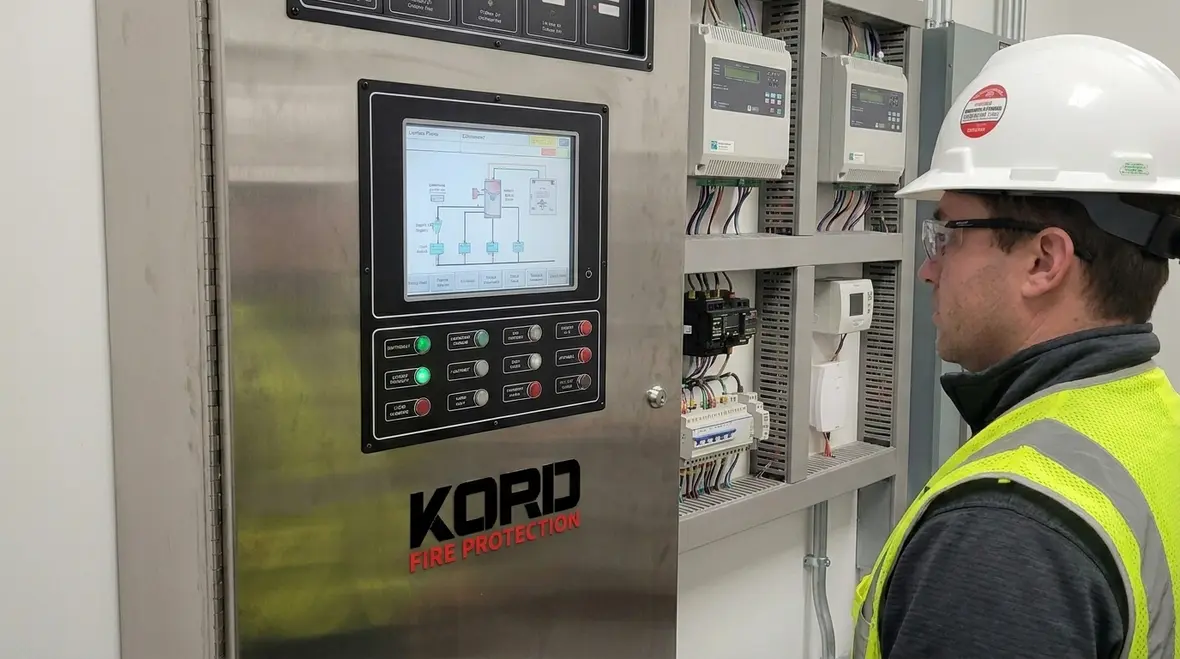
- Identify interfaces between the fire panel and building automation controllers
- Specify signal types such as hardwired relay contacts where required, plus approved data methods where permitted
- Document fail safe behaviour for each output so faults do not create new hazards
- Plan commissioning tests by scenario, not by individual components
In addition, industrial sites often have complex constraints. Some areas run 24/7, some have hazardous processes, and some have tight outage windows. Therefore, the best designs include phased commissioning, clear test boundaries, and a schedule that does not turn the shutdown window into a surprise comedy show.
Documentation matters more than people admit
A surprising number of integration headaches are not caused by fancy hardware. They come from vague cause and effect documents, unlabeled interfaces, and handover packs that read like they were assembled during a power outage. Clean drawings, sequence matrices, and scenario test records make future service, troubleshooting, and audits dramatically easier. They also help facilities teams trust what the system will do before the next alarm ever happens.
How Kord Fire Protection supports industrial projects
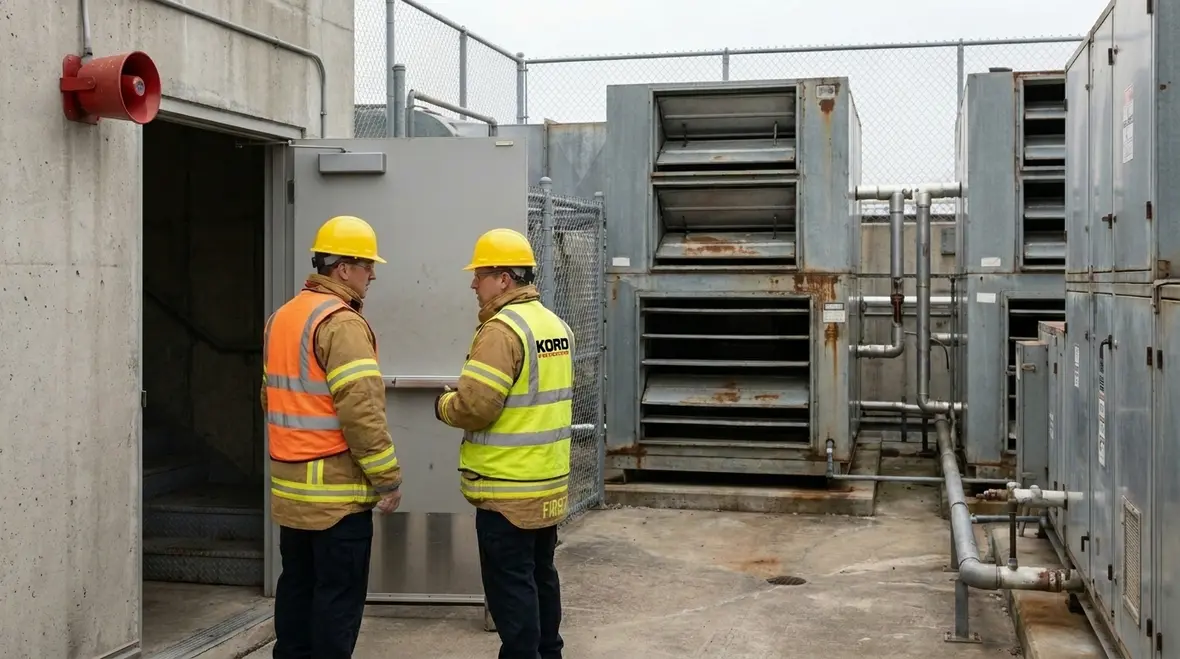
Fire integration is not only a technical task. It is a compliance task, a documentation task, and a commissioning task that can make or break timelines. Kord Fire Protection can become a vital partner because it brings hands on knowledge of fire system requirements and practical support for integrated outcomes.
In a strong partnership model, they typically assist with:
- Design review support for interface points between detection, notification, and automation logic
- Device and system selection that supports reliable sequencing for industrial environments
- Commissioning planning that aligns testing with real scenarios, not just checklists
- Documentation and handover support that helps facilities teams operate confidently after delivery
And yes, this is where the “calm in the storm” part matters. Facilities managers do not want fire integration to feel like a mystery novel. They want clear procedures, traceable logic, and dependable performance. Kord Fire Protection helps teams land that result across industrial, retail, and commercial facilities throughout Australia.
Common pitfalls in industrial fire alarm integration
Even smart teams can trip over predictable issues. For instance, integration often fails when the project team treats interfaces as an afterthought, or when the automation layer tries to “outsmart” the fire panel.
Common pitfalls include:
- Unclear responsibility for outputs, such as who controls dampers during different alarm states
- Integration logic that depends on slow network updates instead of immediate signal paths
- Incomplete fail safe mapping, so a fault triggers the wrong equipment state
- Scenario testing that focuses on one zone at a time rather than multiple concurrent events
- Poor labeling and handover, which leaves operators guessing during an incident
To avoid these problems, the team should align early on control intent, then verify through scenario based commissioning. Furthermore, they should ensure every stakeholder understands what happens on alarm, on pre alarm where applicable, and on supervisory fault states. That reduces confusion and keeps the system responsive when the building needs it most.
Automating reporting and maintenance without risking life safety
Integration should also improve day to day operations. Therefore, automation can capture event timestamps, device status, and alarm history for trending and maintenance scheduling. This does not have to compromise life safety. Instead, it strengthens the facilities team’s ability to respond quickly and plan repairs before issues become bigger problems.
Good reporting approaches include:
- Supervisory event tracking for detectors, panels, and interface modules
- Alarm log export that supports root cause analysis and faster troubleshooting
- Maintenance reminders tied to device life and inspection cycles
- Operational dashboards that show system health across buildings or campuses
Meanwhile, the life safety core remains independent where required. In other words, the building may learn from the fire system, but the fire system should not depend on the building’s data network. That is the business friendly way to say: protect safety first, then optimize operations.
A practical long term advantage
When integration is done well, future upgrades also become easier. Teams can review clean event histories, understand interface behavior, and make targeted improvements without tearing the whole strategy apart. That matters for industrial sites that evolve over time, add equipment, expand floor area, or modernize controls in stages. Good integration is not just about today’s alarm. It is about tomorrow’s serviceability too.
FAQ
Final thoughts and call to action
Integrating fire alarm systems with industrial building automation improves speed, coordination, and operational clarity when alarms occur. Yet success requires careful design, clean interfaces, and scenario based commissioning that protects life safety first. The best systems do not just make noise. They make decisions visible, reactions orderly, and recovery faster for the people who have to manage the site after the sirens stop.
If your facility in Australia needs industrial fire alarm integration done with confidence, Kord Fire Protection can be a vital partner. Contact them to review your scope and build a calm plan that works under real alarm conditions. Because when systems talk to each other properly, people spend less time guessing and more time staying safe.

Join Our Newsletter!
Get the latest fire safety tips delivered straight to your inbox From our Newsletter.