Hawaiian Gardens Fire Safety Guidelines Guide
Fire Safety Guidelines for Hawaiian Gardens Facilities
Fire Safety Guidelines for Hawaiian Gardens Facilities
In Hawaiian Gardens, safety is not a suggestion. It is a responsibility. The city follows strict Hawaiian Gardens fire safety guidelines designed to protect businesses, public buildings, and the people who move through them each day. These standards cover everything from alarm systems to exit routes and routine inspections. Throughout this article, the details of these requirements will unfold, with Kord Fire Protection technicians explaining what matters most and why. Because when it comes to fire safety, cutting corners is not bold. It is reckless. And nobody wants their building to become the sequel no one asked for.

Understanding Fire Safety Compliance in Hawaiian Gardens
Why Compliance Is More Than Just Paperwork
Every facility in Hawaiian Gardens operates under local and state fire codes. These regulations exist to reduce risk, prevent loss, and protect lives. While some owners may see compliance as paperwork and inspections, seasoned professionals see it differently. They see it as preparation meeting responsibility.
Key Responsibilities for Facility Managers
Kord Fire Protection technicians often explain that compliance begins with awareness. Facility managers must understand occupancy limits, hazard classifications, and the type of fire protection systems required for their specific building. For example, a warehouse storing flammable materials requires different safeguards than a small office suite. Therefore, one size never fits all.
Additionally, fire departments expect facilities to maintain active permits for alarms, sprinklers, and suppression systems. Regular inspections confirm that systems work as designed. If a device fails during an emergency, it is already too late. That is why inspections are not optional checkboxes. They are lifelines.
Documentation and Accountability
Moreover, clear documentation supports accountability. Inspectors look for maintenance logs, service records, and evidence of corrective actions. In short, preparation tells a story. And inspectors read it carefully.
How Often Should Facilities Inspect Fire Protection Systems?
Inspection Frequencies You Cannot Ignore
This question surfaces often, and rightly so. The short answer is more often than most people think.
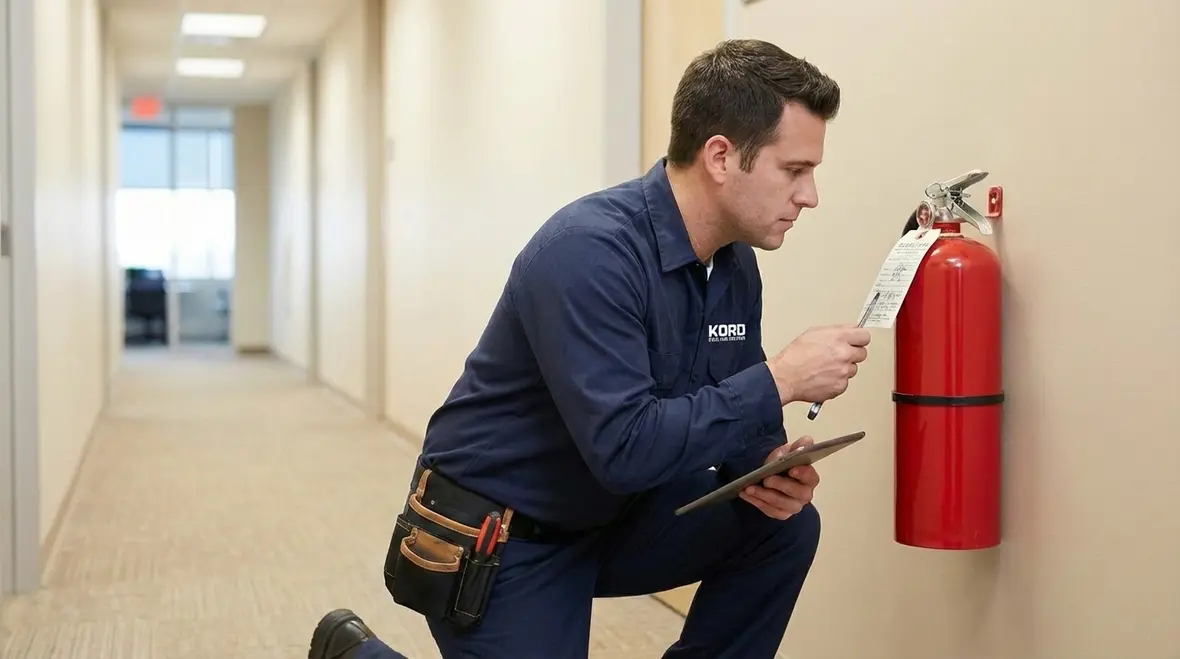
Fire alarms typically require annual inspections, although certain components demand quarterly testing. Sprinkler systems follow a schedule that includes monthly visual checks and annual professional evaluations. Fire extinguishers need monthly visual inspections and yearly servicing.
Kord Fire Protection technicians emphasize consistency. They explain that small issues, like a blocked sprinkler head or a drained battery, can quietly develop into serious failures. However, regular checks catch these problems early.
Tags, Liability, and Real-World Consequences
Furthermore, facilities must ensure that inspection tags remain visible and up to date. Inspectors notice missing tags immediately. It is like showing up to a driving test without a license. Technically brave, but not wise.
Routine inspections also reduce liability. If an incident occurs, documented maintenance proves that the facility acted responsibly. Therefore, inspection schedules protect both lives and reputations.
Fire Alarm and Sprinkler Requirements for Local Facilities
Alarm Systems: Clear, Loud, and Inclusive
Alarm and sprinkler systems form the backbone of most fire protection plans. According to Hawaiian Gardens fire safety guidelines, these systems must match the building size, occupancy type, and risk level.
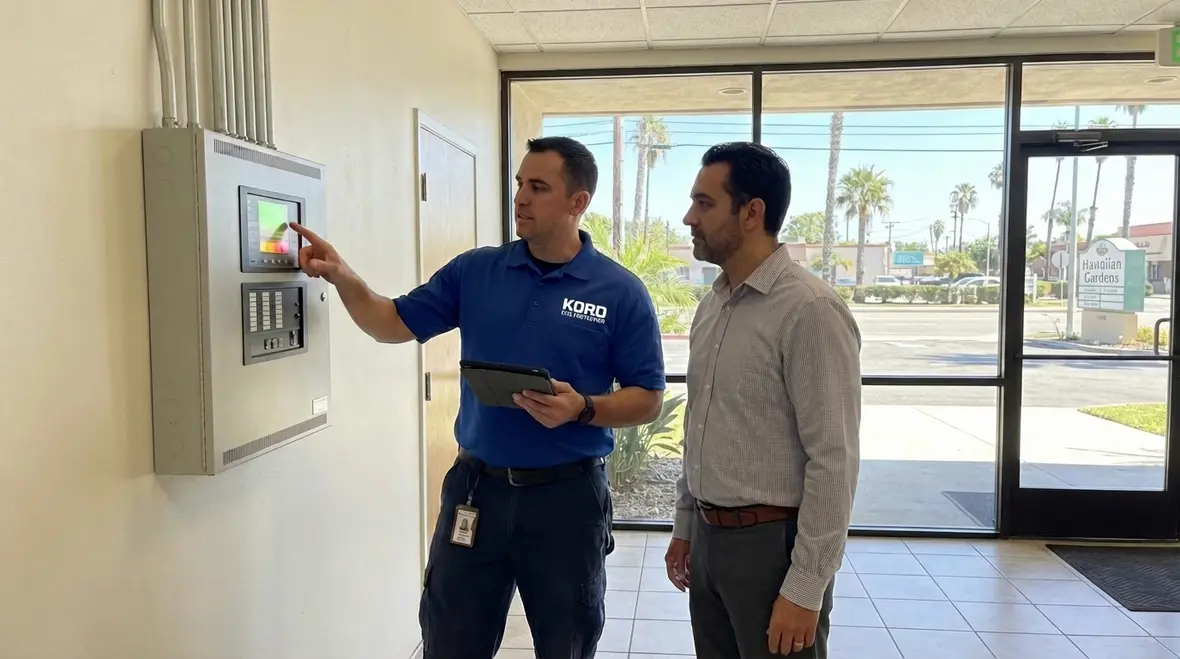
Alarm systems must provide clear notification throughout the facility. That includes audible signals and visible strobes for accessibility. In larger buildings, voice evacuation systems may be required. These systems guide occupants calmly, which reduces panic and confusion.
Sprinklers, Water Supply, and Monitoring
Sprinkler systems must maintain adequate water pressure and coverage. Heads must remain unobstructed. It sounds simple, yet storage racks and decorations often block them. As Kord technicians explain during site visits, sprinklers need space to do their job. They cannot perform magic tricks through stacked boxes.
Additionally, backflow prevention devices require testing to ensure water supply integrity. Without proper water flow, even the most advanced sprinkler network becomes decoration.
Finally, monitoring systems must connect to approved monitoring centers. When alarms trigger, emergency responders need immediate notification. Seconds matter. And in fire emergencies, seconds feel like entire movie trilogies.

Emergency Exits and Evacuation Planning
Keeping Paths Clear and People Moving
Clear exit paths save lives. It is that direct. Facilities must maintain unobstructed corridors, illuminated exit signs, and functioning emergency lighting. Furthermore, exit doors must open easily from the inside without special knowledge or tools.
Evacuation Plans, Roles, and Drills
Evacuation planning goes beyond hanging a map on the wall. Effective plans identify primary and secondary routes, assembly points, and procedures for assisting individuals with mobility challenges. Moreover, staff must understand their roles during an emergency.
Kord Fire Protection technicians often conduct walkthroughs to evaluate evacuation flow. They observe potential bottlenecks and suggest improvements. For instance, rearranging furniture or adjusting storage areas can dramatically improve safe passage.
Additionally, regular drills reinforce readiness. Practice transforms theory into instinct. While drills may interrupt a workday, they build muscle memory that proves invaluable during real emergencies. And yes, people may grumble about stepping outside. However, they will not complain if that practice one day saves a life.
Common Fire Code Violations in Hawaiian Gardens Buildings
Small Oversights, Big Consequences
Even well managed facilities sometimes overlook small details. Unfortunately, small details often carry big consequences.
Below is a comparison of common violations and corrective actions. Facility managers can use this as a quick reference.
| Common Issue | Recommended Action |
|---|---|
| Blocked fire exits | Remove storage and maintain clear paths at all times |
| Expired extinguisher tags | Schedule immediate inspection and servicing |
| Obstructed sprinkler heads | Maintain required clearance below each head |
| Disabled alarm components | Repair or replace and document corrective action |
| Missing evacuation maps | Post updated diagrams in visible locations |
Kord Fire Protection technicians stress that proactive correction prevents citations. More importantly, it prevents tragedy. Fire inspectors do not look for perfection. They look for effort and responsibility.
Training Staff for Fire Preparedness and Prevention
People Complete the Safety Equation
Equipment alone cannot guarantee safety. People complete the equation.
Staff training should cover extinguisher use, alarm recognition, evacuation procedures, and hazard identification. Additionally, employees must know how to report concerns without delay. When workers feel confident in their knowledge, they respond calmly.
Leadership, Culture, and Ongoing Refreshers
Moreover, leadership sets the tone. When managers prioritize fire safety, teams follow. Kord technicians frequently explain that culture drives compliance. If safety becomes part of daily operations, adherence feels natural rather than forced.
Facilities should also conduct periodic refresher sessions. Over time, details fade. However, repetition strengthens memory. A brief quarterly review can reinforce essential procedures.
Prevention plays an equally vital role. Proper storage of flammable materials, safe electrical practices, and routine housekeeping reduce ignition risks. Although prevention may seem less dramatic than alarms and sprinklers, it remains the first and strongest defense.
Integrating Technology with Hawaiian Gardens Fire Safety Guidelines
Smart Tools, Smarter Oversight
Modern facilities benefit from smart monitoring systems, cloud based reporting, and automated alerts. These technologies support compliance with Hawaiian Gardens fire safety guidelines while simplifying management tasks.
For example, digital inspection logs reduce paperwork errors. Remote monitoring allows property managers to receive real time updates on system performance. Consequently, issues receive faster attention.
Kord Fire Protection technicians often introduce facility managers to integrated solutions that combine alarms, sprinklers, and monitoring into unified platforms. This integration improves oversight and reduces gaps.
However, technology does not replace human oversight. Instead, it enhances it. Systems still require physical inspections, manual testing, and professional evaluation. In other words, smart tools support smart people. They do not substitute them.
Frequently Asked Questions About Hawaiian Gardens Fire Safety Guidelines
Conclusion: Turning Guidelines into Everyday Practice
Fire safety does not reward hesitation. It rewards preparation. Facilities in Hawaiian Gardens carry a duty to protect every occupant who walks through their doors. By following established standards, maintaining equipment, and training staff, building owners demonstrate real leadership.
Kord Fire Protection technicians stand ready to guide that journey with clarity and experience. Schedule an inspection, review current systems, and strengthen compliance today. Because peace of mind, much like safety, is built before it is ever needed.
If your facility is located in Los Angeles County and you need dedicated help beyond Hawaiian Gardens, explore Kord Fire’s broader Los Angeles County fire protection services. From sprinklers and alarms to suppression systems and emergency testing, their team delivers code compliant solutions tailored to your building and occupancy.
Take the next step by requesting a customized fire protection plan for your property. With professional inspections, clear reporting, and responsive service, you can keep your Hawaiian Gardens facility aligned with current fire safety guidelines while gaining a reliable partner for long term protection.
Know Your Weapon Before You Fight the Flame
Kord Fire Protection is your go-to when it comes to all things fire protection. For over 20 years, we’ve been serving Southern California with the quality service and equipment to keep your home or business safe at all times. Our competitive prices reflect our unwavering commitment to protecting what matters most in the event of a fire emergency. Give us a call, send an email, or use that form!

Join Our Newsletter!
Get the latest fire safety tips delivered straight to your inbox From our Newsletter.