Full Lifecycle of Fire Protection Explained
There is something quietly heroic about a fire alarm that works when no one expects it to. No applause. No spotlight. Just a sharp warning that saves lives. That quiet reliability does not happen by accident. It comes from understanding the Full Lifecycle of Fire Protection, from design and installation to inspection, maintenance, and eventual replacement. Every stage matters. Every bolt, wire, valve, and panel plays its part. And as Kord Fire Protection technicians often explain to clients, fire safety is not a one time purchase. It is a living system that demands attention, care, and respect.
So let us take a deliberate walk through the journey of fire protection equipment servicing. It is more fascinating than it sounds. After all, this is the story of how buildings stay standing and people stay safe.
The Full Lifecycle of Fire Protection from Blueprint to Installation
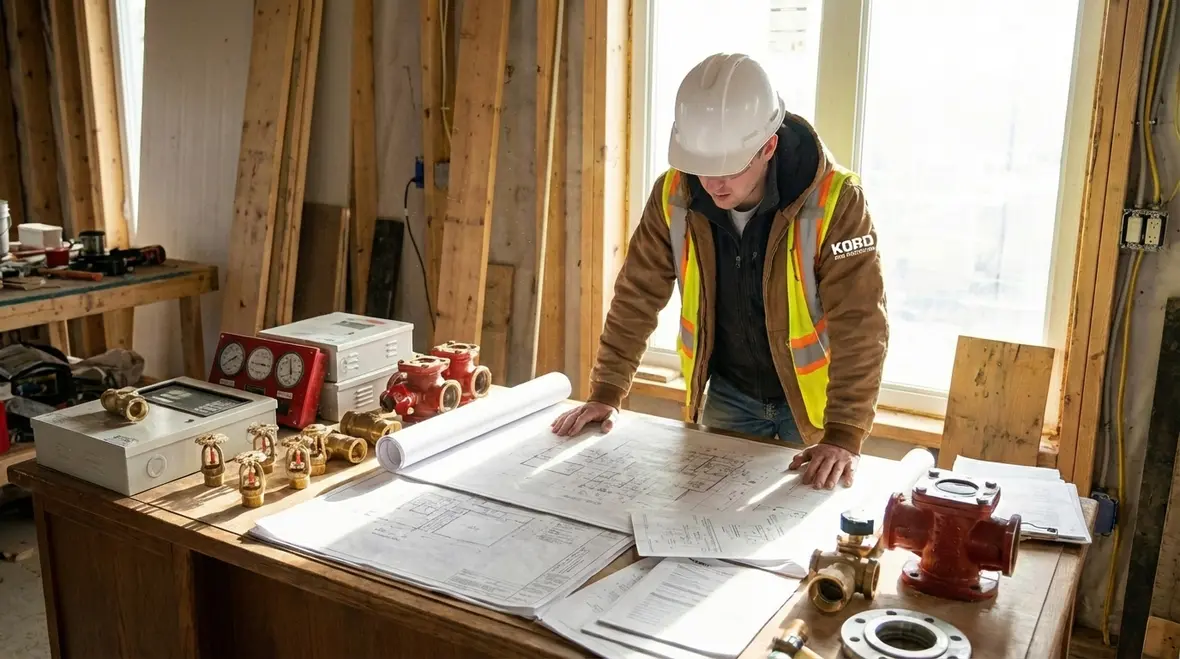
Every system begins with a plan. Before a single sprinkler head is installed, specialists assess the building layout, occupancy type, fire load, and local code requirements. Therefore, engineers design a system that fits the unique risks of the space rather than using a one size fits all template.
Kord Fire Protection technicians often tell clients that design is like casting a movie. You do not put the same actor in every role. A warehouse, for instance, requires a different suppression strategy than a hospital. One stores pallets. The other stores people who cannot evacuate quickly. Big difference.
Once the design receives approval, skilled installers step in. They position sprinkler heads with precision. They wire alarm panels. They connect control valves. Moreover, they test water flow and pressure to confirm performance. Installation is not guesswork. It is methodical, careful, and guided by strict codes.
Because of this structured beginning, the system starts its life ready to protect. However, installation is only the opening chapter. For facilities with critical water supply needs, coordination with fire pump design and NFPA 20 standards often begins here as well, tying in long term performance and testing requirements from day one. For a deeper dive into that connection, explore Kord Fire Protection’s overview of NFPA 20 fire pump design, installation, and compliance.
Read: NFPA 20 Overview – Fire Pump Design, Installation & Compliance
Commissioning and Initial Testing Sets the Tone
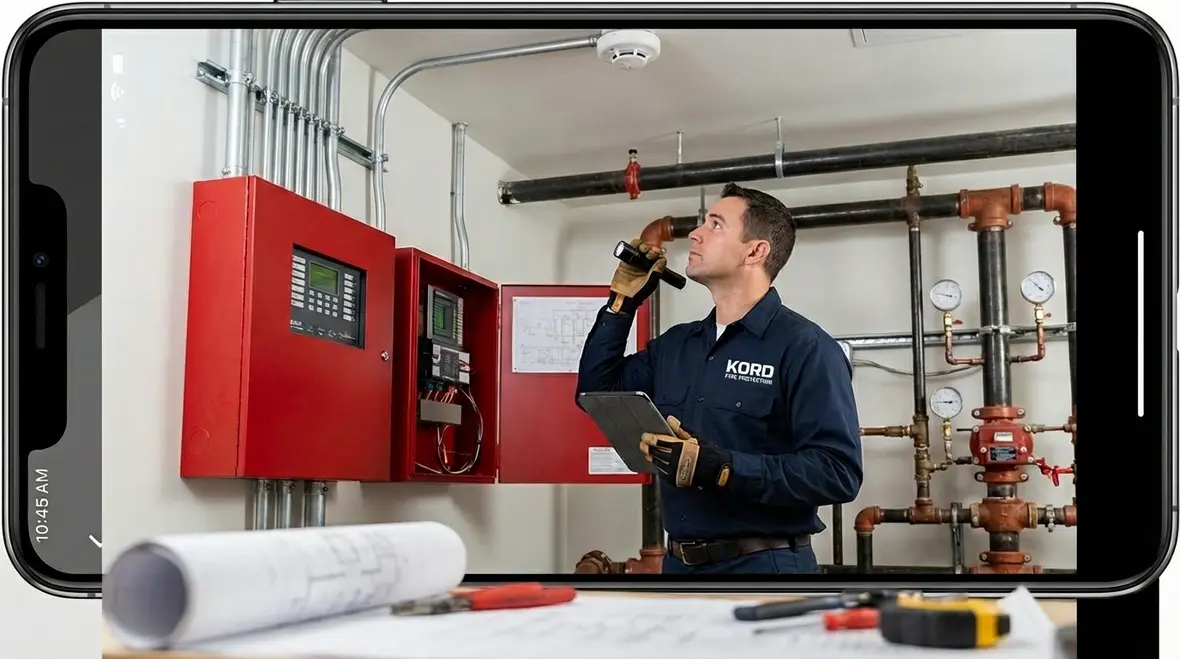
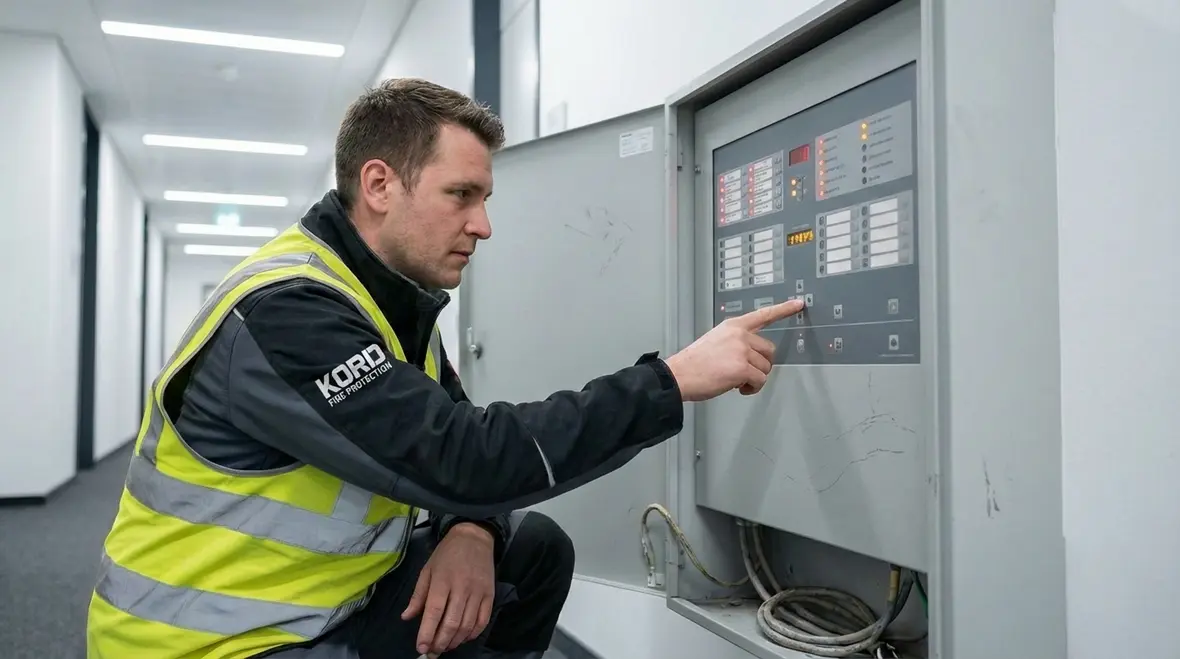
After installation, technicians perform commissioning. This stage ensures the system functions exactly as designed. They activate alarms, test sensors, verify communication with monitoring centers, and inspect every mechanical connection.
In other words, they press all the buttons on purpose so no one has to press them in panic later.
During commissioning, documentation becomes critical. Technicians record baseline data such as water pressure readings, battery levels, and signal strength. Consequently, future inspections have a reference point. If something shifts, they will know.
This early attention shapes the rest of the fire protection system lifecycle. A well commissioned system tends to perform better over time because it begins with clarity and accountability. Just as routine fire pump inspections build on NFPA 25 testing requirements, strong commissioning gives every later inspection something solid to compare against.
Routine Inspections Keep the System Honest
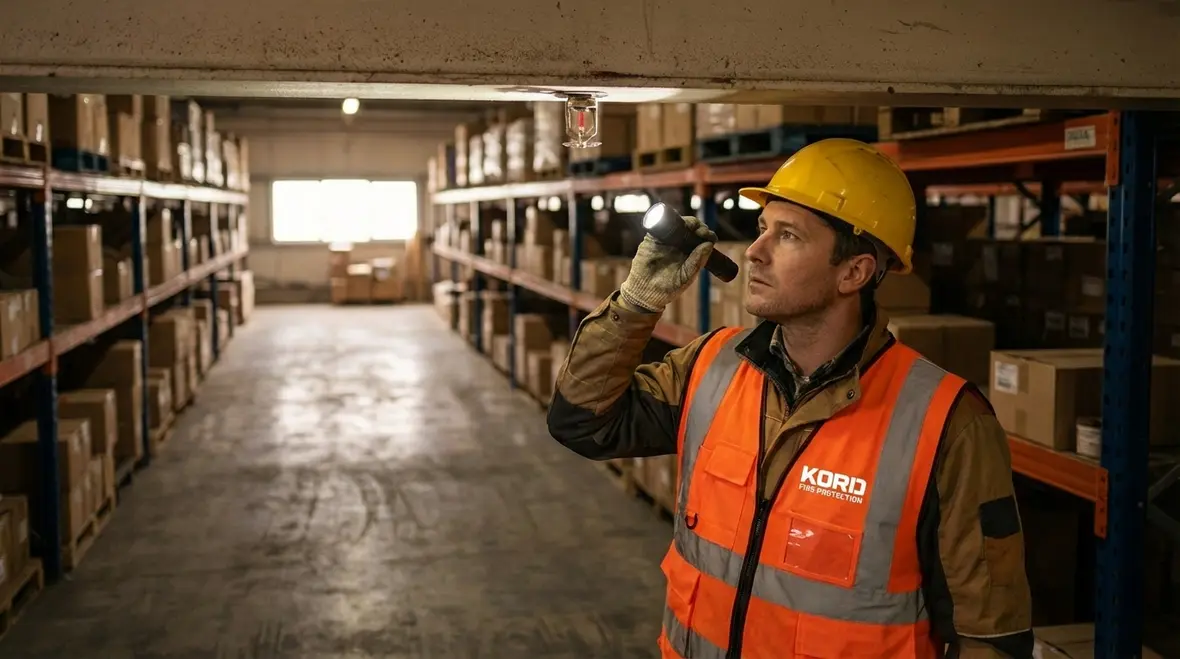
If installation is the birth of a system, inspections are its regular health checkups. Fire protection equipment does not stay perfect on its own. Dust builds up. Valves get bumped. Batteries weaken. And yes, sometimes someone hangs a coat on a sprinkler head. That is never a good idea.
Routine inspections follow strict schedules. Monthly, quarterly, semi annual, and annual checks each serve a purpose. During these visits, technicians examine:
Visual components
- Sprinkler heads for damage or corrosion
- Fire extinguishers for pressure and accessibility
- Control valves for proper position
Functional components
- Alarm panels for signal integrity
- Backup batteries for charge levels
- Water flow switches for proper activation
Because inspections occur regularly, small problems rarely become big ones. Kord Fire Protection technicians often explain that skipping inspections is like ignoring the check engine light. It may seem harmless at first. Until it is not. If you are unsure how often specific systems in California must be inspected and tested, Kord Fire’s Fire System Testing Frequency California Guide breaks it down clearly by system type and interval.
Explore: Fire System Testing Frequency – California Guide
How Does Preventive Maintenance Extend System Life?
Preventive maintenance goes deeper than inspection. While inspections identify issues, maintenance corrects them. Technicians lubricate moving parts, replace worn seals, recalibrate sensors, and update software when needed.
As a result, equipment lasts longer and performs more reliably. This stage plays a vital role in the ongoing care and servicing of fire protection equipment. Instead of reacting to failures, teams prevent them.
For example, sprinkler systems require periodic internal pipe assessments to check for corrosion or blockages. Over time, mineral deposits can restrict water flow. Therefore, technicians may flush lines or conduct internal camera inspections. These actions preserve performance and reduce the chance of failure during an emergency.
Preventive maintenance also supports compliance. Fire codes evolve. Technology improves. So systems must adapt. Updating components ensures that buildings remain aligned with current standards rather than outdated rules. Often, this is where targeted fire pump testing, churn tests, and NFPA 25 inspections intersect with broader lifecycle planning.
Repairs and Emergency Service When Seconds Matter
Even with careful maintenance, components sometimes fail. A forklift may strike a pipe. A power surge may damage a panel. When that happens, response time becomes critical.
Emergency service teams move quickly to isolate the problem and restore protection. First, they secure the affected area to prevent further risk. Next, they diagnose the issue using testing tools and system data. Finally, they repair or replace the faulty component.
Kord Fire Protection technicians often reassure clients during these tense moments. They explain what failed, why it happened, and how to prevent it in the future. That clarity builds trust. It also turns a stressful event into a learning opportunity.
Because emergency repairs form part of the broader fire safety equipment lifecycle, documentation remains essential. Every incident adds insight that informs future inspections and maintenance strategies.

Modernization and System Upgrades Over Time
Technology never stands still. Neither should fire protection systems.
Older alarm panels may lack remote monitoring capabilities. Traditional sprinklers may not meet updated density requirements for new storage layouts. Therefore, modernization becomes necessary.
Enhanced detection
- Smoke detectors with improved sensitivity
- Heat sensors designed for specific environments
Improved communication
- Integration with building management systems
- Real time alerts to mobile devices
Stronger suppression capabilities
- Higher capacity pumps
- Specialized suppression agents for unique hazards
Modernization extends the useful life of a system without requiring complete replacement. Moreover, it aligns protection strategies with current risks. A data center built ten years ago does not face the same demands today. Servers multiply. Power loads increase. Fire protection must keep pace.
End of Life Planning and Responsible Replacement
No system lasts forever. Components age. Metal corrodes. Electronics become obsolete. Eventually, replacement becomes more practical than continued repair.
End of life planning involves evaluating performance history, repair frequency, and compliance status. If maintenance costs climb year after year, replacement may offer better value and reliability.
During this phase, technicians help building owners transition smoothly. They coordinate removal, ensure minimal downtime, and oversee new installations. Consequently, the cycle begins again with improved design and updated standards.
This thoughtful transition completes the journey of the fire protection system lifecycle. It proves that safety is not static. It evolves.
The Human Element Behind the Equipment
Behind every valve and control panel stands a trained professional. Kord Fire Protection technicians do more than tighten fittings. They educate building managers. They explain inspection reports in plain language. They answer questions that might feel small but matter greatly.
For example, they clarify why storage height affects sprinkler performance. They demonstrate how to check extinguisher gauges. They remind teams that blocked exits defeat even the best alarm system.
Because people interact with these systems daily, human awareness supports mechanical reliability. Fire protection is not just pipes and wires. It is a partnership between technology and responsibility.
Frequently Asked Questions
Protect What Matters Most
Fire protection is not a single event. It is a disciplined journey from concept to replacement, guided by expertise and sustained by vigilance. The Full Lifecycle of Fire Protection ensures that systems remain ready long after installation crews leave the site. Kord Fire Protection technicians stand prepared to guide buildings through every phase with clarity and care.
If you are responsible for a building in Southern California and want one partner to help manage that full lifecycle—sprinklers, alarms, extinguishers, pumps, and more—consider Kord Fire Protection’s full fire protection services. From inspections and testing to repairs and modernization, their team helps keep your systems ready when it matters most.
Get full lifecycle fire protection support from Kord Fire Protection
Know Your Weapon Before You Fight the Flame
Kord Fire Protection is your go-to when it comes to all things fire protection. For over 20 years, we’ve been serving Southern California with the quality service and equipment to keep your home or business safe at all times. Our competitive prices reflect our unwavering commitment to protecting what matters most in the event of a fire emergency. Give us a call, send an email, or use that form!

Join Our Newsletter!
Get the latest fire safety tips delivered straight to your inbox From our Newsletter.