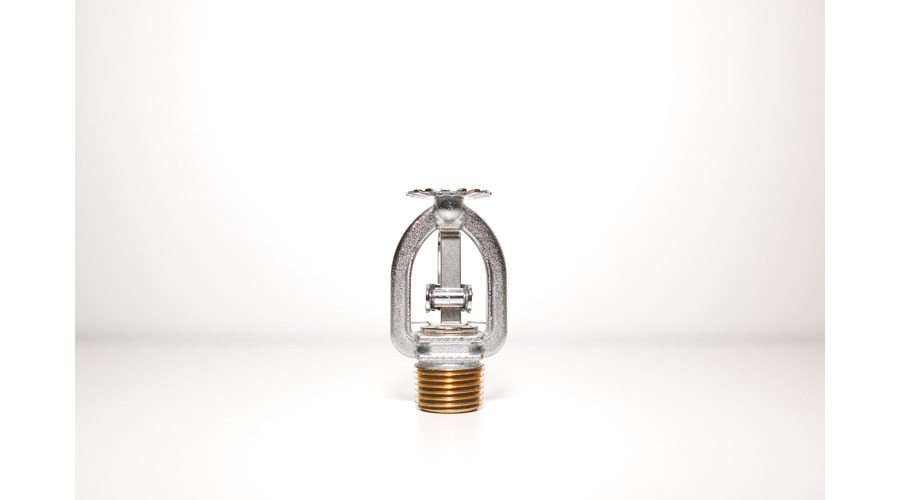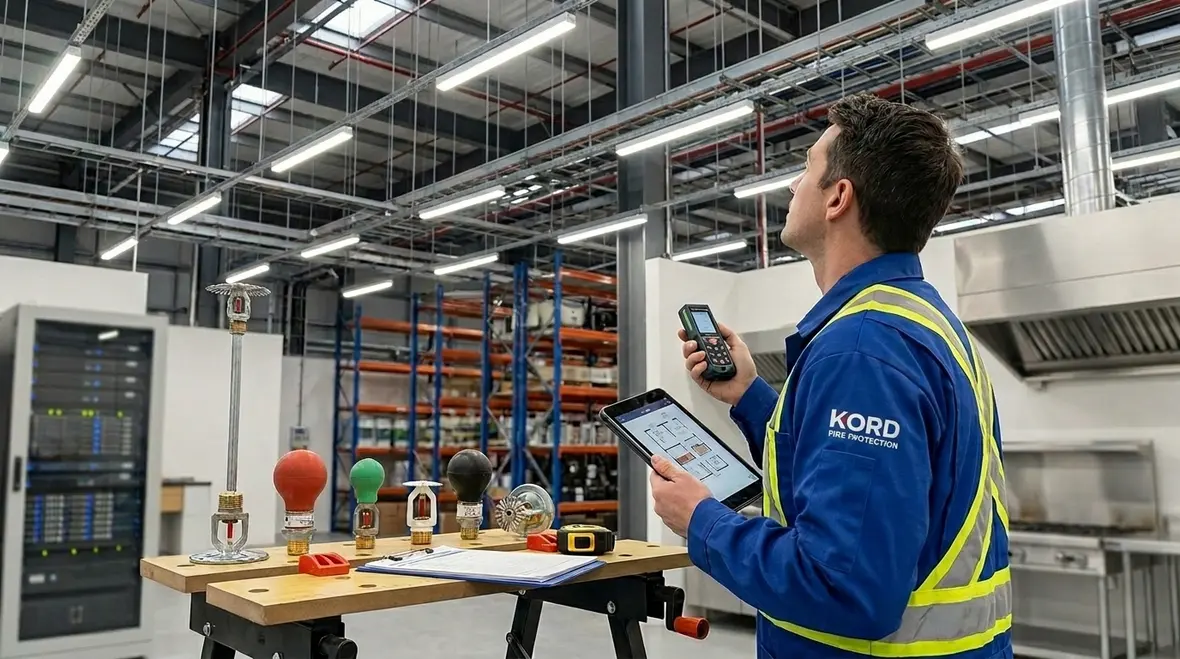
Fire Sprinkler Head Types for Specialized Workspaces
Choosing the right fire sprinkler head types starts with the job site, the hazards, and the layout. For specialized workspaces like data centers, kitchens, clean rooms, workshops, and warehouse bays, the choice can’t be one size fits all. In the first pass, Kord Fire Protection technicians typically walk clients through the most common head families, then narrow the selection to the right response type, spray pattern, and mounting needs. In other words, they do what good technicians always do: they look, they measure, and they don’t guess. Because guessing with fire protection is like trying to fix a toaster with duct tape and confidence.
How Kord Fire Protection technicians match sprinkler heads to workspace risk

Kord Fire Protection technicians treat each workspace like a real-world problem, not a brochure. First, they review the fire load, fuel type, airflow, ceiling height, obstructions, and how people move through the space. Then they map that information to the best-performing fire sprinkler head types for the environment.
For example, a machine shop stores plastics, solvents, and cardboard in different ways than a medical lab stores chemicals. Meanwhile, a retail showroom can have decorative concealment that blocks spray, even when the “distance from the ceiling looks fine” on paper. As a result, the system needs the right spray coverage and the right activation behavior.
In addition, Kord technicians pay close attention to how ceilings behave. A drop ceiling, an open truss, or a high bay can change how water reaches the target. So, even when two rooms look similar, the sprinkler head choice can differ.
Spray pattern and coverage: avoiding dry corners and wet surprises
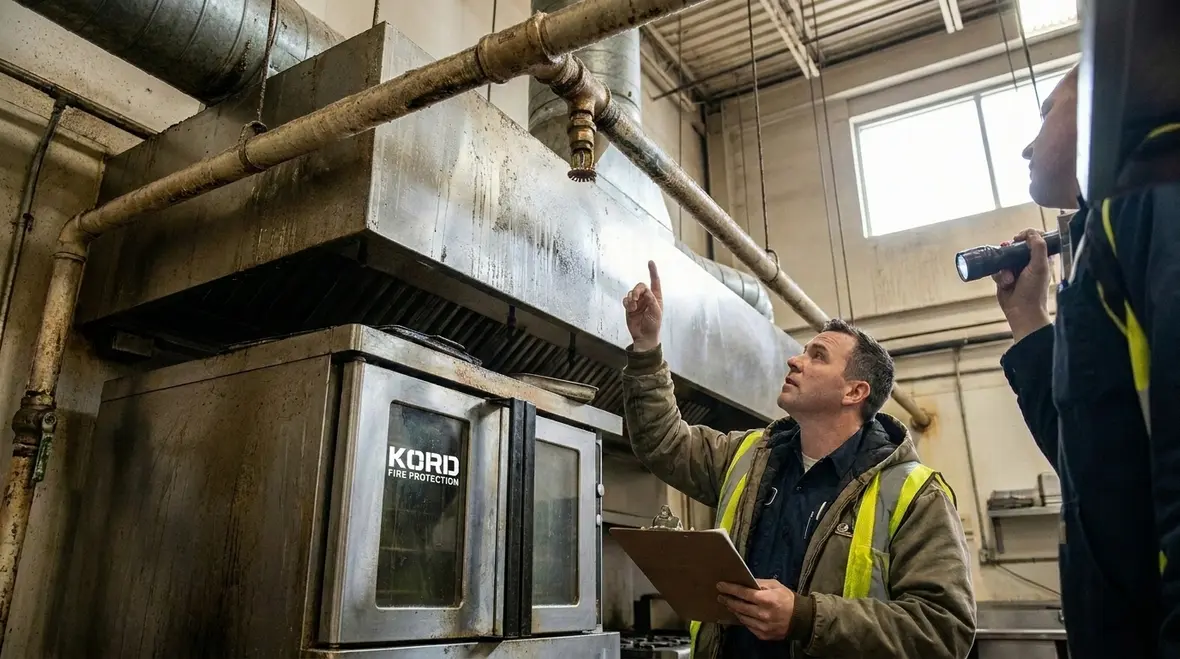
Specialized workspaces often have irregular layouts, tall racks, and equipment that sticks out like it pays rent. Therefore, spray pattern matters as much as the heat response.
Typical sprinkler layouts use a mix of coverage goals, and Kord Fire Protection technicians confirm the spacing and overlap needed to wet the hazard effectively. When the head throws the wrong pattern or the ceiling design blocks the spray, the system can leave weak spots. And weak spots are where fire loves to set up shop.
So they align head placement with real obstructions, such as lights, ducts, sprinkler guards, and beams. Next, they confirm that the water reaches the seat of the fire without being chased away by airflow. This step is especially important in spaces with strong HVAC movement, like some clean rooms and electronics areas.
Temperature ratings and response types for specialty hazards
Different workspaces run at different temperatures. Some have heat sources, steam lines, ovens, or warm process equipment. Others stay cool for product quality or lab needs. If the sprinkler head activates too early, it causes damage and downtime. If it activates too late, it can fail to control the fire.
Kord Fire Protection technicians handle this by selecting the correct temperature rating and response behavior for each hazard. Then they consider the ceiling conditions and how heat will reach the heat sensitive element. In warehouses with higher air movement, heat can spread differently than it does in offices or storage rooms.
Clean rooms, labs, and data areas: precision matters
Clean rooms, labs, and data centers demand tight control. These spaces aim to reduce contaminants, and water discharge needs to avoid unnecessary mess that harms equipment and workflow. Kord Fire Protection technicians typically address contamination control, equipment sensitivity, and reliable detection while maintaining proper coverage.
Kitchen and manufacturing zones: keeping protection practical
Specialized workspaces often include cooking lines, ovens, and high heat operations, plus manufacturing zones with cutting, grinding, and chemical handling. Here, the sprinkler design must balance control performance with realistic maintenance and inspection needs.
Where ceilings and obstructions decide the outcome
In the field, most problems show up around the ceiling. Obstructions, changes in ceiling level, and extra layers for HVAC and lighting can interfere with spray reach. Planning for these variables early helps reduce rework and keeps the system aligned with the workspace.
Featured FAQ: quick answers on head selection
Getting it right now: a calm CTA from Kord Fire Protection
Specialized spaces demand careful sprinkler head selection, not guesswork. Kord Fire Protection technicians help teams match fire sprinkler head types to real hazards, ceiling conditions, and workflow needs so the system performs when it matters.
If a workspace plan is underway or an existing system needs upgrades, explore solutions like fire pump systems or schedule a professional review with Kord Fire Protection to move forward with confidence.

Join Our Newsletter!
Get the latest fire safety tips delivered straight to your inbox From our Newsletter.