Fire Safety Electrical Wiring Compliance: Reliable Life Safety
Fire safety electrical wiring compliance is not a paperwork exercise. It is the difference between a building that protects people and a building that improvises during emergencies. For critical fire safety assets, electrical wiring must follow strict standards for design, installation, testing, and ongoing maintenance. And yes, this matters even when the system seems to “work fine,” because fires do not care about comfort. They only care about heat, smoke, and time.
In this guide, kord fire protection technicians walk through the practical rules that keep life safety systems reliable. They explain what standards typically require, why wiring choices affect performance, and how teams can verify compliance without guesswork. Along the way, this article keeps the tone professional, but if you ever heard someone say “we’ll test it later,” remember: fire has a strange sense of timing.
Key wiring standards for life safety systems that stay reliable
Critical fire safety assets usually include fire alarm systems, emergency lighting, fire suppression equipment controls, smoke control interfaces, and certain monitoring circuits. Therefore, standards tend to focus on reliability under abnormal conditions such as heat, water, vibration, and power disturbances. Consequently, wiring must be selected and installed to keep circuits functional long enough for detection, notification, and safe evacuation.
Common expectations include correct cable type and rating, proper routing and separation, secure terminations, and protection against mechanical damage. In addition, installers must follow accepted methods for conduit, support spacing, bend radius, and labeling. Moreover, inspectors often look for consistent workmanship that reduces failures caused by loose conductors, poor insulation, or incorrect polarity.
kord fire protection technicians also emphasize a simple truth. Standards do not only describe what to build. They describe what to prove. That means documentation, test results, and as built records matter as much as the wire itself. That practical mindset aligns with Kord’s focus on inspection readiness and code-compliant fire alarm support, especially where systems must stay dependable under pressure.
How compliance drives safer cable selection
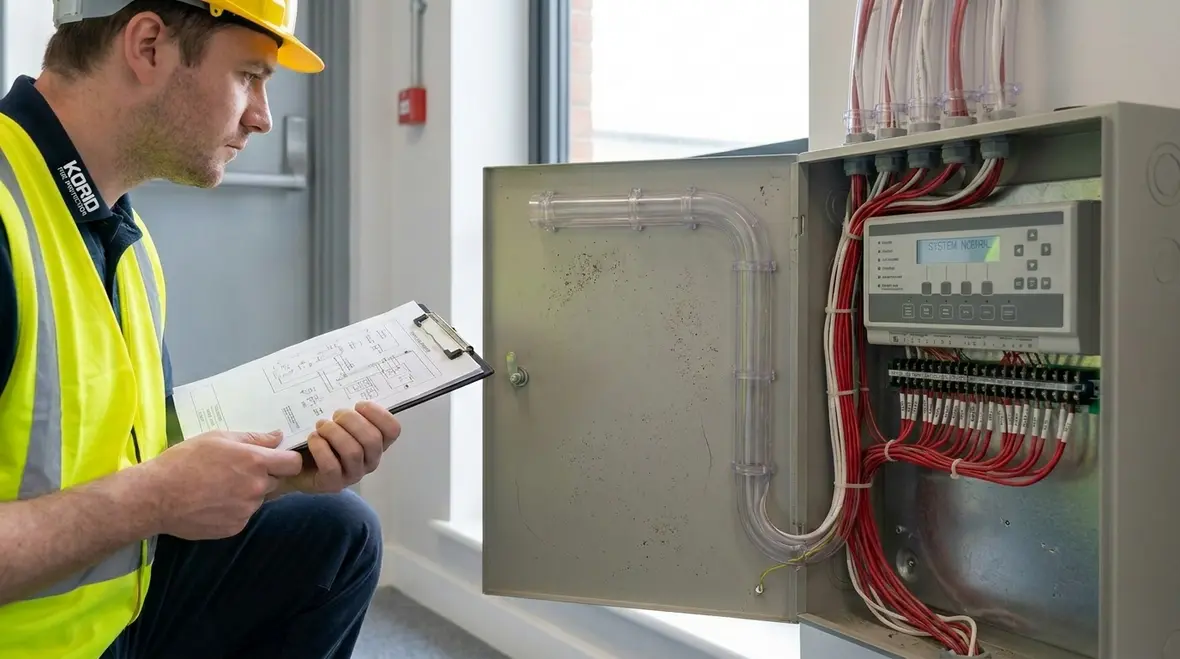
The wiring standards used for fire safety electrical wiring compliance typically require cable performance that matches the system’s duty during a fire event. That includes resistance to fire exposure for certain circuits, limited spread of flame, and low smoke characteristics where required.
Therefore, teams select cables based on the system category and local requirements. For example, emergency power circuits and life safety signaling circuits may demand specific ratings. In the same way, control wiring connected to fire doors, smoke dampers, or suppression systems often receives extra scrutiny because a single broken connection can delay critical action.
kord fire protection technicians explain that cable selection cannot be “close enough.” If someone swaps in a substitute cable, even with the same conductor count, the fire behavior can change. Then the system that should operate under heat might degrade early, like a phone battery that drops to ten percent right when you need directions. Not ideal.
For facilities already reviewing notification circuits, initiating device loops, and panel performance, it also helps to understand how broader fire alarm service systems support ongoing compliance. Wiring is never isolated from the rest of the life safety ecosystem, and strong documentation makes cable decisions easier to defend during testing and inspection.
What cable selection should account for
- System function during normal and emergency conditions
- Fire resistance or survivability requirements for critical circuits
- Smoke and flame spread characteristics where required
- Compatibility with listed equipment and installation methods
- Environmental exposure such as moisture, heat, vibration, and exterior routing
Routing, separation, and protection from physical damage
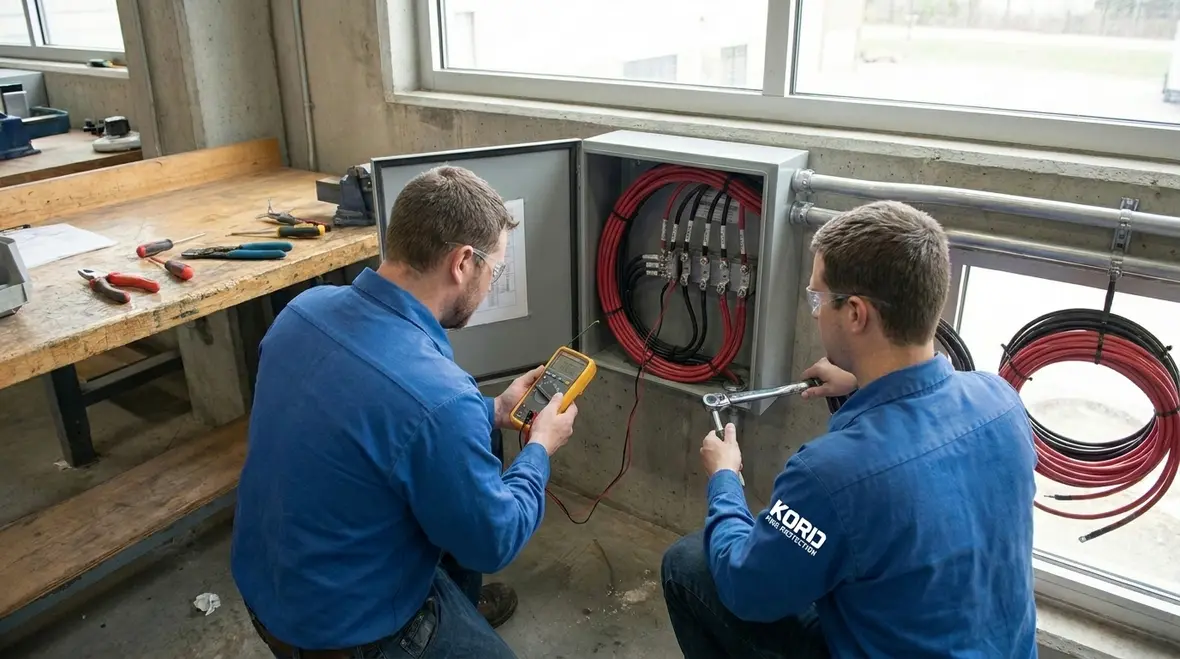
Even the best cable fails if it ends up where it can get crushed, flooded, or overheated. For critical fire safety circuits, routing rules focus on keeping wiring reliable and avoiding cross interference. Standards often require separation from power conductors where feasible, especially when circuits could be exposed to electromagnetic or physical disturbance.
Moreover, installers should plan cable pathways to avoid sharp edges, excessive bending, and areas with high mechanical stress. Therefore, conduit selection, fill ratios, and support spacing matter. In addition, weather rated and fire resistant methods become important for exterior runs or spaces that face moisture.
kord fire protection technicians typically recommend documenting routes early and coordinating with other trades. That reduces the classic scenario where a “quick adjustment” turns into a cable being relocated without maintaining required separation or access for inspection. In business casual terms, that is how budgets quietly turn into problems.
Practical routing habits that prevent trouble later
- Coordinate early with electrical, HVAC, and low-voltage trades
- Protect runs from abrasion, impact, and unauthorized relocation
- Maintain clean pathways that allow future inspection and service access
- Use approved supports and avoid field shortcuts that stress the cable
- Update route documentation when modifications occur
Termination, labeling, and workmanship that passes inspection
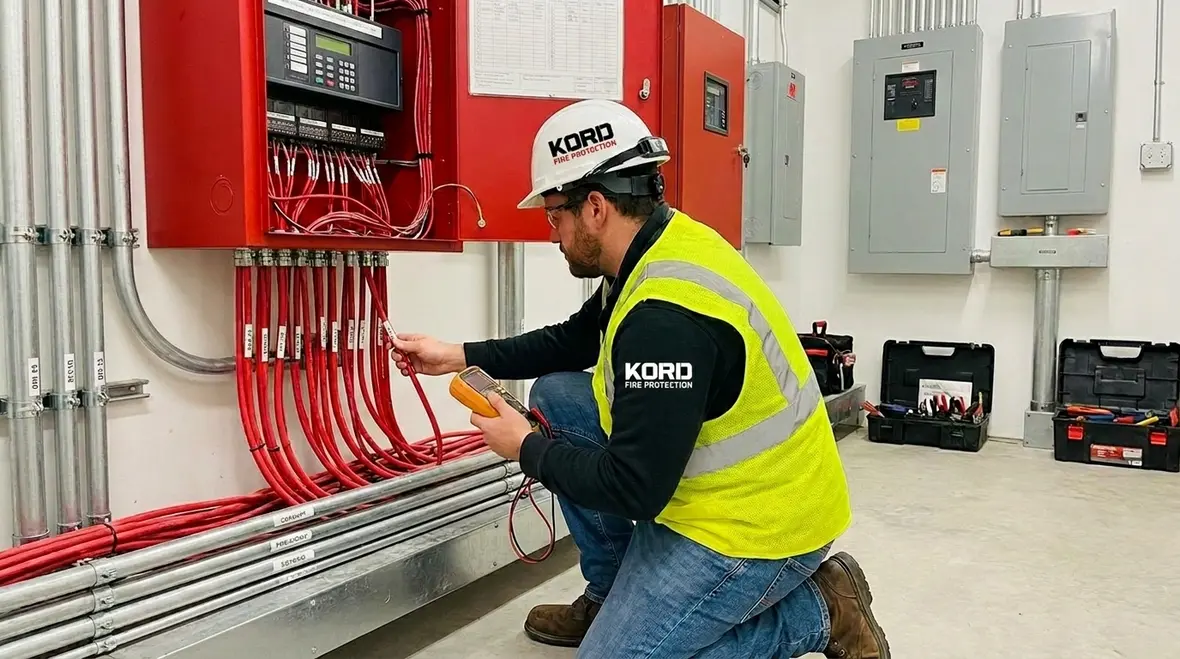
Compliance lives in the details at every termination. Standards commonly require secure connections, correct torque for mechanical lugs, proper insulation stripping, and verified polarity where the system depends on it. Additionally, teams need to ensure labeling and identification methods remain readable and durable.
Therefore, the best practice involves consistent conductor management inside cabinets and junction points. Wires should not be over stretched, and splices should use approved methods. Also, technicians must avoid mixing conductors that look similar but serve different functions.
kord fire protection technicians often point out that many failures do not come from “mystery” faults. They come from human habits: rushed terminations, undocumented changes, or labels that fall off after a few months. And when those labels vanish, troubleshooting becomes a detective show where nobody found the clue in time.
Testing and verification for circuit performance under fire conditions
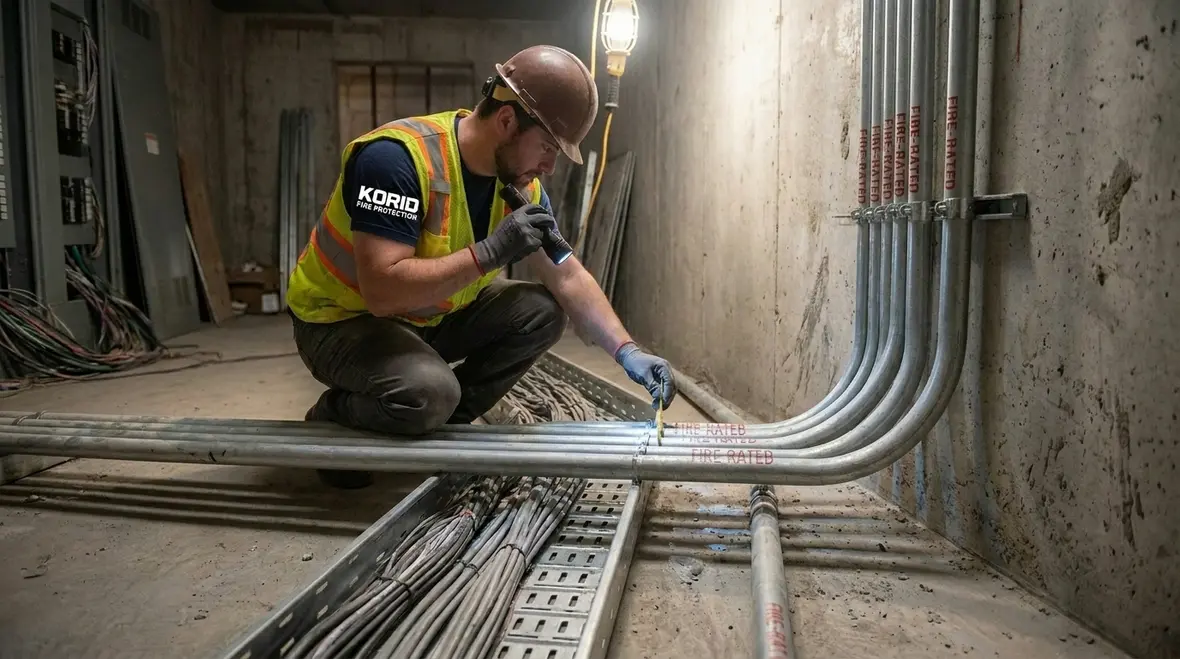
After installation, standards typically require testing that proves circuits perform as intended. This can include continuity checks, insulation resistance testing where required, functional tests of initiating devices and notification appliances, and verification of power supplies under expected conditions.
However, the key is not just “testing once.” Systems need ongoing maintenance so that wiring remains reliable as buildings change. As a result, technicians often recheck after renovations, component swaps, or cable modifications.
In practice, fire safety electrical wiring compliance means the documentation matches the reality. Therefore, as built drawings, circuit schedules, and test records should be accurate and kept current. kord fire protection technicians also stress the value of trending and historical results. When a circuit shows small changes over time, early corrections prevent a major failure later.
That same reliability mindset shows up in Kord’s recent guidance on fire alarm system reliability and battery health and fire alarm trouble signal meanings explained. When wiring, power, and panel diagnostics are reviewed together, teams get a much clearer picture of whether a life safety system will behave properly when conditions turn ugly.
Ongoing maintenance, alterations, and keeping compliance intact
Buildings evolve. Walls move, tenants change, and systems get upgraded. Yet critical fire safety assets still need the same level of wiring performance as the day the system went live. Consequently, any alteration to wiring should follow a controlled process that maintains separation, protection, correct cable types, and correct termination methods.
Therefore, companies should establish procedures for permits, inspections, and sign off before work begins. In addition, they should verify that replacement parts match required specifications. This step prevents “system drift,” where teams keep making small changes that add up to big risk.
kord fire protection technicians also recommend scheduled reviews after major electrical loads are added or after power distribution upgrades. Voltage changes, grounding modifications, or new interference sources can affect system behavior. And while fires do not run on a schedule, electrical systems often do follow one.
A simple compliance review checklist
- Confirm listed cable types and ratings still match the application
- Verify routing, separation, and protection after renovation work
- Inspect terminations, labeling, and cabinet housekeeping
- Review test records against current field conditions
- Correct undocumented changes before the next inspection cycle
FAQ: quick answers for featured snippets
Next step: get a compliance-focused wiring review
Critical fire safety systems deserve wiring that performs when seconds matter. If the building has ongoing renovations, or if records are incomplete, schedule a compliance-focused review with kord fire protection technicians. They will examine cable selection, routing, separation, termination quality, testing documentation, and maintenance readiness.
Then they will provide practical corrections that protect people and reduce inspection surprises. For broader support, explore full fire protection services or connect directly through fire alarm service systems to plan a wiring assessment and bring fire safety electrical wiring compliance into line with real-world conditions.

Join Our Newsletter!
Get the latest fire safety tips delivered straight to your inbox From our Newsletter.