
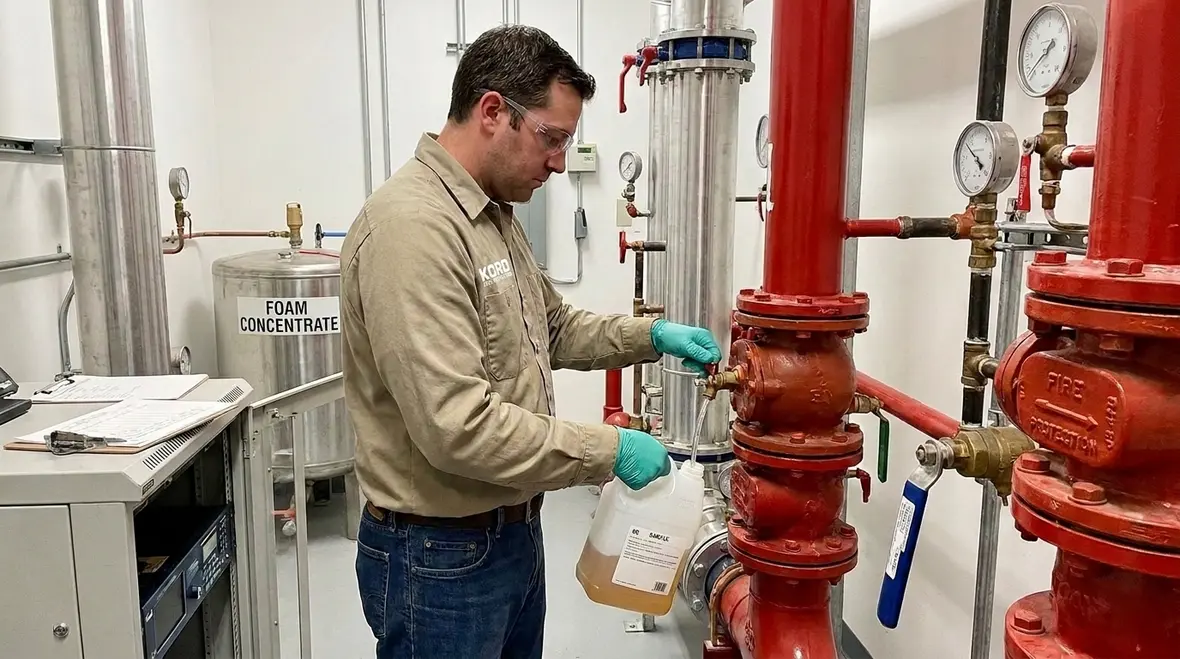
NFPA 18A Section 5.1: Overview of Property and Test Protocol Requirements
Quick Answer
NFPA 18A Section 5.1 sets expectations for how water additives are evaluated and verified, including property documentation and test protocols. Facility owners and contractors must ensure products meet required performance characteristics, and they must manage inspections and requalification to prevent system drift and noncompliance.
If you are tightening documentation and testing workflows across your suppression systems, Kord Fire Protection’s inspection, testing, and maintenance fire protection guide is a useful companion near the start of this conversation because it connects field testing discipline, reporting quality, and long term readiness in one place.
Why Section 5.1 matters for commercial fire protection readiness
NFPA 18A focuses on water additives used in fire suppression systems, and Section 5.1 establishes a practical framework for proving that those additives maintain their intended properties over time. Commercial facilities rely on these systems to perform under worst case conditions. When additive properties drift, performance can degrade, extinguishment time can increase, and test results can become inconsistent during compliance reviews.
For a compliant, repeatable program, organizations must treat Section 5.1 as more than paperwork. It drives how products are selected, documented, stored, tested, and requalified, and it informs what technicians must verify during scheduled inspections.
In many facilities, the compliance burden surfaces during operational changes such as detergent or additive batch substitutions, system modifications, water source changes, or equipment replacement. A strong “NFPA 18A water additive property requirements overview” program reduces the risk that an otherwise operational system fails verification due to missing property documentation, incorrect test method selection, or incomplete maintenance records.
What Section 5.1 requires for additive property documentation
Section 5.1 centers on two compliance pillars: (1) property requirements that define acceptable additive performance, and (2) test protocols that confirm those properties are retained and measurable. The property documentation part typically includes evidence that the additive meets the defined performance characteristics and that the documentation corresponds to the actual product supplied to the system.
Operational documentation that must stay traceable
Commercial facilities should expect to maintain traceability between the additive in service and the evidence used to approve it. This generally includes:
- Additive product identity, grade, and manufacturer
- Batch or lot information when available
- Property documentation provided with the product, including performance claims and any test summaries
- System configuration details, such as concentrate storage details, injection or proportioning approach, and verification intervals
Traceability matters because property requirements assume the additive is what the documentation says it is. When a facility uses the wrong product, mixes two product types, or substitutes a concentrate without full review, the “property requirements” may no longer match the actual in service additive.
Common commercial failure points
Real-world inspection findings often come down to how property records and in service conditions align. Common issues include:
- Outdated documentation kept after system upgrades
- Unverified storage conditions that can accelerate degradation
- Unknown or undocumented water chemistry changes that can affect performance
- Maintenance records that do not capture additive replacements or requalification activities
How test protocols confirm the additive still performs
Test protocols in Section 5.1 are designed to provide consistent, defensible verification results. The intent is simple: measure the relevant additive properties using an approach that is repeatable and suitable for field and program conditions.
What technicians must control during testing
A protocol is only effective if technicians control key variables. Facilities should build procedures that require:
- Correct sampling method and sample handling to avoid contamination
- Temperature and mixing consistency before testing to ensure representative samples
- Accurate dosing setup for any testing that simulates or evaluates concentration
- Instrument calibration checks and method verification per the protocol
- Clear labeling of test samples and linking test results back to the system
Even where the additive appears to be functioning, poor sampling or inconsistent preparation can produce false negatives, repeat test delays, and administrative disputes during compliance audits.
Concentration verification and the property link
Many water additive programs include operating concentration targets. When concentration falls below the intended level, additive properties may not translate to the expected suppression performance. When concentration rises above intended ranges, it can introduce operational concerns such as residue, equipment stress, or undesirable system behavior. This is why a disciplined “NFPA 18A water additive property requirements overview” program ties dosing verification directly to property acceptance criteria.
Facilities should ensure that test protocols reflect the same concentration basis used in their system design and acceptance documentation. Any mismatch leads to results that cannot be reconciled with the property documentation.
Installation, storage, and system interface: where compliance gaps form
Section 5.1 property and test requirements do not operate in isolation. Additive performance depends on how the additive interfaces with the system. Commercial and industrial facilities often face compliance gaps at system interfaces where maintenance is frequent and operational conditions vary.
Concentrate storage and handling
Additives stored in tanks or containers must be protected from conditions that can affect performance. This includes temperature extremes, contamination, and improper labeling. Storage problems become compliance problems when technicians cannot verify what is in the tank or cannot link stored product to the property documentation required for the system.
Proportioning and injection systems
If the additive is introduced through injection or proportioning equipment, the system must deliver the correct concentration reliably. Common mechanical contributors to test variability include:
- Worn pumps or check valves that affect injection rate
- Clogged filters that change flow characteristics
- Calibration drift in metering controls
- Air intrusion or loss of prime in injection lines
These issues can cause concentration to deviate even when additive properties remain intact. During protocol verification, this often presents as inconsistent test results or a failure to achieve acceptance concentrations.
Inspection and requalification: keeping the program audit-ready
Compliance requires more than a one time test. A water additive program must remain audit ready over time, and that means scheduled inspections, structured requalification steps, and controlled documentation updates.
What a best practice compliance workflow looks like
Commercial facilities typically benefit from a workflow that aligns with the facility lifecycle:
- Confirm additive identity and link it to the property documentation set before the product enters service.
- Verify concentration delivery and baseline properties using approved test protocols.
- Schedule routine inspections that include dosing system checks and condition verification.
- Perform requalification testing when required, after system modifications, or when additive replacement occurs.
- Maintain a single source of truth for records, results, and corrective actions.
Why record quality determines outcomes
During audits, the facility must show that it tested the right product, using the right method, and that it acted on deficiencies. Incomplete records create a practical compliance risk because reviewers cannot reconcile test results to the additive properties in service. This is also where partner support can reduce risk through standardized field practices and consistent reporting.
For additional guidance on managing code based compliance and documentation workflows, facility teams can review resources from NFPA codes and guidelines solutions for fire protection and life safety.
If you want a field level companion to that documentation focus, Kord Fire Protection’s commercial fire safety audit step by step process fits naturally here because it shows how service records, test logs, and corrective actions get reviewed when readiness is put under a microscope.
FAQ: NFPA 18A water additive property requirements overview
Call to action
Commercial facilities can protect compliance outcomes by building a traceable, repeatable water additive verification program aligned with NFPA 18A Section 5.1. Kord Fire Protection supports ongoing inspections, testing coordination, and maintenance documentation so teams can address concentration drift, equipment interface issues, and record gaps before an audit finds them. Contact Kord Fire Protection to confirm your current program alignment and establish an audit ready test and maintenance cadence.

Join Our Newsletter!
Get the latest fire safety tips delivered straight to your inbox From our Newsletter.



