Commercial fire extinguisher placement strategy: the calm, smart way to cover risk
Commercial fire extinguisher placement strategy: the calm, smart way to cover risk
Fire protection is one of those topics people treat like it is invisible, until the day it is not. In the first minutes of a fire, every second matters, and that is why a commercial fire extinguisher placement strategy starts with smart positioning, not guesswork. Kord Fire Protection technicians explain that the goal is simple: keep extinguishers close enough to reach fast, visible enough to find under stress, and spaced so one unit can help the next area. In other words, they plan like a forward-thinking team, not like someone who “just mounted one somewhere.” And yes, that kind of planning is less dramatic than it sounds, even if the alarms are always trying to audition for an action movie.
Start with the building map and real travel paths
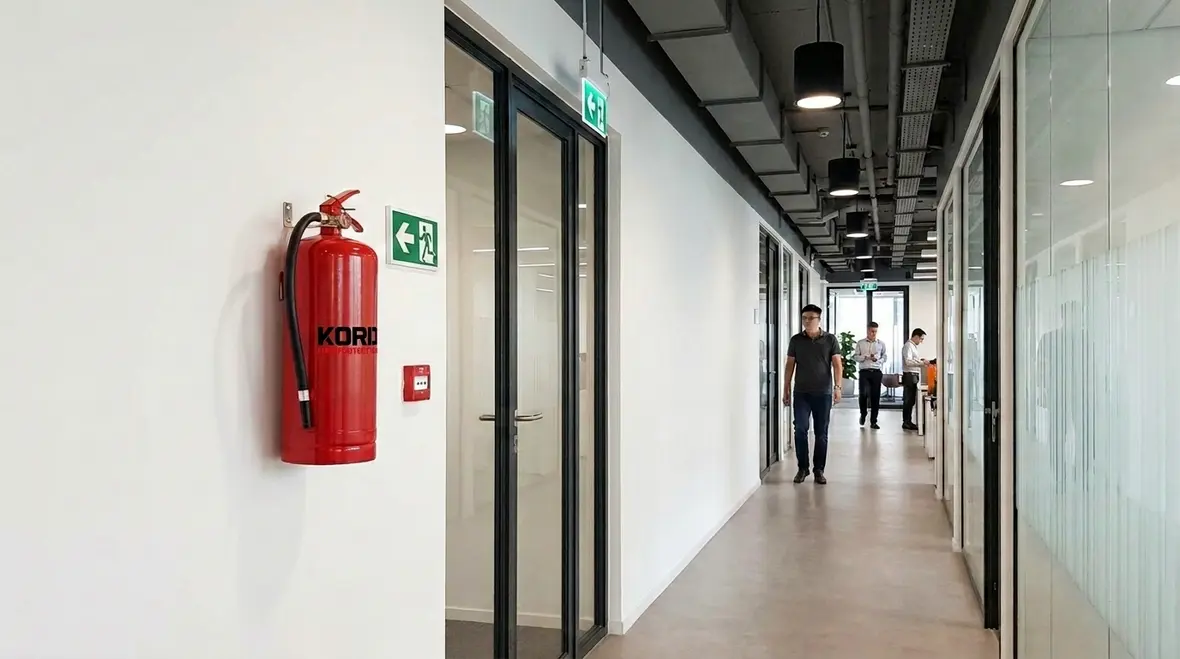
Kord Fire Protection technicians begin with the floor plan, but they do not stop at drawing circles. Instead, they trace how people actually move during normal work and during emergencies. Strategic Placement means factoring in doors, hallways, work zones, and the places workers pause. Then they decide whether the extinguisher sits along a direct exit route or at the near edge of a hazard area.
For maximum coverage, they also consider travel distance. If an extinguisher sits behind a locked room or around a corner people do not use daily, it might as well be in another zip code. As a result, the placement shifts toward clear routes where a technician or staff member can reach the unit quickly and without climbing ladders, squeezing through tight aisles, or hunting behind equipment.
In practice, technicians often treat placement like wayfinding. First, they confirm the extinguisher is near where sightlines naturally land. Next, they check that a person can see it while walking, not only if they turn their head at the last second. Finally, they make sure the extinguisher does not disappear behind open shelving or seasonal displays.
Quick win: plan for how humans actually move
This is the part that separates “technically installed” from “actually useful.” A placement plan only works when it matches real travel paths, real visibility, and real bottlenecks. That is why the technicians look beyond the map and ask, quietly but firmly: where will someone be standing when it matters?
Match extinguisher location to the hazard, not the vibes
Different areas fail in different ways. Therefore, the extinguisher location should line up with the likely fire type and how the fire would spread. Kord Fire Protection technicians emphasize that “maximum coverage” does not mean one extinguisher covers everything. It means each extinguisher covers a meaningful risk area with the right response.
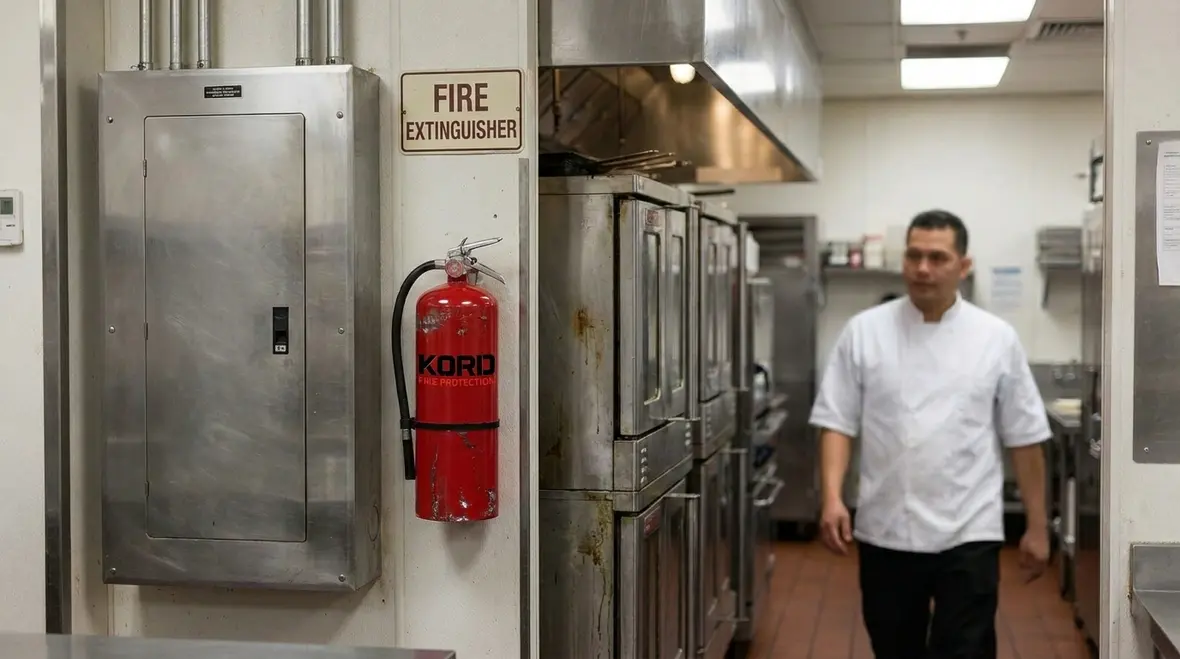
For example, a kitchen area often holds hazards linked to cooking oils, while a machine room may carry risks from electrical equipment or hot motors. Meanwhile, offices and break rooms often involve paper, plastics, or general combustibles. When crews place extinguishers without matching them to the hazard zone, they may create the illusion of safety while ignoring the real threat.
To keep the plan grounded, they often do this in a simple order. First, they identify where ignition sources exist. Then, they identify what fuels those sources could ignite. After that, they assign extinguisher types and mount points that allow quick access. Then, because life happens, they verify the placement with staff walkthroughs so the plan matches how people actually work.
Keep visibility high: signs, lines of sight, and smart mounting
Even when an extinguisher is placed correctly, it can still fail if nobody can find it fast. That is why visibility plays a huge role in fire extinguisher placement. Kord Fire Protection technicians look at the whole view, including lighting, signage, and obstructions.
They commonly ensure the extinguisher sits where staff can spot it from a normal walking position. In addition, they verify that the unit is not blocked by stacked boxes, temporary displays, or maintenance tools. They also check that doors do not swing in a way that hides the extinguisher when the door opens.
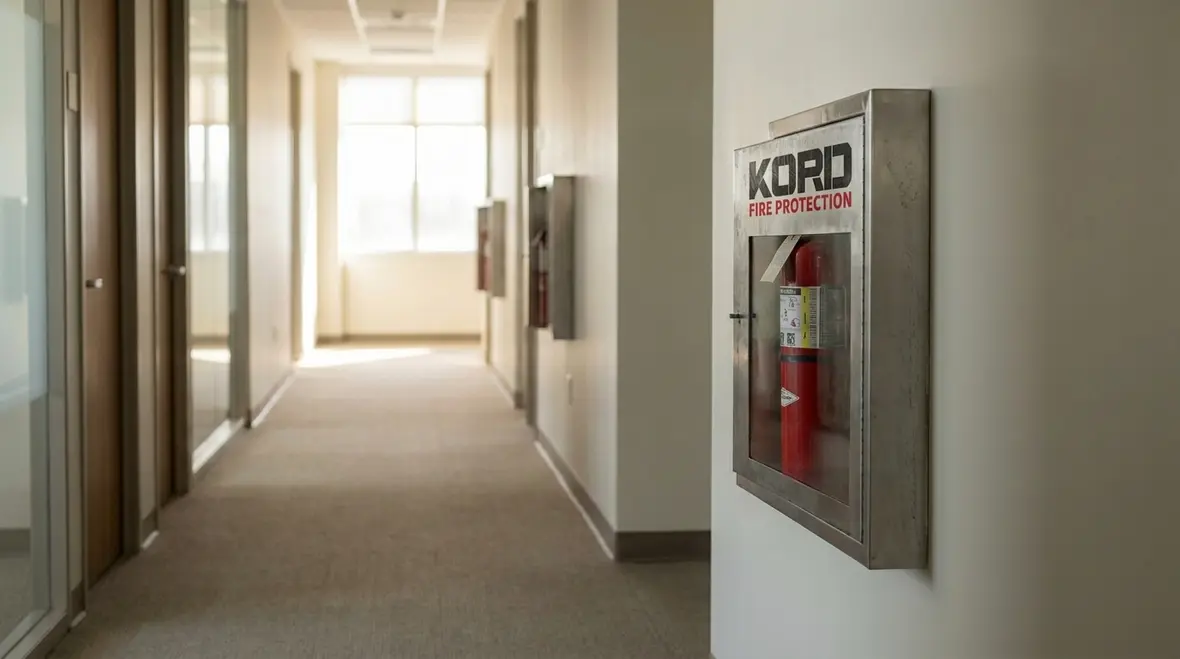
Mount height matters too. When extinguishers hang too high, workers waste time scanning and reaching. When they mount too low, they face damage risk, clutter issues, and accidental bumps. So technicians balance easy access with protection from impact.
And yes, people forget. Even good teams. So technicians also confirm that the placement works during changes, like new furniture, seasonal promotions, or remodeling. If the building evolves, the coverage plan should evolve too.
Plan spacing so one unit covers a zone without leaving gaps
Coverage comes from spacing, and spacing comes from practical math plus real-world observation. Kord Fire Protection technicians use a system that accounts for how quickly staff can reach equipment. Then they evaluate whether gaps exist between extinguishers, especially in long corridors, open-plan areas, and locations with partial partitions.
When spacing fails, two problems show up. First, an extinguisher might sit far enough away that staff arrives after the fire grows. Second, multiple hazards may stack into one area without enough nearby response points. So technicians map zones rather than placing units randomly.
They also adjust for site conditions. For instance, a warehouse may need different placement logic than an office wing. In a warehouse, aisles and shelving create unique sightlines and travel paths. Meanwhile, in an office, doors and cubicles influence where people can move quickly. As a result, the spacing plan stays consistent in purpose but shifts in method.
Finally, they consider where people gather and where they work most. If workers spend most of the day near one workstation cluster, the plan prioritizes those routes. That way, the response is not only compliant on paper but also effective in the real world.
Protect units from damage and keep them ready to use
An extinguisher is not just a sign on a wall. It is a tool that must work when needed. Therefore, Kord Fire Protection technicians examine the environment around the mount point. They look for spots where forklifts, carts, or tools could hit the unit. They also check for vibration and heavy traffic that could cause physical wear.
In addition, they consider moisture, dust, and chemical exposure. If an area collects heavy dust or runs with cleaning chemicals, technicians place the extinguisher where it stays protected. Otherwise, the unit may corrode, lose performance, or become harder to inspect.
Then they build a routine around readiness. Inspections happen on a schedule, and maintenance stays documented. Even the best placement fails if the extinguisher is blocked, missing, or improperly serviced. So they treat placement as part of the broader system, not a one-time job.
Common placement mistakes that ruin coverage
Many businesses want to do the right thing, but a few repeat mistakes show up again and again. Kord Fire Protection technicians often see these issues during reviews and walkthroughs.
Common errors include placing extinguishers in spots that look “easy” rather than reachable, like behind stacked supplies or near decorative partitions that people rearrange. Another issue is mounting units where signs exist but people cannot see the unit due to glare, poor lighting, or a busy backdrop. Also, some teams place extinguishers at uniform intervals without considering hazard clusters, which leaves high-risk areas under-supported.
Another mistake is treating the installation like set-and-forget. Yet buildings change. A new workshop line goes in. A storage wall appears. A doorway opens into a new path. Consequently, the original coverage plan may become less effective over time.
To fix these problems, technicians recommend a simple discipline. First, they confirm accessibility. Next, they confirm visibility. Then, they confirm that the hazard area aligns with the extinguisher type. Finally, they revisit the plan after major layout changes, because risk loves to reinvent itself.
FAQ: extinguisher placement in real business terms

Ready to tighten coverage across your site?
If a fire started tomorrow, your team should not have to guess where to run. Book a walkthrough with Kord Fire Protection technicians to review your coverage map, visibility, mounting locations, and hazard alignment. They will help you build a commercial fire extinguisher placement strategy that works in real travel paths, not just on paper. Take action now, and you reduce risk while boosting confidence across staff, visitors, and managers. Call today to schedule your assessment.
What you get from a placement walkthrough
A coverage plan that tracks where people actually move, where hazards actually live, and how quickly an extinguisher is truly reachable when things stop being calm.
Next step: tighten coverage
Let Kord Fire Protection technicians review your map, visibility, spacing, and mount points so your extinguishers support real response—not just compliance on paper.
Know Your Weapon Before You Fight the Flame
Kord Fire Protection is your go-to when it comes to all things fire protection. For over 20 years, we’ve been serving Southern California with the quality service and equipment to keep your home or business safe at all times. Our competitive prices reflect our unwavering commitment to protecting what matters most in the event of a fire emergency. Give us a call, send an email, or use that form!

Join Our Newsletter!
Get the latest fire safety tips delivered straight to your inbox From our Newsletter.