Emergency Fire Alarm Signaling Protocols for Reliability
When the next alarm event hits, speed and clarity matter, and that is why emergency fire alarm signaling protocols guide how modern systems report trouble, supervise wiring, and confirm activation. First, systems push the right status information to the right device, then they keep sending clean updates until help is on the way. Second, they help prevent confusion during high stress moments, because smoke does not wait for meetings. Finally, coordinated signaling gives fire alarm control panels the context they need to act fast and stay accurate.
In this article, Kord Fire Protection technicians explain how advanced signaling protocols work in today’s world, where panels, loops, and intelligent devices must talk in plain, reliable terms. And yes, they also make sure the system does not “panic” like a character in a horror movie who runs directly toward the sound.
How advanced signaling protocols improve alarm reliability
Modern fire alarm systems use advanced signaling protocols to reduce guesswork and improve consistency. Instead of sending only a basic alarm point, the system shares richer information such as device state, supervisory status, and the timing of changes. Consequently, the control panel can distinguish between an actual alarm condition and a wiring issue or nuisance pattern.
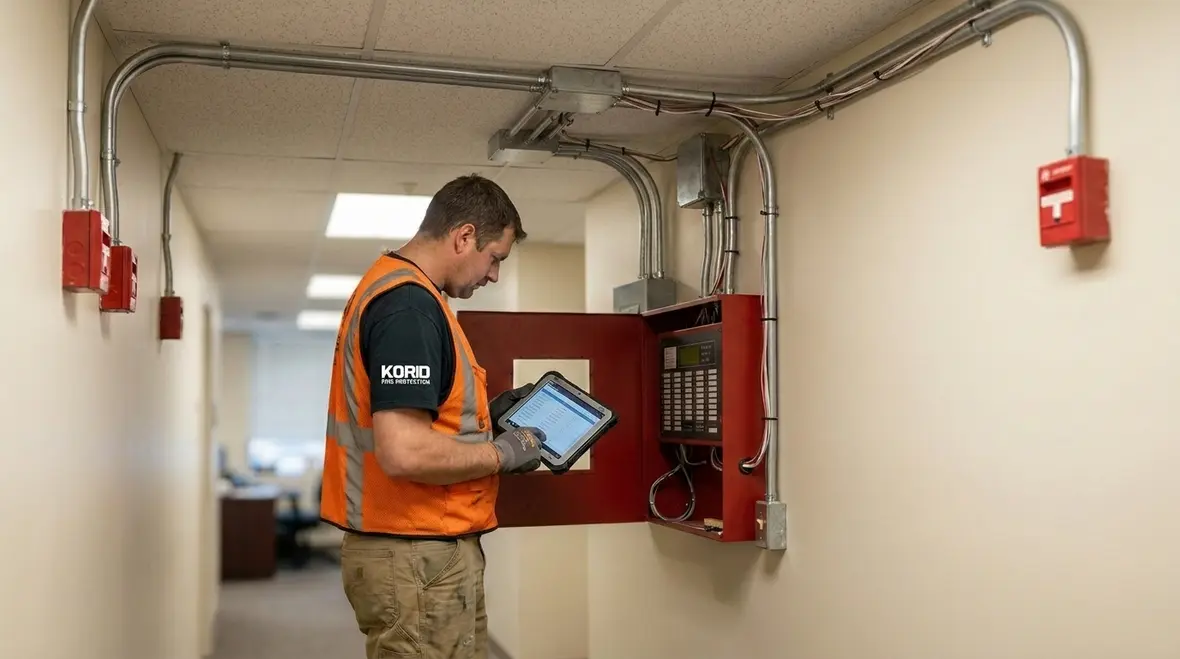
Kord Fire Protection technicians often point out that reliability does not come from one feature. Rather, it comes from how multiple features work together, including supervision, event verification, and structured data transport. Therefore, when a detector activates, the panel can respond with fewer delays and fewer unknowns.
In business terms, it helps teams avoid avoidable calls, false dispatches, and frustrating diagnostics that eat hours. And if the alarm system could talk, it would probably say, “I told you so,” but politely.
That same clarity shows up when you compare modern systems with older zone-based setups. Traditional designs can still perform well, but they generally provide less detail during fast-moving events. By contrast, newer communication methods help operators understand not just that something happened, but what happened, where it happened, and whether the system has confirmed the condition. That extra context helps decision makers move faster without turning every panel alert into a building-wide mystery novel.
Why richer event data matters during high stress moments
When operators can see alarm, trouble, and supervisory distinctions clearly, response becomes more disciplined. The panel is not merely making noise. It is organizing the event. That organization helps staff, monitoring teams, and service technicians react in a sequence that makes sense. If you have ever tried to solve a technical problem with three people talking at once, you already know why clean signaling earns its keep.
What smart addressable signaling sends to the control panel
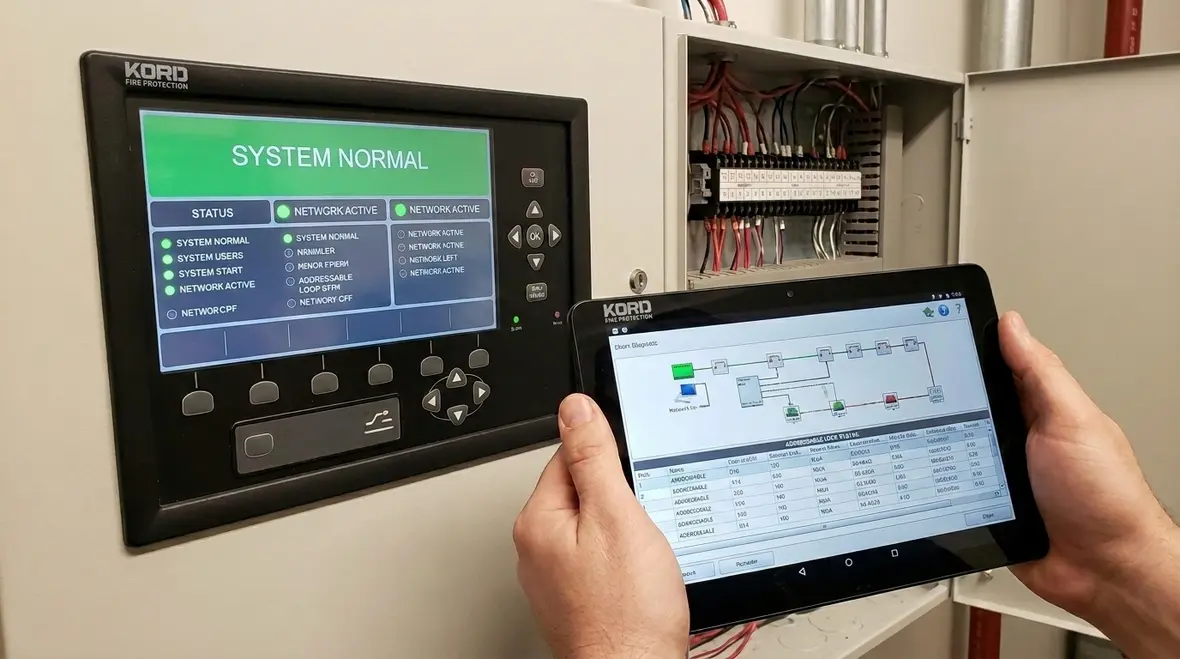
Addressable signaling lets devices identify themselves in a structured way. When a detector, module, or relay changes state, it reports its identity and status to the control panel. At the same time, the panel validates the message format and checks for supervision. As a result, technicians can trace events to specific devices and zones without pulling walls like it is a weekend project.
In practice, advanced signaling protocols support more than alarms. They also handle troubles such as open circuits, short circuits, and loss of communication. Additionally, they track timing and response patterns, so the system can apply the right rules when multiple changes occur close together.
Kord Fire Protection technicians explain that when addressable signaling is set up correctly, it supports faster troubleshooting. Instead of guessing which device is misbehaving, technicians can read event history and isolate the fault with less time and less disruption to the building. That lines up closely with the ideas covered in How Smoke Detectors Communicate With Alarm Panels, where device-level communication makes panel decisions far more precise.
Beyond a basic alarm point
A smarter message gives the panel room to think before it reacts. It can compare timing, verify device behavior, and record a more complete trail of what occurred. For facilities that want cleaner maintenance records and faster service visits, that level of detail is a gift. It is also a lot nicer than the old-fashioned approach of squinting at a panel and hoping the blinking light is feeling cooperative.
Layering supervision and acknowledgment for dependable emergency fire alarm signaling
Emergency events demand more than a single message. Modern systems use supervision and acknowledgment so signals confirm that communication succeeded. First, the system monitors circuits continuously. Then, when a device reports an alarm or trouble condition, the panel acknowledges receipt and updates records.
Therefore, even if noise, interference, or partial failures occur, the system can detect the problem and respond. This matters because an alarm that arrives late is like a late firefighter joke. Everyone hears it, but it does not help when flames are real.
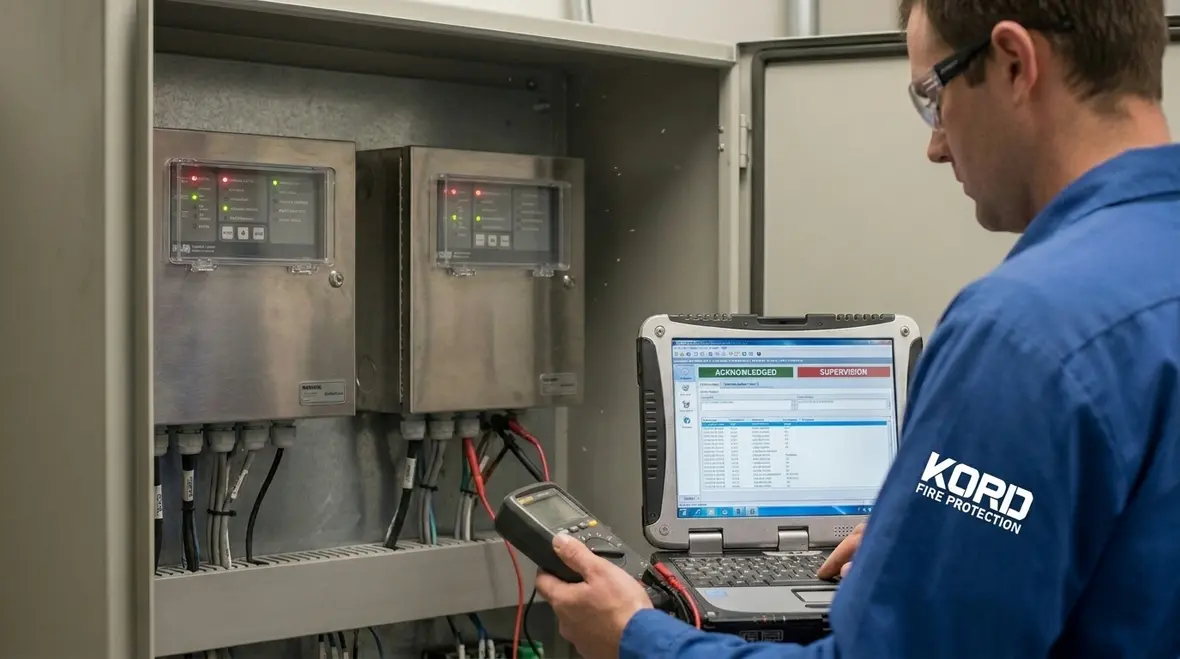
Kord Fire Protection technicians also highlight a simple point: supervision prevents silent failures. When a circuit stops communicating, the panel generates a trouble condition rather than waiting for a catastrophic moment. In addition, the system can help guide maintenance by identifying which loop, device, or module needs attention. If you want a practical companion read, Fire Alarm Trouble Signal Meanings Explained breaks down how those trouble events help owners respond before a bigger problem develops.
Signaling speed, signal integrity, and noise resistance
Advanced signaling protocols support fast update rates and strong signal integrity. As a result, devices communicate reliably in buildings with electrical noise, long wiring runs, or mixed loads from power systems and equipment.
To make this work, systems apply careful timing, controlled message formats, and error checking. Additionally, they manage how data moves across loops or network segments so that communication stays stable even during active alarm conditions.
Kord Fire Protection technicians explain that signal integrity is not just a hardware issue. It also depends on installation and commissioning. Proper terminations, consistent polarity, correct zoning, and correct device addressing all help the system maintain strong performance over time. Then the system can keep delivering emergency fire alarm signaling protocols as designed, even under stress.
This is where disciplined testing earns a quiet round of applause. When wiring pathways, terminations, and panel programming are checked thoroughly, the system becomes much better at resisting nuisance behavior. In other words, reliability is rarely dramatic. It is mostly the result of many correct decisions stacked on top of each other until the whole setup behaves like it has some common sense.
Networked panels, remote nodes, and distributed event reporting
Large facilities often use multiple panels and remote nodes. Modern signaling approaches connect those elements so events travel quickly and consistently to the right places, including annunciation, monitoring interfaces, and reporting tools.
When building systems connect, the goal remains the same: the right event must reach the right authority with minimal confusion. Therefore, the protocol design includes clear event types, consistent timestamps, and structured reporting.
Kord Fire Protection technicians note that distributed reporting reduces delays because people do not need to walk across a campus to understand what happened. Instead, operators can see the device state and location. Furthermore, the system can help manage escalation rules, such as how it handles multiple simultaneous alarms or how it records transitions during the first minutes of an emergency.
Why campuses and large sites benefit most
The larger the property, the more valuable organized reporting becomes. A networked design helps the system act less like isolated islands and more like one coordinated operation. That means security teams, managers, and service personnel can review the same event picture without piecing it together from scattered clues. Nobody misses the old method of sprinting down hallways just to confirm which panel started the drama.
Dual loop strategies for continuity and smarter fault handling
Some systems use dual loop strategies so that an interruption does not stop communication. In other words, if one path fails, the system can still receive critical updates. This helps buildings keep protective coverage while technicians restore normal operation.
Dual Loop Benefit
- Continuity during faults
- Faster isolation
- Better emergency fire alarm signaling protocols performance
What It Does
- It helps prevent total loss of signaling when wiring issues occur.
- It narrows the fault location and reduces time spent searching.
- It supports stable reporting during the first critical moments.
Kord Fire Protection technicians explain that the real win comes during commissioning and ongoing maintenance. They verify loop paths, check supervision behavior, and confirm that notification and reporting actions match local requirements. Then the system stays dependable, like a loyal utility player who shows up every time without stealing the spotlight.
FAQ about advanced signaling protocols in modern fire alarms
Final call: get signaling performance that responds when it matters
Advanced signaling protocols only help if the system is designed, programmed, and maintained with care. Kord Fire Protection technicians can review your loops, device mapping, supervision behavior, and reporting routes so your emergency fire alarm signaling protocols deliver clear, dependable information when seconds count. Request a site assessment, and they will outline practical upgrades or adjustments that improve reliability without turning your building into a construction zone. Call today and get a system that acts calm, even when everyone else is running around like the movie theater just lost the lights.
If your facility needs direct support, explore Fire Alarm Services or review Kord Fire Protection’s full fire protection services to connect signaling reliability with broader system readiness.
Need dependable fire alarm communication?
Talk with a team that handles addressable systems, monitoring, inspections, repairs, and upgrades with practical recommendations that keep your site ready.

Join Our Newsletter!
Get the latest fire safety tips delivered straight to your inbox From our Newsletter.