Fire Suppression Zoning Integration with Building Management
Fire suppression zoning integration can sound like a serious engineering puzzle, but it becomes simple when the right teams plan it step by step. In this article, Kord Fire Protection technicians walk through how they connect fire suppression zones with building management systems so facilities get faster detection, smarter control, and clearer reporting. And yes, done properly, the system behaves like it has its life together. Without that planning, it behaves like a movie ticket line during the weekend premiere of a superhero film: loud, chaotic, and full of people standing in the wrong place.
What Fire Suppression Zoning Integration Means in Real Buildings
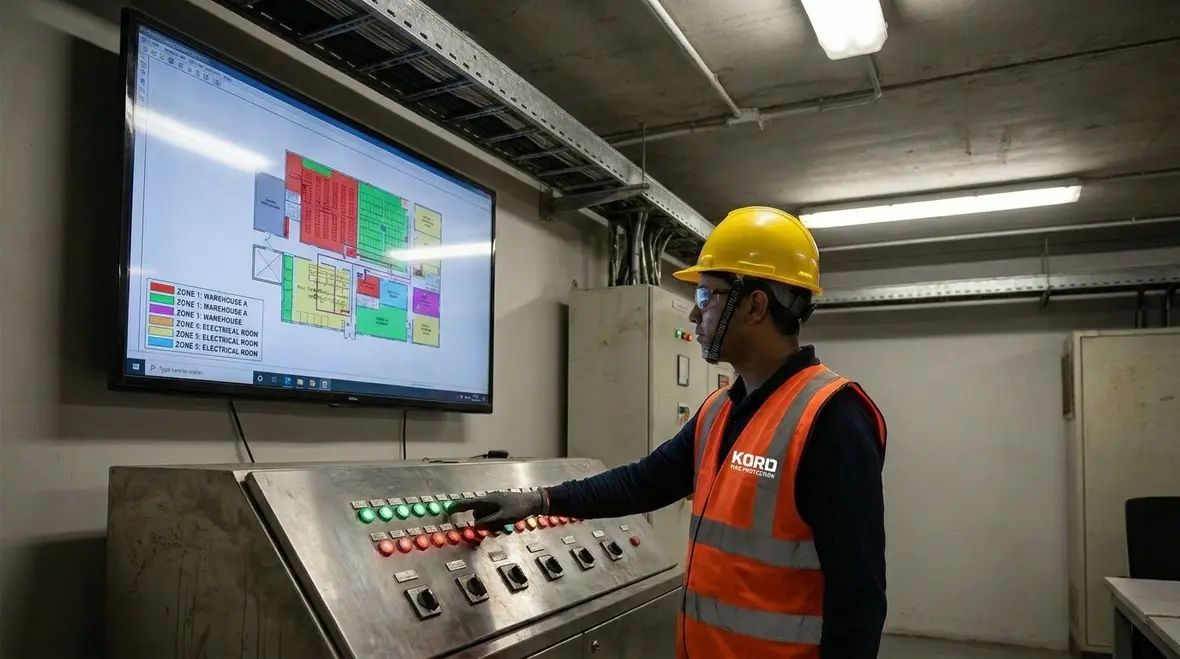
Fire suppression zoning integration means the fire suppression system is split into controlled areas, or zones, and each zone reports status and actions to the building management system. Instead of treating the entire site as one big “fire event,” the system recognizes where conditions changed and what suppression hardware should respond.
Kord Fire Protection technicians explain that zoning creates two big wins. First, it reduces downtime by targeting only the affected area. Second, it improves safety response because operators can interpret zone-level data quickly. If a valve group or distribution panel trips, the building system can display the right location, not just a generic alarm. That difference matters when seconds count.
To make it work, the team aligns three layers: detection inputs, control outputs, and supervision signals. Then, they map those layers to how the building management system already collects alarms and trends. In other words, they do not bolt on a new language. They translate fire control into the facility’s existing “dialect.”
In real buildings, that translation step is where the difference between a polished system and a frustrating one usually shows up. A warehouse, hospital, office tower, and data-heavy commercial facility all manage events differently. Therefore, the zoning strategy has to fit the building’s daily rhythm, staffing model, and risk profile. A well-planned integration keeps people from overreacting to a minor issue in one corner of the site while still making sure the right crews move fast.
Why zone-based reporting matters
Zone-based reporting also creates cleaner maintenance records. When facilities teams can see exactly which area entered trouble, supervisory, or active status, they spend less time guessing and more time fixing. That level of visibility pairs especially well with broader life safety coordination, including fire alarm services that help centralize notifications and event handling for operators.
How Kord Technicians Map Zones to Building Management Points
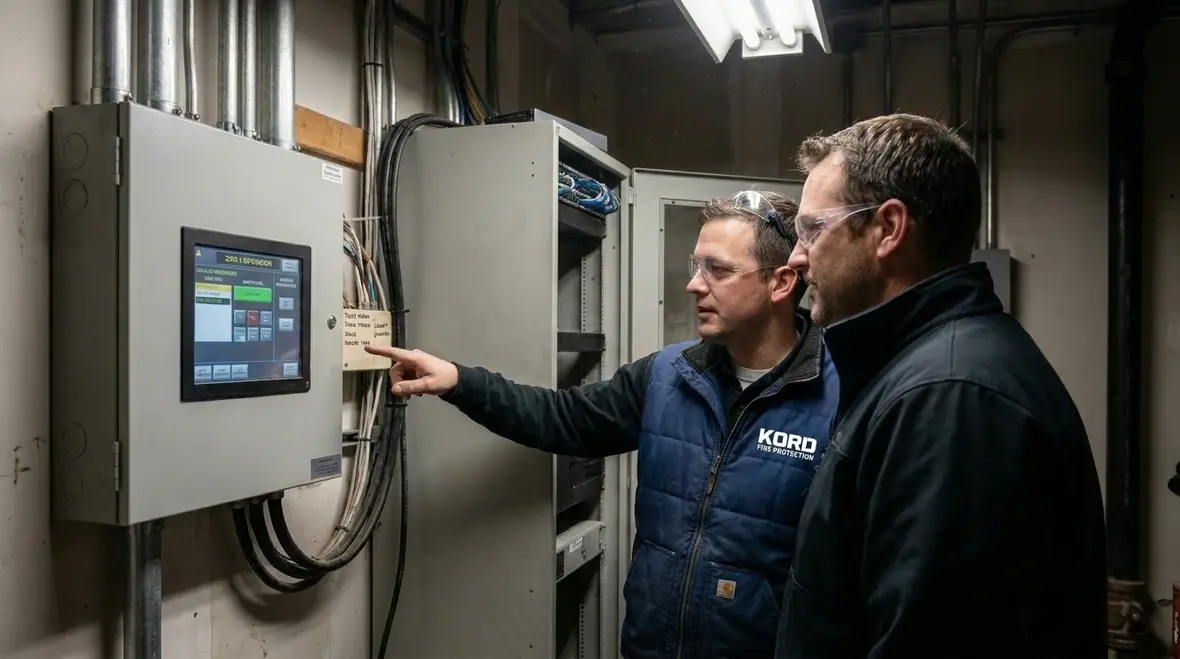
Once technicians define zones, they create a point map. This point map connects fire suppression zone signals to building management system tags. Typically, that includes status points such as armed, supervisory, trouble, and active, plus control actions such as zone enable, valve command, pump command, and shutdown interlocks.
Importantly, Kord Fire Protection technicians keep the logic clean. They avoid messy overlaps where multiple zones trigger the same control output. Instead, they confirm that each zone has a defined input and a defined response. From there, they validate how the building management system will present the information to operators.
At this stage, transition planning matters. For example, when a zone goes active, the system should do more than light an alarm. It should also log timestamps, show affected areas on the floor plan, and route alerts to the right role. Then, it should keep reporting even during network hiccups. Kord technicians often ask, “What happens at 2 a.m. when the maintenance tech is half awake?” Then they design the answer.
A strong point map also makes future service less painful. If another contractor, integrator, or facility engineer reviews the system later, clear naming and organized tag structures reduce confusion. Nobody wants to reverse engineer an alarm map that reads like a secret code written during a coffee shortage. Good labeling is not glamorous, but it saves real time when testing, troubleshooting, and documenting changes.
What goes into a clean point map
- Zone status points for armed, trouble, supervisory, disabled, and active conditions
- Control points for approved commands and shutdown coordination
- Clear naming tied to floor plans, panels, and device groups
- Logging rules that preserve timestamps and operator actions
Designing Reliable Control Logic and Supervision Signals
Fire suppression systems require strict supervision. Therefore, the building management system must not guess. It must receive confirmed zone states from the fire panel or suppression controller and relay them in a safe way.
Kord Fire Protection technicians usually separate logic into clear categories. First comes supervision, which monitors sensor and device health. Next comes command logic, which issues control signals only under approved conditions. Finally comes reporting logic, which pushes that status to dashboards, alarms, and logs.
They also confirm the timing and prioritization. For example, if multiple zones enter pre-action or trouble states, the building management system should sort the events by severity and time. Otherwise, operators see a wall of notifications and miss the one that truly matters. It is like trying to watch a basketball game while someone keeps turning on the lights. The message gets lost.
To avoid unwanted actions, technicians implement interlocks. These interlocks prevent a zone from going active if certain building conditions fail. Such conditions can include equipment shutdown settings, switchgear status, or override permissions. And because the building environment changes, the system should adapt without becoming unpredictable.
Reliable supervision signals are also what keep small problems from quietly becoming large ones. A stuck device, failed communication path, or disabled point should be visible fast and presented in plain language. When the interface explains what happened and where it happened, teams can respond with confidence instead of assembling around a screen like it owes them money.
Integrating Alarms, Notifications, and Dashboards for Operators
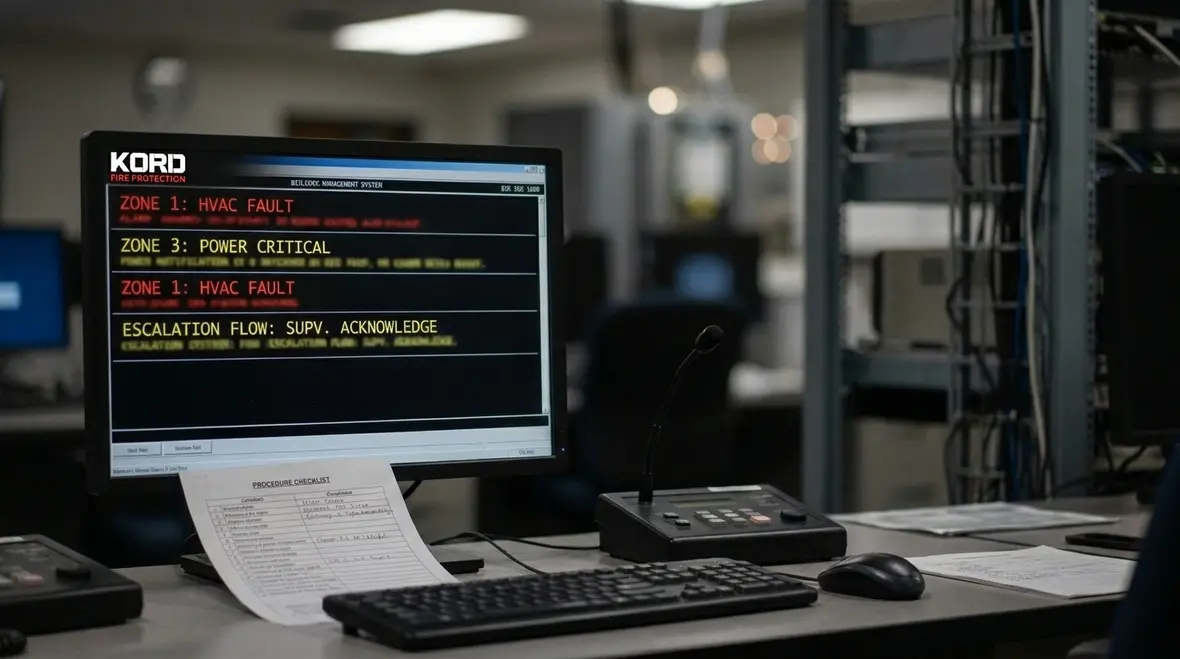
Even when the fire suppression zoning integration works at the hardware level, teams can still fail at the user level. Kord Fire Protection technicians focus on how staff actually responds. They design operator screens so the relevant zone appears first, and supporting data appears only when needed.
For example, when a zone reports active, the dashboard should display the exact area, the suppression type, and the current device status. It should also show what the system is doing now and what it will do next, if applicable. Then, it should link to procedures, like emergency checklists and reset steps, so staff do not hunt through binders.
Transition words become important here because response flow must be clear. First, the system alerts. Then it confirms supervision. After that, it shows location details. Finally, it triggers the right escalation path. This chain reduces confusion and helps crews coordinate with security and facilities staff.
Technicians also recommend consistent naming standards for zones. When everyone uses the same labels across panels, sensors, and building screens, errors drop. Nobody wants the “Zone 3B” that behaves like “Zone 3C.” That is not engineering, that is mystery fiction.
| Integration Area | What Kord Technicians Validate |
|---|---|
| Zone status reporting | Supervisory, trouble, armed, and active states map correctly to building management system tags |
| Control command permissions | Interlocks and enable conditions restrict commands to authorized scenarios |
| Alarm routing | Alerts show correct zone location, severity, and escalation path |
| Audit trails and logs | Events include timestamps, device identifiers, and operator actions for traceability |
Operator screens should answer three questions fast
- What zone changed status?
- What is the system doing right now?
- What action should the operator take next?
Cybersecurity, Redundancy, and Change Control for Zone Systems
Once the building management system connects to fire suppression controllers, the team must protect those connections. Kord Fire Protection technicians treat cybersecurity as part of life safety, not an afterthought. They limit who can change points, enforce role based access, and use approved network paths for communications.
Then, they build for reliability. They plan for how the system behaves if a network link fails. In a well designed setup, the fire suppression control keeps operating based on local controller logic, while the building management system switches to safe, degraded reporting. After the network recovers, it resumes sending updated zone states and logs.
Change control also matters because buildings evolve. Tenants renovate. Floors change function. Equipment gets replaced. Therefore, technicians document every mapping change between suppression zones and building management points. They test the new logic, verify alarm behavior, and confirm that dashboards still display the correct information. That prevents “silent breakage,” where nothing looks wrong until the day it is needed.
This is also where having one provider with broad system knowledge becomes useful. Kord’s broader full fire protection services perspective helps facilities connect zoning work with inspections, alarm coordination, suppression planning, and long-term documentation instead of treating each task like a separate island.
Testing, Commissioning, and Training Without Cutting Corners
Testing proves the integration, not just the devices. Kord Fire Protection technicians test scenarios that match real operations, including partial faults and zone boundary behavior. For example, they verify that zone A action does not incorrectly mark zone B as active. They also confirm that trouble and supervisory signals appear properly during maintenance modes.
Commissioning should include end to end verification. Detection triggers, controllers respond, zone statuses update, and the building management system displays the right alarms in the right order. After that, technicians test operator workflows. They make sure staff can identify the affected zone and follow the correct procedure.
Then they train. Training should cover what operators see, what they do, and what they should never do. Even the best interface cannot replace the right human response. And while it is tempting to treat this like a “sign and move on” step, that is how problems become folklore.
Good commissioning also leaves behind a repeatable testing path. Future inspections and upgrade work go smoother when teams know which points to simulate, which alarms should appear first, and how each zone should behave under normal, trouble, supervisory, and active conditions. It is much easier to maintain a system that was introduced with discipline than one that was launched with crossed fingers and optimistic nodding.
FAQ: Fire Suppression Zoning Integration
Final Call: Plan the Next Upgrade with Kord Fire Protection Technicians
A strong fire suppression zoning integration makes the building management system a helpful partner, not a confusing bystander. Kord Fire Protection technicians help facilities map zones to points, build reliable control logic, validate supervision, and train operators so responses stay calm and fast when it matters. If this integration feels overdue, now is a smart time to schedule a review before small confusion turns into large operational pain.
For facilities that need a next step, Kord Fire Protection can support the work through service coordination, documentation, and system review tied to broader building safety needs. Explore their fire alarm services and full fire protection services to plan an upgrade path with more confidence and less guesswork. Because in life safety, “good enough” is never a joke.

Join Our Newsletter!
Get the latest fire safety tips delivered straight to your inbox From our Newsletter.