Fire Extinguisher Types Explained ABC CO₂ Guide
When it comes to workplace safety, few tools stand as quietly heroic as a fire extinguisher. Yet many people walk past them every day without truly understanding what sits inside that red cylinder. In this guide, fire extinguisher types explained clearly and practically, readers will learn the differences between ABC, CO₂, Clean Agent, Wet Chemical, and other specialized units. Kord Fire Protection technicians often say that knowing which extinguisher to use matters just as much as having one nearby. After all, in a real emergency, confusion is not a strategy.
So let us slow things down, take a steady breath, and walk through the essentials with clarity, a touch of humor, and a calm voice that says, “Yes, this is serious. But no, you do not need to panic.”
Why Understanding Fire Extinguishers Matters in Real Life
Fire does not send a calendar invite before showing up. It arrives unannounced, often fueled by simple mistakes like unattended cooking, overloaded outlets, or faulty equipment. Therefore, understanding the correct extinguisher type is not trivia for safety nerds. It is practical knowledge that protects property, people, and peace of mind.
Kord Fire Protection technicians regularly explain that different fires burn in different ways. Because of that, each extinguisher is designed to fight a specific class of fire. Using the wrong one can make the situation worse. For instance, spraying water on a grease fire can turn a small kitchen mishap into a scene straight out of an action movie. And unless someone enjoys dramatic chaos, that is best avoided.
Fire classes at a glance
Class A involves ordinary combustibles like wood, paper, and cloth.
Class B involves flammable liquids such as gasoline and oil.
Class C involves energized electrical equipment.
Class D involves combustible metals.
Class K involves cooking oils and fats.
Once these categories are understood, everything else begins to make sense.
ABC Fire Extinguishers: The Reliable All Rounder
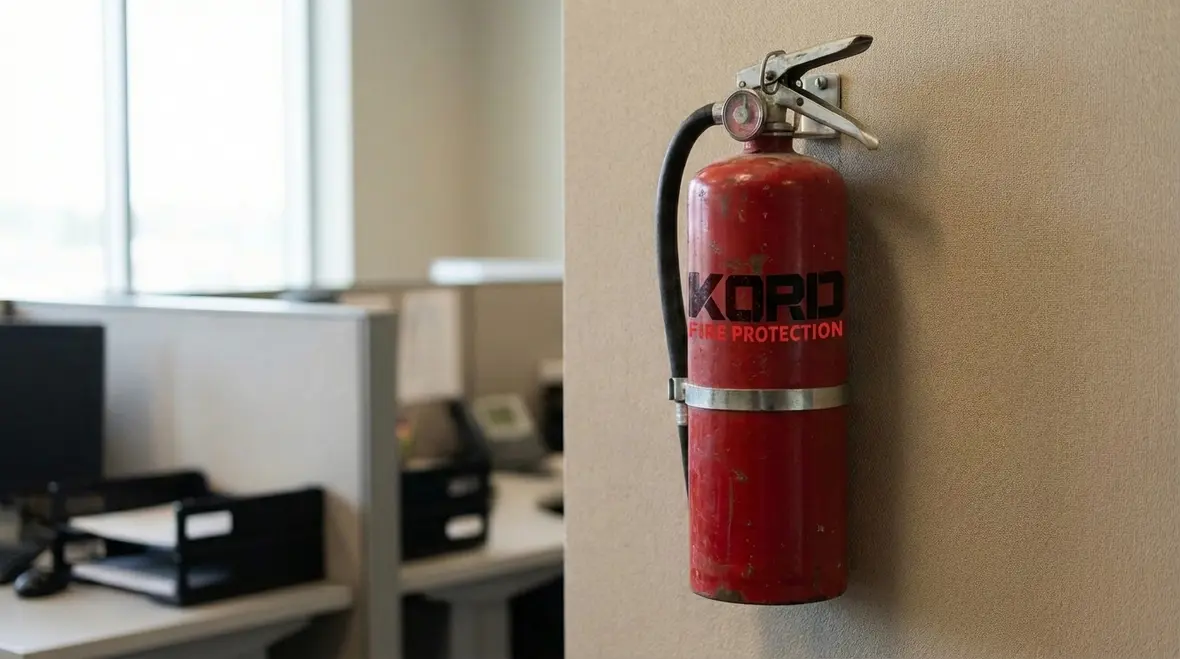
If fire extinguishers had a lead actor award, the ABC unit would likely take home the trophy. It is versatile, widely used, and commonly found in offices, schools, retail stores, and homes.
How ABC dry chemical works
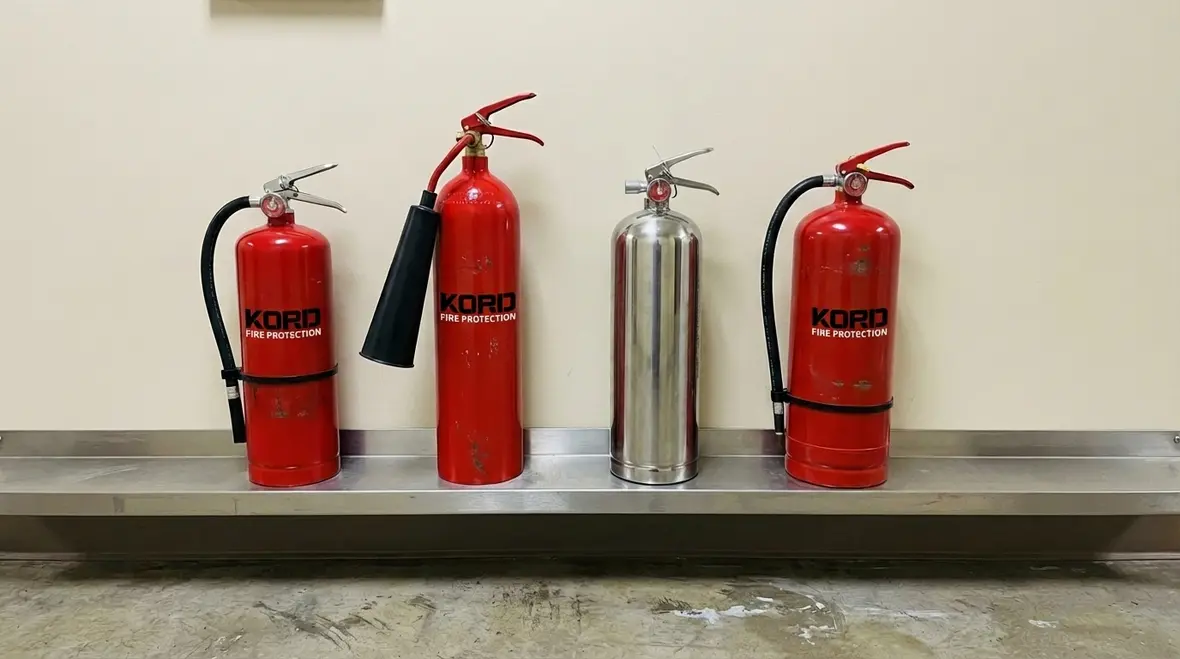
ABC extinguishers use a dry chemical agent, usually monoammonium phosphate. This powder interrupts the chemical reaction of a fire and creates a barrier between the fuel and oxygen. As a result, it can handle Class A, B, and C fires.
Kord Fire Protection technicians often recommend ABC extinguishers for general commercial spaces. They appreciate that one unit covers multiple risks, which simplifies compliance and training. However, they also caution that the powder can leave residue. Therefore, while it puts out flames effectively, cleanup can be extensive, especially around electronics.
In other words, it is dependable and strong, but it is not subtle. Think of it as the firefighter equivalent of a superhero who saves the day but leaves a bit of property damage in the process.
For a deeper dive into upkeep and service schedules for these everyday workhorses, Kord’s guide on how often a fire extinguisher needs to be serviced explains inspections, hydrostatic tests, and when it is time to retire older units.
CO₂ Fire Extinguishers for Electrical and Liquid Fires
Carbon dioxide extinguishers approach fire differently. Instead of coating the flames, they displace oxygen. Since fire needs oxygen to survive, removing it causes the flames to suffocate.
Best uses and key precautions
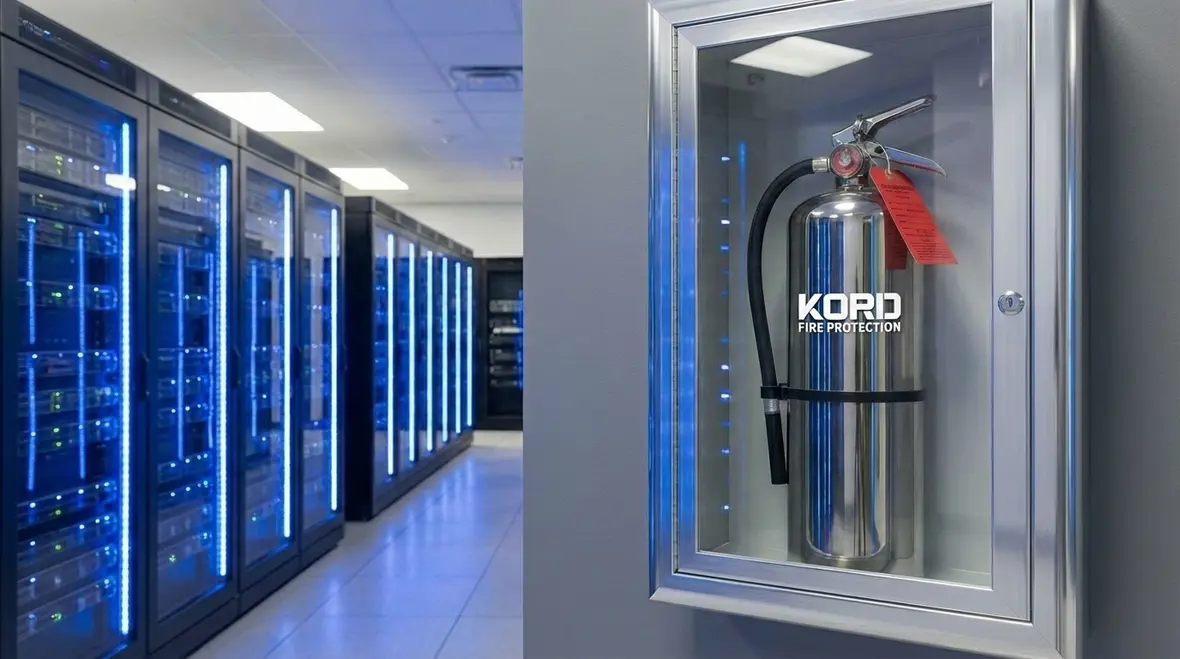
CO₂ extinguishers work best on Class B and C fires. They are particularly effective around electrical panels, server rooms, and machinery. Because they leave no residue, they are ideal where sensitive equipment is involved.
Kord Fire Protection technicians frequently install CO₂ units in data centers and manufacturing facilities. They explain that while these extinguishers are clean, they require proper training. The discharge horn becomes extremely cold during use. Therefore, grabbing it incorrectly can cause injury.
Additionally, CO₂ does not cool materials as effectively as water based options. Consequently, re ignition can occur if the heat source remains. So while CO₂ is precise and tidy, it demands awareness and correct technique.
Clean Agent Systems for Sensitive Environments
Now imagine a museum filled with priceless art or a control room packed with critical servers. In those spaces, even dry chemical residue feels like a disaster. That is where clean agent extinguishers enter the story.
Why clean agents are “no mess” problem solvers
Clean agents use gases that interrupt the chemical reaction of fire without leaving residue. They are safe for electronics and leave minimal cleanup. As a result, they are often chosen for medical facilities, laboratories, archives, and technology driven environments.
Kord Fire Protection technicians explain these systems with calm precision. They emphasize that clean agents work quickly and evaporate rapidly. However, they also stress proper room sealing. Because the agent must reach a certain concentration, ventilation can reduce effectiveness.
Although clean agent extinguishers tend to cost more, they protect high value assets where downtime is expensive. In short, they are the quiet professionals of the fire protection world. No mess, no drama, just results.
If your facility is evaluating gaseous suppression or already operates server rooms and data centers, Kord’s regional pages, such as their Los Angeles County fire protection and San Francisco County fire protection overviews, highlight how clean agent fire suppression systems fit into a broader safety strategy.
Wet Chemical Extinguishers and the Science of Kitchen Fires
Commercial kitchens operate with high heat, open flames, and gallons of cooking oil. Therefore, they require specialized protection. Wet chemical extinguishers are designed specifically for Class K fires.
How wet chemical units tame grease fires
These extinguishers release a solution that reacts with hot cooking oils through a process called saponification. This reaction forms a soapy layer on the surface of the oil, which cools the fire and prevents oxygen from reaching it.
Kord Fire Protection technicians often demonstrate how dramatically different grease fires behave. They remind kitchen staff never to use water on burning oil. Water sinks below the oil, turns to steam, and violently expands. The result can resemble a cinematic explosion, minus the soundtrack.
Wet chemical units not only extinguish flames but also reduce the chance of re ignition. For restaurants, food trucks, and institutional kitchens, they are not optional. They are essential.
Specialized Solutions for Unique Fire Risks
While ABC, CO₂, Clean Agent, and Wet Chemical units cover most needs, some environments demand even more tailored solutions.
Class D and water mist extinguishers
Class D extinguishers address combustible metals like magnesium or titanium. These fires burn at extremely high temperatures and react violently with water. Therefore, specialized dry powders are required to absorb heat and smother the flames.
Water mist extinguishers use fine droplets that cool fires efficiently while reducing water damage. They can work on Class A and certain electrical fires, depending on design. Consequently, they are gaining popularity in offices and heritage buildings.
According to Kord Fire Protection technicians, selecting the correct extinguisher depends on a full risk assessment. They evaluate materials, processes, occupancy, and layout. Because every building tells a different story, fire protection must match that narrative.
Property owners in California cities such as Anaheim, Los Angeles, and Sacramento can see how local codes and hazard classifications shape these choices in Kord’s resources on guidelines for fire extinguishers in Anaheim and fire extinguisher requirements for Los Angeles businesses.
Choosing the Right Option for Your Building
When building owners search online for fire extinguisher types explained for my business, they usually want a simple answer. However, the right choice depends on several factors.
A practical decision checklist
Identify hazards. Determine what materials are present and how they could ignite.
Evaluate electrical equipment. Server rooms and machinery often require CO₂ or clean agents.
Review kitchen operations. Any commercial cooking setup demands Class K protection.
Understand local codes. Regulations specify placement, size, and inspection frequency.
Kord Fire Protection technicians walk clients through these steps methodically. First, they assess risks. Next, they recommend placement based on travel distance requirements. Finally, they train staff on proper use. Because even the best equipment fails without knowledge, training becomes the final layer of protection.
If you are unsure where to begin, Kord’s dedicated fire extinguisher service & certification page outlines services like installation, monthly and annual inspections, hydrostatic testing, and employee training—all of which support the extinguisher choices outlined in this guide.
Quick Comparison of Common Extinguisher Types
Below is a simple side by side reference for clarity.
Extinguisher Type
ABC Dry Chemical
CO₂
Clean Agent
Wet Chemical
Class D
Best For
Class A, B, C general use
Electrical and flammable liquids
Sensitive electronics and assets
Commercial kitchen grease fires
Combustible metals
This comparison offers a snapshot. Nevertheless, a professional assessment ensures accuracy and compliance.
Maintenance, Inspections, and Long Term Reliability
Even the most advanced extinguisher becomes useless if neglected. Therefore, regular inspections remain critical. Monthly visual checks confirm pressure levels, accessibility, and physical condition. Additionally, annual professional inspections verify mechanical integrity.
Kord Fire Protection technicians treat maintenance as a disciplined routine rather than an afterthought. They check gauges, seals, hoses, and mounting brackets. If needed, they recharge or replace units promptly. Because emergencies do not wait for convenient timing, reliability must be constant.
Furthermore, clear signage and unobstructed access matter. An extinguisher hidden behind storage boxes helps no one. In fact, it becomes a decorative suggestion rather than a safety device.
If you maintain extinguishers across multiple locations or simply want to make sure your program is up to code, Kord’s articles on fire extinguisher walk ins in Los Angeles and six year break down/tear down show how professional service keeps each cylinder ready for real world emergencies.
Frequently Asked Questions
Conclusion and Next Steps
Understanding fire extinguisher types explained with clarity empowers smarter safety decisions. From versatile ABC units to precise clean agents, each tool serves a purpose. Kord Fire Protection technicians stand ready to assess risks, install proper equipment, and train teams with confidence. Do not leave fire safety to guesswork.
To move from theory to action, schedule a consultation through Kord’s dedicated fire extinguisher service & certification page or reach out via the main Contact Us form. Contact Kord Fire Protection today and ensure every extinguisher in your building stands prepared to perform when it matters most.
Know Your Weapon Before You Fight the Flame
Kord Fire Protection is your go-to when it comes to all things fire protection. For over 20 years, we’ve been serving Southern California with the quality service and equipment to keep your home or business safe at all times. Our competitive prices reflect our unwavering commitment to protecting what matters most in the event of a fire emergency. Give us a call, send an email, or use that form!

Join Our Newsletter!
Get the latest fire safety tips delivered straight to your inbox From our Newsletter.