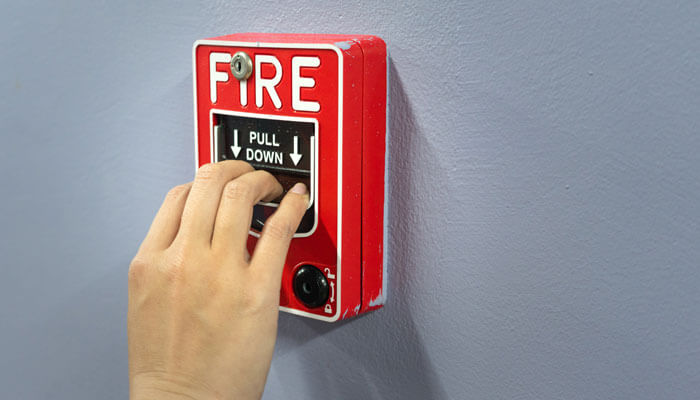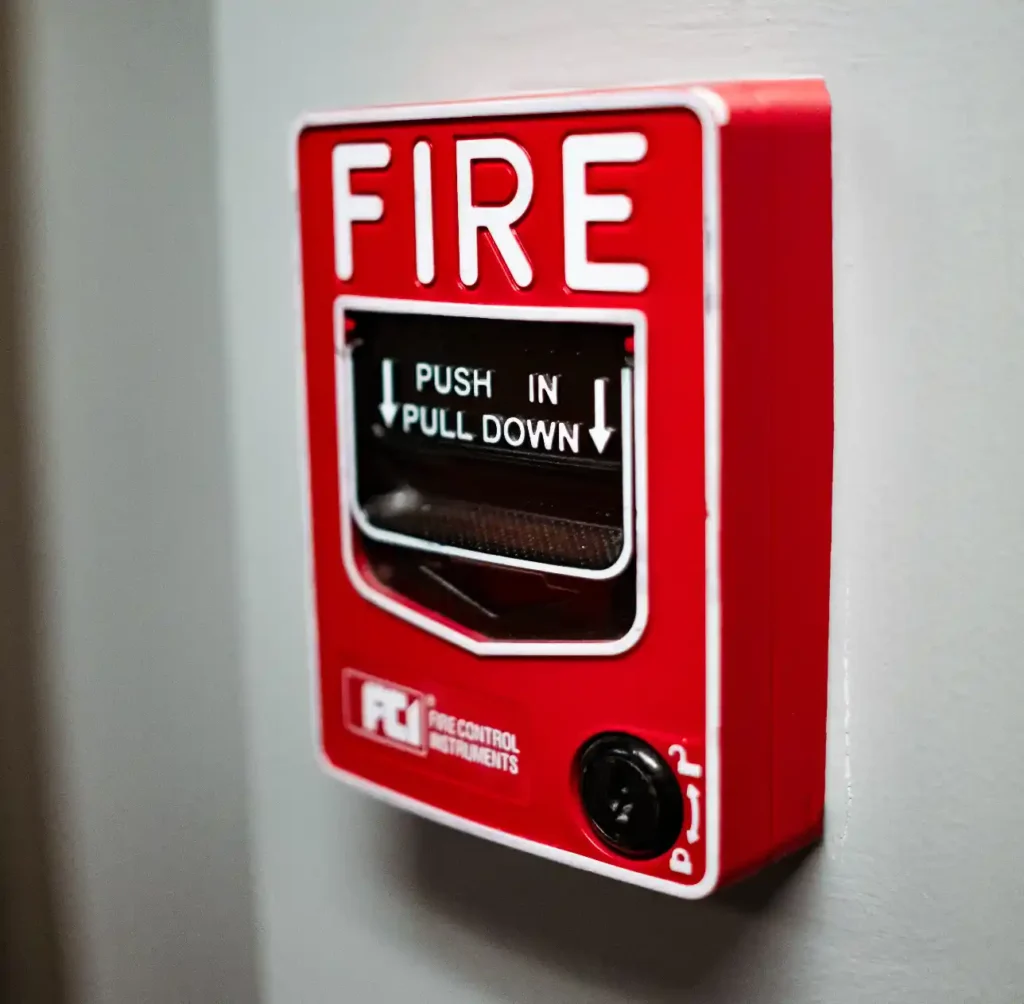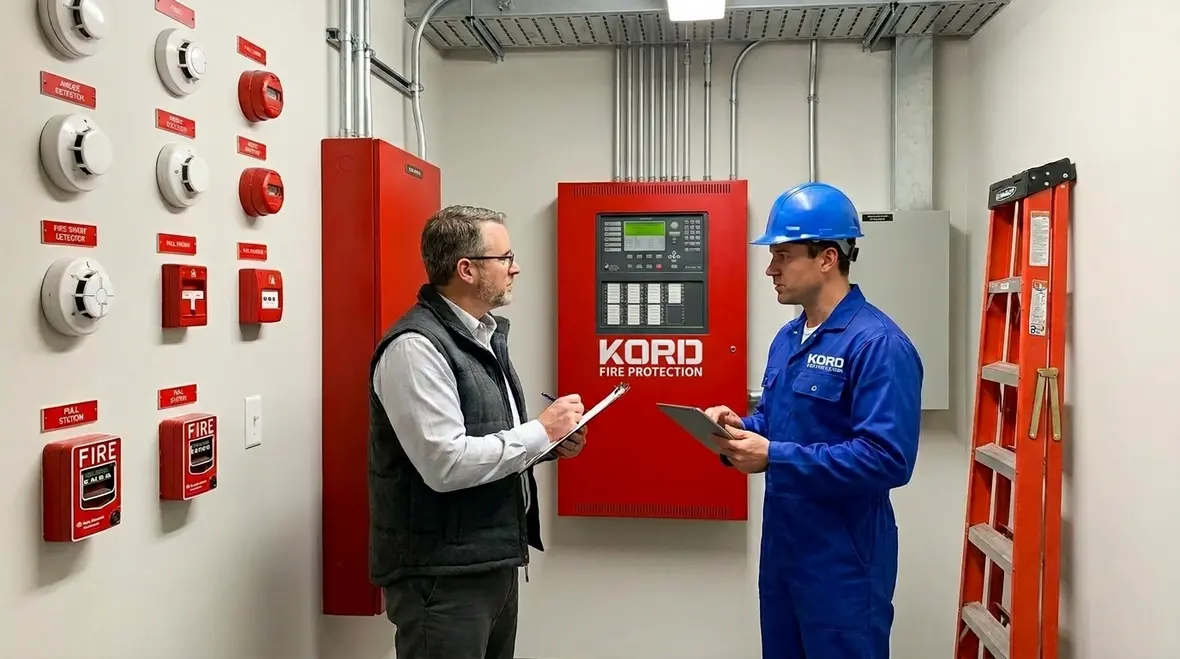
Fire Alarm Testing Protocols Pre Compliance Checklist
Every year, facilities run into the same moment of dread: annual testing day. However, when teams follow solid Fire alarm testing protocols, the process stays organized, predictable, and safer for everyone involved. The goal is simple from the start: confirm the system’s readiness, test key devices in the right order, record results, and keep any alarm control changes traceable. That is exactly the kind of discipline Kord Fire Protection Technicians explain to clients before they even think about pressing a button. Because yes, the fire panel is important, but it is also not a magic box. It needs proper preparation first.
A clean annual fire alarm test is not built on luck. It is built on access, records, communication, and a facility team that understands what the testing crew needs before the first device is activated. When building staff organizes the site ahead of time, technicians can work through the system map efficiently and document real conditions instead of spending half the day solving preventable surprises. That makes the process smoother for operations, clearer for compliance, and much less dramatic for everyone standing near a horn strobe when it suddenly decides to make its presence known.
Pre-Compliance Checklist for Annual Testing Readiness
Before the truck rolls in, the facility should set itself up to pass testing without drama. And if anyone tells you “we will figure it out on the spot,” that person is welcome to try the same plan during a pop quiz. Meanwhile, a calm and complete pre compliance checklist keeps the work efficient and reduces system downtime.
What Kord Fire Protection Technicians commonly recommend includes these steps:
- Verify current device locations, addresses, and any recent changes to wiring, ceiling layouts, or room use
- Confirm access to panels, initiating devices, and notification appliances, including ladders or safe access routes
- Gather prior inspection reports, trouble history logs, and maintenance records
- Review building operating schedules, so testing windows match occupancy needs
- Check that any new construction has not blocked detection coverage or damaged mounting hardware
This first pass does more than prepare paperwork. It reveals whether the site has changed since the last inspection cycle. A room converted into storage, a newly added partition, or a recent wiring adjustment can all affect how the testing plan should be approached. If the facility catches those items early, the annual test becomes a controlled process instead of a scavenger hunt with clipboards.

How Kord Fire Protection Technicians Explain the “Before You Test” Steps
Kord Fire Protection Technicians do not just run tests. They teach facilities what to verify, what to document, and what to watch for as testing approaches. In particular, they focus on reducing surprises, because the only thing worse than a test failure is a test failure with no context.
First, they walk clients through the system map and device list so the team knows what should activate during the Fire alarm testing protocols sequence. Next, they help confirm that the correct panel mode and monitoring pathways are set for the test plan. Then they explain how to document outcomes clearly, so compliance reporting matches real field conditions. When facilities understand the “why” behind the steps, technicians spend less time chasing details, and everyone moves faster.
Why the system map matters before anyone starts testing
The system map and device inventory act like the script for the day. If a pull station should report from one address, a smoke detector should restore in a certain sequence, or a supervisory signal should appear at a specific point, the team needs that expectation in front of them. Without it, every activation turns into guesswork. With it, the crew can compare actual behavior to intended behavior and move through the building with purpose.
This is also a good point to direct facilities toward related system planning. If your building relies on broader water based fire protection support, Kord Fire Protection also provides fire pump service information that helps owners understand how readiness, pressure support, and documentation all tie together across life safety systems.
Prepare the Site: Access, Power, and Device Condition
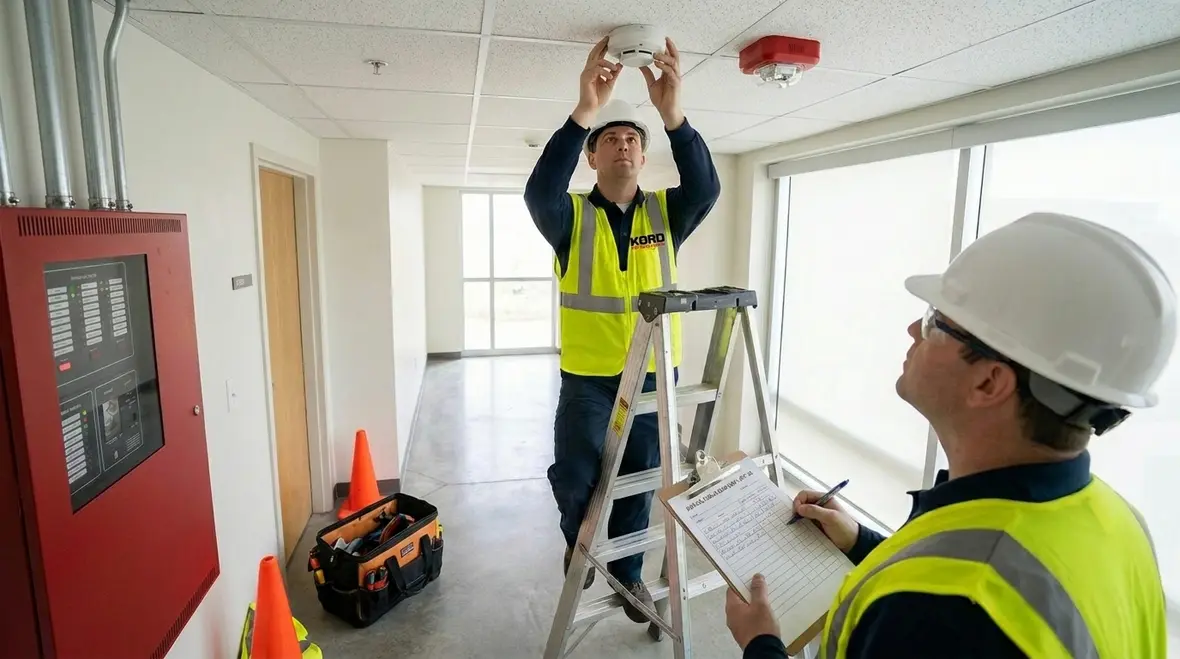
Now the facility needs physical readiness. Even strong systems fail testing when access is missing or devices look like they have been through a rough week. Fire alarm components can take hits from renovations, storage clutter, vibration, and minor maintenance oversights.
Teams should do the following before testing crews arrive:
- Clear routes to pull stations, horns, strobes, detectors, and control equipment
- Confirm that detector heads remain clean and unobstructed, with no paint overspray or temporary covers
- Inspect mounting conditions, ensuring devices sit securely and are not loose or misaligned
- Check power supply status indicators, trouble lights, and any known past issues
- Verify that any water, dust, or moisture risk areas remain controlled
Additionally, the facility should flag any temporary shutdown plans. If a tenant is renovating, the odds of accidental damage rise. Therefore, the pre test window should include a quick walkthrough and a shared plan between building staff and the testing team.
Small access issues become big testing delays fast
One locked electrical room, one blocked detector above stacked inventory, or one control panel hidden behind whatever chaos passed for temporary storage that week can slow the entire day. Annual testing works best when access is boring. Boring is excellent. Boring means technicians can move from one task to the next, verify signals, note conditions, and keep the schedule intact without turning every stop into an obstacle course.
Review Records and Compliance Evidence
Testing results do not live in a vacuum. They connect to prior records, maintenance history, and any prior corrective actions. As a result, this is where many facilities lose time. They end up searching emails, hunting for paper folders, and trying to remember what was fixed last quarter. That is not just inefficient. It also makes reporting harder.
Kord Fire Protection Technicians typically encourage teams to prepare a simple evidence packet that includes:
- Last inspection report and any follow up documentation
- Device change logs, including additions, removals, or relocations
- Service tickets related to trouble codes or false alarm calls
- Updates to building occupancy and floor plan changes
- Any alarm notification pathway changes, including wiring updates
Then, the facility can align expectations before the testing begins. And when the system is tested correctly, evidence becomes clean, consistent, and easy to support.
Good records also help explain current conditions without drama. If a device was recently relocated, if a trouble signal was repaired last month, or if a remodel affected a section of the building, those details matter. They tell the technician whether a reading is unexpected or simply part of a documented change. In other words, records save time because memory is not a compliance system.
Plan for Notifications and System Modes During Testing
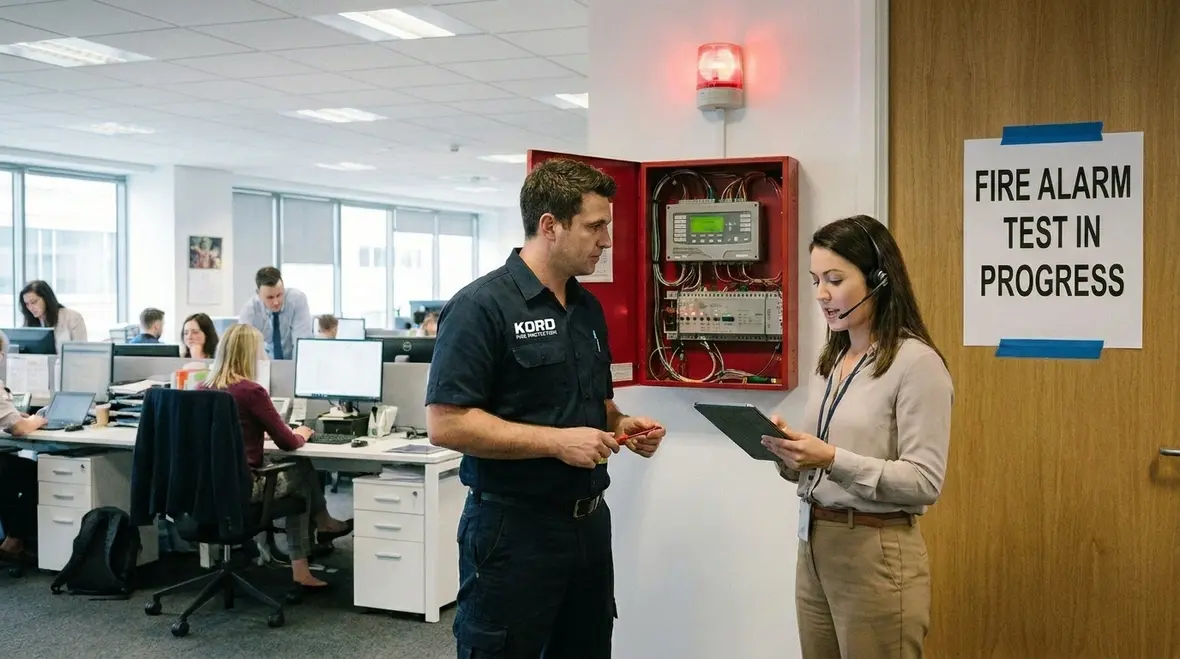
Testing does not only check devices. It also checks behavior under real conditions. During Fire alarm testing protocols, the system may enter specific modes that affect monitoring, signaling, and alarm output patterns.
To keep things smooth, the facility should coordinate:
- Who receives building alerts during the test, including front desk, security, and property management
- Whether occupants will be notified in advance and how that message will be delivered
- How the test will handle panel message expectations, including any acknowledged states
- When normal operation returns, so staff does not assume testing is still running
Meanwhile, teams should remember that notification appliances can sound loud. This is normal, but it can still startle folks who thought “testing” meant a quiet computer check. In other words, treat it like a scheduled drill, not a surprise concert.
Communication keeps testing professional instead of chaotic
Advance notice to tenants, staff, visitors, and security teams prevents confusion when devices activate and signals appear. It also reduces the odds of someone reporting a known test as an unexpected event. The cleaner the communication plan, the easier it is for everyone to distinguish between testing activity and real system status throughout the day.
Testing Logistics: Scheduling, Staging, and Communication
Good logistics turn a long day into a smooth one. Even if the equipment is perfect, poor scheduling creates delays and frustration. And nothing drains motivation faster than waiting for access that was supposed to be ready.
Best practice logistics includes:
- Confirming the test window and ensuring staff can support access on every floor
- Staging any tools, keys, and escorts so the crew does not stop mid process
- Maintaining a clear communication path for questions during testing
- Setting a checklist for what gets tested and the expected outcomes
- Planning for how trouble conditions will be handled and cleared after testing
Additionally, the facility should track any “hold points.” For example, if an area cannot be accessed, it needs a documented plan rather than an improvisation. Therefore, teams protect both compliance goals and daily operations.
Facilities that already coordinate broader protection work often benefit from consolidating support. Kord Fire Protection’s fire alarm services page is a useful related service reference near the planning stage, especially for teams that need inspection support, troubleshooting, or a clearer path for ongoing compliance and maintenance after the annual test is complete.

FAQ: Pre-Compliance and Annual Fire Alarm Testing
Conclusion: Get Ready, Then Get Tested
When facilities treat annual preparation like a real project, testing becomes calmer and results become clearer. By completing the pre compliance checklist, organizing records, and coordinating access and communication, they support a smooth testing day and reduce avoidable rework. Kord Fire Protection Technicians can guide teams through what to verify and how to document outcomes, so compliance reporting matches reality.
Reach out now to schedule your annual system review and get your next test cycle planned with confidence. If your property needs support beyond testing day, explore Kord Fire Protection’s full fire protection services to connect annual readiness with long term system care and reliable compliance support.

Join Our Newsletter!
Get the latest fire safety tips delivered straight to your inbox From our Newsletter.