Fire Alarm Power Redundancy in Australia with Kord Fire Protection
Quick Answer Fire alarm systems must keep working even when utility power fails. Fire Alarm Power Redundancy relies on batteries, backup power supplies, and smart supervision so panels stay online, signals keep traveling, and codes stay satisfied. With the right design, testing, and monitoring, downtime becomes the rare guest that never gets a second invite.
When an emergency hits, fire safety cannot “wait and see.” It must operate like a well trained team: calm, ready, and reliable. That is why Fire Alarm Power Redundancy sits at the heart of uninterrupted fire alarm performance, especially across industrial sites, retail centers, and commercial facilities throughout Australia. In the first place, power loss must not silence detectors, control panels, and signaling devices. Instead, systems should switch sources instantly and then hold steady long enough for evacuation, response, and ongoing operations.
Near the beginning of any serious reliability review, many facilities also benefit from looking at broader fire protection services so alarm power planning fits into the wider life safety picture. At the same time, Kord Fire Protection’s guide to fire alarm power requirements, reliable backup, and AC pairs naturally with this topic because redundancy works best when primary and secondary power are treated like teammates rather than distant cousins at a holiday dinner.
And because real life loves complications, this is where Kord Fire Protection can become a vital partner. They support planning, installation quality, and ongoing service so the redundancy stays effective, not just “installed on paper.” In other words, they help make sure the system works when Murphy shows up wearing a hard hat.
What Fire Alarm Power Redundancy Actually Prevents
Most power failures look simple from the outside. The lights go out. The site sounds different. Yet inside a fire alarm system, a lot must still happen. First, the control panel must keep monitoring inputs like smoke and heat detectors. Then it must keep driving outputs such as alarms and fault signals. Finally, it must keep doing so long enough to satisfy code requirements for standby and alarm operation.
Proper redundancy prevents three common failure modes. It reduces the chance of a complete shutdown during utility loss. It limits “partial silence,” where the panel stays alive but devices drop off due to voltage sag or cable issues. And it helps prevent long term degradation where batteries still show charge on paper but cannot sustain the required load under real conditions.
When power redundancy is handled well, it becomes more than backup. It becomes a controlled safety behavior, supervised and measured, so the system stays consistent across shifts, weather events, and building load changes. That matters in busy facilities where a brief interruption can ripple into delayed response, confused occupants, and a maintenance team suddenly trying to solve electrical mysteries before lunch.
Why continuity matters more than simple battery presence
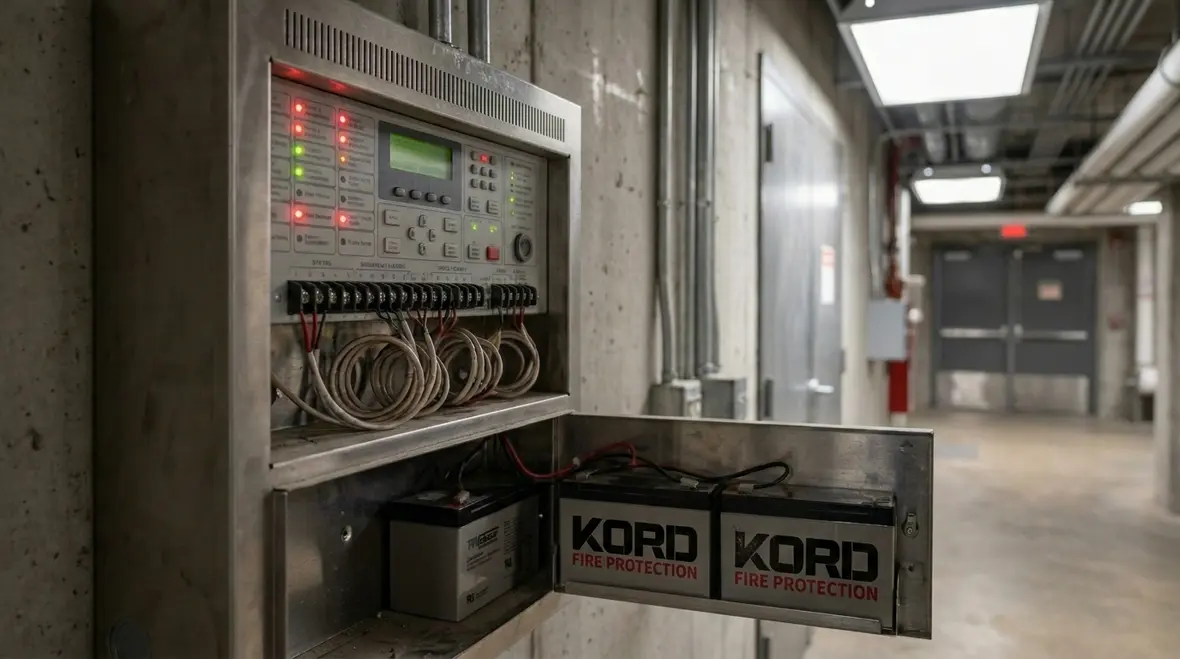
A battery sitting in a cabinet is not the same thing as a battery delivering dependable performance. True redundancy means the system can supervise circuits, hold voltage where it belongs, and keep every critical function alive during the exact moment utility power disappears. If that continuity is shaky, the panel may technically stay on while the rest of the system starts acting like it missed its morning coffee.
How Backup Power Sources Work Together in Business Sites
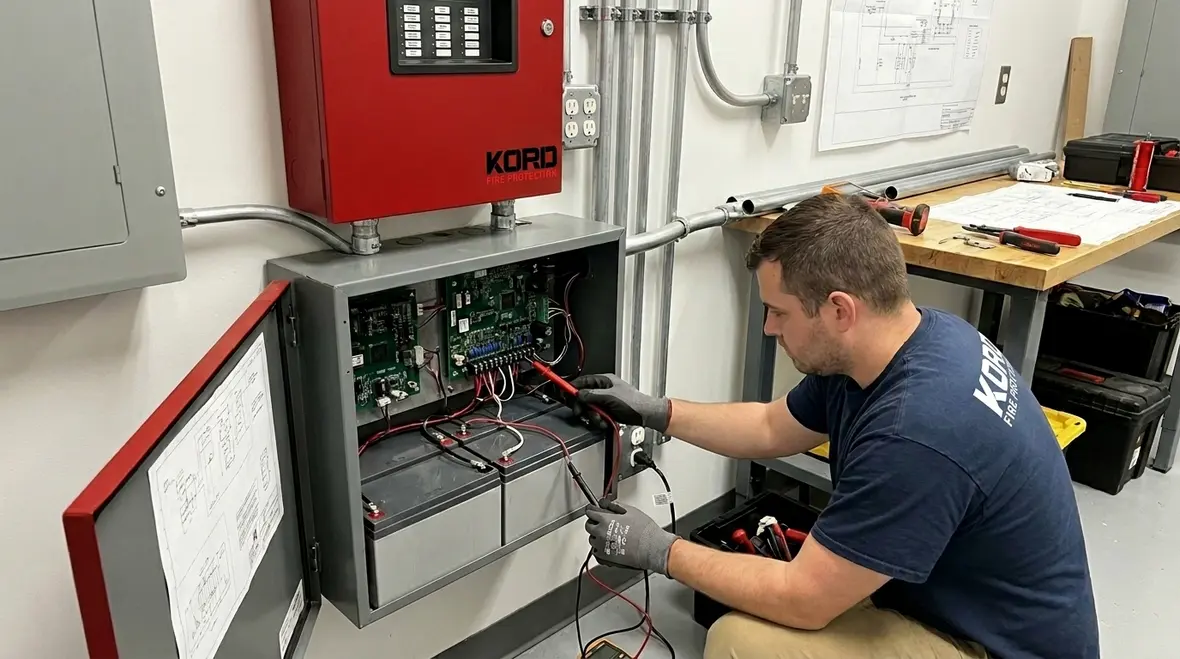
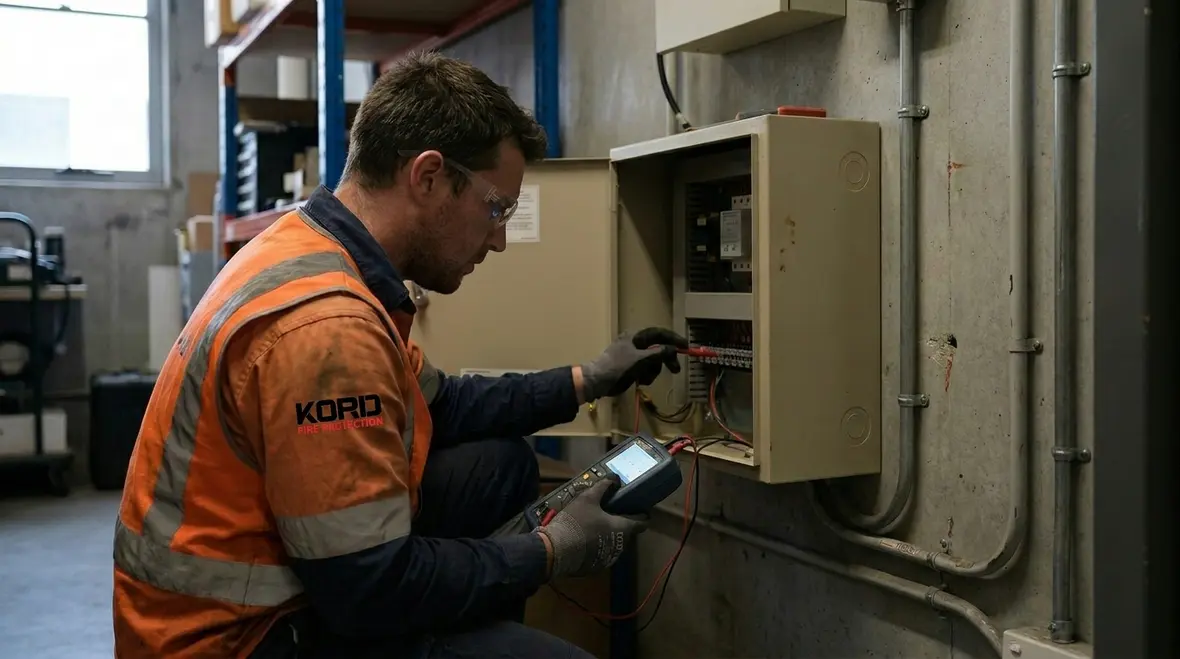
Fire alarm power redundancy typically uses more than one energy path. Usually it starts with the main supply for normal operation, then transitions to backup power when utility power drops. In many commercial and industrial applications, panels use supervised standby batteries. Those batteries support the system for required standby time and then for alarm duration.
However, redundancy does not stop at batteries. Many facilities also add power supplies that manage charging, distribution, and output regulation. Consequently, the system avoids dips that can cause nuisance faults or missed signaling. Additionally, where installations include multiple zones or long cable runs, power distribution planning becomes critical, since voltage at the far end matters.
At the same time, transfer behavior matters. The system should switch without leaving gaps that could delay alarm processing. Therefore, designers and installers plan the changeover so the panel remains within its operating voltage window. In a well designed setup, the transition feels invisible, like a conveyor belt that never stops, even when someone trips a starter switch.
Where distribution planning makes or breaks reliability
Business sites rarely have tidy, compact layouts. They have long runs, multiple devices, extension works, and occasional surprises hiding behind ceilings or inside risers. That means redundancy must account for how power actually travels through the site, not just how it looked on a design sketch. Good planning keeps end-of-line devices from becoming the weak link and helps the whole system ride through outages without drama.
Key Design Choices for Reliable Power During Emergencies
Uninterrupted fire alarm performance depends on design decisions that people rarely notice, until they fail. First, the system must include batteries sized for the correct load and time. That load includes standby draw and alarm draw. If the calculation assumes “best case” conditions, the system can fall short during the real world.
Next, engineers must manage charging settings and battery chemistry compatibility. Incorrect charging rates shorten life, which leads to reduced capacity and unexpected faults. Then cable sizing must support the required current without excessive resistance. Because voltage drops increase with length and load, under sized wiring can quietly weaken the signaling path.
Also, installers need to treat supervision like a feature, not an afterthought. Supervised circuits help detect broken wiring, open circuits, or grounding issues early. As a result, faults appear quickly during routine checks, not during an emergency when everyone suddenly becomes a firefighter with a clipboard.
Finally, designers consider site realities across Australia. Cyclone prone areas, flooding risk zones, dust, heat, and vibration can affect equipment performance over time. Thus, hardware selection and mounting practices help preserve the redundancy’s reliability in harsh conditions. The system may live in a cabinet, but it still has to survive the real world outside that cabinet door.
Testing, Monitoring, and Maintenance That Keep Redundancy Healthy
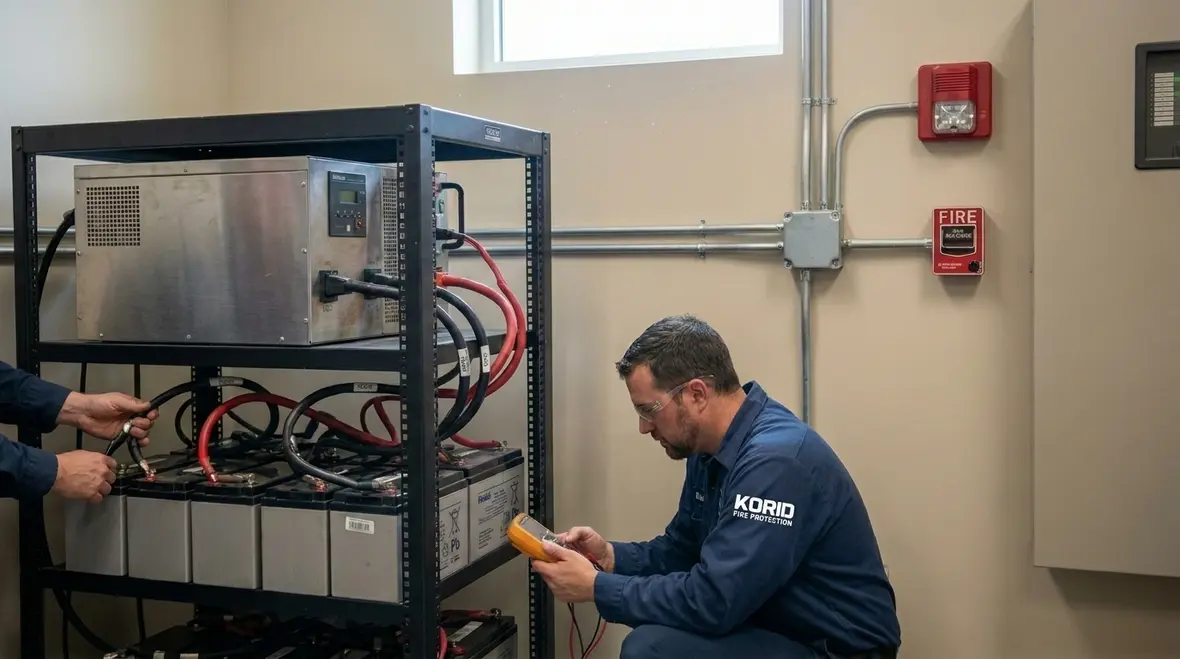
Even a strong design can drift if maintenance falls behind. Batteries age. Terminals loosen under thermal cycling. Chargers drift out of spec. Therefore, ongoing testing must verify that redundancy still performs under load, not just that it “powers on.”
A sound maintenance approach includes battery health checks and functional verification of alarm operation. Technicians should confirm that the system can switch to backup power and sustain the required current draw. They should also check for fault logs, repeated trouble signals, and any patterns that suggest failing components.
Monitoring helps too. Many facilities benefit from service reports and trend tracking so owners see capacity changes before the battery reaches the point of failure. When this is done, the team can schedule replacements during normal downtime, instead of performing emergency swaps while the site is running at full steam.
Here is where Kord Fire Protection becomes a practical partner. They help facilities build a maintenance rhythm that matches operational schedules, documents compliance, and keeps the redundancy performing as intended. In short, they help turn “maintenance” from a box on a form into a real safety system safeguard.
The value of catching battery decline before failure
The smartest redundancy programs do not wait for a fault to become a crisis. They watch trends, compare test results over time, and replace components before the site drifts into risk. That approach reduces unplanned downtime, keeps documentation cleaner, and prevents the kind of last minute scramble that makes every meeting feel longer.
Common Power Problems and How Teams Fix Them Early
Power redundancy often fails due to predictable issues. First, battery capacity drops because of age, improper charging, or high ambient temperatures. Second, voltage drops at end-of-line devices can cause alarms to sound weakly or trigger device faults. Third, loose connections or damaged cables can interrupt supervised paths, creating intermittent troubles that nobody trusts.
Additionally, some sites unknowingly operate with changed loads. Renovations add new equipment. Retail upgrades add additional displays or devices. Industrial expansions can alter electrical loading patterns and heat conditions. If the fire alarm system power plan stays unchanged, redundancy can become insufficient for the updated draw.
To fix these early, teams should revalidate calculations after changes and confirm that device count and spacing match the approved design. Then they should perform targeted testing that focuses on the farthest signaling points and the system’s highest draw state. Because power issues hide in the extremes, a calm methodical test plan catches problems without drama.
And yes, the fire alarm panel will usually report faults with the enthusiasm of a cat knocking things off a counter. The trick is to interpret those signals quickly and correct the root cause.
Meeting Australian Requirements With Documentation and Good Service
Across industrial, retail, and commercial sites, fire alarm systems must meet regulatory expectations for performance, supervision, and ongoing readiness. While specific requirements vary by application and environment, the underlying principle remains steady: the system must operate reliably under fault conditions and power loss scenarios.
Compliance becomes easier when the facility treats power redundancy as part of a documented safety lifecycle. That includes correct battery selection, verified standby and alarm duration calculations, installation quality records, commissioning results, and maintenance evidence. Moreover, service documentation helps owners and managers prove what was tested, when it was tested, and what condition the system achieved during tests.
To manage this without chaos, many organizations rely on a service partner who understands both the engineering intent and the day to day facility needs. Kord Fire Protection can help teams coordinate documentation, testing schedules, and remedial work so that Fire Alarm Power Redundancy stays aligned with real operating conditions, not just the original design snapshot.
Why Kord Fire Protection Supports Uninterrupted Operation
When a site depends on the fire alarm system, the job cannot end at handover. The system must keep performing across seasons, peak trading periods, industrial production schedules, and changing building use. Kord Fire Protection helps bridge that gap by focusing on practical reliability: proper commissioning, careful maintenance planning, and responsive service when faults appear.
Consequently, facility teams gain faster visibility into power health, clearer compliance reporting, and a smoother path to upgrades. And if a battery or charger is trending toward failure, the partner can address it before the system enters trouble mode. That is the difference between protecting people and simply owning a system.
FAQ
Call Kord Fire Protection for Power Redundancy Assurance
Fire safety cannot rely on guesswork. Facility teams should confirm calculations, verify changeover behavior, and keep batteries and power supplies healthy through disciplined service. If Fire Alarm Power Redundancy is already in place, Kord Fire Protection can help validate performance and keep it compliant.
If it is not, they can guide upgrades that protect people and reduce downtime. Book an assessment and sleep better, even when the building does not. For Australian facilities that want reliability without guesswork, that kind of support turns backup power from a technical requirement into genuine operational confidence.

Join Our Newsletter!
Get the latest fire safety tips delivered straight to your inbox From our Newsletter.