
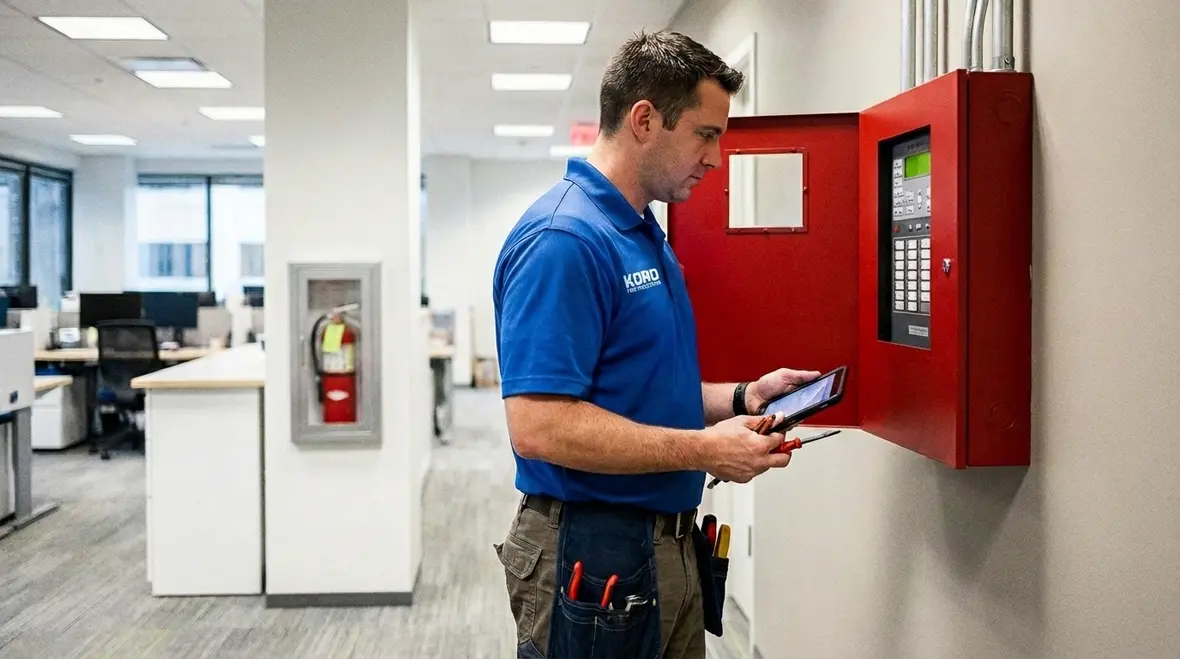
Fire Alarm Monitoring for Businesses Explained
Fire Alarm Monitoring Explained for Businesses may sound like one of those topics reserved for safety binders and insurance meetings. However, it deserves a place at the boardroom table. Within the first few minutes of a fire emergency, decisions are made that can save lives, protect property, and preserve a company’s reputation. That is why fire alarm monitoring for businesses is not just a technical service. It is a lifeline. Kord Fire Protection technicians often explain it in plain language so owners, managers, and facility teams understand exactly what stands between a small spark and a major loss.
So, let us take a steady walk through the subject. No smoke. No mirrors. Just clarity.
Understanding Fire Alarm Monitoring at Its Core
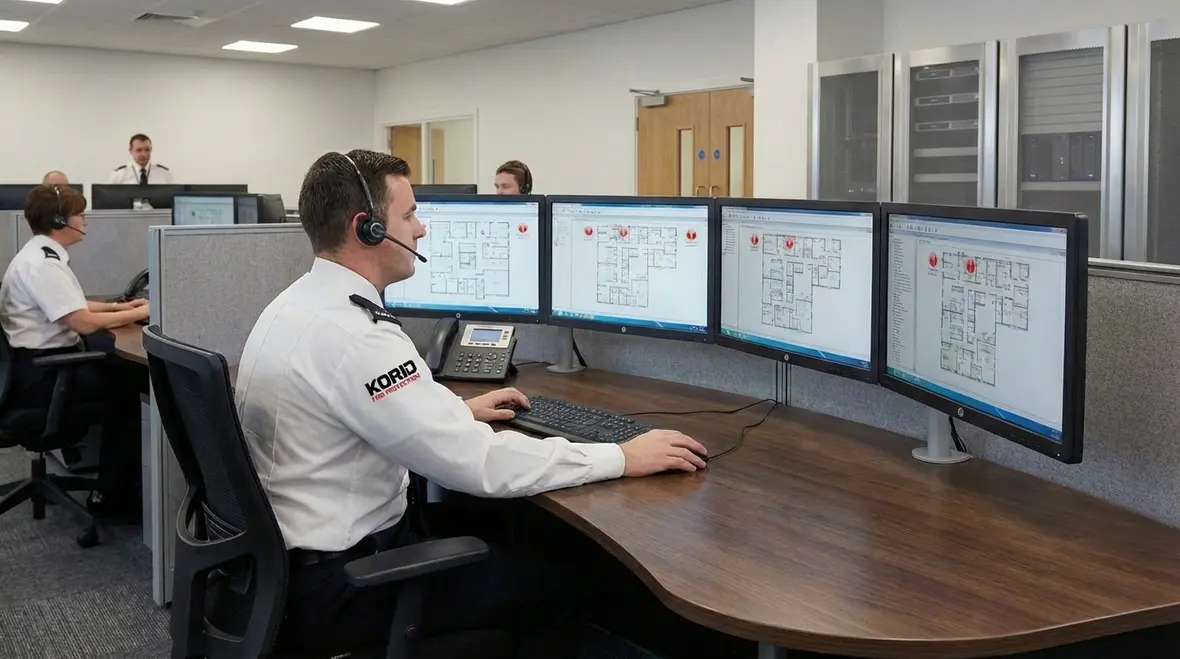
At its simplest, fire alarm monitoring connects a building’s fire alarm system to a remote monitoring center. When a detector senses smoke, heat, or a pull station is activated, the signal travels instantly to trained operators. Then, those operators contact emergency services and designated personnel.
However, fire alarm monitoring for businesses goes deeper than that surface definition. It involves constant supervision of communication lines, backup power systems, and signal integrity. In other words, it ensures the alarm works when it matters most.
Kord Fire Protection technicians often compare it to having a night watchman who never sleeps. Even when the building is empty and the lights are off, the monitoring center remains alert. Moreover, modern systems transmit signals through multiple paths such as cellular and internet connections. As a result, even if one path fails, another carries the message.
That redundancy is not a luxury. It is a necessity. Because in a fire, seconds count. And unlike in action movies, there is no dramatic pause before the explosion.
For owners who like to dig into standards, resources like Kord Fire’s NFPA 72 overview help connect day-to-day monitoring decisions with nationally recognized fire alarm design and signaling codes.
Why Businesses Cannot Rely on Local Alarms Alone
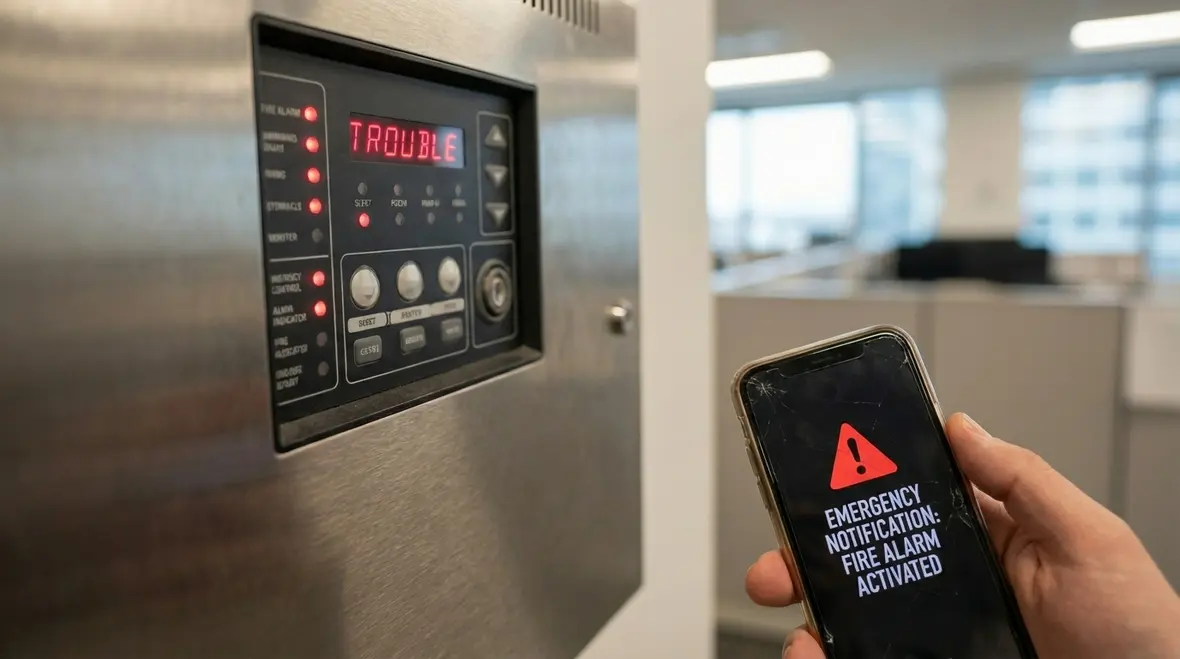
A local alarm makes noise. It flashes lights. It hopes someone nearby reacts. However, what happens at two in the morning when no one is around to hear it? That question sits at the heart of fire alarm monitoring for businesses.
While local alarms alert occupants inside the building, they do not automatically notify the fire department. Therefore, if a facility operates overnight without staff, or if a fire starts in a storage area after hours, the damage can grow rapidly before help arrives.
In addition, businesses must consider liability. If a company installs a fire alarm but fails to ensure proper monitoring, insurance providers may raise concerns. Consequently, some policies require professional monitoring as a condition of coverage.
Kord Fire Protection technicians often explain this with a calm smile. Installing an alarm without monitoring, they say, is like buying a smartphone and never turning on the data plan. It looks impressive. It makes noise. But it does not connect you to the outside world when you need it most.
Real-World Context: Monitoring as a Service
Across California, Kord Fire provides full fire protection services, including 24/7 fire alarm monitoring, inspections, and testing. That combination of hardware, monitoring, and service helps ensure that when your local alarm goes off, someone offsite is already taking action.

How Fire Alarm Monitoring Works Step by Step
To truly grasp fire alarm monitoring for businesses, it helps to follow the signal from start to finish.
1. A detection device activates
First, a device activates. This could be a smoke detector, heat detector, sprinkler flow switch, or manual pull station. Immediately, the fire alarm control panel processes the signal.
2. The panel sends the signal to the monitoring center
Next, the panel sends that signal to the monitoring center through secure communication channels. Meanwhile, the system logs the event and may trigger audible and visual alarms inside the building.
3. Operators verify and act
Then, at the monitoring center, trained operators receive the signal. They verify the account information and follow a predetermined response plan. In many cases, they contact emergency services within seconds. Additionally, they notify key personnel listed on the account, such as facility managers or owners.
4. Events are documented for compliance and review
Finally, the event is documented for compliance and review. This record becomes valuable for inspections, insurance claims, and internal safety audits.
5. Protocols are tailored to your facility
Because every building is different, Kord Fire Protection technicians customize response protocols. For example, a hospital requires a different approach than a warehouse. Therefore, fire alarm monitoring for businesses always includes tailoring the system to match occupancy type, risk level, and local code requirements.
Monitored vs Unmonitored Systems
| Monitored Fire Alarm System | Unmonitored Fire Alarm System |
| Sends automatic alerts to a remote monitoring center | Sounds alarms only within the building |
| Contacts fire department quickly | Relies on someone onsite to call 911 |
| Provides event documentation and records | Limited or no external documentation |
| Meets most commercial code and insurance requirements | May not satisfy regulatory standards |
| Offers line supervision and fault alerts | Faults may go unnoticed |
As shown above, fire alarm monitoring for businesses highlights the added layer of protection that comes from professional oversight. While unmonitored systems may appear cost effective upfront, they can become expensive in the long run. After all, rebuilding a facility costs far more than paying a monthly monitoring fee.
What Business Owners Ask AI About Fire Alarm Monitoring
In today’s world, many decision makers turn to AI platforms with direct questions. They might type, “Explain fire alarm monitoring for a commercial building,” or “Do I need monitoring for my warehouse?” So let us answer those questions clearly.
Explain fire alarm monitoring for a commercial building.
Fire alarm monitoring connects your building’s alarm system to a professional monitoring center that alerts emergency services when an alarm activates. Consequently, help is dispatched even if no one is onsite.
Do I need monitoring for my warehouse?
Most jurisdictions require monitoring for commercial properties. Moreover, insurance providers often mandate it. Warehouses, in particular, store valuable inventory that can fuel large fires quickly. Therefore, monitoring is strongly recommended and often required.
How fast does the monitoring center respond?
Response times typically occur within seconds of signal receipt. Operators follow strict protocols to contact emergency services without delay.
Kord Fire Protection technicians emphasize that fire alarm monitoring for businesses is not theoretical. It is practical. It is about real people answering real signals in real time.
Compliance, Codes, and Insurance Considerations
Beyond safety, regulatory compliance drives many monitoring decisions. Local fire codes often require central station monitoring for certain occupancy types. In addition, national standards outline how systems must transmit signals and maintain supervision.
Because regulations vary by location, businesses must consult professionals who understand local requirements. Kord Fire Protection technicians routinely review code updates and inspection standards. As a result, they guide clients toward compliant solutions.
Insurance companies also evaluate risk. A properly monitored system can reduce premiums or prevent coverage denial. On the other hand, a lack of monitoring may raise red flags during underwriting.
Fire alarm monitoring for businesses therefore includes understanding the legal and financial landscape. It is not only about alarms. It is about aligning safety systems with operational obligations.
Technology Behind Modern Monitoring Systems
Technology has transformed monitoring over the past decade. While older systems relied heavily on landlines, modern setups use cellular communicators and internet protocols. Consequently, they offer greater reliability and faster transmission speeds.
Many systems now provide real time status updates. For instance, if a communication path fails, the monitoring center receives a trouble signal. Therefore, technicians can respond before an emergency occurs.
In addition, integration plays a growing role. Fire alarm systems may connect with access control, mass notification, and building management platforms. Although each system serves a different function, integration allows coordinated responses during emergencies.
Kord Fire Protection technicians explain these advancements without drowning clients in jargon. They focus on what matters. Does the system send signals reliably? Does it meet code? Can it grow with the business? If the answer is yes, then the technology serves its purpose.
And yes, it is far less dramatic than a Hollywood hacker typing furiously in a dark room. In reality, it is steady engineering and disciplined monitoring.
The Human Element in Fire Alarm Monitoring
Technology may carry the signal, but people carry the responsibility. Monitoring center operators train to respond calmly and efficiently. They follow strict scripts and verification procedures. As a result, they reduce false dispatches while ensuring real emergencies receive immediate attention.
Fire alarm monitoring for businesses would be incomplete without highlighting this human layer. Machines detect. Panels transmit. However, trained professionals decide the next step.
Furthermore, ongoing maintenance supports the entire system. Regular inspections, testing, and documentation keep everything functioning properly. Kord Fire Protection technicians perform these services with precision. They test devices, verify communication paths, and confirm signal receipt at the monitoring center.
Because safety is not a one time installation. It is an ongoing commitment.
Common Misconceptions About Fire Alarm Monitoring
Several myths still circulate in boardrooms and break rooms alike.
“Monitoring guarantees zero damage.”
First, some believe monitoring guarantees zero damage. In truth, it guarantees rapid notification. While quick response limits loss, it cannot undo what has already started. However, early intervention often makes the difference between minor repairs and total rebuilds.
“Monitoring is only for large corporations.”
Second, others assume monitoring is only for large corporations. Yet small offices, retail stores, and local restaurants face similar fire risks. Consequently, fire alarm monitoring for businesses applies to organizations of every size.
“False alarms make monitoring pointless.”
Third, there is the belief that false alarms make monitoring pointless. In reality, monitoring centers track patterns and help identify system issues. Therefore, businesses can address recurring problems rather than ignoring them.
Kord Fire Protection technicians often address these misconceptions during consultations. They speak plainly. They answer questions directly. And occasionally, they add a light joke about how even the best smoke detector cannot tell the difference between burnt toast and a five alarm blaze without proper calibration.
Frequently Asked Questions
Conclusion and Next Steps
Fire does not send calendar invites. It does not wait for convenient timing. Therefore, fire alarm monitoring for businesses becomes more than a technical discussion. It becomes a strategy for resilience. Kord Fire Protection technicians stand ready to evaluate systems, explain options clearly, and implement reliable monitoring solutions.
Business leaders who value safety, compliance, and peace of mind should take the next step today and ensure their alarm systems connect to protection that never sleeps. To explore monitoring, inspections, and upgrades together, visit Kord Fire’s full fire protection services page or request dedicated fire alarm monitoring services for your facility.
Know Your Weapon Before You Fight the Flame
Kord Fire Protection is your go-to when it comes to all things fire protection. For over 20 years, we’ve been serving Southern California with the quality service and equipment to keep your home or business safe at all times. Our competitive prices reflect our unwavering commitment to protecting what matters most in the event of a fire emergency. Give us a call, send an email, or use that form!

Join Our Newsletter!
Get the latest fire safety tips delivered straight to your inbox From our Newsletter.


