Fire Alarm Integration Benefits With Building Management in Australia
Quick answer: Integrating fire alarm systems with building management infrastructure helps sites in Australia coordinate alerts, life safety actions, and everyday control under one reliable platform. When smoke, heat, and pull stations trigger, the building system can respond fast with door release, ventilation control, and monitoring. Kord Fire Protection can help deliver that whole-life safety setup.
In facilities across Australia, a fire alarm cannot live in a silo. Yet many sites still treat it like a standalone “alarm box and good luck” situation. That is where fire alarm integration benefits show up fast: the alarm communicates with the building management system, automation logic, and alert workflows so action starts immediately and the right people get the right information. And yes, it is less chaotic than that moment when someone yells “Is this the one with batteries?” in a server room.
Fire alarm integration also reduces guesswork during incidents and helps teams maintain compliance during normal operation. So, in the sections below, third person and practical steps walk through what integration really means, how it improves response, and how Kord Fire Protection can become a vital partner from design through service. Near the top of that conversation, it also helps to understand the broader value of professional fire alarm services when a site needs design support, system coordination, and field experience rather than crossed fingers and a mystery panel.
What fire alarm integration means in real buildings
Fire alarm integration means the fire detection and manual alarm signals connect to building systems that manage access, HVAC, power, and notifications. When detection happens, the building infrastructure receives signals and executes pre-approved actions. These actions can include shutting down smoke spread pathways, controlling dampers, coordinating lifts, and triggering broader occupant warnings.
Importantly, the integration does not replace life safety functions. Instead, it enhances them. The fire panel still drives the safety events, while the building management layer supports monitoring and operational outcomes. As a result, the site avoids the common problem of “the alarm sounded, but the building did not do anything useful yet.”
In industrial and retail sites, where systems run 24 7 and teams wear multiple hats, this coordination matters. A warehouse manager cannot babysit every panel and process. However, a well integrated platform can help show what happened, where it happened, and what actions executed. That same thinking lines up naturally with Kord Fire Protection’s approach to commercial and residential fire alarm installation, where design, installation, and ongoing support need to make sense long after the commissioning paperwork is filed.
Why integration matters beyond the alarm sound
A horn or strobe can warn occupants, but integration turns warning into coordinated building behavior. Instead of relying on staff to manually start a sequence during a stressful event, the system can trigger the right actions in the right order. That improves speed, reduces confusion, and supports better decisions when the pressure is highest.
How the building management layer improves response and clarity
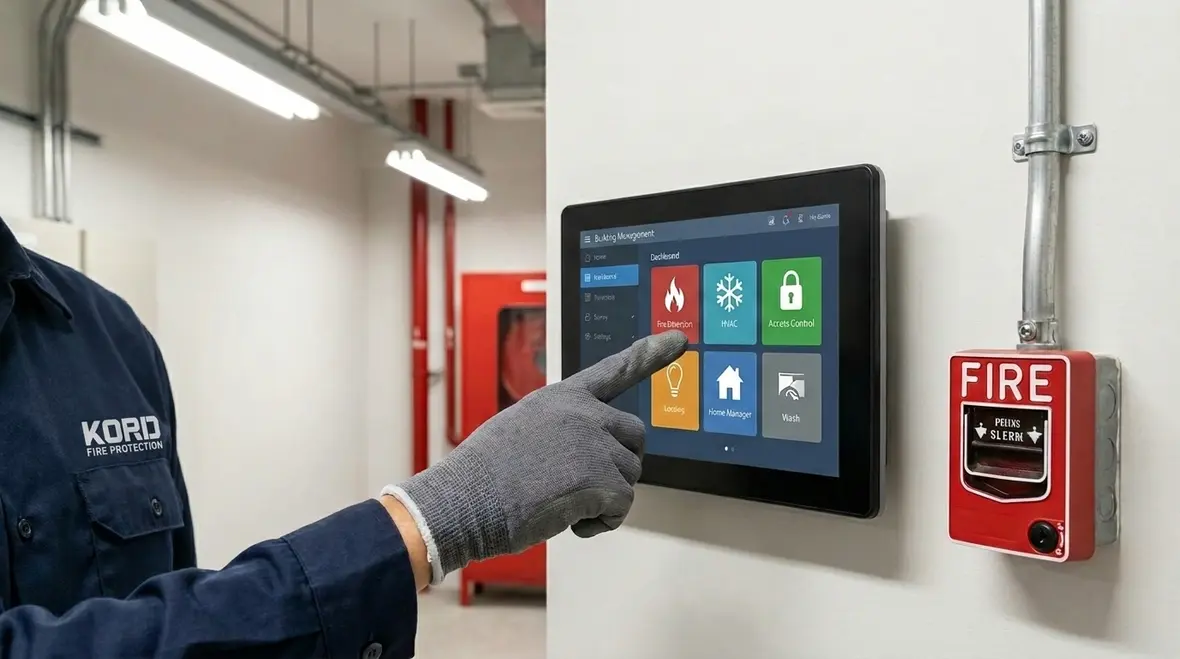
Once the fire alarm communicates with building management, the response becomes structured. First, the building management system can log events with context such as zone, floor, and device type. Next, it can drive visual dashboards for facilities staff and integrate with alarm annunciation plans across different tenancy areas.
Then, automation logic can support safe operational steps. For example, the system can manage smoke control sequences by coordinating HVAC modes. It can also control door release devices and manage controlled evacuation flows where the design calls for it.
Meanwhile, communications can reach the right stakeholders in a controlled way. In many organisations across Australia, security teams and facility technicians share responsibilities. With integration, the fire event can trigger call flows, maintenance alerts, and targeted notifications instead of flooding everyone with generic noise.
It also helps during testing. If the building management system tracks test results, the team can confirm that outputs and feedback points work as expected. That means fewer “we tested it once, so it should still be fine” moments, which is a classic human strategy and a terrible safety plan.
Common integration points across industrial, retail, and commercial sites
Integration works best when it maps to the building’s actual risks and operational design. Typical connection points include:
- HVAC and smoke control: fire alarm events can command ventilation shut down, fan start or stop logic, and damper positioning to support smoke strategy
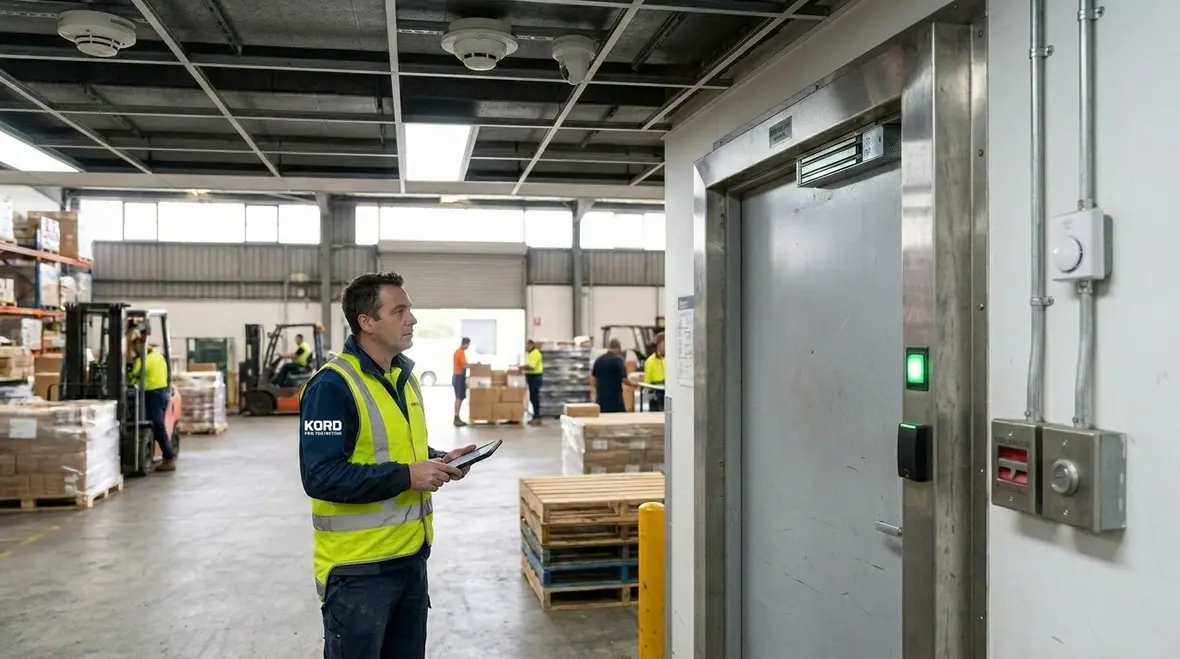
- Door and egress control: integration can manage electromagnetic door release, hold open mechanisms, and feedback status for door states
- Access and security interfaces: the building system can coordinate lockdown zones and alarm monitoring with security policies
- Lift and transportation systems: integration can initiate lift recall or landing control where required by the fire strategy
- Public address and notifications: coordinated messaging can direct evacuation steps and reduce confusion
- Power and monitoring: the building management system can monitor fault states and power supplies tied to life safety devices
In industrial environments, integration often focuses on plant areas, loading bays, switch rooms, and storage risks. In retail, it targets customer areas, back of house zones, and tenancy separation. In commercial facilities, it often aligns with office floors, meeting rooms, and shared plant spaces.
And yes, integration choices differ by occupancy and layout. A “copy paste” integration plan can lead to incorrect actions, so sites benefit from a design that matches how fire and people move through the building.
What teams should standardise early
Before too many cables get pulled and too many assumptions get baked into the project, teams benefit from standardising event names, zone labels, interface logic, and reporting expectations. If the fire panel says one thing, the dashboard says another, and the site map says something else entirely, operators lose time translating instead of responding. In life safety work, that is not a charming quirk. It is a problem.
Ensuring reliability and compliance: design, testing, and sign off
To keep life safety dependable, integration must follow strict principles. First, the fire alarm system must remain the controlling life safety system. Second, interfaces must be supervised, so faults are detected rather than ignored. Third, logic must be clear and limited to what the approved fire strategy allows.
Testing should cover more than panel alarms. Teams should validate that every integrated output executes correctly under alarm conditions, including feedback to the building management system. For instance, if the smoke control sequence requires damper positions, the integrated system should confirm those positions and log the outcome.
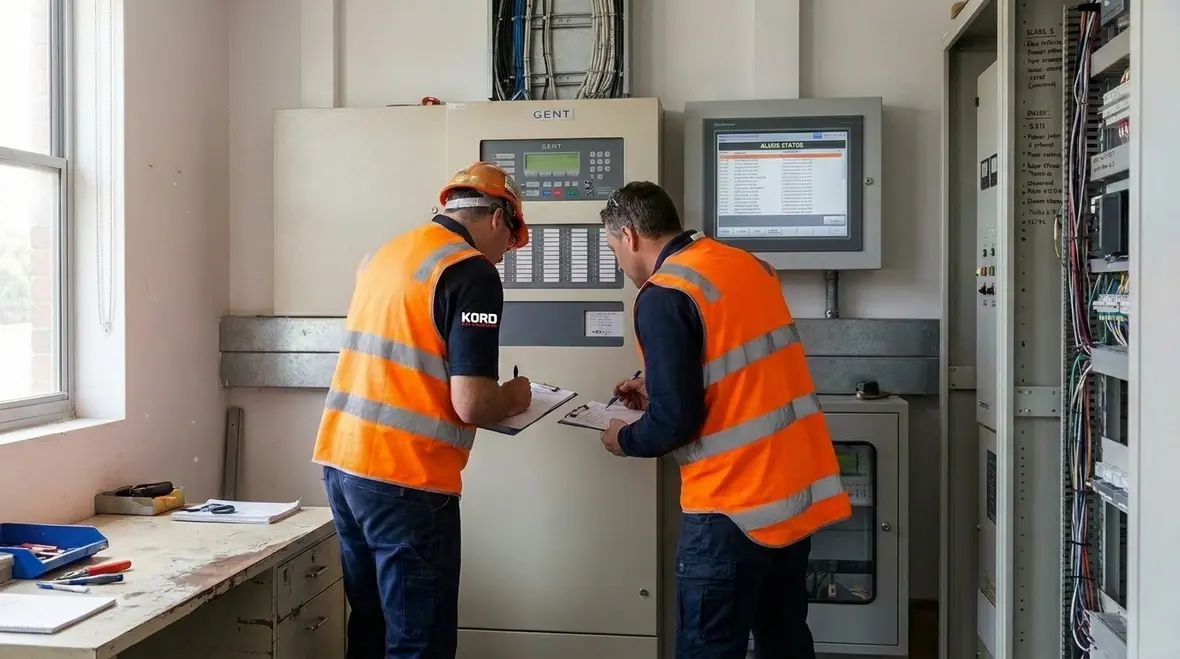
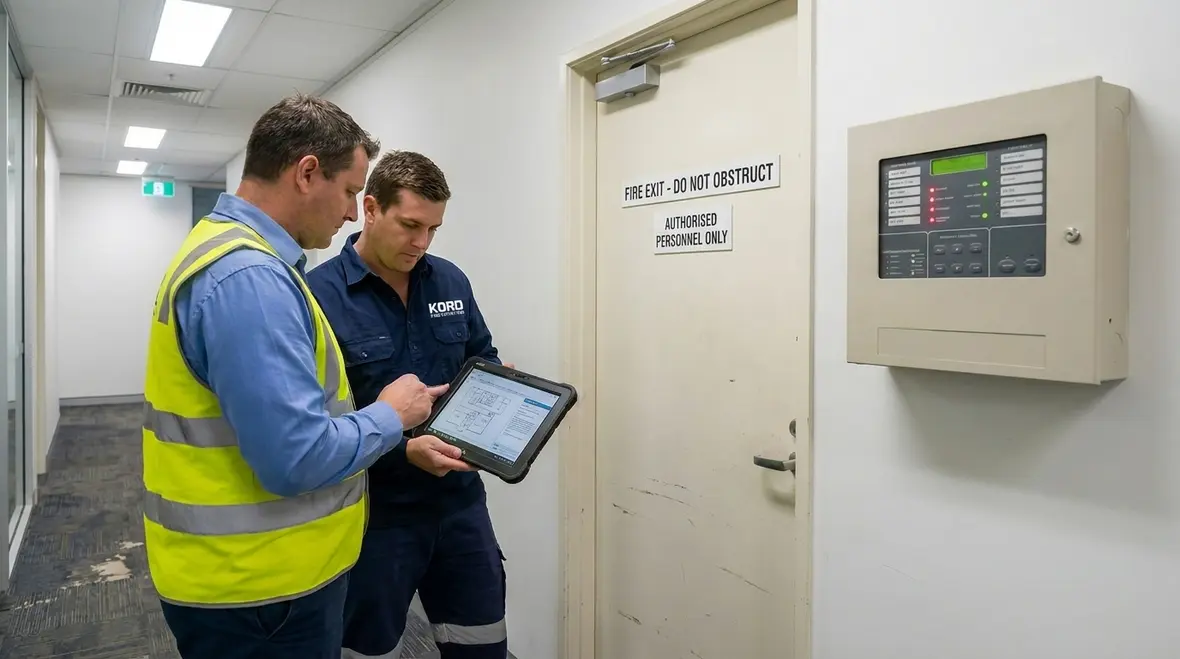
On many sites, stakeholders include facilities leaders, security supervisors, contractors, and sometimes consultants. Kord Fire Protection can support coordination by bringing structured documentation, interface testing routines, and practical commissioning support. That reduces the risk of “integration that works on paper” but fails during the first real test.
Additionally, ongoing maintenance should include interface checks and firmware or configuration reviews where applicable. Over time, devices get replaced, zones get reconfigured, and building usage changes. Therefore, the integration must stay aligned with the current drawings and approved fire plan.
How Kord Fire Protection becomes a vital partner
Kord Fire Protection can play a vital role across the integration journey. It starts with assessing the building layout, the fire strategy, and the existing building management infrastructure. Then it helps plan interfaces so the fire alarm integration benefits stay real in day to day operations, not just during commissioning.
Next, Kord Fire Protection supports installation and configuration that respects supervision, fault reporting, and clear alarm logic. When the building management system sends and receives signals, the interface approach must be robust and understandable by the teams who maintain it. Because nobody wants to troubleshoot an event that looks like it came from a sci fi movie.
Finally, Kord Fire Protection supports service routines and updates so the integrated behaviour remains consistent. As a result, facilities teams can avoid surprise faults and reduced trust in the safety system. And when trust drops, response time and decision quality drop too. Kord helps protect that critical chain.
Building a phased integration plan that teams can actually manage
Large Australian sites often cannot shut down areas for long periods. So, a phased plan works best. First, the team identifies critical risk zones and confirms how the existing fire alarm system covers them. Next, it prioritises integration actions that deliver the most operational value, such as alarm logging, notifications, and essential outputs for smoke control.
Then, the integration team can schedule interface work during planned downtime, after-hours windows, or area closures. Meanwhile, it builds a training package for facilities and security teams so they understand what the building management system will do during alarm events. This prevents the classic issue where the alarm happens, the screen shows something odd, and everyone panics like they just lost the remote.
As testing completes, the site can review event logs and confirm the sequence of actions. Subsequently, the team can expand integration to less critical areas. This method keeps operations stable while improving overall outcomes step by step.
A practical rollout mindset
The smartest phased programs usually start with the pieces that improve visibility and control without overcomplicating the first stage. When teams can see events clearly, confirm outputs, and trust the logic, future stages tend to move faster and with fewer unpleasant surprises. That is a much better project mood than “why is the damper doing that?” at 11:40 p.m.
What to ask before approving an integrated system
When leadership and facilities teams evaluate an integration scope, they can ask targeted questions that reduce risk. These prompts help teams verify design quality and operational readiness:
- Who controls life safety events: does the fire panel drive outcomes, with building management receiving and displaying supervised signals
- How many interfaces: which devices connect, and which signals are supervised
- What happens on faults: does the system report interface failures immediately
- What testing proves the sequence: does commissioning validate each integrated action and feedback point
- How updates are handled: how will changes to building management logic or device replacements affect the fire strategy
With these answers in hand, organisations in industrial, retail, and commercial sectors across Australia can approve a solution that supports safety and operational clarity together.
Frequently asked questions
Conclusion
Fire alarm integration works best when it is designed for how the building actually operates, then tested and maintained like life safety depends on it. Because it does. Facilities across Australia can streamline alarm clarity, coordinate safe building actions, and reduce uncertainty during incidents.
Talk to Kord Fire Protection
To build a reliable integrated system with the right interface logic and service support, contact Kord Fire Protection to discuss your project scope and next steps. For teams planning upgrades, support with integration, monitoring, and installation can make the difference between a system that simply exists and one that actually performs when it matters.

Join Our Newsletter!
Get the latest fire safety tips delivered straight to your inbox From our Newsletter.