Industrial Fire Pump Commissioning in Australia Explained
Quick Answer: Industrial fire pump commissioning is the disciplined process of proving a pump system performs exactly as designed under real alarm and flow conditions. It verifies controls, priming, pressure, flow, and alarms, and it documents results for compliance and confidence. Partnering with Kord Fire Protection helps teams stay ahead of faults before they become expensive surprises.
In Australia, facilities across industrial, retail, commercial, and multi-site portfolios rely on dependable fire protection. That is why industrial fire pump commissioning matters early and often, starting right after installation and continuing through any updates. In the first days of handover, commissioning teams validate that every component behaves as required. Then, over time, they prove the system remains steady when conditions change. And yes, people sometimes treat commissioning like it is “just paperwork.” It is not. It is the moment the system shows its work.
For facilities looking to connect commissioning with dependable downstream support, Kord Fire Protection’s full fire protection services offer a natural next step between installation, verification, and long-term readiness. And because alarm integration matters just as much as hydraulic performance, teams often benefit from aligning pump work with fire alarm service systems as the site moves from construction into live operation.
Industrial fire pump commissioning: what it really proves
Industrial fire pump commissioning verifies performance, not hope. Specifically, it confirms the system can deliver the required pressure and flow when the building needs it most. It also confirms that the electrical controls, starting sequence, and protective functions behave as intended.
Moreover, the process checks how the pump system reacts to the real-world triggers that start the chain of protection. For example, it evaluates pump start on pressure drop or fire alarm input, and it confirms that valves, controllers, and sensors respond correctly. Transitioning from “installed” to “commissioned” gives the facility manager something solid: evidence.
And when evidence is clear, maintenance becomes easier. Then compliance reviews become smoother. Finally, operational teams stop guessing and start monitoring with confidence. A fire pump system should not feel like a mystery box, and commissioning is the opposite of that.
Pre commissioning planning that avoids delays on site
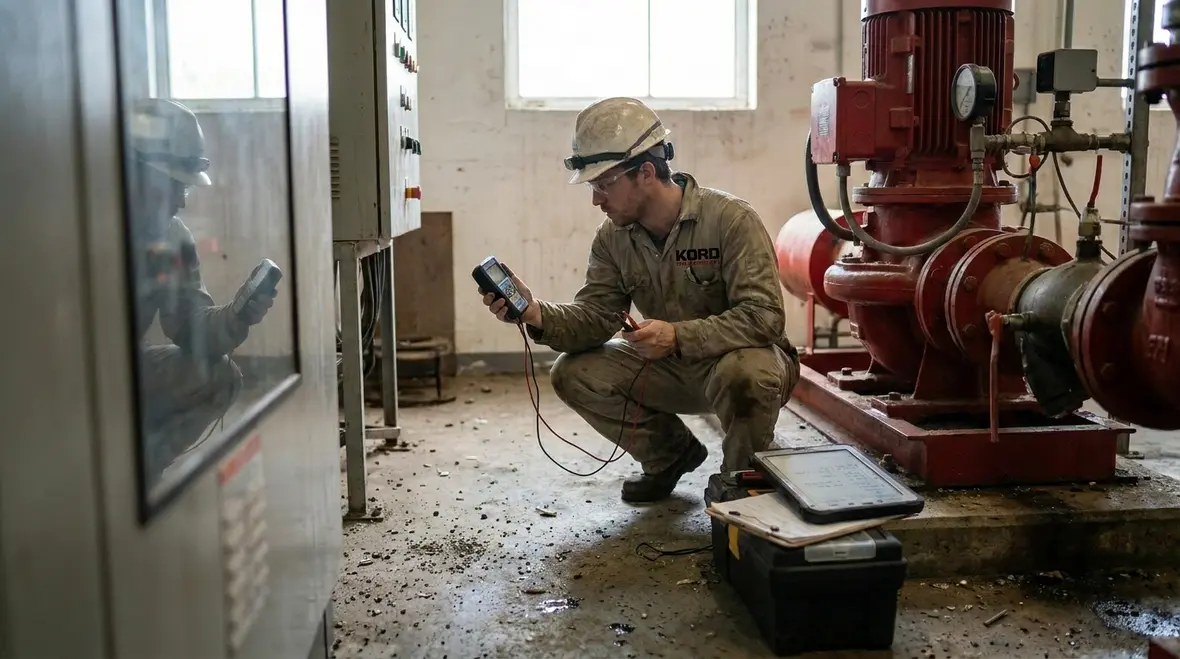
Before the first test, a commissioning plan sets the rhythm. It lists roles, safety controls, test sequence, acceptance criteria, and documentation requirements. Consequently, teams reduce downtime and avoid rework. They also prevent the classic scenario where one trade finishes installation, and another trade says, “We should have coordinated that.”
For multi-trade industrial and retail sites across Australia, coordination matters even more. Different areas may be live, occupied, or time restricted. Therefore, teams schedule testing windows, plan water usage, and confirm isolation procedures with the client and electrical contractor.
In addition, good planning confirms that instrumentation is ready. Pressure gauges, flow measurement devices, and test leads must be calibrated and suitable for the ranges expected. If the measurement chain is unreliable, the results become questionable. Then, instead of building confidence, the process creates doubt. Nobody wants doubt. Well, nobody sane.
Why early coordination changes the whole commissioning day
This planning stage also sets expectations for access, authority, and communication. If one person owns controller checks, another oversees hydraulic testing, and another signs off isolations, everyone knows where decisions live. That sounds simple because it is simple, but simple discipline prevents very complicated headaches later.
Core commissioning steps for reliable pump performance
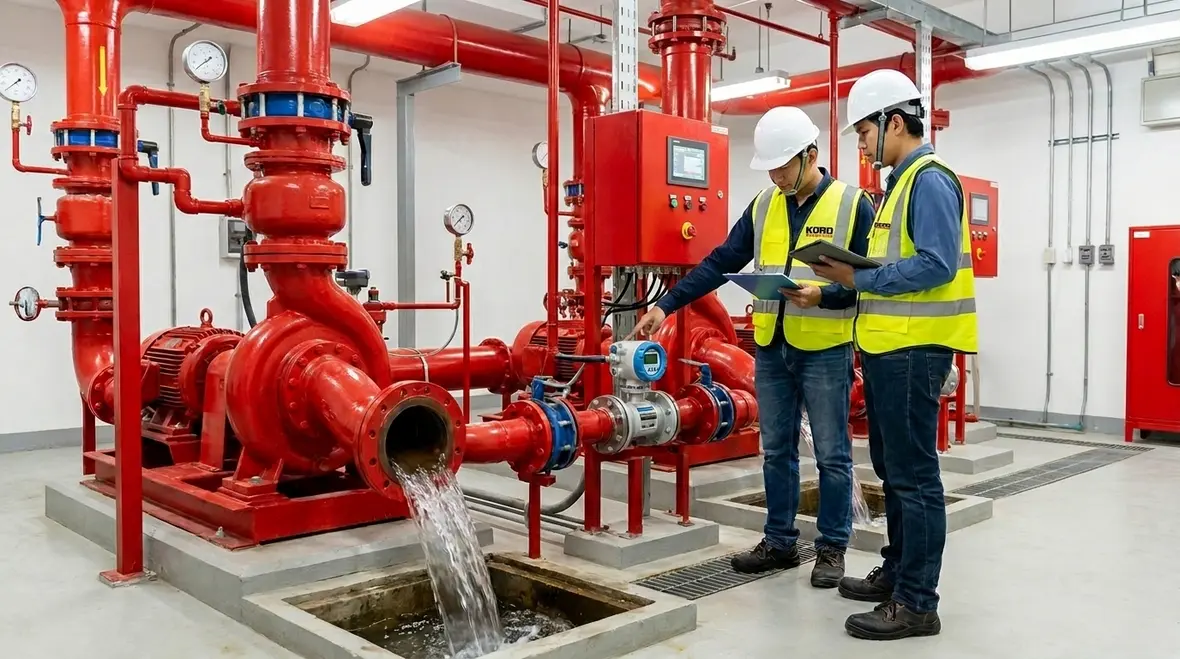
Once the site is prepared, industrial fire pump commissioning moves into the practical checks. The sequence usually follows control verification, hydraulic behavior, then safety and alarm integration.
1) System control and interlock verification: Commissioning teams confirm start and stop logic, confirm interlocks for valves and controls, and verify that alarms and status signals reach the right panels. They test both normal and emergency operating paths.
2) Electric performance and protective functions: They verify motor starting behavior, phase rotation where applicable, overload protection settings, and controller readings. They also check that the system protects itself when it should.
3) Hydraulic performance testing: Teams perform flow and pressure tests across expected operating points. They confirm that pressure stabilises as demand changes and that the pump curve matches design intent.
4) Valve operation and water supply behavior: They verify suction conditions, check valve performance, and confirm that valve positions correspond to controller logic.
Next, they validate what the system does when it matters: when a demand signal occurs, the pump starts correctly, pressure rises promptly, and the system provides the required performance. After that, they document results with measurements and pass fail outcomes so stakeholders can review with clarity.
What separates routine checking from actual proof
A proper commissioning routine does not stop at “the pump turned on.” It asks whether it turned on for the right reason, at the right time, with the right sequence, and with the right information reaching the right people. That is a lot of “rights,” but emergencies are not the place for “close enough.”
What to check in controls, alarms, and integration
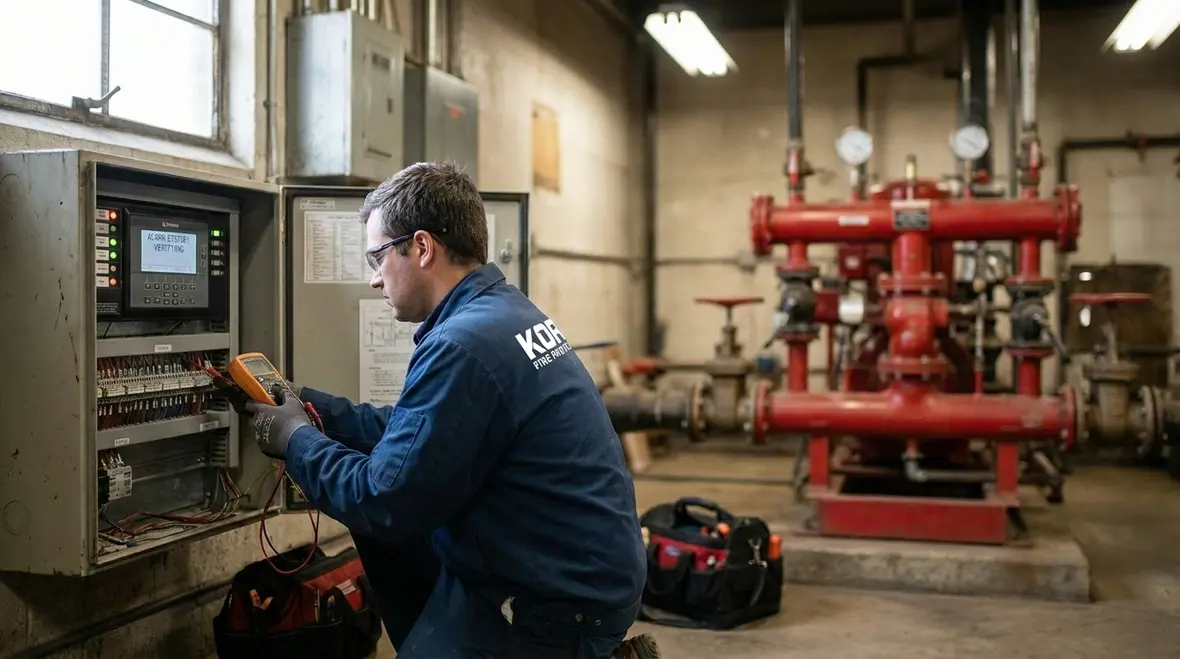
Industrial fire pump systems rarely operate alone. They link into fire alarm control panels, building management systems, and supervisory monitoring. As a result, commissioning must treat integration as a first-class activity, not a final afterthought.
During checks, teams confirm that alarms identify the right condition. For instance, a controller should report a pump fault without confusion, and it should distinguish between “start failed” and “pressure not achieved.” Transition words matter here because the logic matters: first verify signals, then verify priorities, then verify response timing.
They also check that supervisory signals and fault messages display consistently. Moreover, they confirm any change of state logs and alarm history retain meaningful data. That helps facilities during incident reviews and routine inspections.
And yes, sometimes a system “works” but only because it is vague. A vague alarm is like a vague movie review. It might not ruin your weekend, but it will not help when the building needs facts.
Safety, compliance, and documentation that auditors trust
Safe commissioning requires disciplined procedures. Teams isolate where needed, manage water discharge responsibly, and ensure personnel understand test hazards like sudden pump start or pressure surges. They follow site rules and coordinate with operations to keep the building running while tests occur.
In Australia, facility stakeholders expect documentation that stands up to scrutiny. Therefore, commissioned systems should include test results, controller settings used during tests, calibration certificates for key instruments, and clear evidence of acceptance criteria. Transitioning from test notes to a final commissioning record reduces friction during compliance audits and future handovers.
Additionally, strong documentation helps future maintenance teams. When a controller setting changes or a sensor fails later, the facility can trace what “good” looked like. Then troubleshooting becomes faster, and downtime drops.
Kord Fire Protection can be a vital partner in this step, because commissioning work often spans multiple disciplines: pumps, controls, alarms, isolations, and reporting. When a partner brings a unified approach, the commissioning package stays complete, consistent, and ready for real-world review, not just internal optimism.
How Kord Fire Protection supports industrial fire pump commissioning
Kord Fire Protection can help facilities treat commissioning like a system, not a series of isolated tests. That matters because fire pump installations live at the intersection of engineering and operations. Consequently, a strong partner aligns technical outcomes with how the site actually works.
For many Australian industrial and commercial sites, the challenge is continuity. The facility needs dependable outcomes now and predictable support later. Kord Fire Protection can support that by helping teams plan commissioning activities, verify integration details, and ensure documentation meets the level stakeholders require.
Also, Kord Fire Protection helps bridge communication between contractors and facility owners. Transitioning from installation to acceptance becomes smoother when everyone uses the same language: performance targets, alarm definitions, and control logic outcomes. That reduces confusion and keeps schedules on track.
Finally, commissioning does not end on the test day. Kord Fire Protection can support ongoing readiness through inspection and maintenance planning, so the system stays stable as the building changes. After all, buildings evolve, and fire protection needs to evolve with them. Even superheroes need upkeep.
Common commissioning pitfalls and how to prevent them
Commissioning fails when assumptions slip in. One common pitfall is testing without confirmed instrumentation calibration. Another is skipping integration checks and assuming signals arrive correctly at the panel. Yet another is relying on a single operating point instead of validating performance through expected conditions.
Furthermore, facilities sometimes miss the human side. If operational staff do not understand alarm meanings, they may respond slowly or incorrectly during a real event. Transition words help prevent this: first train, then confirm understanding, and finally document response steps.
Then there is the classic schedule trap. Teams compress commissioning to “save time,” and that is usually how rework enters the conversation. A measured approach, with clear acceptance criteria and a documented process, prevents that scramble.
When Kord Fire Protection supports the effort, it helps teams reduce these pitfalls through structured testing and clear reporting. That creates confidence that lasts well beyond handover day.
FAQ
Conclusion: get commissioning right before the first emergency
Industrial fire pump commissioning turns an installed system into a proven system. It validates controls, hydraulic performance, alarms, and documentation so your team can trust what happens during demand. That confidence is not a luxury. It is the baseline that keeps decisions calm when pressure rises.
If your facility needs a calm, structured commissioning approach across industrial, retail, and commercial sites in Australia, contact Kord Fire Protection. They can help align test results, integration, and reporting into a package that stands up when it matters most.

Join Our Newsletter!
Get the latest fire safety tips delivered straight to your inbox From our Newsletter.