Fire Alarm Detection for Large Spaces with Beam Detection
For large spaces, fire safety teams often rely on our beam smoke detection systems for large spaces because they can monitor vast areas with fewer devices than point detectors. In other words, instead of trying to “watch the whole world” with thousands of sensors, they watch the way smoke interrupts light. And yes, the beam detector still works when you do not want your ceilings cluttered like a Christmas tree.
Then the question becomes simple: how does a beam detection system actually find smoke early enough to matter? Kord Fire Protection technicians often explain it in a clear, practical way, because every building behaves differently. They focus on how the beam path sits in the real space, not just on paper drawings.
How a Beam Detection System Works in Practice
A beam smoke detection system uses a light source and a receiver aimed across a space. When smoke enters the path, it scatters and weakens the light. As a result, the system measures a drop or change in the light signal and triggers an alarm decision based on programmed sensitivity and timing.
First, the system aligns the sender and receiver so the beam travels through the occupied zone. Next, it stores a stable baseline signal for “normal clear air.” After that, it continuously compares live readings to the baseline. Therefore, gradual effects, like steady dust, get handled through designed thresholds and drift compensation.
Most beam systems also use signal processing to reduce false alarms caused by minor changes. However, building motion can still influence the beam path. For that reason, proper mounting and stable structures matter. Kord Fire Protection technicians typically verify mounting points, check vibration conditions, and confirm that the beam path stays stable through seasonal changes.
One more practical detail matters: sight lines. If a forklift, scaffold, or hanging obstruction blocks the beam, the system may interpret it as smoke. Therefore, installers plan the route so it crosses open space and avoids common traffic patterns. It is like planning a camera shot for security footage. If someone keeps walking into the frame, the system will “see trouble” even when none exists.
Real World Use Cases for Beam Detection in Fire Alarm Environments
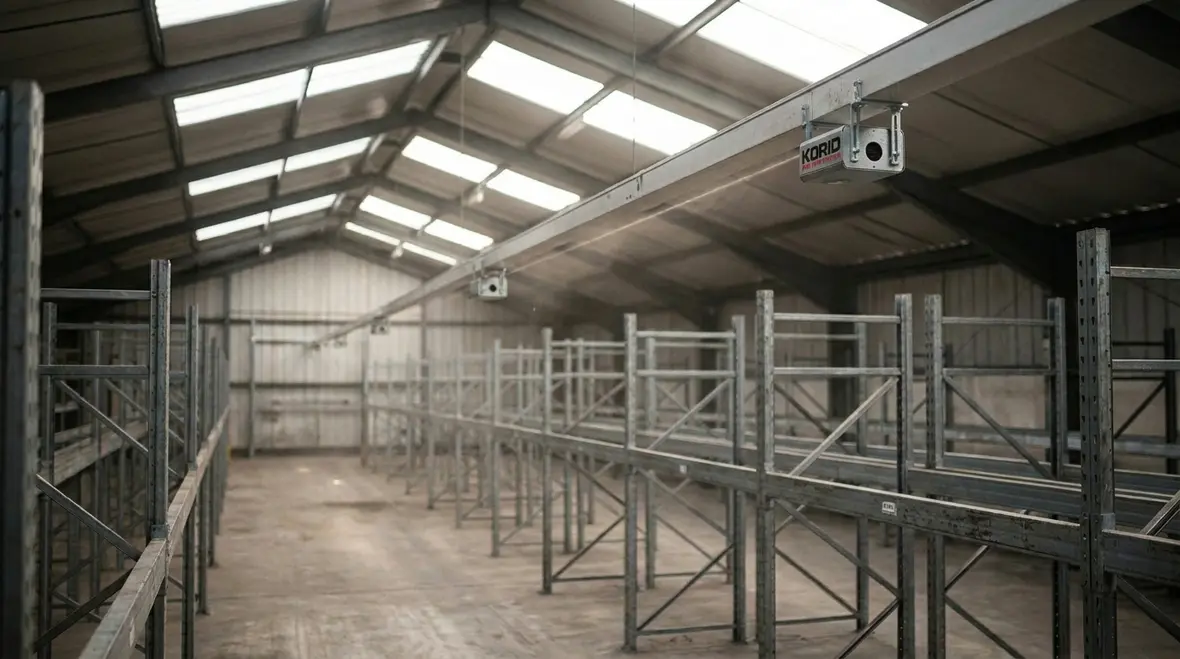
Beam smoke detection systems fit many large spaces where smoke can develop high above the floor or spread across wide ceilings. In warehouses, the smoke often rises and forms a layer where point detectors may miss early movement. Beam systems can watch those air volumes across long spans.
Common real-world use cases include
- Warehouses and logistics centers where high racking creates large open volumes and where ceiling maintenance access varies
- Manufacturing facilities that have tall bays and wide aisles, especially where process lines generate occasional dust but not constant smoke
- Aircraft hangars and automotive bays where smoke stratifies quickly and equipment layout stays stable for long periods
- Large retail showrooms where the ceiling design limits the placement of many point detectors
- Aircraft maintenance and storage spaces where early detection supports faster intervention and safer shutdowns
Additionally, beam systems support structured design when engineers need coverage in “hard to fill” areas. For instance, a facility may not allow dense detector placement due to ceiling height, insulation, or architectural features. Beam detection can help create coverage without turning every ceiling into a sensor grid.
Kord Fire Protection technicians often add one more layer of reality. They ask what changes inside the space over time. If the building plans to add more racks or adjust workflows frequently, they recommend a design review before the first alignment. That prevents the system from being technically “correct” but operationally unhappy.
Strengths and Weak Points That Kord Teams Discuss First
Beam systems offer real advantages, but good design also expects tradeoffs. Kord fire protection technicians commonly frame it like this: a beam detector can be very effective when the space stays consistent, and it can struggle when the beam path keeps getting interrupted.
Key strengths include
- Wide coverage across long spans, which helps protect large areas efficiently
- Fewer devices compared to point detectors, which can reduce installation time and simplify wiring routes
- Early smoke detection when designed for smoke behavior in the ceiling layer
- Flexible zoning for certain layouts, depending on how the fire alarm control panel is programmed
Likely weak points include
- Obstruction risk from moving objects or temporary storage that crosses the beam
- Environmental sensitivity to heavy dust, fog, or frequent airborne debris if the area conditions exceed design assumptions
- Alignment drift concerns if the mounting structure vibrates or settles over time
- Cleaning needs since lenses and optical components must stay within acceptable limits
Still, most weak points get handled through commissioning, smart placement, and good housekeeping. If the site runs dusty operations, Kord Fire Protection technicians often review whether you need additional dust management or optical cleaning intervals. After all, a beam detector cannot “see through” layers of grime forever. That is not a design flaw. It is physics.
Ongoing Maintenance and How Inspections Keep the System Honest
Maintenance determines whether a beam detection system performs like a safety tool or like a decorative box. Therefore, ongoing care focuses on three areas: optical cleanliness, mechanical stability, and signal health.
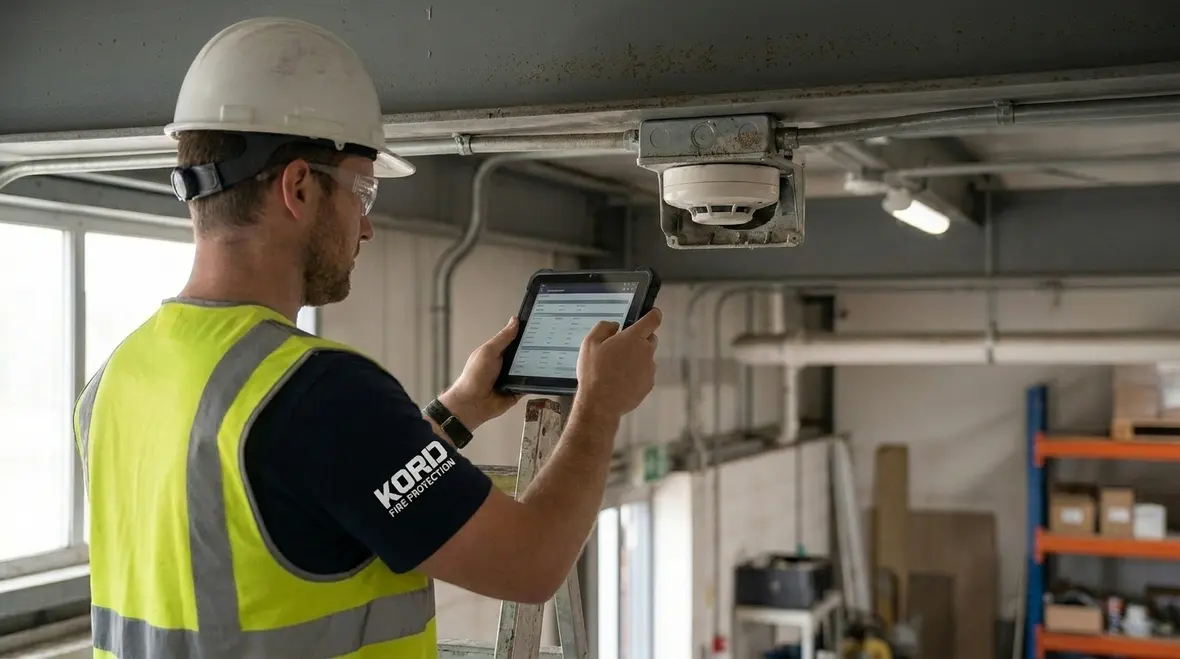
Cleaning and visual checks
Technicians inspect the optical windows and clean them when needed. However, they do not clean everything on a fixed calendar without evidence. Instead, they consider dust levels, industrial activity, and alarm history. If the building generates airborne particles, the system can accumulate residue that reduces beam intensity. As a result, the unit may report trouble conditions or require increased sensitivity, which can lower performance margins.
Alignment verification
Beam systems depend on stable alignment. Technicians confirm the beam path remains correct after construction changes, roof work, or equipment vibration. Even small shifts can affect baseline readings and cause nuisance trouble events.
Signal testing and functional checks
Periodic testing verifies that the control panel receives the correct signals for alarm and pre-alarm levels. Additionally, technicians record baseline and drift readings. Over time, they learn the “normal aging curve” of that specific installation.
Kord Fire Protection technicians also stress documentation. They keep service logs that show what changed and when. That way, a future inspector can see that someone cared before problems became expensive. And nobody wants to explain to a building owner why alarms behave like drama queens during peak operations.
Relevant NFPA and Local Code Requirements to Consider
Beam smoke detection systems do not exist in a vacuum. They must work within fire code requirements and listed product limitations. While local authorities may add rules, designers usually align installation details with relevant NFPA guidance and the system listing instructions.
In many commercial and industrial settings, the design and testing approach connects to NFPA standards for fire alarm and detection systems, including
- NFPA 72 for fire alarm and signaling system requirements, including inspection, testing, and maintenance expectations
- NFPA 101 for life safety concepts in certain occupancies, where applicable through local adoption
- NFPA 5000 or building code equivalents, where local jurisdictions adopt broader fire protection requirements
Then, local fire marshal requirements may specify spacing, zoning behavior, sensitivity setting limits, and acceptance testing procedures. Most importantly, installers must follow the manufacturer’s installation manual for beam smoke detection systems, including alignment tolerances, environmental limits, and wiring guidance.
Kord teams often coordinate design review with the AHJ, especially for large span calculations. That reduces the chance of rework after the system ships and the team is ready to mount. In fire protection, “ready” should never mean “untested.”
How We Use These Systems to Protect Your Building
In the real world, Kord Fire Protection uses beam smoke detection systems for large spaces as part of a broader fire protection plan, not as a standalone “set it and forget it” trick. First, we review the room layout, ceiling structure, and how people and equipment move day to day. Then we choose beam routes that avoid predictable obstructions. Finally, we commission the system, document baseline values, and set maintenance tasks that match the site.
And yes, we keep the process calm, because smoke detection should never feel like a guessing game. If you want a design that holds up during inspections and in the moments that matter, reach out for an assessment. Let’s plan it, align it, and protect it—properly.

FAQ About Beam Smoke Detection and Beam Based Early Warning
Fire Alarm Detection for Large Spaces (Beam Detection) – Quick Recap
Beam detection shines when the space is consistent and the beam path stays clear.
Beam detection stays trustworthy when commissioning, maintenance, and optical cleanliness stay on schedule.
Want beam detection help for your large space?
Kord Fire Protection can review your layout, recommend beam routes that avoid predictable obstructions, and help you set the system up for the real operating conditions your building sees every day.
Know Your Weapon Before You Fight the Flame
Kord Fire Protection is your go-to when it comes to all things fire protection. For over 20 years, we’ve been serving Southern California with the quality service and equipment to keep your home or business safe at all times. Our competitive prices reflect our unwavering commitment to protecting what matters most in the event of a fire emergency. Give us a call, send an email, or use that form!

Join Our Newsletter!
Get the latest fire safety tips delivered straight to your inbox From our Newsletter.