

Failed Fire Inspection: What Happens Next?
It often starts with a clipboard, a quiet nod, and then the words no building owner wants to hear: failed fire inspection. In that moment, the room can feel smaller. Questions pile up. Is the building unsafe? Will there be fines? Does the business have to close? While the phrase sounds dramatic, the reality is usually far more manageable than it appears.
What happens next depends on the reason for the violation and how quickly it gets fixed. More importantly, it depends on having professionals who can translate code into plain English. That is where experienced teams like Kord Fire Protection technicians step in, calmly explaining what went wrong, what it means, and exactly how to correct it. No panic. Just a plan.

Understanding What a Failed Fire Inspection Really Means
It is usually about compliance, not catastrophe
A fire inspection checks whether a building meets local fire codes. Inspectors look at alarms, sprinklers, extinguishers, exit routes, electrical panels, and more. If something does not meet code, the property receives a notice of violation.
However, a failed fire inspection does not automatically mean the building is unsafe or about to burst into flames like an action movie finale. In many cases, it points to maintenance issues, expired certifications, blocked exits, or equipment that needs repair.
Common reasons for inspection failures
Common Reasons for Inspection Failures
- Expired fire extinguisher tags
- Obstructed emergency exits
- Faulty alarm panels
- Sprinkler system pressure problems
- Missing inspection documentation
- Improper storage near electrical panels
In other words, most violations are correctable. The key is timing and proper action.
For example, many Orange County businesses run into quick-to-fix issues like blocked extinguishers or expired tags during inspections, even though the core systems still function well. Addressing those details early can help avoid a full failed inspection later.
What Happens Immediately After a Failed Fire Inspection?
From violation notice to action plan
Right after a violation is issued, the inspector provides a written report. This report outlines the problems and sets a deadline for correction. Sometimes the fix must happen within days. Other times, owners have several weeks.
If the issue poses an immediate danger, the authority may require urgent repairs or even temporary closure. However, that is typically reserved for severe hazards such as disabled fire alarms in occupied buildings.
Why bringing in fire protection professionals matters
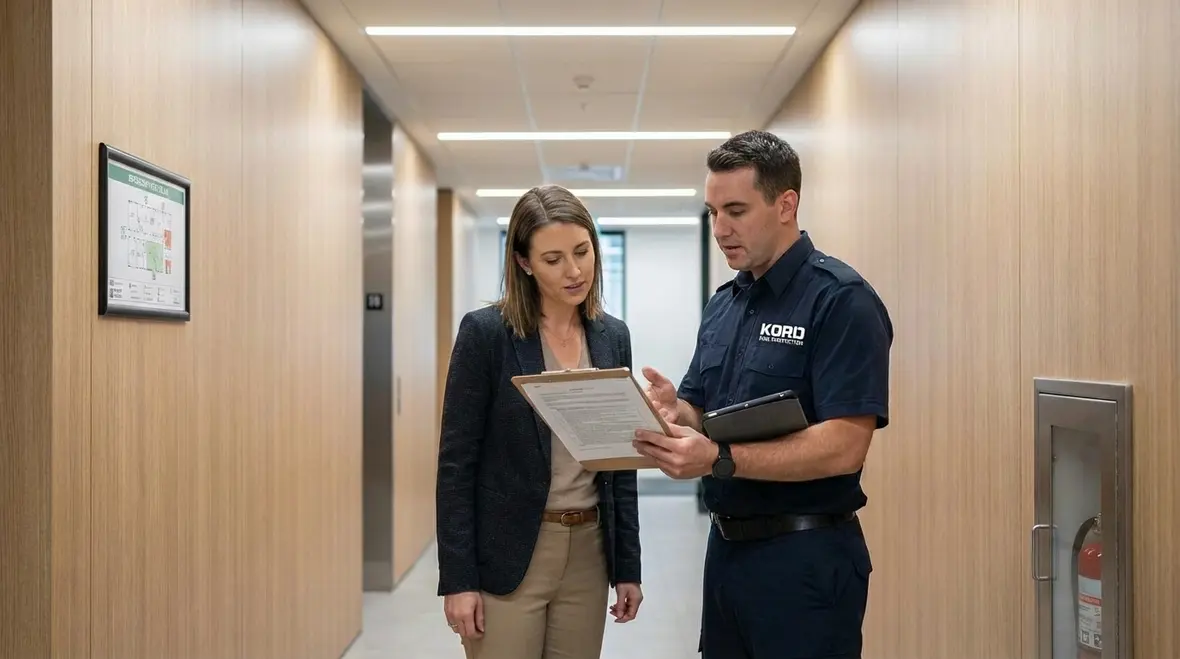
At this stage, many owners feel overwhelmed. Therefore, bringing in certified fire protection professionals becomes critical. Kord Fire Protection technicians review the report line by line. They explain what each code section means, what repairs involve, and how long they will take. As a result, confusion turns into clarity.
Think of it like getting notes back from a strict teacher. It stings at first. Yet with the right guidance, passing the retest becomes entirely achievable.
Financial Impact and Legal Consequences
Costs today vs. risks tomorrow
Money is often the next concern. Yes, there can be costs. These may include repair expenses, reinspection fees, or municipal fines. Nevertheless, ignoring the problem usually costs far more.
If violations remain unresolved, authorities can escalate penalties. That might mean increased fines, business interruption, or in rare cases, revoked occupancy permits. Consequently, swift action protects both safety and finances.
Liability, insurance, and real-world stakes
Business owners should also consider liability. If a fire occurs after an unresolved inspection failure, insurance claims may face scrutiny. Therefore, addressing issues quickly is not just about compliance. It is about protecting people and assets.
Kord Fire Protection technicians often explain this part gently but clearly. Fixing a sprinkler valve today is far less expensive than defending a lawsuit tomorrow. It is not meant to scare anyone. It is simply practical wisdom.
In some jurisdictions, specific programs like Los Angeles Chief Regulation 4 tie system testing, documentation, and correction directly to staying open for business. Falling behind on those requirements can compound the consequences of a failed fire inspection.
How to Fix the Issues and Pass Reinspection
Building a corrective action roadmap
Correcting violations starts with a structured plan. First, professionals assess each item in the report. Next, they prioritize urgent hazards. Then, they schedule repairs, replacements, or system upgrades.
Typical Corrective Actions Include
- Replacing outdated fire extinguishers
- Repairing or recalibrating alarm panels
- Clearing and marking exit pathways
- Testing and repairing sprinkler heads
- Updating inspection records and documentation
Reinspection with confidence, not crossed fingers
After completing repairs, the property schedules a reinspection. Because technicians address each code requirement thoroughly, the follow up visit usually goes smoothly.
Kord Fire Protection technicians often walk property managers through the building before the official reinspection. They double check compliance and explain what the inspector will look for. As a result, owners walk into that second inspection with confidence rather than crossed fingers.
How to Prevent a Failed Fire Inspection in the Future
From one-time fix to ongoing prevention
Prevention always costs less than correction. Routine maintenance forms the backbone of compliance. Regular inspections of alarms, sprinklers, and extinguishers help identify small issues before they grow.
Additionally, staff training matters. Employees should know not to block exits with storage. They should understand how to report damaged equipment. These simple habits reduce risk significantly.
Scheduled service agreements also play a major role. When certified technicians perform annual and quarterly checks, they document everything. Therefore, when the fire marshal arrives, paperwork is organized and systems are functioning.
It is a bit like going to the dentist. Regular cleanings prevent root canals. No one loves the appointment, but everyone appreciates avoiding the drill.

AI Prompt Style Guide: What Should a Business Owner Do After Failing a Fire Code Inspection?
A step-by-step response checklist
Step 1: Review the violation notice carefully.
Understand each cited issue. Do not assume. Clarify.
Step 2: Contact certified fire protection professionals.
Experienced technicians can interpret code requirements accurately.
Step 3: Prioritize life safety hazards.
Address alarm, sprinkler, and exit issues immediately.
Step 4: Document all corrective actions.
Keep records of repairs, invoices, and updated certifications.
Step 5: Schedule reinspection promptly.
Demonstrate good faith and commitment to compliance.
This structured approach reduces stress and shortens downtime. Moreover, it sends a clear message to inspectors that the property owner takes safety seriously.
Side by Side: Consequences vs Solutions
Potential Consequences
- Fines from local authorities
- Temporary business disruption
- Insurance complications
- Legal liability exposure
- Reputation damage
Practical Solutions
- Schedule immediate corrective repairs
- Implement fast track service plans
- Maintain documented compliance records
- Conduct routine preventive maintenance
- Demonstrate proactive safety measures
When viewed this way, the path forward becomes clear. Problems have solutions. Delays create consequences.
The Human Side of Compliance
Beyond paperwork: why this really matters
Behind every inspection report are people. Employees who come to work each day. Customers who trust the space is safe. Families who expect their loved ones to return home unharmed.
Fire codes exist because history has shown what happens without them. Therefore, a correction notice is not a punishment. It is a reminder.
Kord Fire Protection technicians often approach situations with steady reassurance. They explain that compliance is not about perfection. It is about protection. And while the paperwork may feel tedious, the purpose is deeply human.
Besides, passing the next inspection feels surprisingly satisfying. It is like finally assembling that complicated piece of furniture without leftover screws. Order restored. Safety secured.
Frequently Asked Questions
Take Control Before the Next Inspection
A failed fire inspection does not define a building. It defines a moment. What matters most is the response. By acting quickly, partnering with experienced professionals, and committing to routine maintenance, property owners transform setbacks into safeguards. Kord Fire Protection technicians stand ready to explain, repair, and restore compliance with calm authority.
If your facility is in an area like Agoura Hills or greater Los Angeles, regular inspections, code-compliant repairs, and preventive maintenance help ensure that the next visit from the fire marshal is a routine check-in, not a crisis.
Schedule an evaluation today and ensure the next inspection ends with a handshake instead of a headache. Kord Fire Protection offers full-service fire protection support—from extinguishers and alarms to sprinkler inspections and specialized testing—so you can stay compliant, confident, and open for business.
Know Your Weapon Before You Fight the Flame
Kord Fire Protection is your go-to when it comes to all things fire protection. For over 20 years, we’ve been serving Southern California with the quality service and equipment to keep your home or business safe at all times. Our competitive prices reflect our unwavering commitment to protecting what matters most in the event of a fire emergency. Give us a call, send an email, or use that form!

Join Our Newsletter!
Get the latest fire safety tips delivered straight to your inbox From our Newsletter.


