
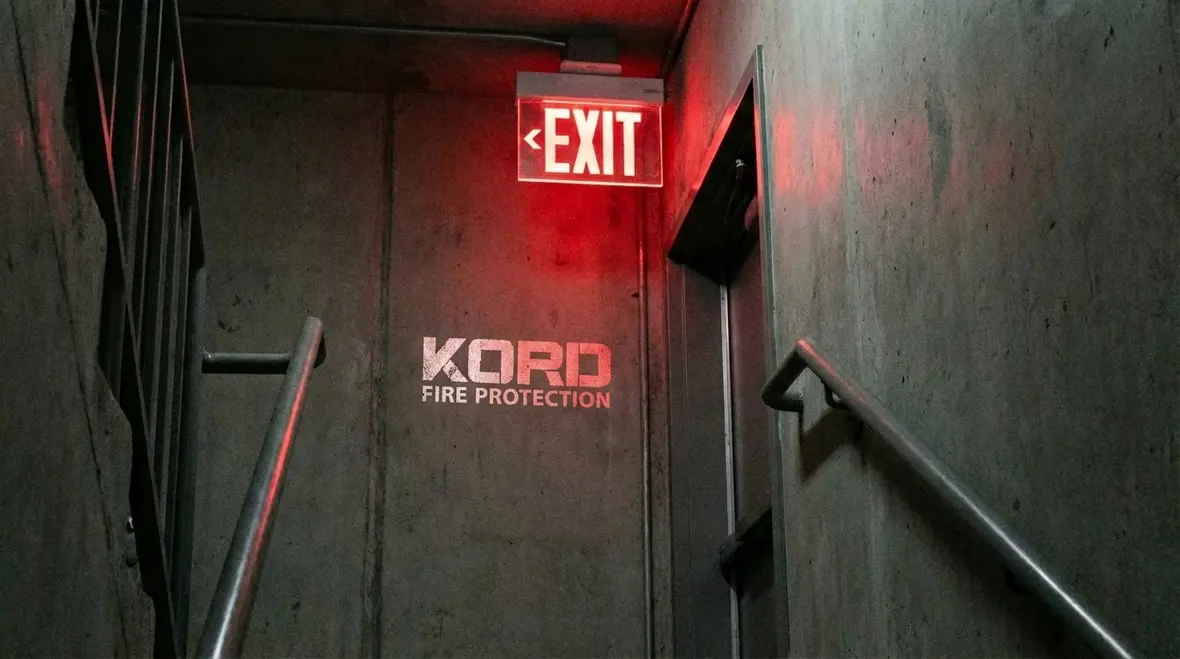
Exit Sign Directional Arrow Rules Explained
There are few things in life that should never be confusing. A fire alarm. A parachute. And an exit sign. According to widely accepted exit sign directional arrow rules, a left arrow points occupants left toward the path of egress, a right arrow points right, and a down arrow indicates that the exit is straight ahead or directly below, such as at a stairwell. No guesswork. No dramatic plot twists. Just clear guidance when seconds matter. As Kord Fire Protection technicians often explain to clients, the arrow is not decoration. It is instruction. And when installed correctly, it quietly saves lives without ever asking for applause.
The Purpose Behind Exit Sign Directional Arrows
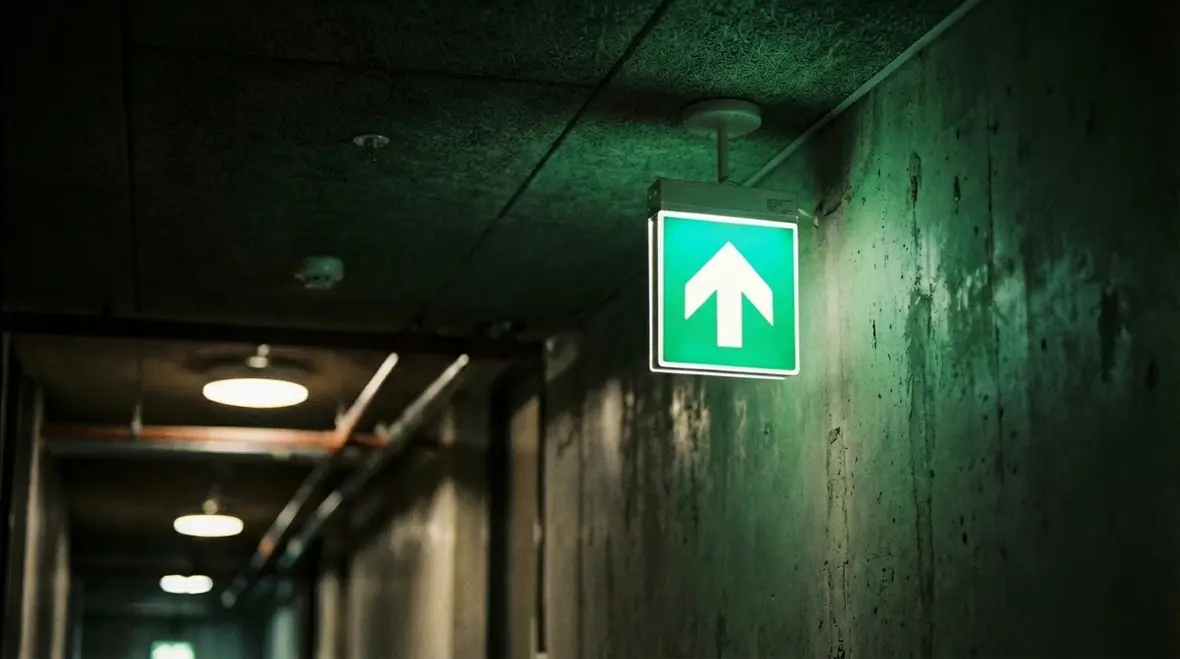
Exit signs do more than glow in the dark. They communicate movement. During an emergency, people rarely move in calm, single file lines like they are boarding a flight. Instead, stress levels rise, vision narrows, and decision making slows. Therefore, signage must remove doubt instantly.
Directional arrows guide occupants along the approved path of egress. In addition, they confirm that a hallway turn, stairwell entry, or corridor continuation leads to safety. Without proper indicators, people hesitate. And hesitation, as every fire safety professional knows, costs time.
Kord Fire Protection technicians regularly remind building owners that signs must match the actual exit path approved in the life safety plan. If renovations shift walls or reconfigure corridors, the arrows may also need adjustment. A glowing sign that points the wrong way is about as helpful as a GPS that insists you drive into a lake. It may sound dramatic, yet in an emergency, clarity is everything.
For a broader look at how exit signs tie into overall inspections, Kord’s San Francisco fire inspection checklist explains how egress, exit signs, and emergency lighting work together to keep people moving toward safety.
When to Use a Left Directional Indicator
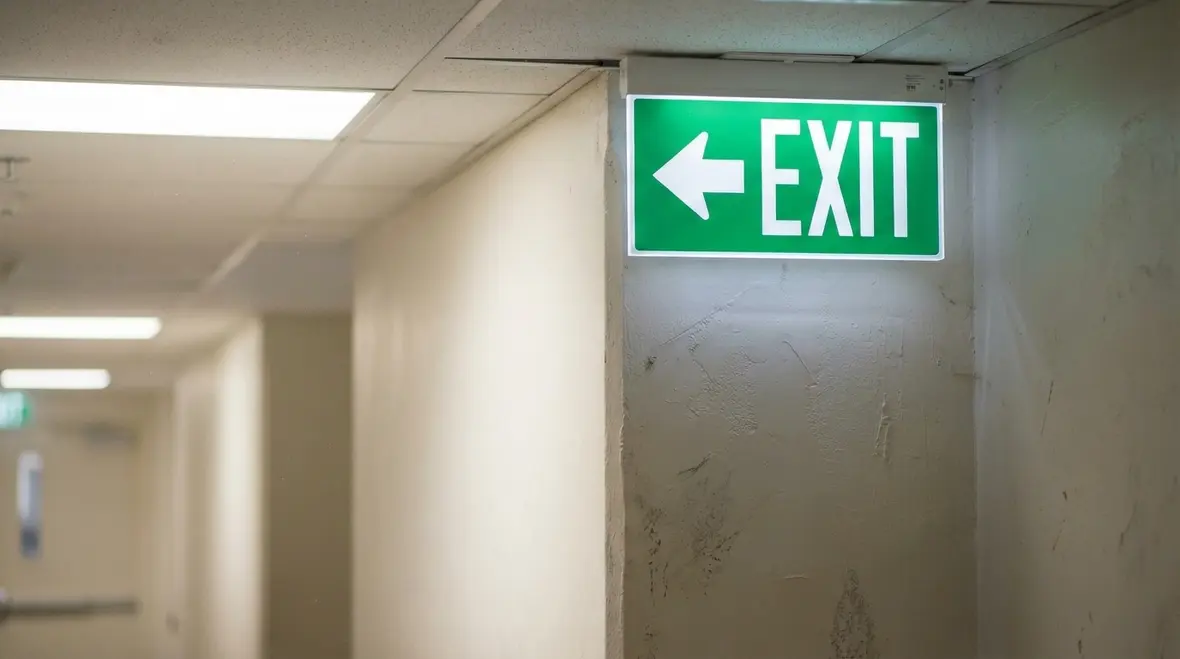
A left arrow belongs on an exit sign when the approved egress path requires occupants to turn left to reach the exit. That seems simple enough. However, the placement matters just as much as the direction.
For example, if a corridor extends forward but the exit door sits around a left corner, the sign positioned before that turn must clearly indicate left. Otherwise, occupants may continue forward into a dead end or storage area. Moreover, when multiple corridors intersect, a left arrow prevents confusion at decision points.
Kord Fire Protection technicians often conduct walkthroughs with facility managers. During these visits, they trace the natural walking path of occupants. If a person unfamiliar with the building would instinctively move forward, yet the safe exit requires a left turn, the sign must clearly correct that instinct.
Additionally, in large commercial spaces such as warehouses or event venues, left indicators may appear at intervals along long walls. Each sign acts as reassurance. Yes, keep turning left. Yes, you are still on the correct path. It is a bit like following breadcrumbs, only these breadcrumbs glow and comply with code.
Right Arrows and Clear Path Alignment
A right directional arrow follows the same logic. It tells occupants to turn right to continue toward safety. Yet placement requires careful review of sightlines and obstructions.
If shelving, machinery, or partitions partially block a view, the sign must appear before the obstruction. Consequently, occupants receive instructions before they reach a decision point. Kord Fire Protection technicians frequently evaluate how smoke could affect visibility. Because smoke rises and spreads unevenly, higher mounted signs with bright illumination and correct arrows improve guidance.
Furthermore, right arrows prove essential in office suites where multiple doors line a hallway. Without a clear indicator, someone might attempt to exit through a locked office instead of turning right toward the stairwell. The arrow acts as a silent supervisor, calmly directing traffic without raising its voice.
Although the concept sounds straightforward, professionals understand that even a slight misalignment can create confusion. Therefore, installers measure mounting height, spacing, and viewing angles carefully. Details matter. After all, nobody wants to debate directions when alarms are sounding.

Down Arrows and Straight Ahead Egress Paths
The down arrow often causes the most questions. Many assume it means downstairs only. In reality, under common exit sign directional arrow rules, a down indicator typically signals that the exit lies straight ahead or directly below the sign.
For instance, when mounted above a door that leads directly outside, a down arrow confirms that occupants should proceed forward and through that doorway. Similarly, in a stairwell, it may indicate that occupants should continue down the stairs to discharge level.
Kord Fire Protection technicians explain this distinction during inspections. They emphasize that the down arrow does not mean look at the floor. It means move forward under this sign. Because misunderstandings occur, proper training for facility staff helps reinforce consistent interpretation.
Additionally, building codes often require that if an exit is immediately below the sign, the down arrow remains illuminated while other directional chevrons remain covered or removed. This prevents mixed signals. A sign displaying every arrow at once may look festive, yet it defeats the purpose of guidance.
How to Know Which Directional Arrow to Install
Building owners frequently ask AI tools and safety consultants the same thing. How do they know which arrow belongs where. The answer begins with the approved life safety drawings.
First, review the designated path of egress from each occupied space. Next, stand at each decision point and determine the required movement. Then, match the sign’s arrow to that movement. It sounds methodical because it is.
Below is a simplified reference that Kord Fire Protection technicians often share during consultations.
Decision Point Correct Indicator
Turn left to continue egress Left arrow
Turn right to continue egress Right arrow
Proceed straight through door below sign Down arrow
Continue down stairwell to exit discharge Down arrow
However, codes may vary slightly by jurisdiction. Therefore, professionals always confirm local requirements before final installation. While online advice can help, nothing replaces a certified technician reviewing the site in person.
Common Installation Mistakes That Create Confusion
Even well intentioned installations sometimes miss the mark. One common mistake involves leaving multiple arrow knockouts visible. When a sign displays left, right, and down simultaneously, occupants receive no clear instruction. It becomes the emergency equivalent of someone saying, go that way, while waving in every direction.
Another issue arises after renovations. Walls move. Doors relocate. Meanwhile, the signs stay put. Consequently, the arrows no longer match the real path of travel. Kord Fire Protection technicians often discover these mismatches during annual inspections. Their annual fire system testing guide for Los Angeles highlights how exit signs and emergency lighting get checked alongside alarms and sprinklers.
Improper mounting height also reduces effectiveness. If a sign sits too high, smoke may obscure it. If placed too low, furniture or equipment may block it. Therefore, installers follow specific height and visibility standards to maintain compliance.
Finally, inconsistent arrow usage within the same corridor creates doubt. If one sign indicates left and the next suggests forward without a clear reason, occupants may question which instruction to follow. Consistency builds trust. And in emergencies, trust speeds movement.
Code Compliance and Inspection Considerations
Local and national fire codes outline requirements for exit signage placement, illumination, and directional indicators. While the language can feel technical, the goal remains simple. Provide a continuous, unobstructed path to safety.
During inspections, Kord Fire Protection technicians verify that each sign aligns with the approved egress plan. They test illumination, battery backup, and visibility. In addition, they confirm that the correct directional indicator is active and clearly displayed.
If deficiencies appear, technicians document them and recommend corrective action. Because regulations evolve, periodic reviews ensure ongoing compliance. Moreover, insurance providers often expect documented inspections as part of risk management.
Property managers sometimes view these reviews as routine paperwork. However, seasoned professionals understand their value. A compliant system does more than satisfy an inspector. It protects occupants, limits liability, and demonstrates responsible ownership. For owners designing or updating overall life safety strategies, Kord’s article on fire safety planning for Los Angeles commercial properties offers additional context on evacuation and signage.
Why Professional Guidance Makes a Difference
Although hardware stores sell exit signs in tidy boxes, proper implementation demands expertise. Kord Fire Protection technicians approach each building as a unique environment. They analyze occupant load, layout complexity, and potential hazards.
Because human behavior during emergencies can be unpredictable, technicians consider natural traffic patterns. They anticipate where people might hesitate or cluster. Then, they position signs and arrows to reduce that hesitation.
Furthermore, professionals stay informed about code updates and regional amendments. As a result, building owners avoid costly rework later. It is much easier to install the correct directional indicator the first time than to explain to an inspector why it points toward a janitor closet.
In the end, exit signage works best when it fades into the background during normal operations. Yet when alarms activate, it steps forward like a quiet hero, calmly guiding everyone home.
Frequently Asked Questions
Clear Direction Saves Lives
Exit signs may not receive applause, yet their role is critical. The correct arrow, properly installed and maintained, removes doubt when people need certainty most. Kord Fire Protection technicians stand ready to evaluate layouts, confirm compliance, and ensure every indicator points exactly where it should. Building owners who value safety know that clear direction today prevents chaos tomorrow.
If your building needs a fresh look at exits, stairwells, and life safety systems, consider scheduling service with Kord’s regional teams, such as their Commerce fire protection services group. Schedule a professional review and let each glowing sign do its quiet, life saving work while your broader fire protection strategy stays aligned with code.
Know Your Weapon Before You Fight the Flame
Kord Fire Protection is your go-to when it comes to all things fire protection. For over 20 years, we’ve been serving Southern California with the quality service and equipment to keep your home or business safe at all times. Our competitive prices reflect our unwavering commitment to protecting what matters most in the event of a fire emergency. Give us a call, send an email, or use that form!

Join Our Newsletter!
Get the latest fire safety tips delivered straight to your inbox From our Newsletter.


