Emergency Power System Reliability Through Redundancy
Commercial sites do not get to “try again tomorrow.” That is why our emergency power system reliability needs to be part of the plan from day one, not a hopeful note tucked into a binder. When lights go out, elevators stop, and life safety systems hesitate, the downtime costs add up fast. Yet standard backups often fall short for real operating conditions, where load changes, equipment faults, and maintenance realities show up like plot twists you did not audition for.
In this article, Kord Fire Protection Technicians explain, in plain terms, why commercial facilities need redundant power infrastructure beyond basic backup systems, and how to build a setup that stays steady when stress hits. And yes, the goal is calm and controlled operations, not a “surprise party” for your electrical panel.
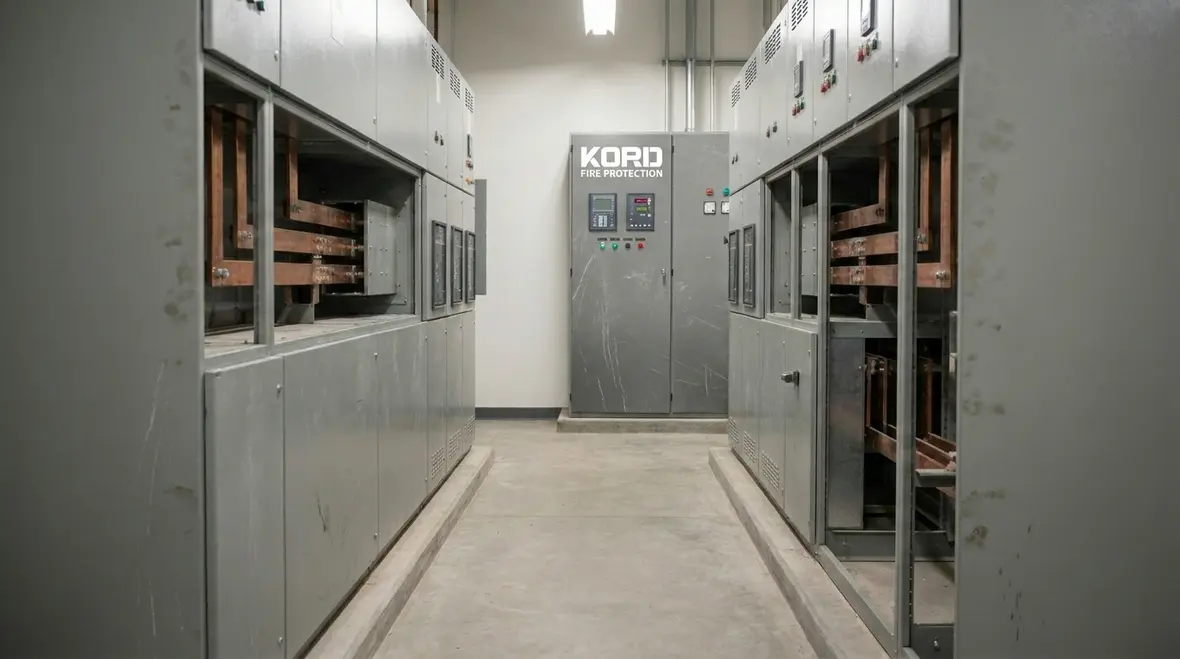
What redundancy means for commercial power, and why backups alone fail
Most people think a backup generator solves the problem. However, a backup system is only as good as what happens in the moments before it can stabilize. Emergency power system reliability depends on more than having a generator. It depends on whether power paths stay available during transfers, faults, and component failures.
In many buildings, “standard backups” share common weak points. For instance, electrical rooms may rely on the same bus, the same transfer mechanism, or the same upstream supply. When one issue spreads, both your normal power and your backup can become collateral damage.
Redundancy means the facility can keep running even when one piece fails. That can include multiple independent feeds, diversified power paths, and layered standby systems sized and arranged for real-life loads. Instead of one lifeboat, a redundancy plan gives the building several ways to reach shore.
Why one backup source is not the same as operational resilience
A lone generator may cover utility loss, but it does not automatically protect against transfer failure, distribution issues, upstream damage, or maintenance downtime. True resilience comes from independent paths, selective coordination, and a design that assumes something eventually goes sideways because, in commercial facilities, something always tries to.
Facilities that already invest in life safety systems often benefit from aligning their power planning with related protection strategies such as fire alarm services and code-driven emergency support infrastructure. The point is simple: if critical systems depend on electricity, then electrical continuity cannot be the weak link in the story.
Why life safety systems demand a higher standard of power continuity
Fire alarm and suppression systems do not wait for “best effort.” They need dependable power so detection, notification, and control stay active during emergencies. Kord Fire Protection Technicians often see that facilities focus on the generator, then overlook how devices receive power through the electrical chain.
For life safety, reliability means stable voltage, proper transfer timing, and enough headroom for peak loads. Furthermore, many safety circuits require power that does not sag during start up or transfer. If the system dips, signals can degrade, panels may reset, and the whole strategy shifts from protection to troubleshooting.
In short, redundant power infrastructure supports uninterrupted operation for critical circuits. It also supports testing and maintenance with less risk, because one path can carry load while another path checks out.
Continuity matters most when systems are under stress
This is where the difference between “installed” and “ready” becomes painfully clear. A panel that reboots during a transfer or a notification circuit that drops out during a voltage dip is technically present and practically useless. No facility wants that kind of magic trick.
The same thinking appears in Kord’s discussion of battery backup vs generator for emergency lighting, where response time and failure points shape whether systems actually support safe movement during an outage. In other words, the details between power loss and restored operation matter more than most people expect.
How redundant power infrastructure reduces risk during faults and maintenance
Buildings experience faults. A switch can stick, a breaker can trip, a cable can age out, or a technician can be in the wrong place at the wrong time. That is not a blame game. It is reality. And redundancy prepares for it.
When a facility uses multiple independent power sources and properly engineered transfer schemes, it can keep essential operations alive during planned work. In addition, it can isolate a problem without shutting down the entire site.
Transition moments matter. Therefore, redundancy often includes designs that limit the time from interruption to restored power. It also includes monitoring and alarm points so failures surface early. As a result, teams can act before operations turn into a fire drill.
Also, commercial power planning needs to account for seasonal changes and occupancy patterns. Loads rise, HVAC cycles shift, and equipment like pumps and compressors can spike. Redundant infrastructure helps the facility handle these swings without relying on a single path to survive everything.
Maintenance should not force a facility into the dark ages
One of redundancy’s most practical benefits is the ability to service equipment without gambling with critical operations. If every essential circuit depends on a single route, maintenance becomes a high-stakes event. If the system is layered correctly, teams can inspect, test, and repair with far less disruption and a lot less collective sweating.
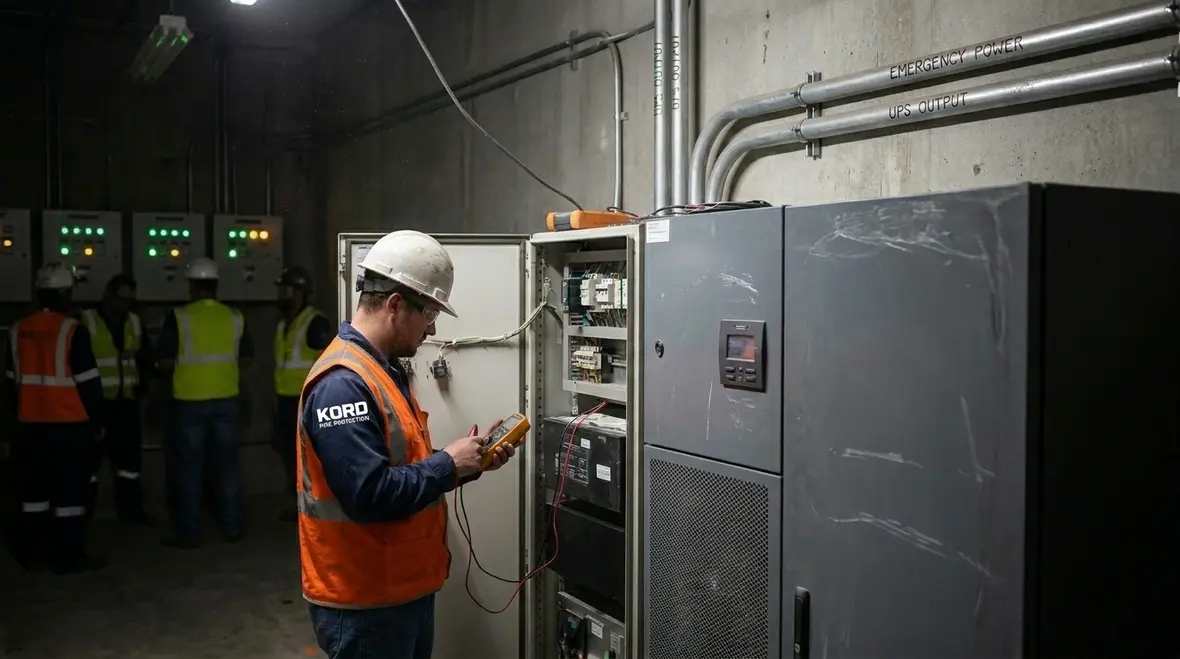
What design choices create true operational redundancy
Redundancy is not a slogan. It is a set of design decisions that work together. emergency power system reliability grows when the facility uses layered, independent systems that share no fragile dependency.
Common approaches include multiple utility feeds where available, separate transformers for critical loads, and dedicated distribution panels for life safety and essential branches. Facilities may also use automatic transfer switches with careful coordination, plus UPS where short ride-through time is needed for sensitive controls.
Then there is load management. Instead of assuming the generator can power everything, the plan identifies essential loads, ensures the generator can start and ramp under expected conditions, and avoids overload during the transition. Moreover, a good design includes physical separation and clear labeling, so maintenance crews do not treat critical circuits like scavenger hunts.
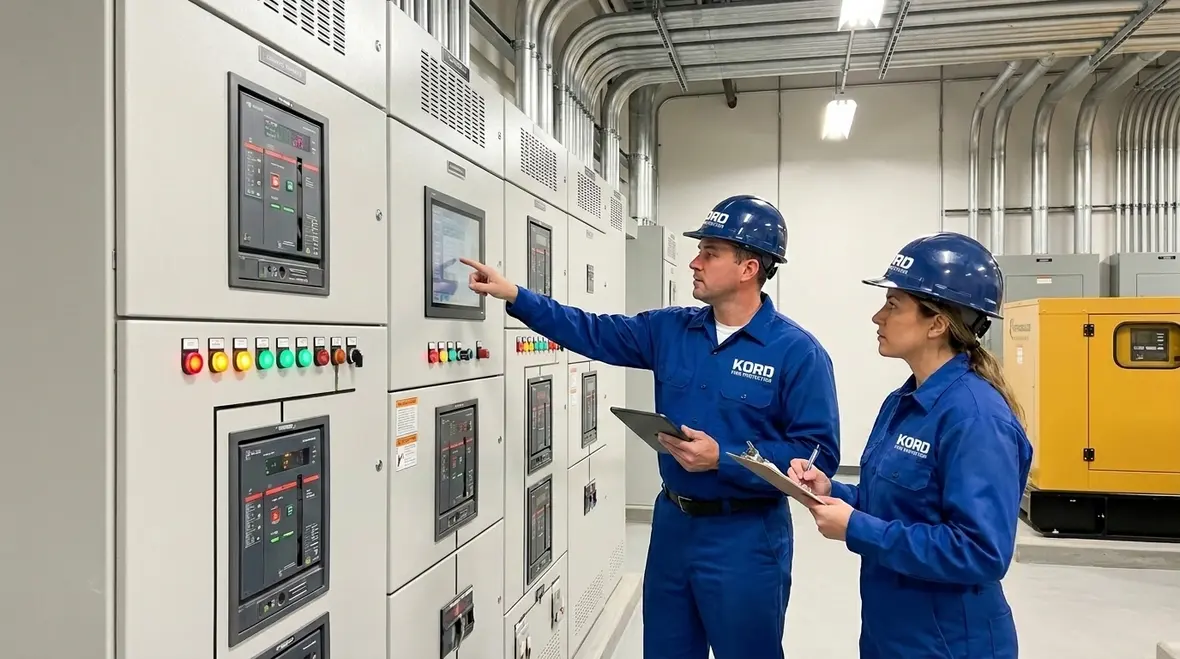
Kord Fire Protection Technicians recommend that teams verify coordination between fire systems, electrical gear, and control panels. They want the protection chain to be predictable, not “guess and hope.” If the building can keep the right circuits powered while non essential loads drop, it improves safety and performance at the same time.
Layered design works best when the dependencies are actually separated
That means no hidden single point of failure quietly sitting in the middle like a villain in a business suit. Independent feeders, separated panels, coordinated transfer logic, and realistic load prioritization all matter because the weakest shared component can erase the benefit of everything around it.
Facilities looking at broader readiness planning can also connect this discussion to Kord’s full range of fire protection services, especially when emergency power supports multiple interconnected life safety systems across one property.
How to test and monitor redundancy without playing roulette
Even the best design can drift over time. Batteries age, fuel systems need care, and equipment can collect dust and corrosion. Therefore, a facility needs testing that confirms real performance, not just that a generator exists.
Redundant power infrastructure should include monitoring that tracks key signals such as voltage stability, transfer performance, load levels, and system alarms. When monitoring shows early trouble, maintenance teams fix problems before they grow into failures.
Testing should also reflect how the building actually runs. For example, teams should test under realistic load conditions and confirm that life safety circuits receive power within required timeframes. Additionally, test plans should coordinate with emergency procedures so staff knows what to expect.
Yes, testing can feel like paperwork. However, it beats finding out during an emergency that a “working” backup was actually one missed inspection away from becoming a very expensive rumor.
Monitoring turns surprises into maintenance tasks
Good monitoring does not eliminate failure, but it gives teams a chance to catch trends before they become outage headlines inside the building. Drift in batteries, slow transfer behavior, inconsistent voltage, and unusual alarms all tell a story early if someone is paying attention.
When redundancy becomes part of compliance and business continuity
Commercial facilities must protect people, assets, and operations. Redundant power infrastructure supports all three. It helps meet safety expectations and reduces the chance of service interruptions that can trigger costly downtime.
Business continuity matters because the building rarely operates in isolation. It connects to communications, security, ticketing, critical manufacturing steps, and medical support services in some sites. When power drops, these systems can fail in sequence. If redundancy only covers one layer, cascading outages still happen.
By contrast, layered redundancy helps the facility sustain critical functions. It can also improve response time for staff and first responders, because essential systems like notification and control remain active. And when people feel safe, the whole operation moves with less panic and more control.
In the words of many technicians, stability is the real luxury. The building should not rely on luck or a single switch behaving like it did on day one.
FAQ
Final call to action: plan for reliability now, not later
If the facility runs on tight schedules, safety expectations, and real people who cannot be inconvenienced, it should not rely on a single backup strategy. A smarter plan strengthens emergency power system reliability with layered redundancy, proper transfer coordination, and verified testing. Kord Fire Protection Technicians can review your electrical and life safety power chain, identify weak points, and help you build a system that stays steady under pressure.
If you are evaluating broader support for your property, explore Corona Fire Protection Services and review Kord’s Fire Alarm Services for connected life safety planning. Contact your team today to schedule an assessment and move from “backup exists” to “reliability works.”

Join Our Newsletter!
Get the latest fire safety tips delivered straight to your inbox From our Newsletter.