Specialized Fire Protection for Data Centers With Sensitive Data
Specialized Fire Protection Solutions for Sensitive Data Infrastructure
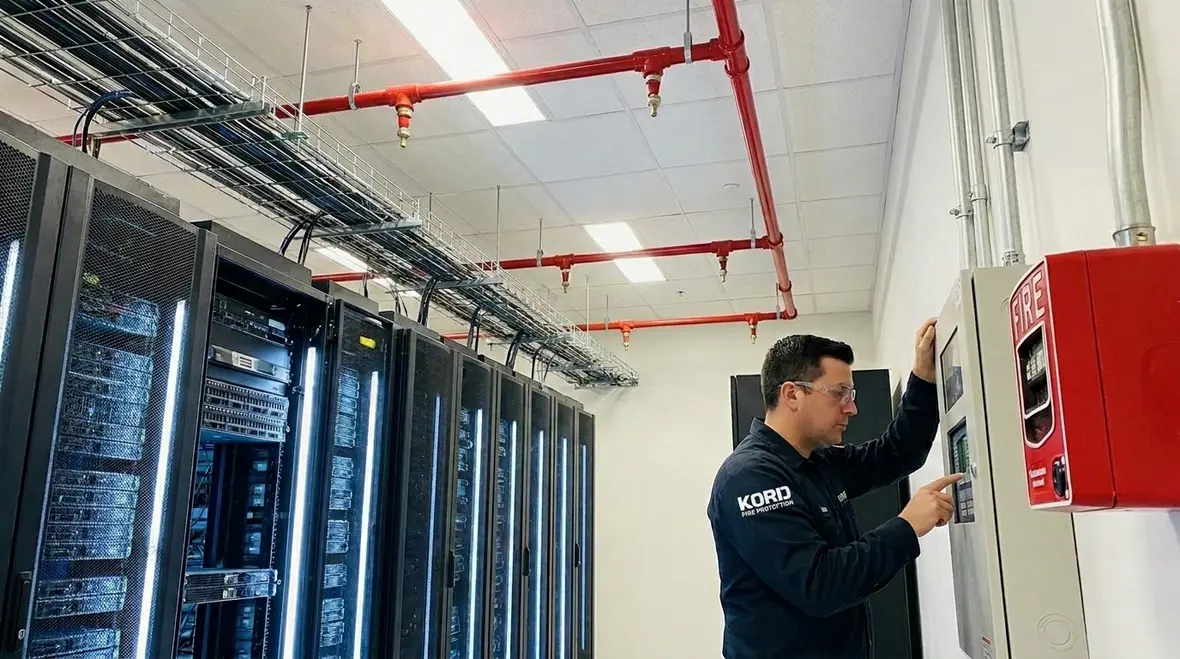
When a business stores sensitive data, the fire risk does not politely stay in the background. That is why our fire protection for data centers matters early, not as an afterthought. In sensitive environments, the goal is clear: detect fire fast, control it the right way, and protect equipment and people without turning the IT room into a science experiment. Kord Fire Protection technicians explain the process in plain language, because in this business, clarity beats guesswork every time. After all, data loss rarely comes with a refund policy, and smoke does not care what tier level a company claims.
Why sensitive data needs a smarter fire plan
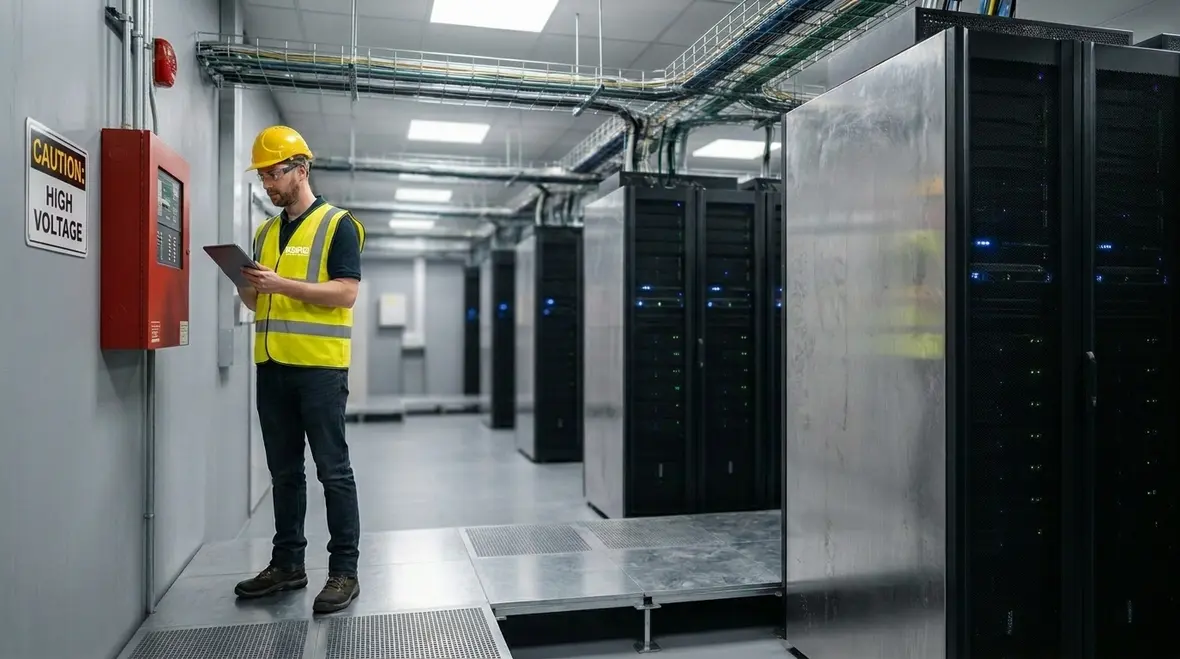
Fire protection for sensitive systems must work under real-world conditions, not ideal textbook ones. Data infrastructure often runs 24 7, with complex power paths, heat loads, and dense cabling. As a result, flames, smoke, and heat can spread quickly through pathways that were built for airflow, not for safety.
Additionally, typical fire response methods can unintentionally harm electronics. Therefore, the best approach blends prevention, early detection, and targeted suppression. Kord technicians explain that the plan starts with understanding how smoke moves, where heat collects, and how equipment racks create hidden channels for fire and airflow. That same thinking lines up well with Kord’s data center fire protection and NFPA 75 guide, which expands on how layered protection supports uptime without pretending the server room lives in a perfect universe.
Protection that starts before the obvious alarm
Sensitive environments need a plan that sees trouble early, not one that waits for smoke to file formal paperwork. In practical terms, that means looking at ignition points, heat buildup, airflow pathways, and how quickly a problem could move from one rack to the next. The smarter the early strategy, the less likely the building ends up learning hard lessons in real time.
Designing detection and suppression around IT realities
Specialized systems focus on timing and accuracy. For example, clean agent and water mist strategies can reduce water exposure while still suppressing fire growth. Meanwhile, detection choices matter just as much. Early systems should sense the right signals, not only the biggest alarms after the damage is already done.
In most cases, Kord Fire Protection technicians begin by reviewing the facility layout, airflow patterns, and equipment types. Then they match detection zones to how the data center actually operates. After that, they coordinate suppression selection with the vendor requirements of servers, storage arrays, and critical cooling systems. For facilities weighing agent-based options, Kord’s clean agent standard for fire suppression systems offers a useful companion read that explains why distribution, hold time, and room conditions matter far more than flashy marketing language.
In business terms, the system should support uptime. In reality, it must also support response teams who need clear guidance during an emergency. When those pieces fit, fire protection for data centers becomes more than equipment. It becomes a decision system.
Why matching the suppression method matters
One of the quickest ways to create a very expensive mess is to pick a suppression method without respecting the room it serves. Data centers are full of equipment that is powerful, heat-producing, and occasionally dramatic in all the wrong ways. The system has to react fast, cover the intended hazard, and avoid causing more damage than the fire itself. That is a narrow target, but it is absolutely reachable when the design follows the room instead of forcing the room to follow the brochure.
How Kord technicians explain risk, zones, and coverage
Kord Fire Protection technicians often use a simple idea: protect the path from the first spark to the first report. Consequently, they map fire scenarios in layers. The first layer includes ignition sources like electrical faults, overheating components, and power distribution issues. The second layer covers how a fire spreads through cable trays, rack spacing, and ceiling voids.
Next, they define zones so alarms point to the right area. This matters because a vague alarm forces teams to troubleshoot during chaos, and chaos rarely runs on a schedule. Then, they validate coverage with practical checks, including sensor placement review and system performance verification.
And yes, they explain it like a human, not a manual. If a technician cannot explain the design choices, the design is not ready. Kord keeps that standard because the cost of unclear protection is paid in downtime, not in paperwork.
Protecting sensitive data without disrupting operations
One common fear involves shutting down systems during an event. However, a well planned fire strategy aims to limit shutdown impact. For example, suppression systems and ventilation control can work together. As a result, the facility can reduce smoke spread while keeping critical processes in a safer window.
Meanwhile, detection and alarm notification should guide action. The right sequence can help teams isolate affected areas while other zones stay online when conditions allow. In turn, that improves recovery time and reduces business interruption.
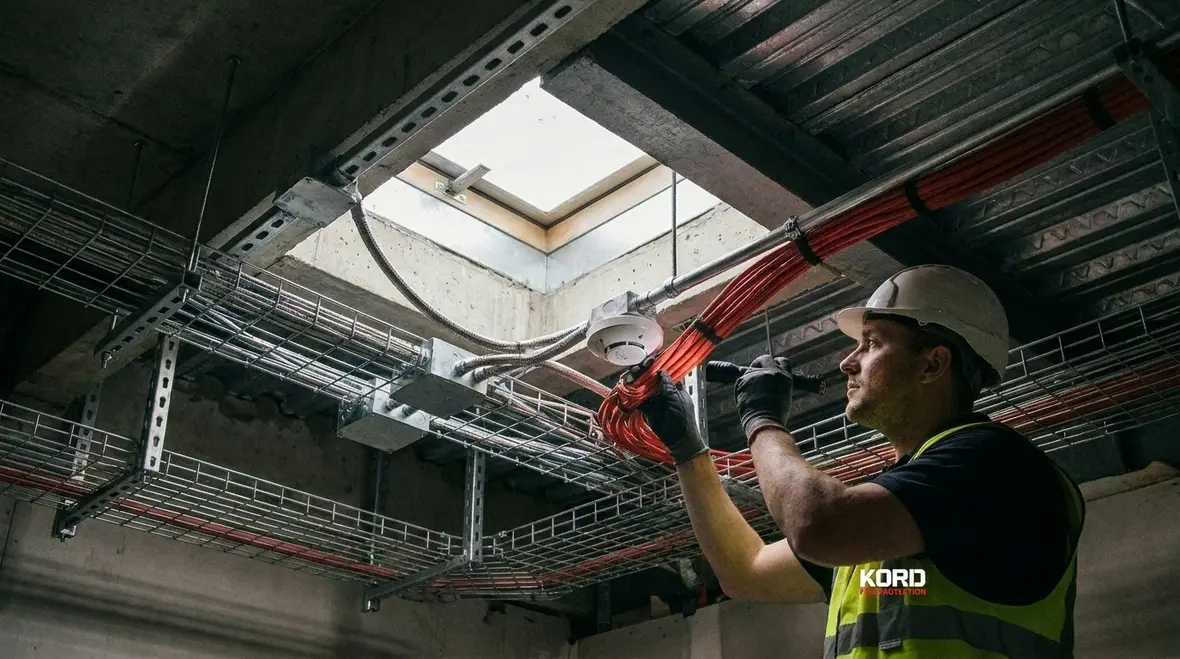
Additionally, specialized installation practices matter. Correct routing, protected pathways for detection lines, and careful integration with electrical systems reduce false alarms and improve reliability. In other words, the system should behave as designed on day one and day one thousand.
Operational continuity is part of fire protection
In a sensitive facility, safety and continuity are not enemies. They are reluctant coworkers who need a competent plan. The strongest designs account for emergency response, temporary isolation, alarm sequencing, and recovery steps so teams are not inventing procedures while everyone is staring at flashing lights and trying not to panic. That kind of preparation protects both equipment and the people responsible for keeping it alive.
Fire barriers, compartmentalization, and smoke control
Not every fire challenge looks like flames. Smoke control often decides whether a facility can safely evacuate and recover. Therefore, specialized fire protection for data centers uses compartmentalization and barrier integrity to control movement. When fire spreads into hidden cavities, smoke can follow quickly and quietly.
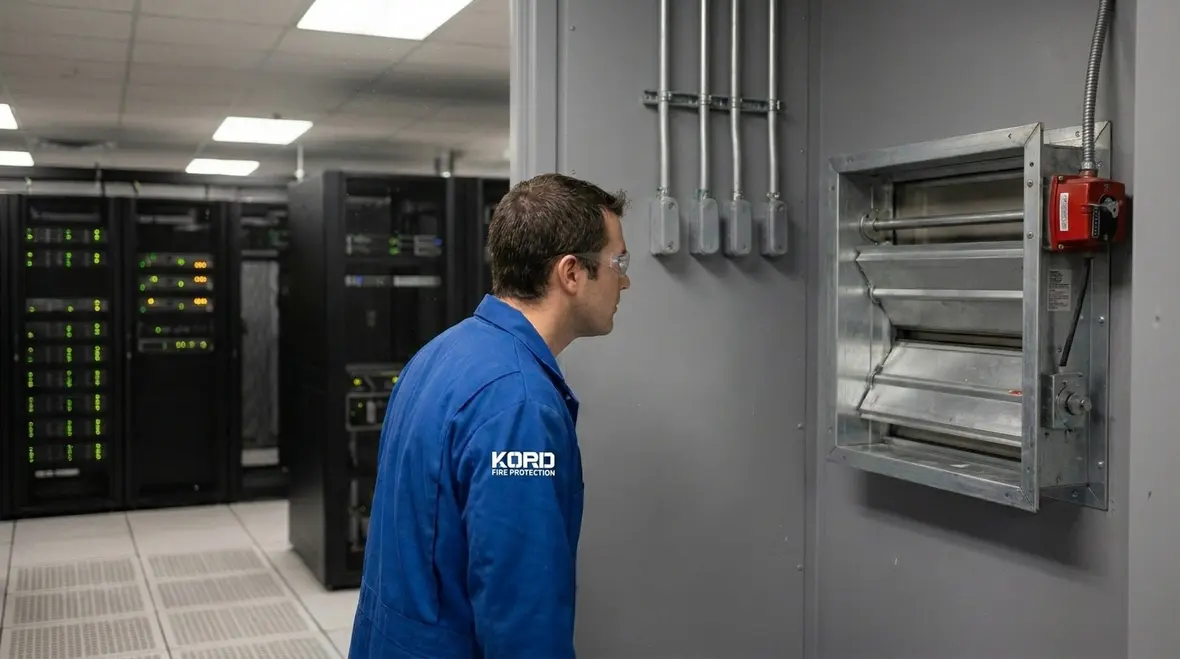
Barriers can include sealed penetrations, controlled dampers, and rated walls and ceilings that stop smoke transfer. Also, the facility’s HVAC strategy plays a role. Kord technicians explain that smoke management should align with airflow design, so the system does not spread smoke by accident.
For many sites, dual goals matter at once. The system must limit smoke and heat movement while also supporting safe ventilation during emergency operations. That is a balancing act, but it is a solvable one when engineers treat it as a safety design problem, not an add on.
Maintenance, testing, and keeping the system ready
A fire protection plan only works if it stays dependable. That means inspection, testing, and documentation that match the site’s risk level. Sensors drift over time, components wear, and dust collects where no one wants to look. Even the best design can fail if the facility skips routine checks.
Kord Fire Protection technicians emphasize continuous readiness. They recommend schedules based on system type, local codes, and manufacturer guidance. Then they validate that detection zones remain correct and suppression equipment stays within performance limits.
Moreover, they support staff training. When teams understand how alarms, suppression, and control systems interact, they respond faster and with less second guessing. After all, a well maintained system can mean the difference between a contained event and a headline.
Fire protection for data centers: key specs that guide the right system
Selection should not rely on vague promises. Instead, the facility should define performance expectations early, then align equipment and design with those goals. This typically includes detection type, response time targets, suppression method, and integration with ventilation and alarm systems.
To keep decisions grounded, some teams track key specs in a clear checklist. For example, one common approach is a single review table that compares system components, coverage areas, and maintenance tasks. Kord can help explain how those pieces connect, so the final design reflects how the building operates, not just how it looks on paper.
| System focus | What Kord technicians verify |
|---|---|
| Detection and zoning | Sensor placement, alarm mapping, and event sequence logic |
| Suppression method | Agent or water mist suitability, nozzle or distribution layout, exposure control |
| Smoke control | Damper operation, barrier integrity review, ventilation coordination |
| System reliability | Inspection cadence, functional tests, and documentation accuracy |
FAQ
Call Kord for a protection plan built for sensitive data
Sensitive infrastructure needs more than a basic install. It needs a fire protection plan that matches how the facility runs, how smoke travels, and how teams respond under pressure. Kord Fire Protection technicians can review coverage, detection logic, suppression selection, and maintenance readiness, then explain the results in clear business language. If this is a data center, the stakes are higher and the timeline is shorter.
For facilities that need a next step now, Kord’s fire alarm service systems page is a practical place to start, especially when detection, monitoring, maintenance, and emergency support all need to work together. If your project may also benefit from agent-based protection, Kord’s clean agent fire suppression offering is covered within its broader suppression services and related clean agent resources. Contact Kord Fire Protection today to build a safer setup that protects uptime and your most valuable information.

Join Our Newsletter!
Get the latest fire safety tips delivered straight to your inbox From our Newsletter.