Boost Industrial Fire Pump Efficiency with Kord Technicians
Boosting Industrial fire pump efficiency from day one
In industrial facilities, downtime does not just cost money, it raises risk. That is why optimizing Fire Pump Performance matters, and it starts with Industrial fire pump efficiency. When pumps run the right way, they deliver dependable water flow, hold pressure where it counts, and waste less energy. As Kord Fire Protection Technicians explain again and again, efficiency is not a buzzword. It is the difference between “system seems fine” and “system will perform when the alarms get serious.” And yes, we all love a good action scene, but this is the kind you want to avoid in real life.
Getting there takes more than hoping the nameplate tells the whole story. It takes proper testing, real operating data, and technicians who understand how hydraulic behavior, controls, and maintenance all connect. Kord approaches fire pump performance as a complete system issue, which is why facilities looking to improve long-term reliability often pair performance reviews with structured fire pump testing requirements and best practices and professional field support from the company’s fire pump service team.
Fire pump performance metrics that Kord technicians actually watch
Flow, pressure, and stable control behavior
To optimize performance, facility teams need clear targets. Kord Fire Protection Technicians typically track a few core metrics because they reveal what the pump is truly doing, not what the nameplate claims. First, they check flow rate against the design curve. Next, they confirm discharge pressure under operating conditions. Then they review speed control, especially on systems using variable control or jockey pump strategies.
After that, they connect the dots. If flow drops while pressure rises, it often points to valve positions, air issues, or a hydraulic mismatch. If pressure surges, it can signal control problems or unstable suction conditions. Meanwhile, for Industrial fire pump efficiency, the goal is stable output with the least wasted energy. In business terms, that means fewer surprises and fewer callouts that feel like a surprise tax.
To keep it practical, technicians also log trends over time. Like Netflix seasons, problems often start small and escalate when no one is watching. Temperature, suction strainers, and wear patterns can shift efficiency long before failures show up.
Why trend data matters more than one good test
A single clean reading can look comforting, but trend data tells the truth. If a system posts acceptable numbers one month and drifts the next, that is the start of a story technicians want to catch early. Repeated measurements of RPM, GPM, PSI, vibration, and startup response help reveal whether the pump is staying inside its expected performance window or quietly drifting toward a service issue. That is where disciplined inspections start paying for themselves.
How pump selection and system design shape efficiency
The pump curve only works when the system curve does too
Sometimes the pump is fine, but the system is not. That is why Kord technicians approach optimization as a system job, not a single equipment job. The pump curve must match the system curve, and the facility must have correct hydraulic demand across the range of expected conditions.
If the system has higher friction losses than expected, the pump works harder to push the same water, which drags down Industrial fire pump efficiency. If the suction supply is constrained, the pump may operate with poor hydraulic performance, causing cavitation risk and wear. Also, pipe layout matters. Odd angles, undersized lines, and closed or partially stuck valves can create “hidden friction,” the kind that never shows up until a real test day arrives.
To make improvements, technicians review as built drawings and compare them to actual field conditions. Then they confirm the pressure base, tank or suction source configuration, and any changes made during past renovations. Even a “small” change like rerouting a discharge line can shift efficiency and reliability.
Commissioning steps that prevent wasted energy and bad flow
Why field verification beats paperwork alone
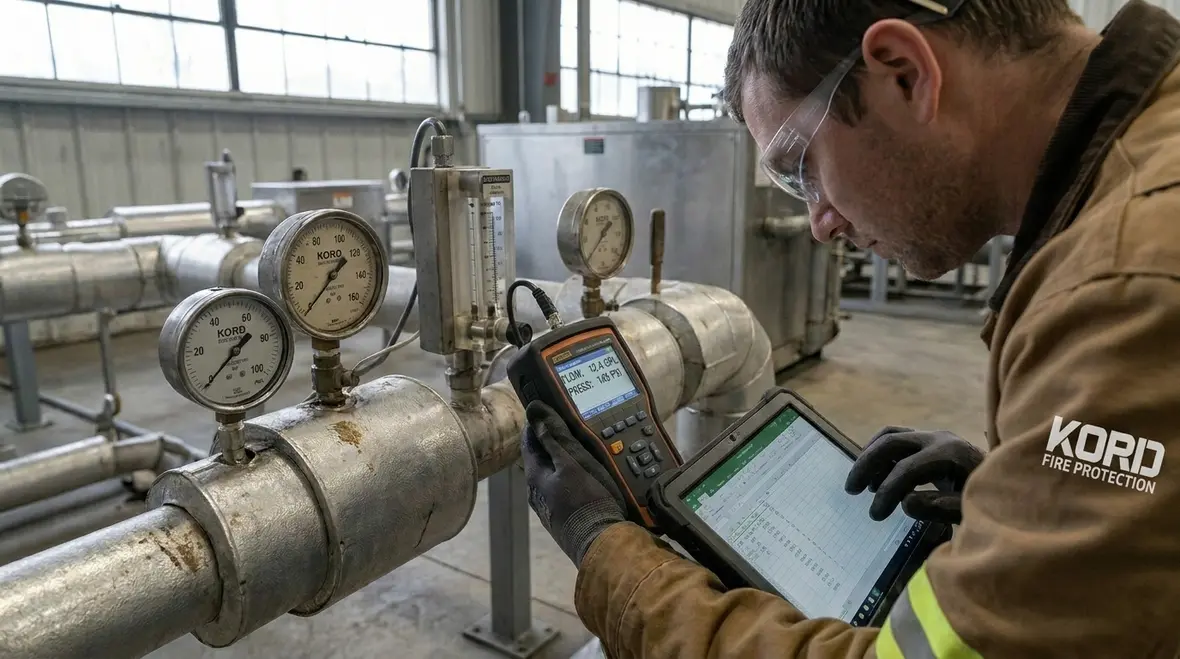
When teams commission fire pumps, they should treat it like a final dress rehearsal, not a quick formality. Proper commissioning verifies that the pump reaches the required flow and pressure at the expected conditions. Kord Fire Protection Technicians focus on field verification because control settings on paper do not always translate to the real world.
They typically confirm alignment, check suction conditions, and ensure that strainers and relief components are clean and in the correct state. Then they test control sequences. That includes start logic, stop logic, and transitions between main pump, jockey pump, and any automatic pressure control mode.
Crucially, they do not stop at “it starts.” They confirm stable discharge pressure during steady demand and verify that the pump does not hunt or cycle unnecessarily. When controls cycle, energy waste rises, and pressure stability drops. In other words, it is like revving an engine in an empty parking lot. Technically it runs, but it does not perform like it should.
To support Industrial fire pump efficiency, commissioning also checks electrical parameters. Voltage imbalance, phase loss, and incorrect motor settings can reduce performance and accelerate wear.
Testing standards make optimization measurable
That is also why facilities benefit from documented testing procedures rather than “we ran it and it looked okay.” Kord’s published guidance explains that no-flow and annual flow testing help confirm whether a pump is staying within expected performance bands and whether calibration, gauges, and controls can be trusted during evaluation. Once testing becomes repeatable, optimization stops being guesswork and starts becoming measurable progress.
Maintenance practices that protect hydraulic performance over time
Small maintenance issues become big efficiency losses
Optimizing Fire Pump Performance is not a one time event. It is a living process. Over months and years, pumps face wear, buildup, and minor misalignment that quietly changes performance. Kord technicians recommend maintenance that targets the items that affect flow and pressure first.
They inspect and clean suction strainers and check for debris buildup. They examine impellers, wear rings, seals, and bearings. They also verify that coupling alignment stays within acceptable tolerances. If alignment drifts, vibration rises, which increases friction and can reduce Industrial fire pump efficiency while increasing failure risk.
Water quality also plays a role. Scale, corrosion, and microbial growth can change hydraulic conditions. Therefore, technicians review local water characteristics and monitor for changes that impact pump behavior. When facilities keep water management in check, they reduce energy loss and protect components.
Finally, they verify that gauges and sensors stay accurate. If a pressure transducer drifts, controls make wrong decisions. Then the pump may respond late or too strongly, and the system may waste energy to chase a false reading.
Common causes of efficiency loss and how Kord technicians fix them
Diagnosis first, replacement second
Even well run systems lose efficiency. The key is catching the pattern early. Kord technicians often see recurring issues that reduce Industrial fire pump efficiency without causing immediate alarms. For instance, partially closed suction or discharge valves can limit flow and force the pump to work harder. Likewise, trapped air at suction or discharge can reduce pump effectiveness and cause erratic pressure.
Another frequent culprit is miscalibrated controls. If setpoints are off, the pump may overshoot pressure and then compensate, which wastes energy. Also, worn impellers and degraded wear rings can lower hydraulic efficiency. When that happens, the pump may still meet pressure at times, but it will do it with extra energy and less margin.
Then there are electrical problems. Motor strain, worn starters, and incorrect wiring can reduce output. Over time, that can shift pump behavior and make tests look inconsistent.
To correct these problems, technicians use a structured approach. First, they confirm operating data during demand. Next, they inspect the suction path for flow restriction. Then they review control settings and confirm sensor accuracy. After that, they decide whether the best fix is cleaning, adjustment, calibration, or component replacement. That order matters. It keeps teams from throwing parts at a problem like it is a video game boss fight.
Using tests and reporting to sustain better pump efficiency
Turn scheduled tests into a performance feedback loop
Facilities that want lasting gains use tests as feedback loops. Kord Fire Protection Technicians recommend trending results across scheduled intervals. That way, teams see gradual changes before they become failures.
Tests should include flow and pressure measurements under controlled conditions. Technicians also record pump run time, suction conditions, and any control behavior. If efficiency drops, the report should connect the dots between the measurements and possible causes.
For example, if flow decreases over successive tests while pressures look similar, that can indicate valve drift, partial blockage, or hydraulic wear. If vibration climbs, it may indicate alignment changes or bearing wear. If startup times increase, it can signal electrical load issues.
With solid reporting, maintenance becomes smarter. Instead of “replace it because time passed,” teams can choose “replace it because performance changed.” That is how Industrial fire pump efficiency stays strong and predictable.
FAQ: Fire pump efficiency and optimization
Final call to action for industrial facilities
Industrial sites that want dependable fire flow should not guess. They should measure performance, track trends, and correct issues that quietly reduce Industrial fire pump efficiency. Kord Fire Protection Technicians can review pump data, verify commissioning outcomes, and support ongoing maintenance that keeps controls steady and hydraulics healthy.
If the next test feels like a stressful mystery, it is time to turn it into a clear plan. Contact Kord today through its fire pump service page and explore related protection support like commercial & residential fire alarm installation. Then you can focus on operations, not on whether the pump is going to behave like a drama queen.

Join Our Newsletter!
Get the latest fire safety tips delivered straight to your inbox From our Newsletter.