Backup Power for Fire Protection Redundancy and Testing
Backup power for fire protection stands between a tiny problem and a major disaster. And when fire protection systems must work during a power outage, redundancy is not a luxury, it is the job. Kord Fire Protection technicians explain that critical infrastructure cannot “hope” the grid comes back in time. Instead, it must transition fast, run long enough, and stay supervised so failures get caught early. In other words, the system should behave less like a flaky smartwatch and more like a dependable firefighter who never clocks out. This article breaks down redundant power solutions for critical fire protection infrastructure, with practical details on how teams design, test, and maintain them.
Redundancy that keeps detection and suppression online
When power drops, fire protection loads still need control, alarm, communication, and actuation. Therefore, redundant power solutions usually combine multiple layers. First, facilities often install dedicated Backup power for fire protection systems sized to cover the time the site needs, from minutes to hours. Then, they add failover paths so a single component does not take the entire system down. Additionally, they use monitoring so operators see problems before an alarm device becomes a sad prop during a real event.
Kord Fire Protection technicians often point out that “redundant” does not mean “random.” A proper design follows a clear sequence. For example, emergency power should start within the required transfer time, and voltage should stay within the equipment limits. Then, the controls should remain stable so the system can supervise sensors, panels, and notification circuits without rebooting.
Why layered backup matters
A single backup component can help, but layered protection is what keeps life safety systems calm under pressure. Batteries bridge short interruptions. Generators carry the longer outage. Supervisory signals tell staff when something is slipping. Good redundancy is really a chain of small decisions that prevent one awkward failure from turning into a building wide problem. That is why many facilities also coordinate their alarm readiness with regular fire alarm inspection and testing for commercial buildings, because reliable power and reliable signaling belong in the same conversation.
Backup power options for life safety systems
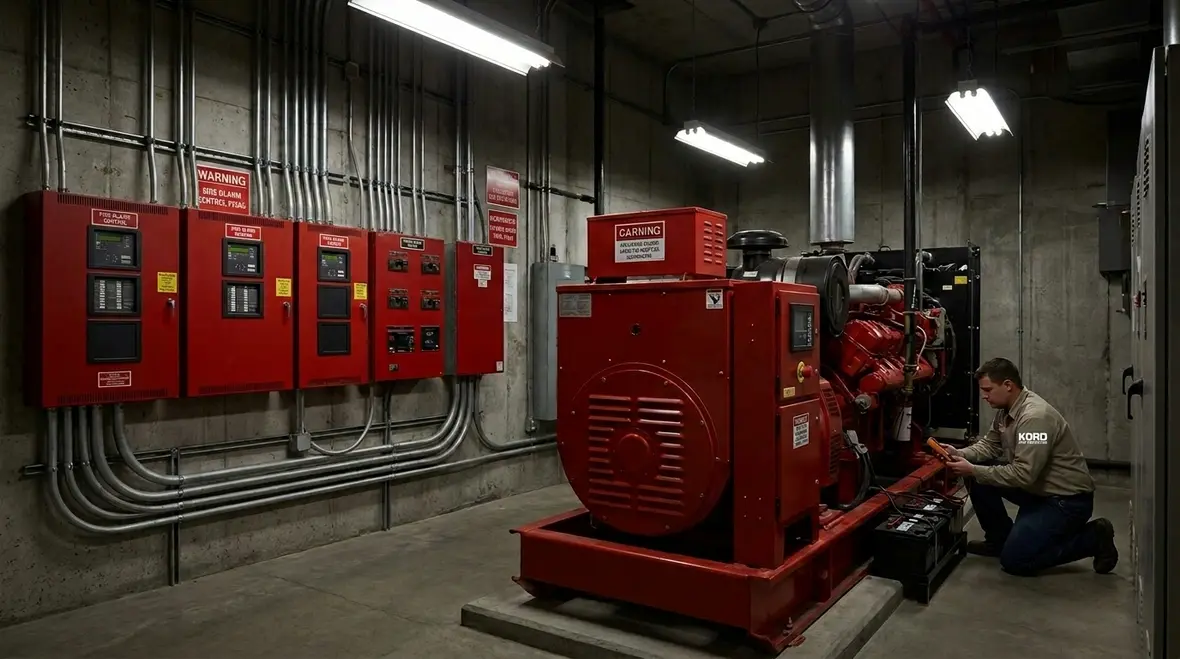
Facilities typically use a combination of power sources. Common choices include engine generator systems, battery based solutions, and uninterruptible power systems for sensitive controls. Each one handles different failure modes. For instance, batteries often cover the brief window while a generator starts. Meanwhile, generators provide longer duration runtime for larger sites, multiple buildings, or extended outages.
To keep things reliable, Kord Fire Protection technicians explain that engineers match the power source to the load profile. They look at how fire alarm panels draw power during standby, what happens during alarm transmission, and how notification appliances affect peak demand. Therefore, the system design avoids undersizing, which can lead to voltage dips, nuisance faults, or a shutdown right when the building needs everything most.
Choosing the right mix of sources
No two buildings share the same risk profile. A compact commercial property may lean heavily on batteries for short duration continuity, while a campus or industrial site may need a generator strategy with extended runtime planning. Sensitive electronics can also benefit from conditioned power so controls do not hiccup during transfer. The goal is not to buy every shiny power device in sight. The goal is to build a sensible stack that matches real loads, actual operating sequences, and the ugly reality that outages rarely announce themselves politely.
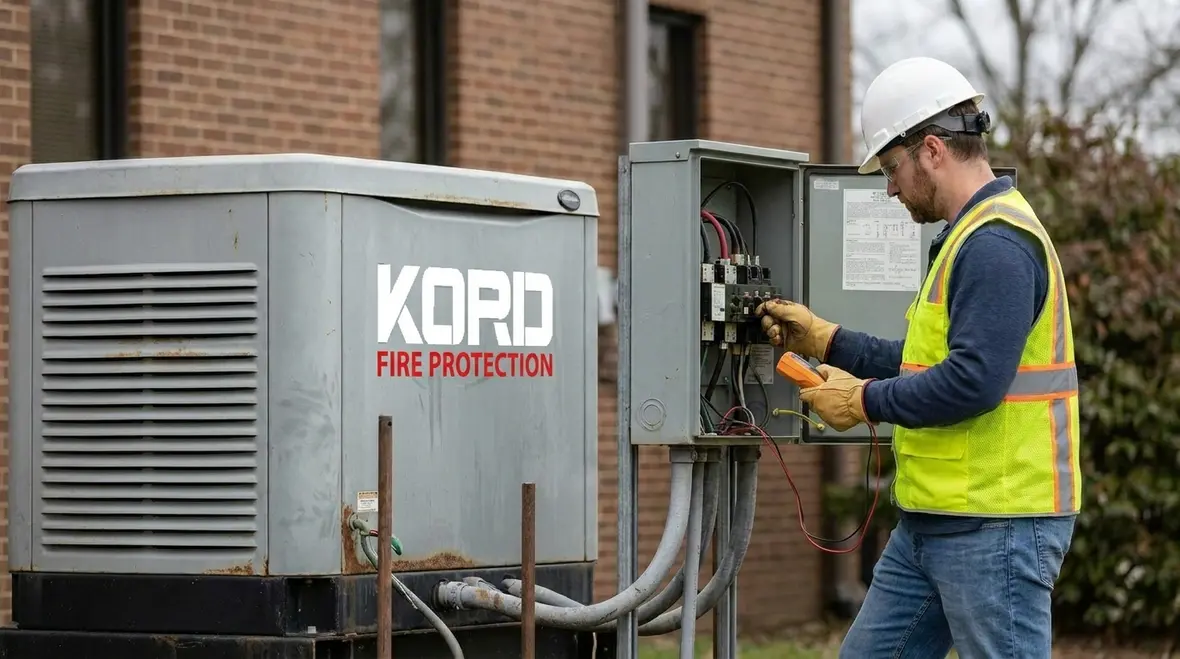
How transfer and supervision work in real facilities
Power transfer matters because timing errors can cause missed supervision or delayed signaling. As a result, many installations use automatic transfer switches and control logic that transfers loads based on voltage and frequency thresholds. Additionally, they provide a controlled transition so the fire protection equipment sees stable power.
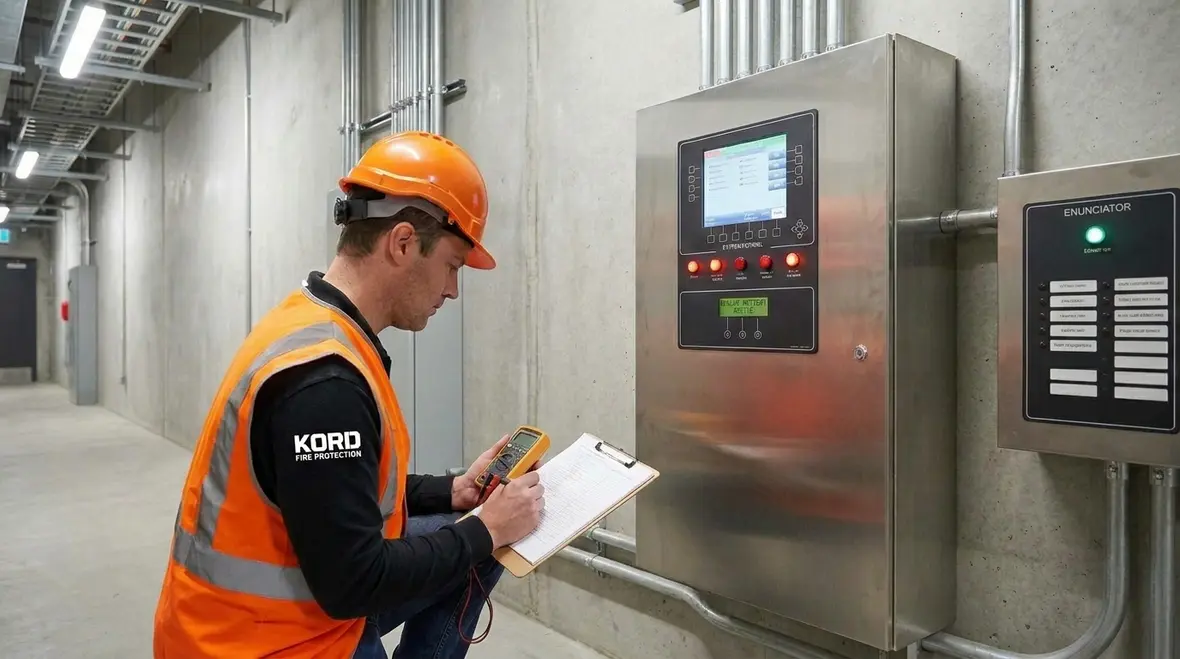
Supervision is the other half of the equation. Components should report trouble conditions, including low battery status, ground faults, charger failures, or generator issues. Furthermore, the fire alarm system should treat power problems as events that require attention. Kord Fire Protection technicians often recommend that teams set clear maintenance triggers so a “trouble” report becomes a scheduled fix, not a mystery left for the next meeting.
And yes, someone will eventually say, “It always worked before.” That is exactly why supervision and documentation exist, so past performance does not become future risk. Fire protection does not run on vibes.
Signals teams should never ignore
- Low battery or charger trouble that quietly chips away at standby reliability
- Transfer delays that look small on paper but are long enough to upset sensitive controls
- Ground faults and wiring issues that trigger nuisance trouble or prevent proper operation
- Generator alarms tied to fuel, starting, temperature, or output abnormalities
Engineering redundancy into panels, circuits, and wiring
Redundancy does not only live in the power source. It also lives in the way systems distribute energy. For critical loads, designers may separate circuits, reduce shared failure points, and route wiring to maintain function even when one section faces a fault. In practice, this can mean using properly rated devices and protective components that fail safely.
Moreover, facilities can reduce common-cause failures by keeping power conversion equipment in protected locations and using enclosures rated for the environment. Fire protection technicians also check that grounding and bonding remain correct so stray faults do not create false trouble or block proper operation.
Kord Fire Protection technicians emphasize that installers should follow equipment instructions and maintain conservative voltage allowances. That means they verify wire size, voltage drop, and load calculations. Then, they confirm that chargers and inverters perform within their specified output ranges. When the math checks out and the wiring matches the plan, the system behaves like it was built for the real world, not a spreadsheet fantasy.
Design details that quietly save the day
A resilient system usually looks boring in the best possible way. Panels stay powered. Circuits stay supervised. Wiring routes avoid needless shared hazards. Protective devices coordinate instead of fighting each other. That kind of boring is a compliment. It means the infrastructure is doing its job without drama, which is exactly what you want from anything responsible for keeping people informed and protected during an emergency.
Testing, load banks, and maintenance that actually reduces risk
Even the best design can drift over time. Batteries age, chargers degrade, and generators develop issues that only show up under stress. Therefore, a strong program includes periodic functional tests, load testing where appropriate, and inspection of connections and controls.
For battery systems, technicians check capacity, inspect for corrosion, and confirm charger output. For generator systems, they typically run scheduled tests, verify transfer operation, and use load bank testing when required to confirm runtime under expected demand. In addition, they review performance history and confirm fuel quality and replenishment schedules.
Kord Fire Protection technicians also stress that testing must reflect the actual site load. When teams test at too low of a load, equipment may pass and still fail under real alarm conditions. Consequently, the goal is not just “it turned on,” but “it performed the way the system must perform.”
Maintenance habits that pay off
Routine testing is where theory meets the part of reality that likes to break things at inconvenient times. Capacity checks, transfer verification, terminal inspections, fuel review, and performance logging may not sound glamorous, but neither does explaining to a building owner why their backup strategy folded like a lawn chair during a blackout. Teams that test with discipline tend to find small defects while they are still cheap, manageable, and not trying to ruin everyone’s week.
Facilities that already coordinate sprinkler maintenance often benefit from aligning schedules across systems. For example, a broader review of fire sprinkler testing in Los Angeles County can help property teams keep alarms, suppression, and supporting power systems moving on the same compliance track instead of managing them like unrelated cousins at a family reunion.
Common failure points and how teams prevent them
Many power failures come from preventable issues. A top risk is undersized power or incorrect load assumptions. Another is poor transfer settings that cause short interruptions. Additionally, overlooked maintenance can leave dirty terminals, degraded batteries, or failing circuit protection devices.
Facilities also face design gaps when the fire alarm system shares power with noncritical loads. When that happens, a nuisance electrical fault can cascade into a life safety issue. Therefore, teams separate critical circuits and ensure that the power path for life safety equipment remains independent where required.
Finally, documentation gaps create long delays during emergencies. If operators cannot quickly identify the right subsystem, response time suffers. To prevent that, Kord Fire Protection technicians recommend clean labeling, updated as-built drawings, and clear sequence descriptions for service staff.
Prevention beats emergency improvisation
When teams document loads, label equipment clearly, inspect on schedule, and test the system under conditions that resemble real use, the usual weak points stop being surprises. That is the whole point. Fire protection is serious enough without adding scavenger hunt energy during an outage. A little organization now saves a lot of panic later.
FAQ about redundant fire protection power
Get a resilient power plan with Kord Fire Protection
Reliable fire protection needs more than a single power source. It needs smart transfer, strong supervision, correct sizing, and disciplined testing. Kord Fire Protection technicians help facilities build redundant power paths that support detection and notification when the grid fails. Next, they review your loads, equipment, and maintenance history, then map a practical plan for performance you can trust.
If your site needs broader support beyond backup strategy alone, Kord Fire Protection also offers comprehensive solutions through its full fire protection services page. Contact Kord Fire Protection today to schedule a power and readiness assessment and keep critical infrastructure ready for the moments that matter.

Join Our Newsletter!
Get the latest fire safety tips delivered straight to your inbox From our Newsletter.