Why emergency lighting design standards matter from day one
In an emergency, seconds feel like hours, and the last thing a tenant needs is uncertainty. That is why Kord Fire Protection emphasizes emergency lighting design standards early in every project. These standards guide spacing, illumination levels, sign placement, wiring practices, battery health, and inspection routines so egress stays clear when smoke, heat, and power loss show up uninvited. In other words, emergency lighting should work the way it was tested in the real world, not the way it was “kind of” mounted during a busy Friday.
To keep compliance tight and tenant safety higher, this article walks through practical ways to optimize emergency egress lighting. Kord Fire Protection technicians explain what to look for, how to avoid common failures, and how to build a system that performs when it counts. If someone asks why people get serious about lights that may never be used, the answer is simple: when they do get used, nobody laughs. Not even the Joker.
Where code requirements and real life meet
Emergency egress lighting does not live in a vacuum. It connects to building codes, life safety rules, and the way people actually move through spaces. So, technicians start by mapping the travel routes from exit to exit, then they align the lighting layout with those routes and with the expected occupancy load.
Most failures happen when design assumptions break down during installation or maintenance. For example, designers may place fixtures correctly on paper, yet field conditions can shift due to ceiling changes, new equipment, or a future tenant’s layout. Therefore, Kord Fire Protection technicians treat the initial design as a living plan, not a once and done drawing set.
They also confirm that emergency lighting supports both visual wayfinding and safe movement. This includes illumination at required points, clear direction at intersections, and adequate brightness that helps tenants distinguish hazards like stairs, landings, and door swings. When this is done well, occupants find exits faster and reduce panic. When it is done poorly, the building becomes a dim maze. A maze is fun at a carnival, not during evacuation.
Step by step: optimize layout and coverage
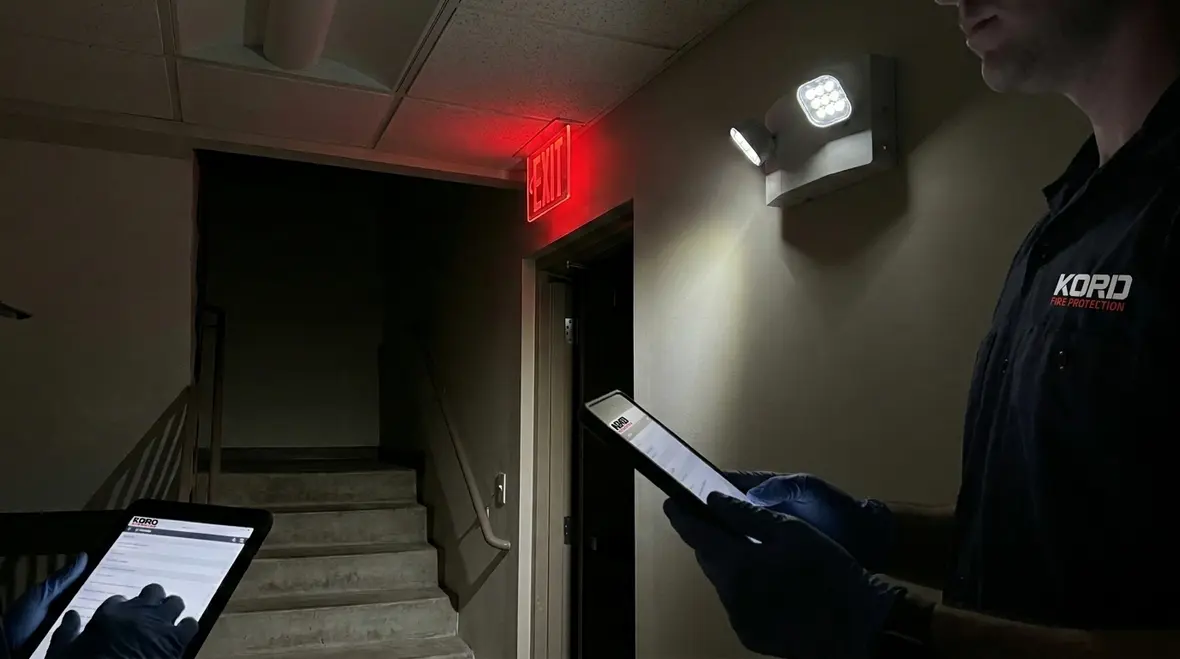
To optimize emergency egress lighting, teams must design coverage that accounts for sight lines, wall edges, and the paths people take under stress. First, they evaluate the layout of corridors, stair enclosures, and exit discharge areas. Then they choose the placement method that best fits the geometry of each space.
Kord Fire Protection technicians often emphasize that coverage must remain consistent from floor level to normal line of sight. Additionally, they check how lighting interacts with reflective surfaces and with the direction of egress signs. If a sign points correctly but the surrounding area stays too dim, people still hesitate. In emergencies, hesitation is basically a slow-motion problem.
They also handle door hardware and obstructions. A door can block light output or create shadow bands, especially near stair doors. As a result, technicians adjust placement so fixtures do not rely on perfect conditions that rarely exist. Even small offsets matter when smoke reduces contrast.
Finally, they confirm that the emergency lighting system matches the building’s occupancy and risk profile. A retail suite needs different attention than a warehouse corridor because people move differently and may carry carts, ladders, or personal items. Therefore, optimization is not generic. It is tailored.

How do fixtures, signs, and power systems work together
Emergency egress lighting is not just one product category. It is a system made of units, signs, battery packs, and wiring that must perform together. If one component is weak, the whole plan suffers.
So, technicians start by reviewing fixture types and their placement. Some units produce directional light for wayfinding, while others cover wide corridor areas. Signs, meanwhile, support fast recognition of exits and help reduce indecision at turns and intersections.
Then the team verifies the power strategy. Emergency lighting design standards call for reliable transfer from normal power to emergency power, along with continued operation for the required time. Kord Fire Protection technicians check battery condition, charger behavior, and system supervision where applicable. They also verify that the circuiting supports the right sections of the building.
Here is the part that saves lives and avoids embarrassing callbacks. Batteries degrade over time, even if the lights look fine. Therefore, technicians do not just install. They test, document, and schedule maintenance so the emergency lighting system stays ready through each season, not only at the handover walkthrough.
Testing, inspection, and maintenance that actually holds up
Optimizing emergency egress lighting does not stop at installation. It continues through testing and maintenance that reflect how real occupants behave and how real systems age.
First, Kord Fire Protection technicians establish a testing plan that aligns with the building schedule. They also consider when tenants change layouts and when maintenance contractors access ceiling spaces. In many buildings, ceiling tiles get moved, diffusers get swapped, and labels get lost. If the documentation does not keep up, testing becomes guesswork.
They then verify illumination performance using practical field checks. The goal is not just “the light turns on.” The goal is that it provides adequate coverage where people need it most. That includes stairs, exit doors, and route changes where confusion usually grows.
Next comes inspection of visible parts. Damaged lenses, loose housings, and corrosion can reduce performance. Likewise, signs that are faded or blocked by new signage can slow evacuation. Therefore, technicians train maintenance staff to report changes quickly, because the building is never truly static.
Finally, they document findings and corrective actions. Clear records support compliance reviews and reduce uncertainty for owners and facility managers. If the system needs repair, the documentation tells the story without drama.
Common problem areas and how technicians correct them
Even with good intent, buildings accumulate issues. People reconfigure spaces, contractors add equipment, and lighting systems get treated like background furniture. Kord Fire Protection technicians see recurring challenges and address them with a methodical approach.
Below is a quick look at frequent trouble spots and the response approach. This helps teams act fast before a small defect turns into a big safety gap.
Dual column quick check
Problem area Optimization action
Corridors with new partitions
Relayout the emergency lighting design standards coverage to match the updated travel routes.
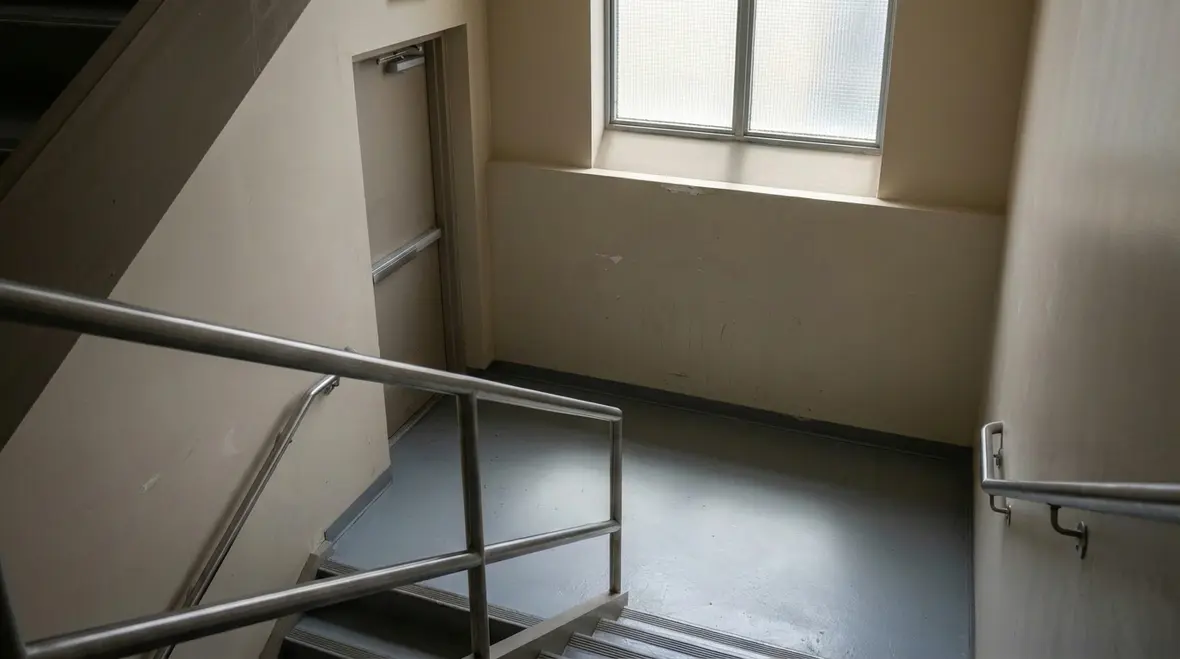
Stair doors and landings
Adjust placement and verify brightness so tenants can see direction and footing.
Exit discharge paths
Confirm the lighting reaches the area where people exit the building, not only the door threshold.
Battery and charger aging
Test and monitor runtime performance, then replace components on a planned schedule.
Blocked fixtures by mechanical work
Inspect after renovations and confirm no obstructions create shadow zones.
Training tenants and staff for calm evacuations
Lights help people find exits, but people still need to know how to respond. Therefore, Kord Fire Protection technicians often support a broader safety plan that includes staff training and tenant awareness.
When occupants understand where exits are and what the emergency lighting system signals, they move with purpose instead of panic. To support that, teams ensure that exit signage remains visible under emergency conditions and that the direction of wayfinding matches the actual paths.
Additionally, staff training should include how to report issues. For example, a tenant may notice a fixture flickering or a sign blocked by seasonal decorations. If staff know these observations matter, they report them quickly. Then technicians correct the issue before the next inspection cycle.
It also helps to run a simple communication routine for drills. Tenants do not need a lecture, but they do need clear instructions. Think of it like movie previews. The message is short, the benefit is big, and nobody wants a plot twist during a real emergency.
FAQ about emergency egress lighting optimization
Next steps: protect tenants and pass inspections with confidence
Emergency egress lighting works only when it is designed, installed, tested, and maintained as a real life safety system. Kord Fire Protection technicians can review coverage, power reliability, and inspection records, then recommend practical upgrades that fit the building’s layout and renovation history. If the goal is compliance and tenant safety without last minute surprises, act now. Schedule a site assessment and testing plan so the lighting performs as promised when it matters most. Because in an emergency, the building should not improvise.
Want to connect safety across systems?
If you are managing life safety for complex facilities, it helps to think beyond one system at a time. Kord Fire’s guidance on clean agent fire suppression for critical spaces complements the same “tested and maintained” mindset you apply to emergency egress lighting.
Schedule a site assessment
Get coverage, power, and inspection records reviewed, then receive practical upgrade recommendations tailored to your layout and renovation history.
Know Your Weapon Before You Fight the Flame
Kord Fire Protection is your go-to when it comes to all things fire protection. For over 20 years, we’ve been serving Southern California with the quality service and equipment to keep your home or business safe at all times. Our competitive prices reflect our unwavering commitment to protecting what matters most in the event of a fire emergency. Give us a call, send an email, or use that form!

Join Our Newsletter!
Get the latest fire safety tips delivered straight to your inbox From our Newsletter.