
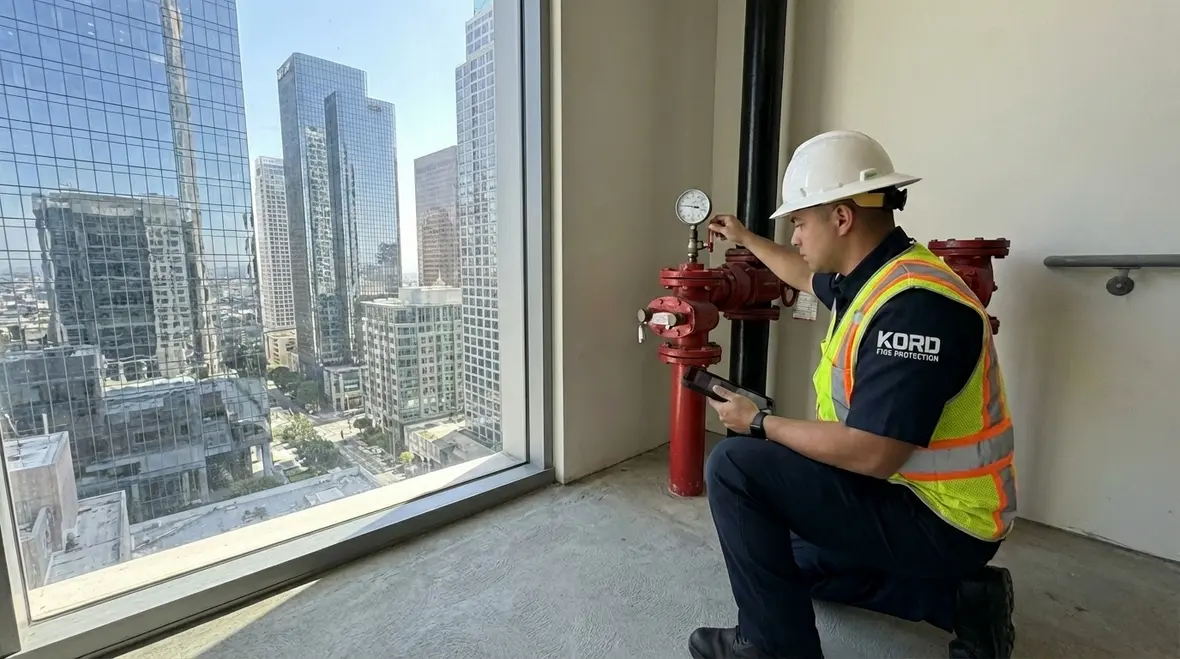
Downtown LA Fire Safety Guidelines for High Rises
High above the streets of Los Angeles, glass towers shimmer in the California sun. However, beauty at that height comes with responsibility. The Downtown LA fire safety guidelines set clear standards for high rise buildings, aiming to protect lives, property, and peace of mind. These rules cover everything from sprinkler systems to evacuation plans. Throughout Downtown, Kord Fire Protection technicians often explain that safety is not a one time task. It is a living system that needs care, testing, and respect. In the sections ahead, this article explores how high rise buildings in Downtown Los Angeles can meet and exceed those standards with confidence.

Understanding Fire Risks in Downtown LA High Rises
Downtown Los Angeles is dense, vertical, and constantly moving. Office towers, residential condos, hotels, and mixed use buildings all share the skyline. Because of that density, a small issue can grow quickly if ignored.
First, high rise buildings face unique fire behavior. Heat rises. Smoke rises. People, unfortunately, also tend to panic and rush for elevators, which is never the hero move in a fire. Therefore, building owners must plan for vertical evacuation, stairwell pressurization, and smoke control systems.
In addition, many Downtown towers include restaurants, parking garages, and retail spaces. Each use adds another layer of risk. Grease fires in commercial kitchens, electrical loads in office floors, and vehicle fires in underground garages all require tailored protection. Kord Fire Protection technicians often explain that fire safety in a high rise is less about one device and more about how every system works together.
For high rise managers who want a deeper dive into citywide standards, resources like the broader Los Angeles County fire protection services page can help connect the dots between local codes, countywide expectations, and what that means for a single tower in Downtown.
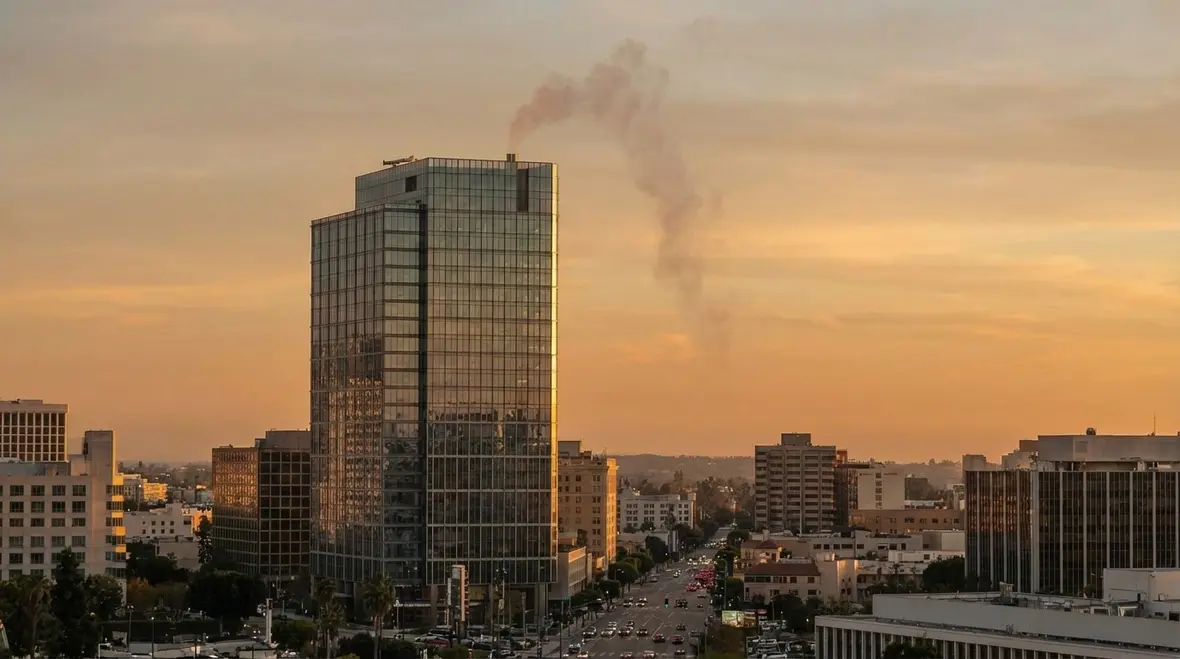
Core Systems Required by Downtown LA Fire Safety Guidelines
To meet local high rise fire codes, buildings must rely on several integrated systems. These systems do not work in isolation. Instead, they operate like a well rehearsed orchestra. When one instrument fails, the whole performance suffers.
Automatic Fire Sprinkler Systems
Sprinklers remain the front line of defense. They activate based on heat, not smoke, and they control or extinguish fires before they spread. According to fire authorities, properly maintained sprinklers dramatically reduce property damage and injury.
Kord Fire Protection technicians routinely inspect valves, flow switches, and pressure levels. They also check for corrosion or obstructions in piping. After all, a sprinkler system that looks fine from the outside can hide problems within.
Fire Alarm and Detection Systems
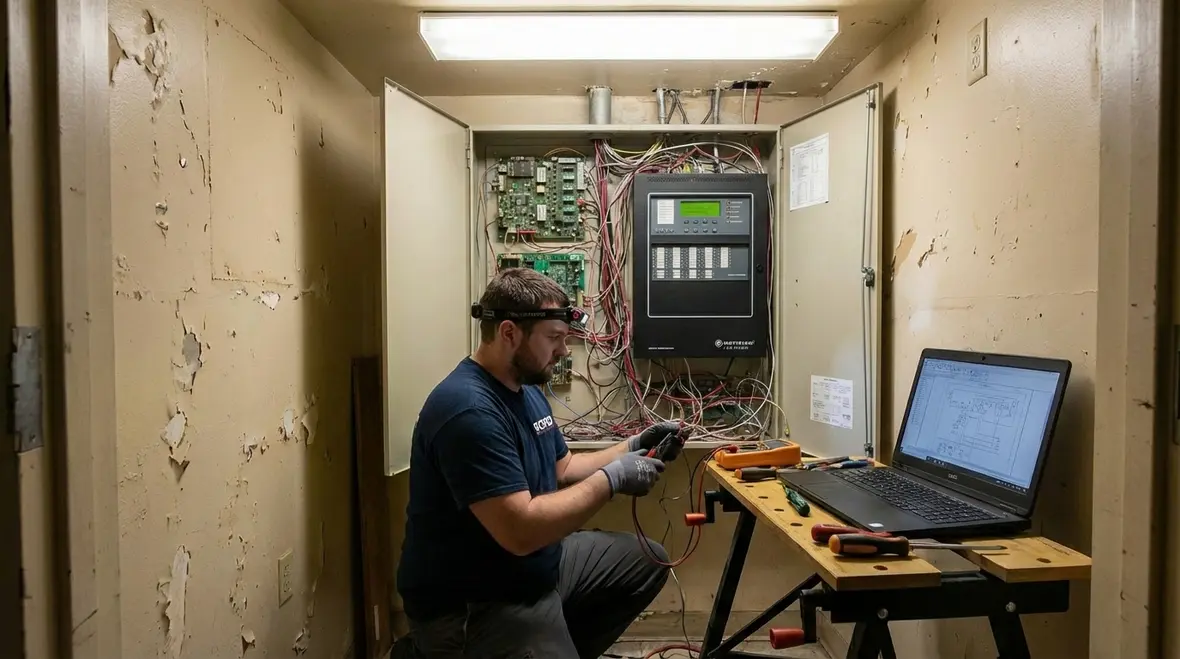
Detection buys time. Smoke detectors, heat sensors, and manual pull stations alert occupants early. Moreover, modern systems connect directly to monitoring centers, which then notify the fire department.
Technicians test control panels, backup batteries, and communication lines. If a panel throws an error code, it is not a suggestion. It is a call to action.
Standpipes and Fire Pumps
Because firefighters cannot drag hoses up dozens of flights easily, standpipes provide water access on every floor. Fire pumps ensure water pressure remains strong, even at the top of the building. Regular flow testing confirms that these systems perform under real conditions.
For owners who want a service partner already familiar with Downtown towers, the dedicated Downtown LA fire protection services page outlines how inspection, testing, and repairs can be tailored to the unique mix of offices, condos, and hotels in the city’s core.
How Often Should High Rise Fire Systems Be Inspected in Downtown LA?
Building owners often ask this question, usually with a hopeful tone that suggests once a decade might do the trick. The reality is more frequent, and for good reason.
Inspection schedules follow national standards and local amendments. For example:
- Sprinkler systems require annual inspections, with certain components checked quarterly.
- Fire alarm systems need annual testing, plus periodic visual checks.
- Fire pumps must undergo weekly or monthly churn tests and annual flow tests.
- Emergency lighting and exit signs require monthly and annual testing.
Therefore, compliance is not a single calendar reminder. It is an ongoing commitment. Kord Fire Protection technicians often explain inspection reports in plain language, helping property managers understand not only what failed, but why it matters.
Evacuation Planning and Occupant Training in Downtown Towers
Even the best equipment cannot replace clear human action. Consequently, evacuation planning forms a major part of local high rise fire requirements.
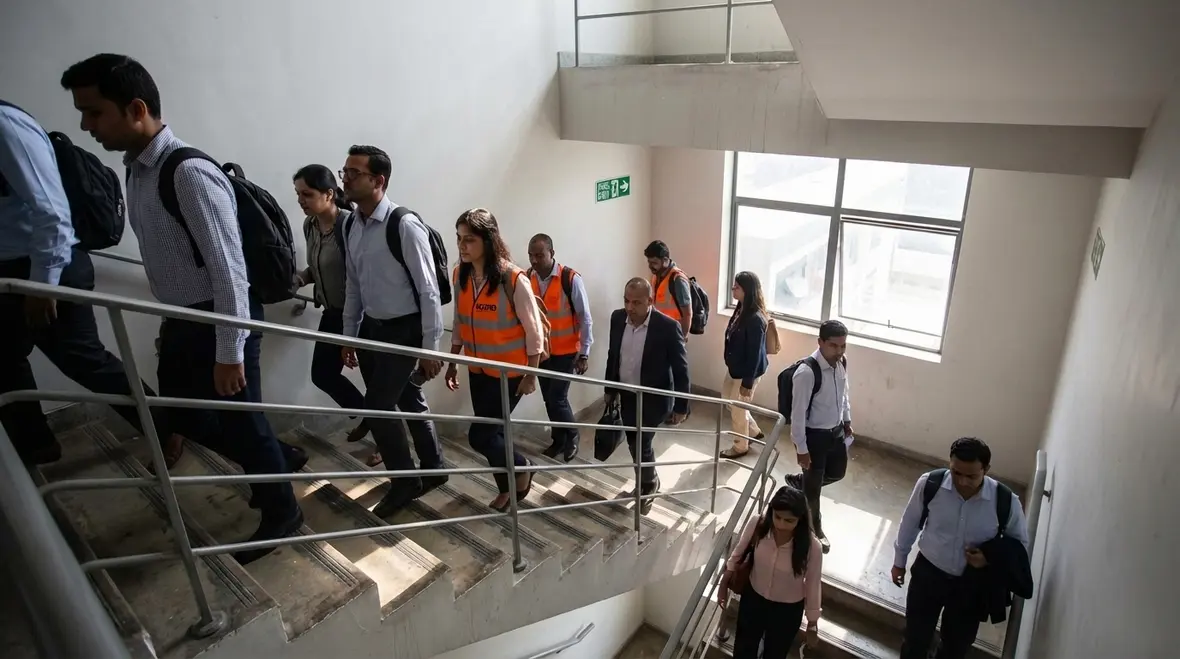
Every building should maintain a written emergency action plan. This plan outlines evacuation routes, stairwell locations, areas of refuge, and roles for floor wardens. In residential towers, management should provide guidance to tenants. In office buildings, employers must train staff regularly.
Furthermore, drills build muscle memory. When people practice walking down 20 flights of stairs, they learn what it feels like. It is not glamorous. It is not a Marvel movie slow motion scene. It is steady, organized movement. And that practice can save lives.
Kord Fire Protection technicians often participate in walkthroughs, pointing out blocked exits, improper door hardware, or storage in stairwells. They explain that a stairwell is not a storage closet. It is a lifeline.
Fire Safety Upgrades for Older High Rise Buildings
Downtown Los Angeles includes towers built decades ago. While these buildings hold architectural charm, they may not meet current standards without upgrades.
Older properties may lack modern alarm panels, voice evacuation systems, or updated sprinkler coverage. Additionally, seismic retrofits can affect fire protection piping. Therefore, coordination between structural engineers and fire protection professionals becomes critical.
Below is a comparison of common legacy features and recommended upgrades.
| Legacy Feature | Modern Upgrade Approach |
|---|---|
| Analog alarm panels | Addressable fire alarm systems with real time monitoring |
| Limited sprinkler coverage | Full floor sprinkler retrofits with updated heads |
| Manual communication only | Voice evacuation and mass notification systems |
| Aging fire pumps | Energy efficient pumps with digital controllers |
By upgrading systems, building owners not only align with the Downtown LA fire safety guidelines, but also improve tenant confidence. After all, nothing says responsible management like visible commitment to safety.
Working with Certified Fire Protection Technicians in Downtown LA
Choosing the right fire protection partner matters. High rise systems are complex, and mistakes can be costly.
Kord Fire Protection technicians bring hands on experience with local codes, permitting processes, and fire department coordination. They explain deficiencies without jargon. Instead of overwhelming property managers with technical language, they break down issues step by step.
Moreover, they emphasize documentation. Inspection tags, test reports, and compliance records protect building owners during audits or after incidents. In a city as regulated as Los Angeles, paperwork is not optional. It is part of the safety ecosystem.
Additionally, proactive maintenance saves money over time. A small valve repair today can prevent a major water damage event tomorrow. As technicians often note, it is far cheaper to maintain a system than to rebuild a floor.
Common Compliance Mistakes High Rise Owners Should Avoid
Even well managed buildings can slip up. However, most violations share common patterns.
- Ignoring minor deficiencies on inspection reports
- Failing to update evacuation maps after tenant improvements
- Blocking electrical panels or sprinkler risers with storage
- Letting fire alarm batteries expire without replacement
- Delaying required five year internal pipe inspections
Although these issues may seem small, they compound over time. Consequently, city inspectors may issue citations or require corrective action within tight deadlines. A calm, organized maintenance plan prevents that scramble.
FAQ About High Rise Fire Safety in Downtown Los Angeles
Conclusion and Next Steps for Building Owners
High rise safety is not about fear. It is about preparation, clarity, and steady action. By following established standards, maintaining equipment, and working with experienced professionals like Kord Fire Protection technicians, Downtown building owners can protect lives and investments. Schedule a comprehensive inspection, review your current systems, and strengthen your emergency plan today. In a city that never really slows down, peace of mind is worth every careful step.
Need a partner who already knows Downtown LA?
Explore Kord Fire’s dedicated Downtown LA fire protection services to see how inspections, testing, and upgrades can be coordinated floor by floor without disrupting tenants.
Take action on your entire portfolio
If you manage multiple properties across the region, Kord Fire can also coordinate inspections and service through their Los Angeles County fire protection team, helping you keep every building inspection ready and aligned with the same practical, high standard of safety.
Know Your Weapon Before You Fight the Flame
Kord Fire Protection is your go-to when it comes to all things fire protection. For over 20 years, we’ve been serving Southern California with the quality service and equipment to keep your home or business safe at all times. Our competitive prices reflect our unwavering commitment to protecting what matters most in the event of a fire emergency. Give us a call, send an email, or use that form!

Join Our Newsletter!
Get the latest fire safety tips delivered straight to your inbox From our Newsletter.


