Data Center Power Redundancy for Maximum Uptime With kord
Quick Answer: Modern data centers keep servers alive by using power redundancy that prevents outages from turning into shutdowns. A strong design adds parallel power paths, automatic switching, and smart monitoring. When fire risk enters the picture, kord fire protection can help protect both assets and uptime by reducing downtime from incidents.
In Australia’s industrial, retail, and commercial facilities, downtime does not just hurt, it invoices. That is why Data Center Power Redundancy matters. It keeps critical workloads running when equipment fails, maintenance happens, or storms roll in with the confidence of a bad action movie sequel. In the rest of this article, a third person explains how to maximize uptime using practical power strategy, and how kord fire protection can become a vital partner when the conversation moves beyond electricity and into safety.
Near the start of that planning, many operators benefit from pairing uptime goals with full fire protection services so suppression, alarms, inspections, and service readiness are not treated like separate islands.
Optimizing uptime with layered power paths
Why one backup plan is never enough
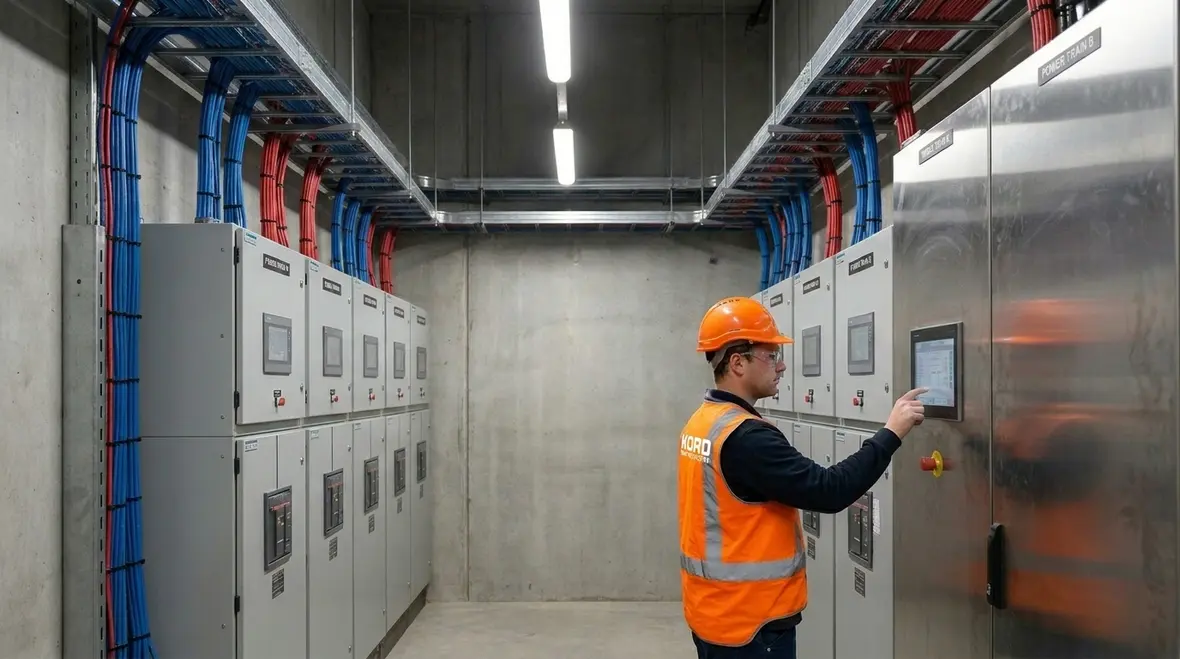
First, facilities leaders build redundancy as a layered system, not a single “backup plan.” They design multiple power paths so the data hall does not depend on one switch, one bus, or one transformer. Then they add automatic transfer so operations continue even while crews swap components.
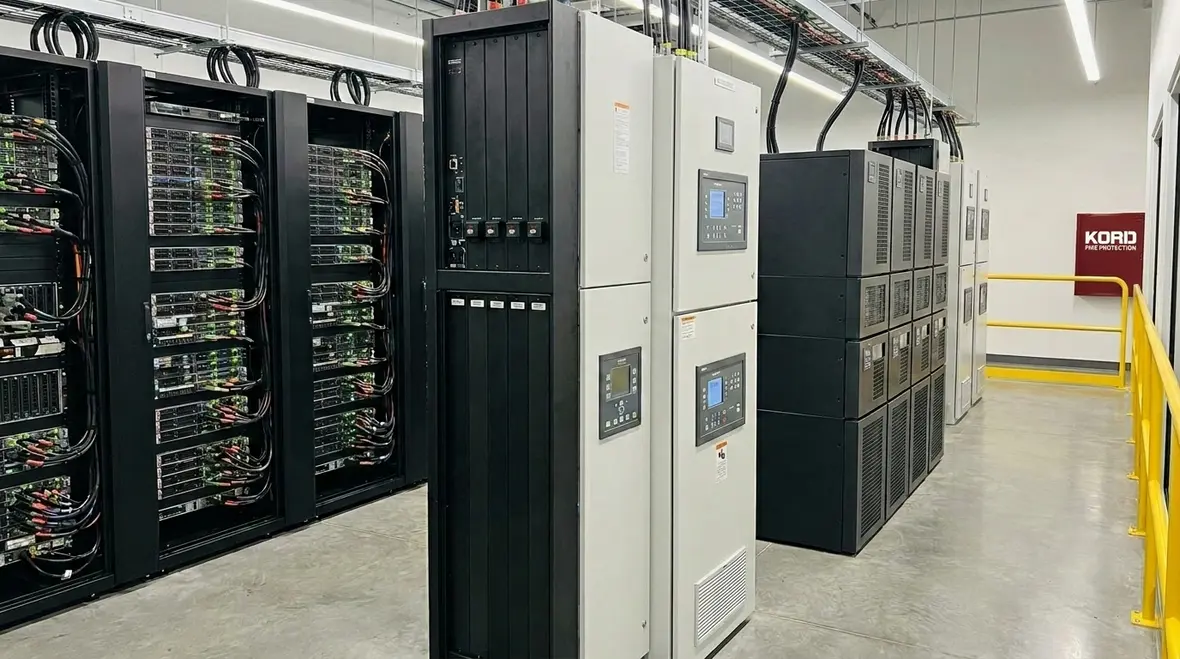
In practical terms, teams typically split power into independent trains. Each train can include a separate UPS, distribution panels, and cabling routes. Meanwhile, critical loads get served by static transfer switches or similar switching gear that routes power without a human stepping in like a stagehand under pressure. As a result, the service stays stable during common events like breaker trips, minor faults, or planned maintenance.
This approach also gives operators room to perform maintenance without holding their breath the entire time. A redundant path is not there to look impressive on a single-line diagram. It is there so one issue stays one issue, instead of becoming the kind of story everyone retells in the break room for six months. When uptime targets are serious, design teams think in terms of fault isolation, selective coordination, and operational flexibility, not just backup boxes with optimistic labels.
Of course, no design beats good operating discipline. Therefore, facilities teams also standardize procedures for testing, alarm handling, and load management. Otherwise, redundancy can turn into expensive theatre, where everything looks ready until it is time to prove it.
UPS strategies that prevent micro outages
Ride-through performance matters more than the label
Next, they focus on ride-through capability. Even when a generator starts quickly, there can still be a brief gap. A high-quality UPS system bridges those moments. However, uptime does not rely on “having a UPS.” It depends on how the UPS supports the load over time and during transitions.
Facilities commonly use online double conversion or equivalent topologies to reduce transfer time effects. They also tune battery and runtime planning to match real site needs, including seasonal demand and maintenance schedules. Additionally, they ensure the UPS output stays within tolerance for sensitive equipment.
That tuning step matters more than people sometimes admit. A UPS can be technically installed and still be strategically underprepared. If battery autonomy is too short, if bypass arrangements are poorly understood, or if load assumptions were based on yesterday’s reality, the system may perform beautifully right up until it does not. Sensitive computing environments are not especially forgiving about brief voltage drama.
To avoid surprises, teams verify commissioning results and then repeat testing. They do not only check that the UPS runs. They also confirm that alarms behave correctly, that the bypass path works, and that the system returns to normal configuration cleanly. Because if the UPS fails quietly, the entire promise of Data Center Power Redundancy collapses quietly too.
Redundant distribution and switchgear design that stays stable
Stability is won in the distribution layer
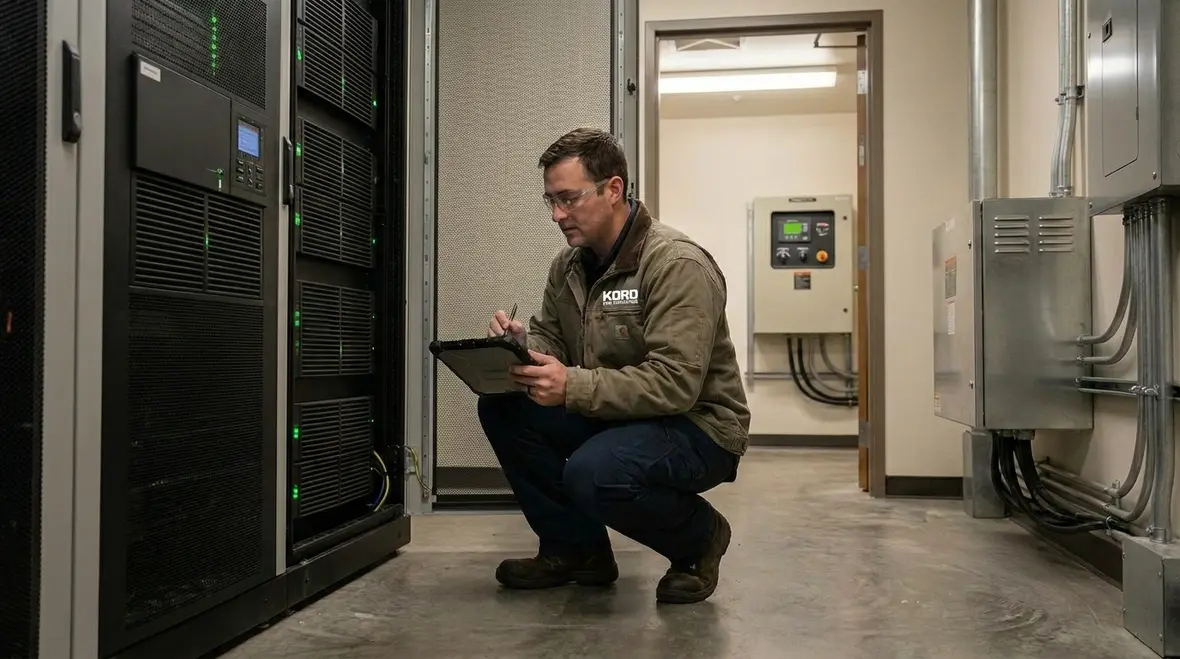
Then the article moves closer to the “distribution layer,” where stability often gets won or lost. Power distribution includes switchgear, busways, PDU layouts, and the way feeds route to racks. Teams should isolate critical circuits so one fault does not cascade across the room.
Good redundancy design uses sectionalization. It limits what a breaker event can impact and it keeps rerouting options available. At the same time, teams design for maintainability, which means they can service a section without shutting down the whole operation. Consequently, they reduce the temptation to “just leave it running and pray.” That strategy may work for weekends, but not for audited uptime targets.
They also pay attention to load balancing between redundant branches. When loads sit unevenly, one path ages faster and the other looks fine, until it suddenly is not. Moreover, monitoring helps catch this early, so maintenance teams can act before capacity margins disappear.
Another practical detail is routing discipline. If supposedly independent feeds share too much physical pathway, a single incident can still affect both. That is why robust design looks at electrical separation, equipment access, labeling, and the small field conditions that decide whether the elegant plan survives real life. In this layer, neatness is not cosmetic. It is resilience wearing a hard hat.
Generator planning and automatic start performance
Backup generation only works when the sequence works
After UPS, many sites rely on generators. Here, the key is timing and reliability across start, transfer, and steady state operation. Teams should confirm generator capability at the expected load profile, including the reality that data centers do not always run at one neat percentage like a textbook example.
They also consider fuel strategy, including supply reliability and storage conditions. In Australia, fuel management can become a real operational challenge during extreme weather or logistics disruption. Therefore, facilities often implement tank monitoring, scheduled checks, and defined procedures for refueling events.
Meanwhile, automatic transfer equipment must operate smoothly. If transfer logic or sensing fails, the generator may start, but the loads may not switch as intended. As a result, the facility loses the benefit of redundancy and faces an outage anyway.
To keep that from happening, teams validate transfer sequences in commissioning and then retest periodically. They document outcomes and adjust settings when the facility changes. Because every time racks increase, power demand shifts, and “old settings” become “new risk.” A generator that looked comfortably sized during phase one can feel a lot less heroic after several expansions and a few unplanned load additions.
Monitoring, testing, and fast recovery for real faults
Hardware is only half the uptime story
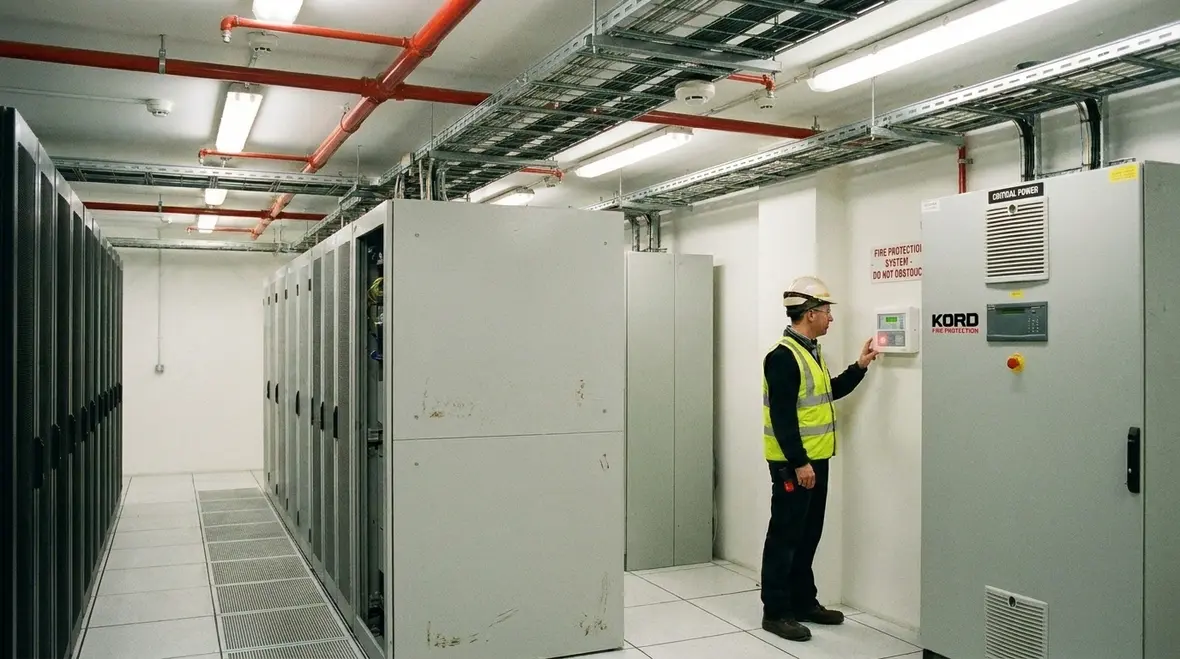
Now we shift from hardware to how people run the system. A redundant design can still underperform if monitoring and maintenance lack detail. Therefore, teams install data logging for critical signals, including UPS status, battery health, switchgear alarms, and generator start metrics.
Then they build a test plan that reflects the facility’s risk profile. For example, they test static switch behavior, verify transfer under simulated conditions, and confirm correct operation of bypass paths. They also test the response time for alarms and escalation. Because if a fault happens, speed matters. Speed turns “potential outage” into “brief event,” and sometimes it turns a crisis into a boring incident report.
For many commercial and retail operations, the challenge is minimizing disruption during testing. So teams coordinate testing windows and use load simulation methods where appropriate. Additionally, they update single-line diagrams and equipment maps so technicians and electricians do not chase guesses during an actual emergency.
Fast recovery depends on this documentation culture. When alarms arrive, responders need to know what failed, what transferred, what did not, and what can be safely restored first. Recovery becomes much smoother when the team is following a rehearsed playbook instead of inventing one while a manager asks for updates every ninety seconds.
Why fire protection becomes a uptime partner with kord
Resilience has to include electrical safety and fire strategy
Power redundancy protects against electrical failure, but it does not address heat, smoke, or suppression performance. That is where kord fire protection becomes a vital partner. When fire risk increases, downtime can come from activation, smoke damage, evacuation delays, and equipment losses that no UPS can revive. In other words, a site can have perfect electricity and still suffer an outage if safety systems cannot control the hazard.
Facilities teams should align electrical design with fire strategy. They coordinate protection zones, ensure suppression systems work with the environment, and verify that detection and alarm pathways remain reliable. Then they consider how power systems behave during fire events, including what happens to critical circuits and how shutdown sequences interact with safety operations.
Moreover, the team should treat fire protection as part of the same uptime roadmap. If a protection service identifies a vulnerability, addressing it reduces the chance of emergency shutdowns and post-incident replacement cycles. As a small joke with big truth: a data hall can feel like it is running on pure logic, but fire does not care about logic. It only cares about conditions.
For industrial, retail, and commercial facilities across Australia, this coordination becomes even more valuable during high-occupancy periods, maintenance work, and peak load seasons. Therefore, a site that pairs robust Data Center Power Redundancy with strong fire protection planning gains resilience against the broader set of events that cause real downtime. For a deeper look at standards and planning for critical environments, teams can also review Data Center Fire Protection and NFPA 75 Guide as part of the larger resilience conversation.

Featured FAQ
Conclusion
Maximizing uptime requires more than buying backup gear. It takes layered power paths, reliable UPS ride-through, stable distribution, tested generator performance, and disciplined monitoring. Each layer supports the next, and each one needs regular validation to remain trustworthy when pressure arrives.
Just as importantly, safety systems help prevent incident-driven downtime. If your facility needs a coordinated approach, schedule a power redundancy and safety review with your engineering team and consider partnering with kord fire protection to protect both the power and the people.

Join Our Newsletter!
Get the latest fire safety tips delivered straight to your inbox From our Newsletter.