
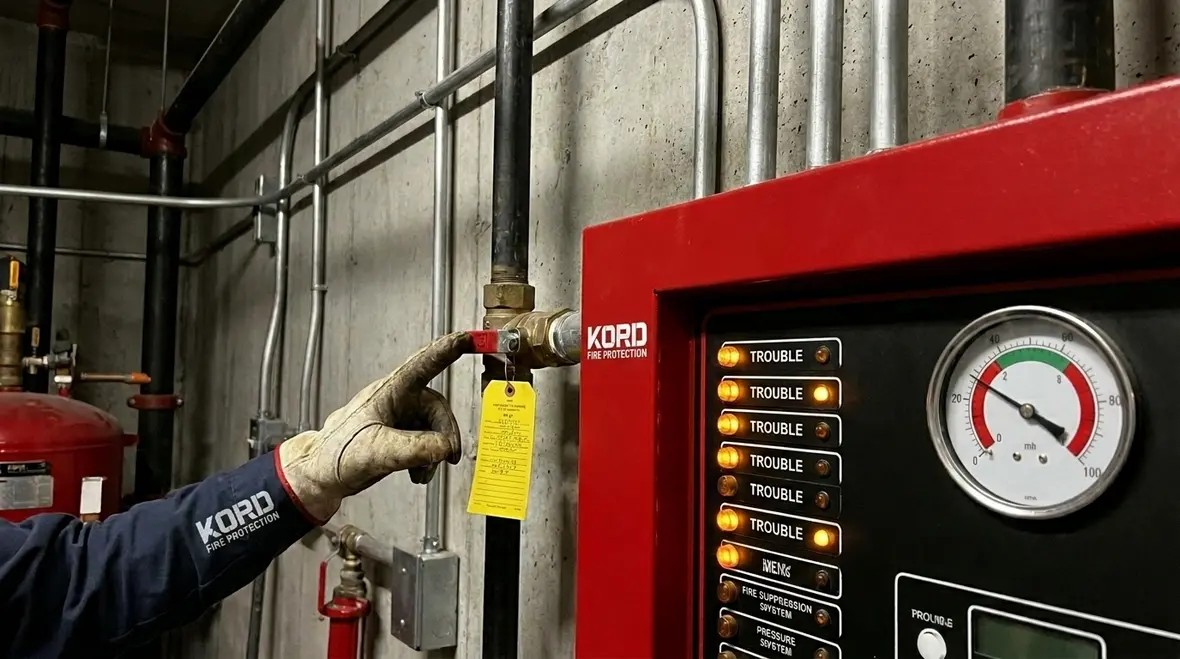
Fire Suppression System Impairment Signs and Fixes
Fire suppression system impairments can quietly turn a life saving network into a system that fails when it matters most. In other words, an owner can do everything “right” on paper, yet still face a problem in the real world. When a unit has an impairment, it may still sit there looking confident, like a guard dog wearing a bandana, but it might not deliver the water, gas, or clean agent at the right time. That is why fire suppression impairment should never be treated as a minor maintenance note. Instead, owners need clear insight into what causes impairments, how they show up, how teams can verify they are corrected, and how a partner like Kord Fire Protection supports smooth, documented readiness.
Common signs of fire suppression system impairment
People often wait for the dramatic moment, but impairments usually show up earlier. First, they can appear through inspection findings, system logs, or trouble signals. Then, they show up as symptoms that look small yet carry risk.
- Supervisory signals that point to valve issues, tamper conditions, or switch failures
- Pressure or flow readings that do not match expected baselines during tests
- Delayed actuation in test scenarios, even if the system still “works” later
- Communication faults in monitored panels or notification circuits
- Missing seals, wedged valves, or blocked access near control components
Meanwhile, many impairments are not about the agent itself. They can involve power, wiring, detection tie ins, or a simple component that never got reset after work. And yes, sometimes it happens because a contractor left a door open or moved a key switch. It is boring until it becomes expensive, which is how most building surprises tend to behave.
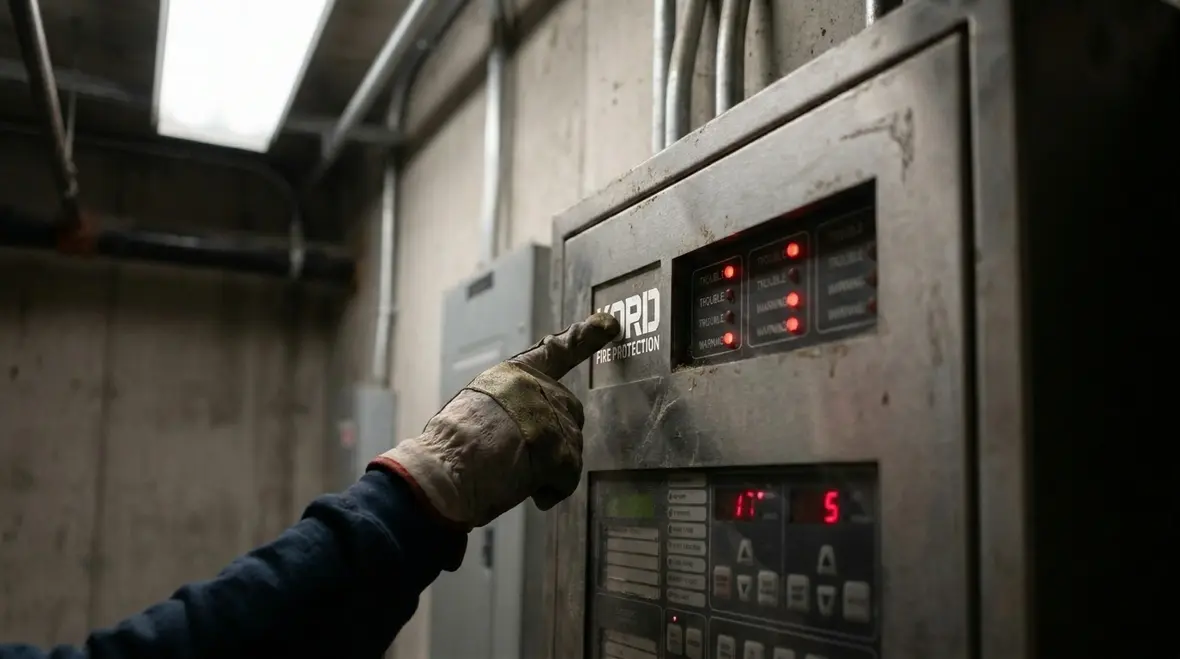
Why owners should treat impairments as a safety and liability issue
When the system cannot perform, the building owner carries more than worry. They carry exposure. Fire protection is not just a compliance checkbox; it is an operational promise. As a result, an impairment affects response time, emergency planning, and insurance conversations.
Also, impairments often overlap with other risks. For example, if a hazard area lacks reliable coverage or the system status is not clear, the site may face increased downtime during investigations after an incident. Then, insurance claims can stall if documentation does not match the timeline. In short, owners protect people and protect budgets when they manage fire suppression impairment as a priority, not a background task.
Transitioning from fear to control requires a simple mindset: if the system is impaired, it needs correction before the next business day, not sometime before the next quarter. Nobody runs a casino by “hoping” the cards will shuffle correctly.
What recurring trouble signals usually mean
A one time fault can be a fluke. A repeated signal is a pattern. When the same device keeps reporting trouble, the smartest move is to treat that history like evidence, not background noise. Repeated tamper alerts, abnormal pressure changes, or panel communication issues may suggest a deeper condition that survived the last repair. That is exactly where owners lose time if nobody steps back and asks why the same thing keeps returning.
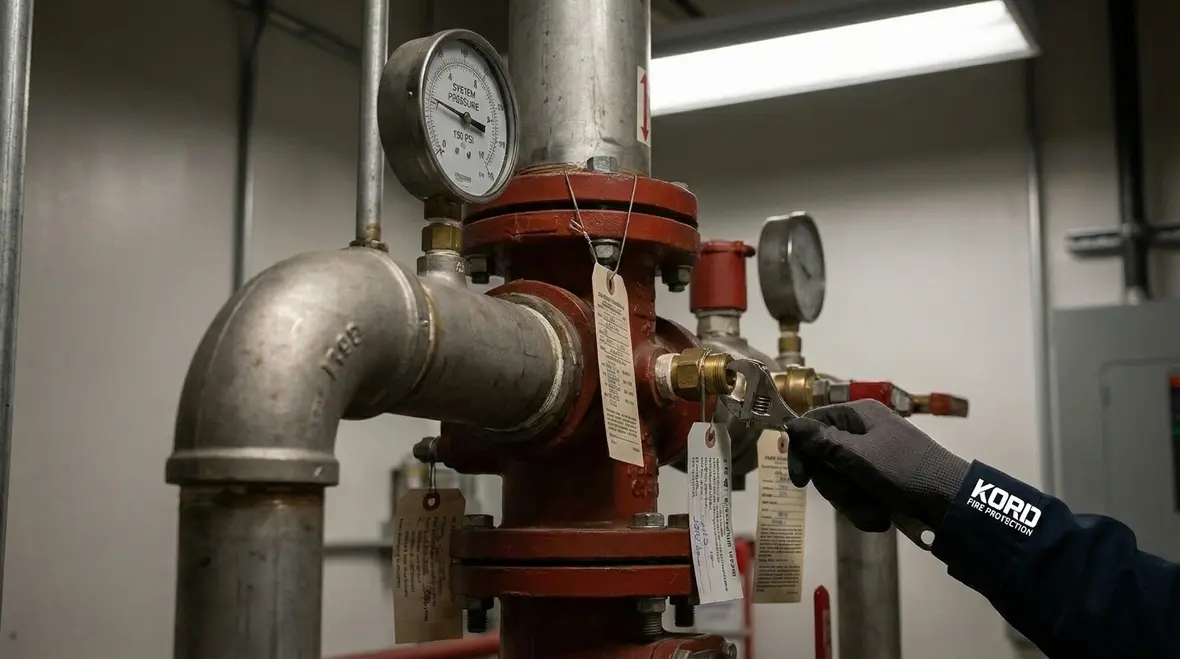
Root causes that trigger impairment conditions
Most impairments come from predictable categories. Knowing them helps owners ask better questions and spot problems sooner.
Mechanical and valve related
- Valve position changes after maintenance or construction
- Clogging, corrosion, or contamination in lines
- Low tank pressure or improper recharge status
Electrical and control related
- Power loss, battery issues, or blown fuses
- Faulty supervisory switches
- Wiring damage or failed device feedback
Beyond that, impairments also stem from process gaps. Teams sometimes reset panels without completing the full verification. Or a vendor closes work orders without confirming that the system returns to normal status. Even worse, the site may have partial repairs that leave the system technically “fixed” but not fully functional under required conditions.
Owners also run into impairment conditions during tenant improvements, equipment swaps, and rushed maintenance windows. A valve gets touched, a circuit gets interrupted, or a panel gets silenced and never truly restored. None of that sounds dramatic in the moment. Yet those are the kinds of small decisions that turn into very long explanations later.
How inspections and test results reveal deeper problems
Owners deserve more than a checkbox report. To manage impairment effectively, they should review what the findings actually mean for performance. First, they should compare results to the manufacturer baseline and the expected operational sequence. Then, they should ask whether the issue affects agent delivery, detection timing, notification, or control logic.
During walkthroughs, Kord Fire Protection often looks for the story behind the paperwork. For instance, if there is a recurring trouble signal at the same valve, it could suggest a recurring obstruction, alignment problem, or a work practice that keeps undoing the fix. Additionally, if tests show inconsistent pressure, the team checks for leaks, fittings, or water supply issues that might not appear during a short observation window.
Owners can also require a clear close out standard. A good close out explains what failed, what was repaired, how the system was verified, and what new baseline readings were recorded. That way, the next inspection does not feel like playing detective with a flashlight that keeps flickering.
If your team wants a stronger baseline for pressure, flow, and documented verification, it helps to review related guidance like Fire Pump Testing Requirements – Things To Know, which reinforces how reliable testing helps catch issues before they become operational surprises.
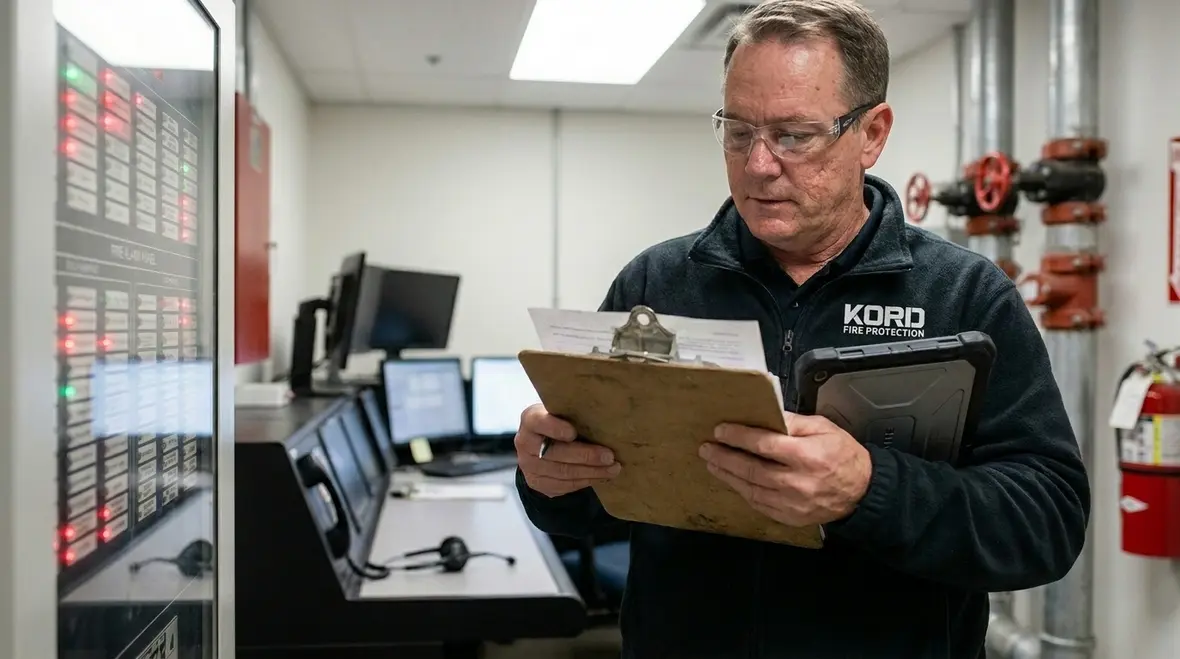
What owners can do between service visits
While a professional team handles much of the work, owners still control key decisions. Therefore, they should set internal steps that keep systems monitored and access controlled.
- Assign an owner point of contact who responds quickly to impairment notifications
- Maintain clear access to valves, panels, and agent storage areas
- Document trades work so every contractor knows what must not be adjusted
- Review system status reports at a set cadence, not only after a problem
- Train staff on escalation so “we saw a trouble light” becomes an action, not a rumor
And yes, owners should ask for status trending when available. If the building has a monitored panel, trend data can show whether trouble conditions repeat, even if they clear temporarily. That insight helps prevent a slow decline into a full impairment event. It is like checking a fuel gauge instead of waiting for the engine to start making new sounds.
A practical close out checklist for building teams
- Confirm the exact device or zone that triggered the impairment
- Verify what repair was completed and by whom
- Record the date, time, and final status after retesting
- Save updated readings, photos, and service notes in one place
- Make sure the monitoring path and panel status both show normal
This kind of process is not glamorous, but it works. It turns “we think it is fixed” into “we know how it was verified.” In fire protection, that difference matters a lot more than anyone wants to discover during an emergency.
Why Kord Fire Protection improves readiness and documentation
When owners manage fire suppression system impairments, the most valuable partner is the one that helps them move from uncertainty to verified readiness. Kord Fire Protection supports this by coordinating inspections, addressing impairment conditions with clear repair steps, and helping ensure service records match actual system performance.
In practice, that means owners get a service approach that focuses on more than “making the light go away.” Instead, Kord Fire Protection emphasizes verification. The team checks that components return to normal operation, tests align with requirements, and the site has the documentation needed for compliance, insurance, and emergency planning.
Owners also benefit when service teams communicate in business friendly terms. They can understand what happened, what changed, what remains at risk, and what comes next. Then, the building team can plan around corrections instead of reacting after an alarm event. That is the kind of calm leadership that keeps firefighters grateful and owners out of long meetings with awkward questions.
For broader support across suppression, sprinkler, alarm, and inspection readiness, owners can also explore Full Fire Protection Services near the end of their planning process as a practical next step.
FAQ: Fire suppression system impairment basics
Next steps to protect your building now
Fire suppression system impairments do not announce themselves with a countdown clock, so owners must act early. First, review recent inspection and monitoring findings. Then, prioritize impairment corrections based on what affects agent delivery, control, and timing. If your records need clarity or your team needs a steady partner, contact Kord Fire Protection. They help owners verify readiness, document repairs, and reduce uncertainty. Take control today, so the system performs the moment it must.
Need broader support across inspection, documentation, and service readiness? Kord Fire Protection offers coordinated solutions that help owners stay ready without relying on crossed fingers and lucky timing.

Join Our Newsletter!
Get the latest fire safety tips delivered straight to your inbox From our Newsletter.



