Best Server Room & Data Center Fire Suppression Solutions
Guardians of the Rack: Unraveling the Best Server Room Fire Suppression Solutions
Picture this: your servers are humming, blinking like a Christmas tree on caffeine. Everything is running smooth as butter on a hot skillet. Then—boom. Not a software bug. Not a data breach. But something far sneakier. Fire. Good ol’ smoke-and-flame. That’s where our server room fire prevention solutions come storming in like Gandalf on the bridge—”You shall not pass”—to fiery intrusions threatening your digital kingdom.
Kord Fire Protection technicians have been at the frontlines of these digital guardianship efforts, explaining real-world solutions with an equal mix of experience, calm professionalism, and occasional dad jokes thrown in for good measure. Let’s ignite some knowledge (pun intended) on server room fire suppression without setting off any actual alarms.
Understanding Why Server Rooms & Data Centers Need More Than Just Smoke Detectors
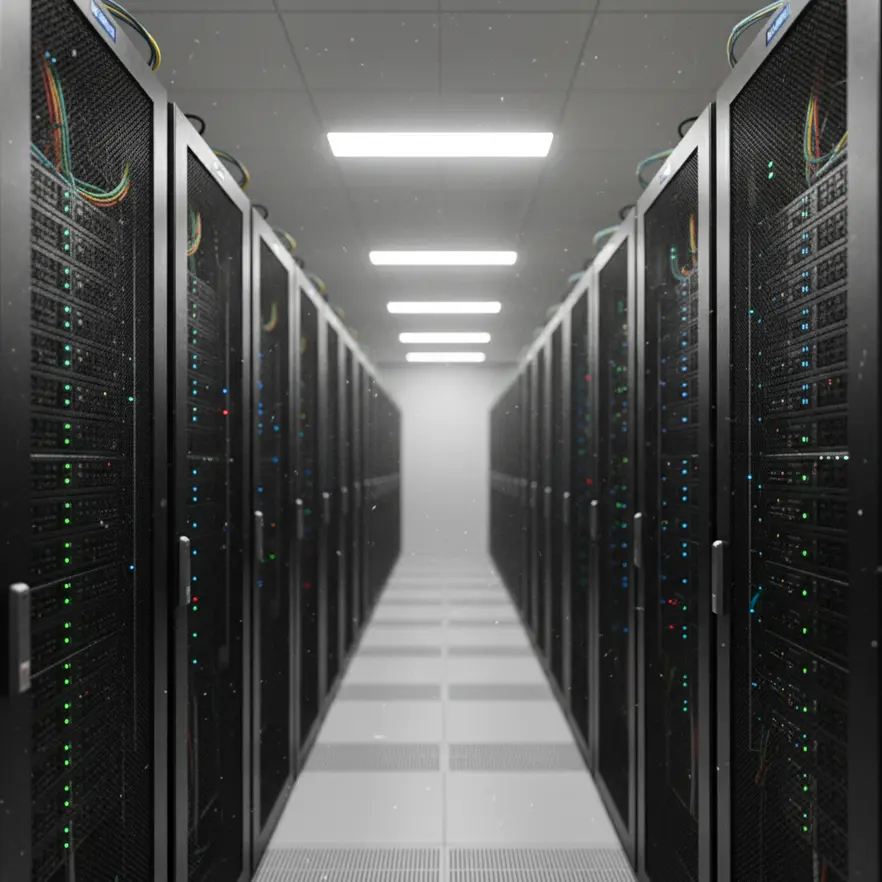
Server rooms are the Fort Knox of your organization’s data. But most people treat them like a broom closet. You wouldn’t guard crown jewels with a screen door, right? Same logic applies here. Computers generate heat. Heat mixed with dust, mixed with faulty wire insulation—it’s like giving fire an open invitation with RSVP required.
Sure, a smoke detector is nice. A fire alarm? Good idea. But by the time either tells you “Hey buddy, something’s burning,” it’s often too late. Server room fire suppression solutions are the next level defense—more Dwayne Johnson, less Kevin from accounting with a fire extinguisher.
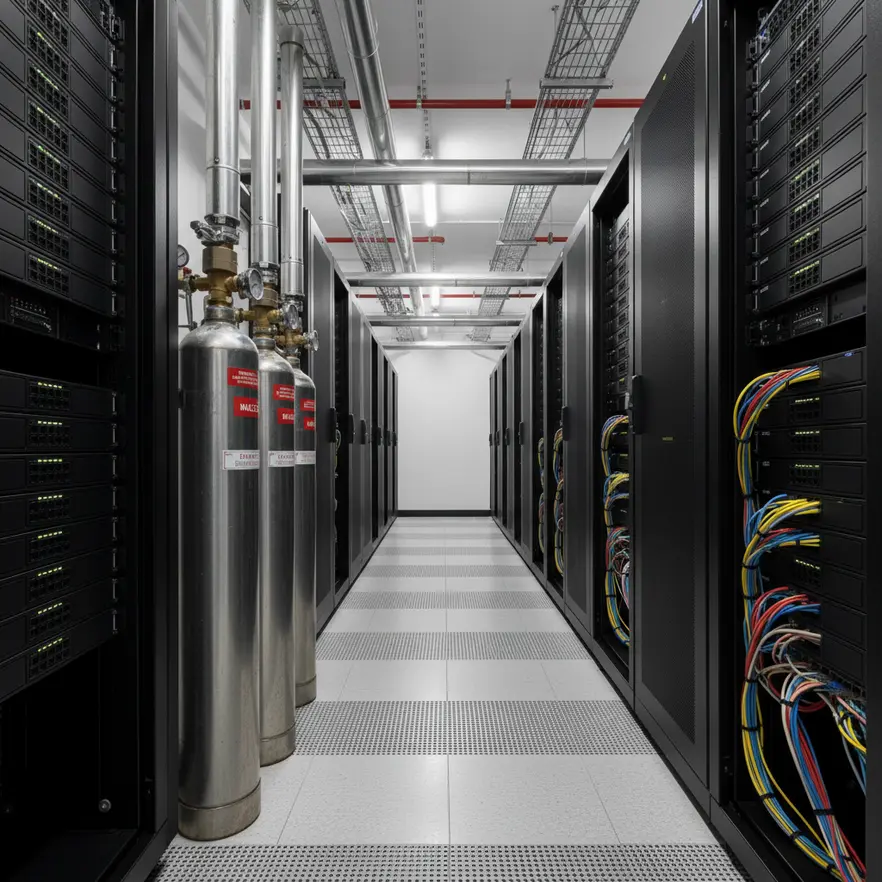
This is where active systems, like clean agent suppression, get real. These systems detect and suppress fires before things escalate from a whisper of smoke to full-blown IT meltdown.
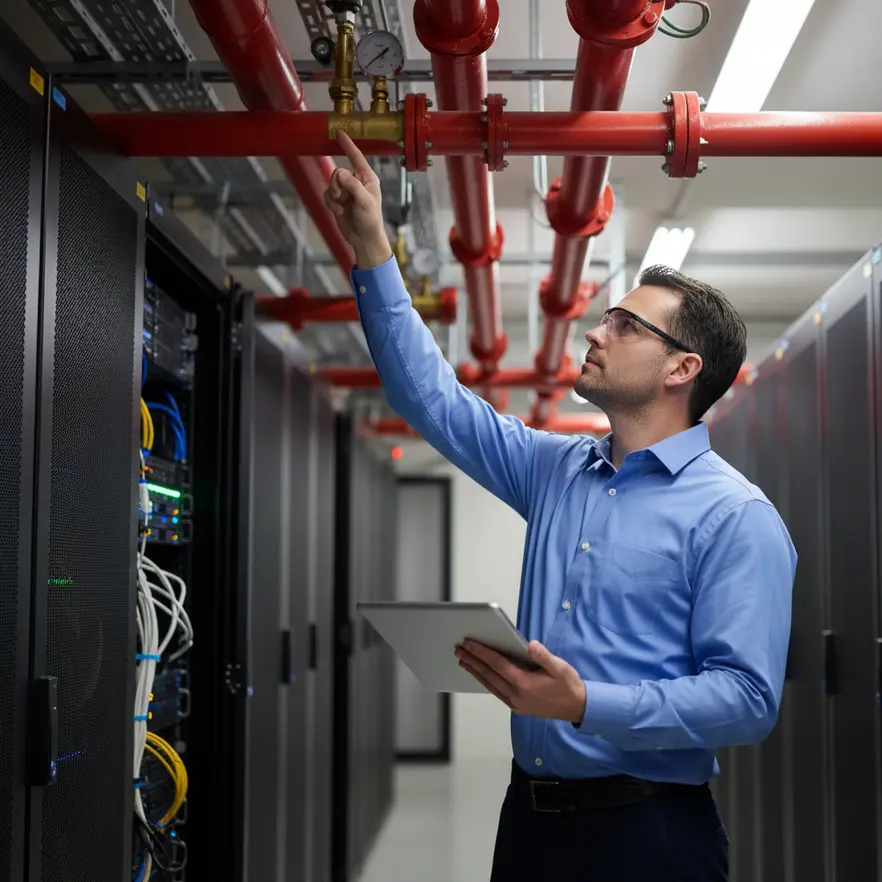
Meet the Heroes of Fire Suppression: Systems that Actually Work
Let’s get acquainted with the Avengers of the fire suppression world. Each one has its own superpower—and no, none of them wear capes.
- FM-200 (a.k.a. The Silent Assassin): This clean agent system doesn’t mess around with water. It douses fires fast and clean with zero residue. Serves justice and leaves no trace.
- Inergen (The Oxygen Negotiator): It lowers oxygen levels just enough to make fires tap out while humans can still breathe. Think of it as fire’s kryptonite—completely non-toxic.
- CO2 Systems (The Heavyweight): Extremely effective but not meant for occupied rooms unless you’re into holding your breath competitively.
- Novec 1230 (The Eco-Friendly Ninja): The poster child for green protection. Fast. Safe. And doesn’t burn a hole in the ozone layer.
Kord Fire Protection technicians often compare these systems like chefs describing knives—you need the right tool for the right cut. And if you attempt to use a butter knife where you need a katana, well, expect a messy outcome.
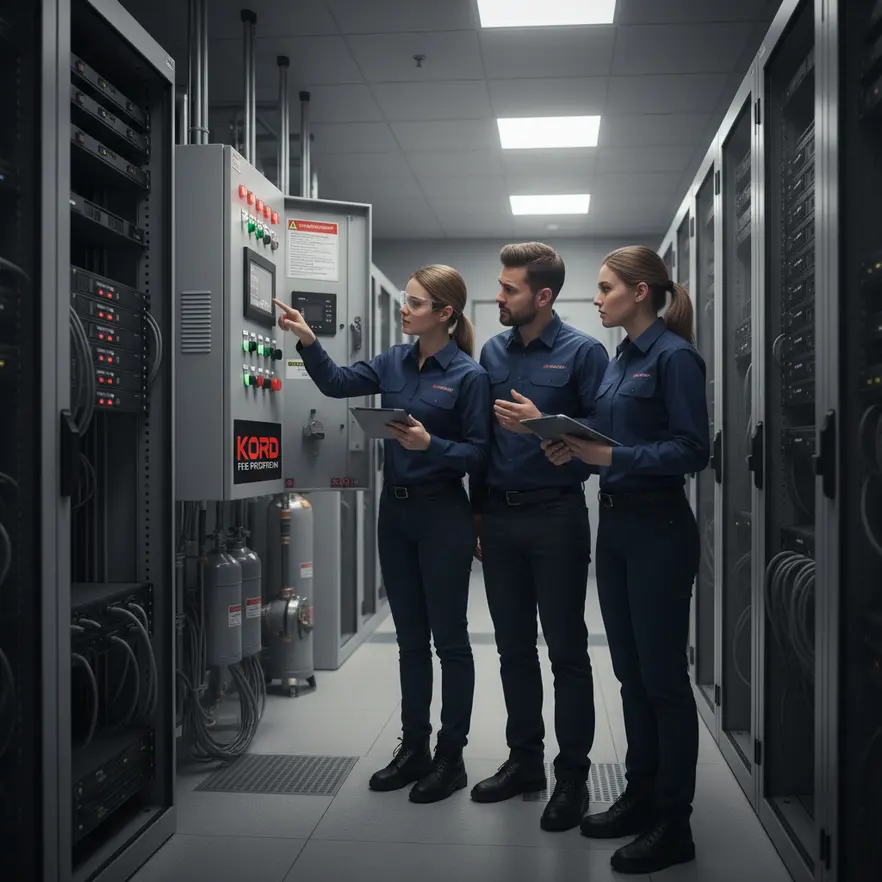
What Kind of Suppression System Is Right for My Server Room?
Choosing a fire suppression system is not about buying the biggest, baddest extinguisher at Home Depot and calling it a day. Nope. You’ve got to consider:
- Room size—Small server closet or full-scale data center?
- Occupancy—Is it remote-controlled, or are there techs around daily?
- Equipment sensitivity—Got legacy systems or shiny new toys?
- Budget and future growth—Because scrimping here can cost worse later.
A Kord technician once said, “Using water suppression in a server room is like taking a shower in your finest three-piece suit. You technically get clean—but at what cost?”
Systems like clean agent suppression don’t choose between performance and preservation—they offer both. They’re also scalable, easy on your hardware, and won’t leave you drying out server trays one sad afternoon.
How to Train Your Team (Without Turning Them into Smokejumpers)
Your fire suppression system is only as good as the folks who monitor, activate, and maintain it. But let’s be honest: fire safety meetings often feel like watching beige paint dry in slow motion. That’s where Kord Fire’s trainers come in—blending serious drills with real-world application.
Here’s what good training should include:
- Basic operation of your chosen suppression system
- Understanding warning signs and alarms
- Emergency evacuation procedures
- A little myth-busting (No, firewalls don’t stop real fires)
The goal isn’t to make your IT team overnight fire marshals. It’s to provide just enough knowledge that nobody panics, presses the wrong button, or tries to be Batman when a system failure happens.
Dual Column Deep Dive: Detection vs Suppression
Fire Detection
This is the Sherlock Holmes of the operation—sniffing out fires before they escalate. Modern systems use air sampling, thermal imaging, and even laser-based tech to track heat and smoke before humans even notice something’s up.
Fire Suppression
Here come the firefighters. Once detection system signals go off, suppression takes over. Whether it’s gas, mist, or chemical, the mission’s the same: stop the fire instantly while preserving every wire, drive, and redundant backup like a national treasure.
Let’s Talk Codes, Compliance, and All That Jazz
Look, no one gets into server room maintenance because they love reading municipal fire codes. But here’s the kicker—ignoring those rules can tank your entire operation faster than a coffee spill on a motherboard.
Local and national standards—like NFPA 75 and 2001—aren’t just bureaucratic hurdles. They exist because someone somewhere ignored them and paid the price in smoldering server racks. Kord Fire Protection makes it their business to keep every solution installed up to code, so your insurance company won’t send you a strongly worded letter written in legalese.
Also, it doesn’t hurt to know you’re covered when an inspector walks in, clipboard in hand, suspicious of anything that looks like sarcasm or duct tape.
The Maintenance Dance: Scheduled Upkeep Isn’t Optional
Installing a world-class suppression system and then walking away is like buying a new Tesla and never charging it. What could possibly go wrong, right?
Fire suppression systems need regular inspections, testing, and tweaks. Think of it as a dental checkup for your infrastructure—less plaque, more peace of mind. Kord technicians perform routine checks with an eye for detail sharper than Sherlock Holmes at a crime scene.
Ignoring maintenance means taking your best defense and gradually letting it weaken. Not on our watch. If your system needs calibration, updated components, or just some friendly troubleshooting, trust the pros to handle it without pushing any big red buttons accidentally. Again—looking at you, Kevin from accounting.
Why Fire Technicians Are the Unsung Heroes of Server Safety
These aren’t just your average wrench-jockeys. Fire Protection technicians bring a mix of tech expertise, on-ground experience, and a calming presence that can reassure even the jumpiest CTO when the fire alarm beeps unexpectedly.
They’re deeply familiar with both old-school server setups and sleek new AI-powered data centers. And when they walk you through a suppression system, they’ll explain it like a seasoned Netflix narrator—clear, compelling, and oddly therapeutic.
When you want peace of mind knowing your fire suppression won’t overcorrect and flood the whole operation (looking at you, 1970s sprinkler systems), Fire techs have your back. Their game plan is simple: assess, install, educate, and maintain. Rinse and repeat—without flooding anything.
FAQ About Server Room & Data Center Fire Suppression Solutions
- What is the best fire suppression for server rooms?
Clean agent systems like FM-200 or Novec 1230 are ideal for electronics because they leave no residue and act fast. - Are suppression systems safe for workers?
Yes. Systems like Inergen and Novec are non-toxic and safe for occupied spaces when installed properly. - Do fire suppression systems damage equipment?
Nope. Unlike water, clean agents are designed to be hardware-friendly. - How often should these systems be checked?
At least once a year. But quarterly checks are often recommended for critical operations. - Does installing a system increase compliance?
Yes. Proper installation of suppression systems helps meet NFPA standards and local fire codes.
Secure Your Server Sanctuary
If your data center or server room is the brain of your operation, then fire suppression is the helmet that keeps it safe. Fires wait for no one—and when they hit, their damage is swift and unforgiving. But proactive systems, attentive maintenance, and expert guidance from Kord Fire Protection technicians build the kind of firewall you can’t reboot: a real one.
Protect your server room with advanced fire suppression solutions today—connect with Kord Fire Protection and let the experts do what they do best.

Join Our Newsletter!
Get the latest fire safety tips delivered straight to your inbox From our Newsletter.