Electrical Wiring for Fire Systems: Safety Starts Right
Why the right Electrical wiring for fire systems starts the whole safety plan
Commercial fire safety systems do not work on vibes. They work on wiring, conduit, and the boring stuff that keeps a life-saving signal traveling when everything else is on fire. That is why Electrical wiring for fire systems must be chosen carefully from the first pull to the final terminations. And yes, the tradeoffs matter, because a wrong cable or an undersized conduit can turn a reliable alarm system into a confusing delay, like waiting for a sitcom character to notice the smoke. Kord Fire Protection technicians explain it plainly: you are not “just installing wire,” you are building a path that fire and time cannot easily interrupt.
In this guide, the reader will learn how commercial teams select cables, conduits, supports, and routing methods that help maintain performance during emergencies, while staying code aligned and practical for real buildings. For facilities already coordinating broader life safety work, Kord Fire’s full fire protection services show how wiring decisions fit into the bigger picture of inspection readiness and dependable system performance.
How Kord Fire Protection technicians explain fire wiring basics
Start with survivability, not convenience
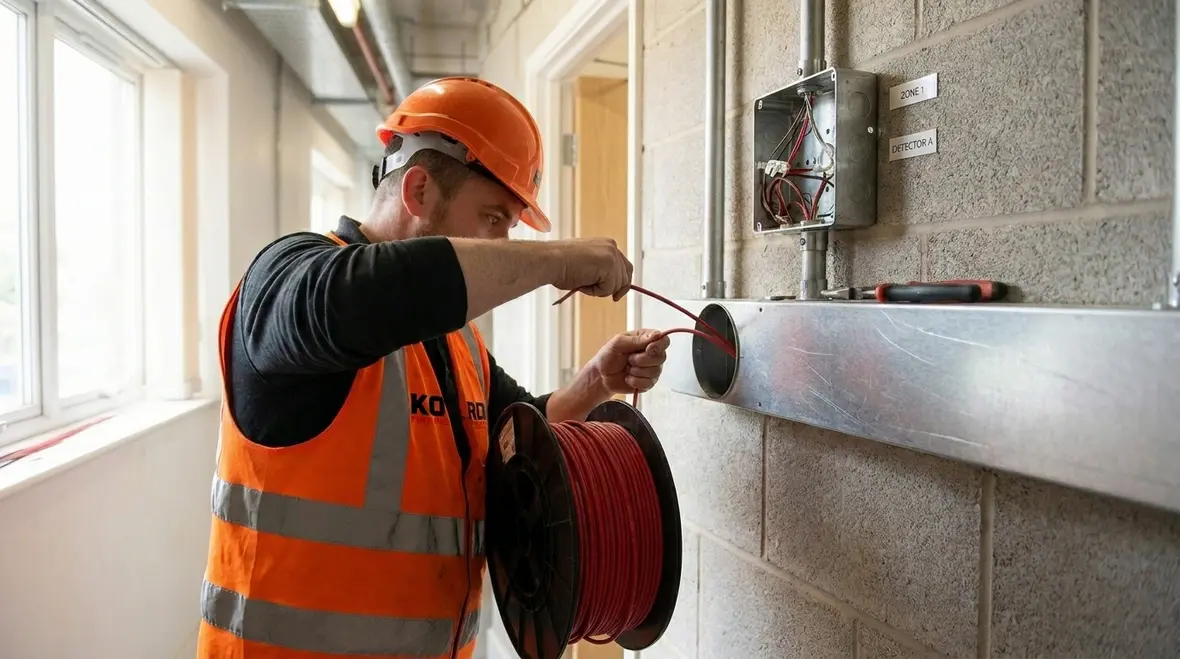
Kord Fire Protection technicians typically start with a simple idea: fire alarm circuits must stay functional long enough for detection, notification, and system control. Therefore, the wiring cannot be treated like typical power wiring. Even when a building crew is moving fast, the system still needs consistent rules for separation, protection, and labeling.
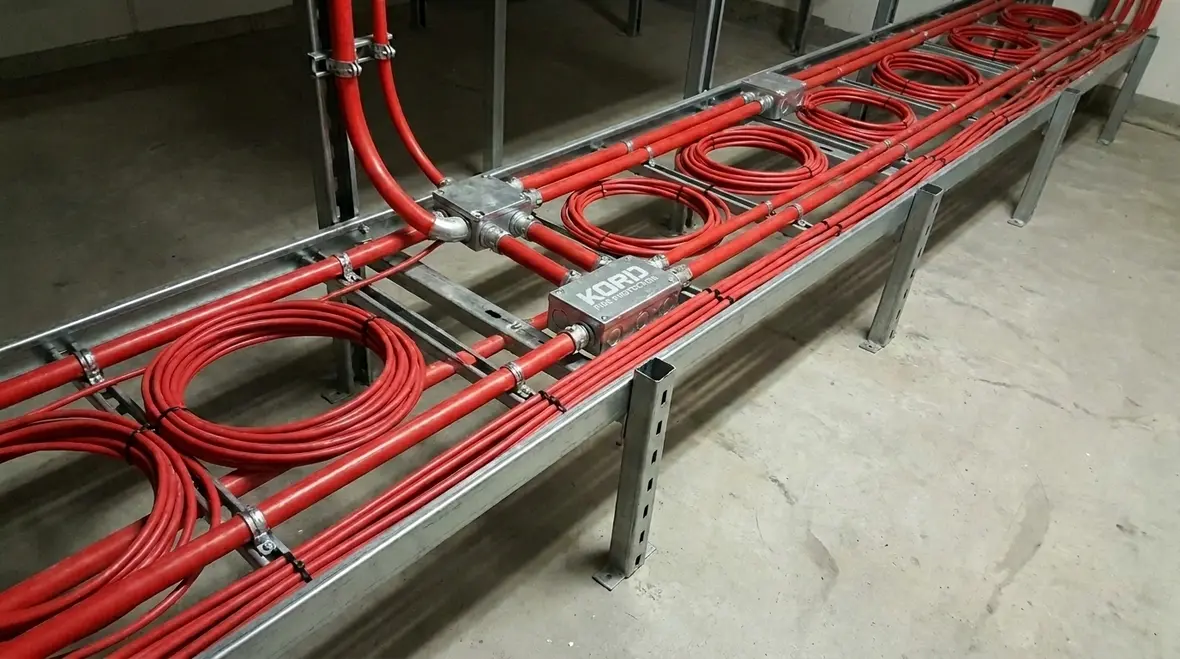
Next, they explain that the wiring path includes more than the cable itself. It includes conduit choices, fittings, bends, and how the system is supported. If a conduit path is messy, moisture finds weak points. If it is poorly supported, vibration loosens terminations over time. And if the routing ignores the fire zones, the system may lose sections exactly where it should keep control.
Then the practical part kicks in. Kord Fire Protection technicians emphasize proper installation details, because the best spec on paper fails if the installer takes shortcuts. In other words, the fire system does not care how busy the crew was. That same mindset shows up across Kord Fire’s fire alarm services, where planning, layout, testing, and reliability all depend on getting the basics right before the walls hide everything.
The path matters as much as the panel
A control panel can be advanced, beautifully programmed, and loaded with features, but none of that helps if the physical path between the panel and the field devices is sloppy. The path has to survive jobsite chaos, maintenance access, vibration, dust, and the occasional mystery impact from equipment that “wasn’t supposed to go there.” Good wiring design reduces those risks before they become expensive troubleshooting sessions.
- Keep routing logical and easy to trace later
- Use supports that reduce strain and movement over time
- Choose fittings that protect conductor entries and transitions
- Label runs clearly so commissioning is not a scavenger hunt
Picking cables that keep signals steady under stress
Commercial sites often use two kinds of fire alarm wiring needs: circuits that carry power to devices, and communication paths for controls and signaling. As a result, the reader should match the cable design to the duty cycle and the environment.
What teams look at before they pull cable
- Cable type for fire alarm service that fits the system requirements and installation rules
- Temperature rating so the insulation can tolerate expected conditions
- Shielding and pairing where noise or interference could affect signal quality
- Conductor size so voltage drop stays within limits across the full route
- Listing and compatibility so the cable works with the control panel and device types
In addition, the reader should plan for expansion. New tenants, new rooms, and new device locations are common. Therefore, cable routing should allow future additions without forcing unsafe shortcuts, like cramming extra conductors through the same fitting until the conduit looks like it lost a fight.
The best cable choice is not always the cheapest spool on the truck. It is the option that supports the required performance, survives the building conditions, and still behaves predictably years later when someone else has to service it. That is a much more boring answer than “just use whatever is handy,” but boring is exactly what a fire alarm circuit should be when the stakes are high.
Why conduit material and design decisions matter
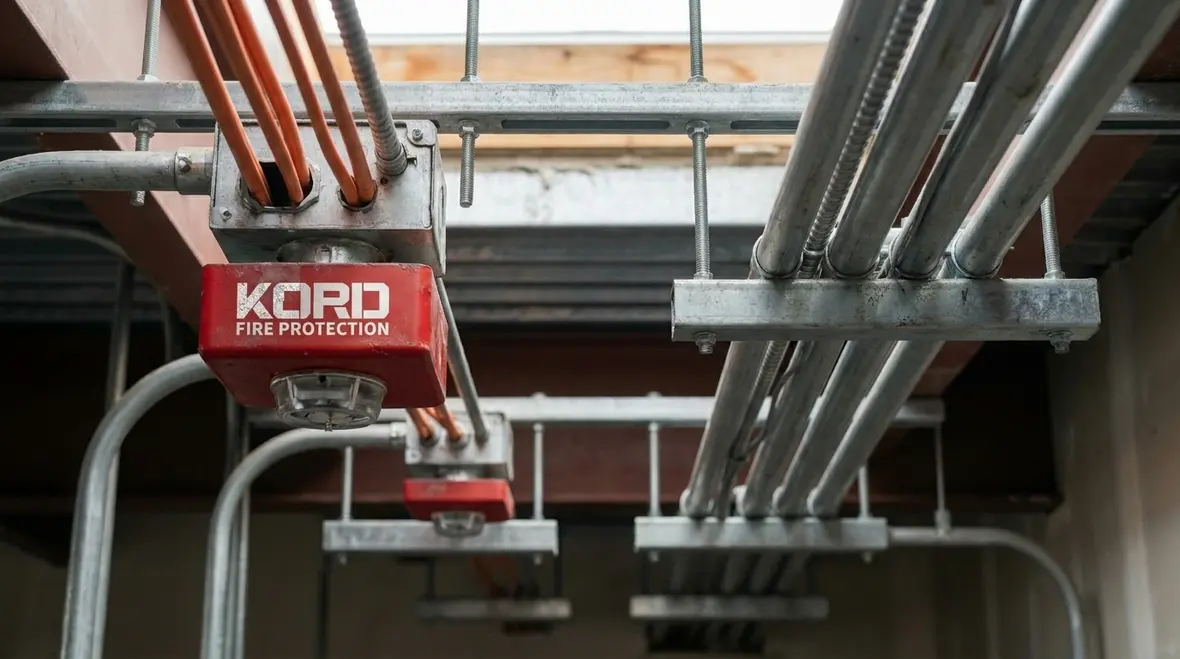
Conduit does more than “hold the wire.” It protects the system from physical damage, moisture, and heat exposure during a fire scenario. However, not every conduit option fits every building. The best choice depends on the installation location, building layout, and how the system must be maintained.
Common commercial considerations
- Material selection based on corrosion risk, indoor or outdoor conditions, and mechanical protection needs
- Conduit size that supports the correct fill for the number and type of conductors
- Fittings and transitions that protect entry points and keep the system sealed where needed
- Bend radius and routing to avoid damaging insulation and make pulling easier
Meanwhile, Kord Fire Protection technicians stress that conduit design should reduce the chance of future trouble. If the layout creates tight turns, the installer may pull too hard, scuff insulation, or twist conductors in ways that shorten life. And then, surprise, the system underperforms at the worst possible time. It is like cutting corners on a seatbelt. It might feel fine until it absolutely does not.
Design decisions also affect service speed later. Straightforward conduit runs with sensible pull points and access locations make testing, repair, and expansion much easier. When pathways are chaotic, every future service call costs more time, more labor, and more patience. Nobody wants a simple inspection to turn into archaeology above a hard ceiling.
Routing, separation, and supports that prevent hidden failures
Even when the correct Electrical wiring for fire systems and conduit are selected, installation still can go wrong. That is why teams focus on routing paths, separation from other building wiring, and solid support methods.
The details that save headaches later
First, separation helps avoid interference and reduces the risk that other circuits compromise fire system performance. Therefore, crews plan spacing and routing so the fire wiring does not share the same cavities or pathways where heat, noise, or fault conditions travel.
Second, supports control strain. When cables hang without proper bracing, they tug at terminations and strain junction points. Over time, this can lead to loose connections, higher resistance, or inconsistent device operation. For commercial buildings that experience vibration from HVAC units or nearby traffic, support quality becomes even more important.
Third, routing should avoid physical hazards. Areas near loading docks, mechanical work spaces, and service corridors need protection and clean installation practices. Kord Fire Protection technicians often recommend crews “think like the cable.” If the path looks likely to get hit, snagged, or exposed to moisture, the routing should change before installation becomes a rescue mission.
Finally, sealing and weatherproofing matter for exterior runs and wet locations. When moisture enters conduits, corrosion can build quietly. Then the system starts to behave strangely, like a doorbell that only works when it feels like it. A properly designed conduit system helps prevent that drama.
Common mistakes crews make with fire wiring and conduits
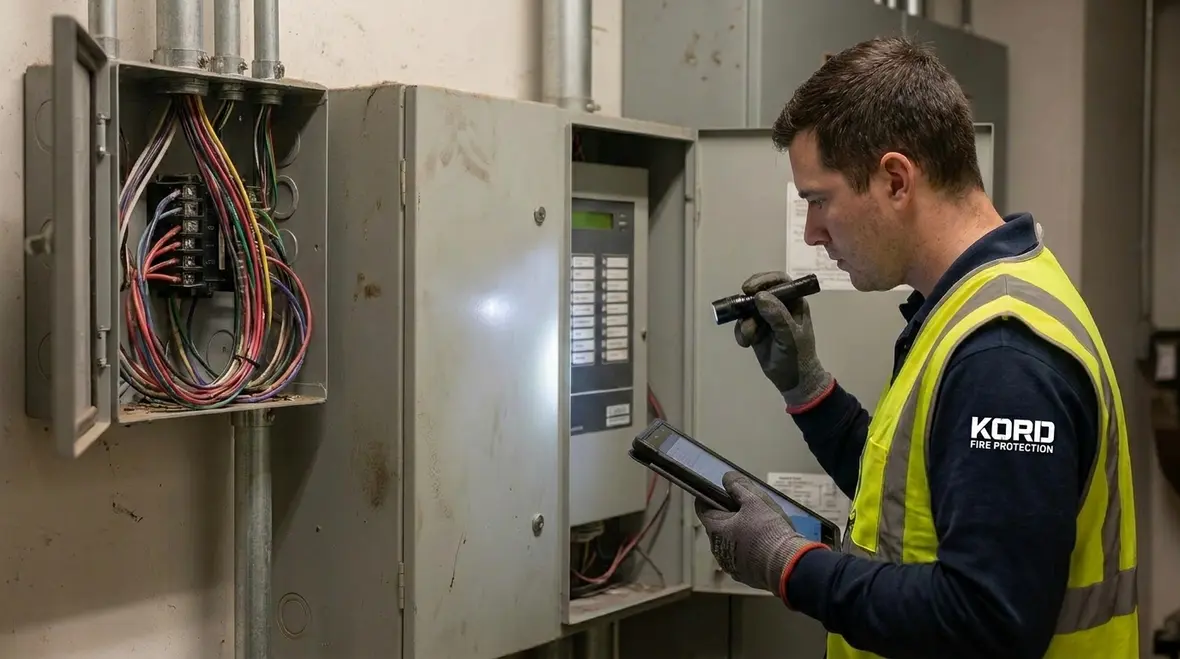
Commercial jobs move fast, and fire alarm work is often squeezed between other trades. Still, small mistakes can create large problems. Kord Fire Protection technicians see the same issues show up, especially when teams treat fire systems like “the last thing to finish.”
Typical mistakes include
- Overfilling conduits which makes pulling difficult and can damage insulation
- Using improper fittings that leave gaps or weaken the conduit path
- Skipping required separation so the fire wiring runs too close to noise sources
- Rushing bends so the cable experiences kinks or excessive pulling force
- Failing to label so troubleshooting turns into guesswork during commissioning or service
- Neglecting support spacing which adds strain at terminations
To keep the process calm and controlled, the reader should require clear installation checklists and a review step before the job closes up. In addition, commissioning and inspection should validate not only the device operation, but also the integrity of wiring paths and conduit continuity as applicable.
Most of these mistakes are not dramatic in the moment. They look like tiny shortcuts, harmless substitutions, or “we’ll fix it later” decisions. Unfortunately, fire alarm systems have a rude habit of remembering every shortcut when it is least convenient. Clean work during installation is still the cheapest fix.

Choosing an installation plan that supports inspections and long term service
A strong installation plan saves time later. Therefore, teams should coordinate early with the electrical contractor, fire alarm contractor, and building stakeholders. When the plan includes device locations, routing routes, and conduit pathways, the job reduces rework.
Kord Fire Protection technicians often recommend that commercial teams schedule walkthroughs at key stages. They should confirm that conduit routes match the approved design and that the installation method meets code expectations for the building type. Then, the team can verify that labeling and as built documentation will be accurate.
For long term service, the plan should also consider access. If a conduit run ends behind locked ceilings with no reasonable access, maintenance becomes costly. However, if the team builds a clean pathway with logical access points, service calls stay quick and predictable. That means fewer delays, fewer repeat visits, and fewer “we have no idea what that wire does” moments.
This is also the right point to coordinate adjacent system needs. For example, facilities planning broader alarm upgrades or new installs can pair wiring reviews with Kord Fire’s commercial and residential fire alarm installation services, helping the project move from design to commissioning without the usual last-minute chaos.
FAQ
Final CTA: Get fire wiring and conduit guidance before the walls close
Commercial fire safety depends on details, not hope. If the building team wants a reliable system that passes inspections and stays dependable, they should get help early. Kord Fire Protection technicians can review wiring needs, conduit paths, routing, and installation methods so Electrical wiring for fire systems performs as intended. Contact a qualified contractor today, schedule a planning review, and keep the project moving without rework. Because in a real emergency, the only thing that should be delayed is the fire, not the alarm.
If the project also depends on reliable water supply support, review Kord Fire’s fire pump page and explore their broader fire alarm services to keep the building inspection-ready from panel to pump room. Near the finish line of any build, that kind of coordination is not extra. It is the difference between smooth signoff and expensive do-overs.

Join Our Newsletter!
Get the latest fire safety tips delivered straight to your inbox From our Newsletter.