Warehouse Fire Extinguisher Placement Rules Australia
Quick Answer: Warehouses need more than “some extinguishers.” Teams must follow placement rules so travel distances stay safe, hazards are protected, and equipment is easy to reach during a real incident. With the right plan and inspections, kord fire protection can help facilities reduce risk while staying audit ready.
In the first place, fire extinguisher placement rules in a warehouse should never rely on guesswork. They should consider the hazard type, expected fire size, and how far a person must travel to reach the nearest unit. Teams should also keep extinguishers where they are visible, accessible, and mounted at a sensible height without blocking routes. Just as important, they must avoid placing them where forklifts, racking, or clutter quietly turn them into museum pieces. When warehouses get this right, the first response is faster, safer, and far more effective. And yes, that matters even if everyone thinks “we’ll never need it.”
Near the top of any sensible strategy, facilities should think beyond extinguishers alone and connect placement planning with broader full fire protection services so coverage, inspections, and system coordination do not drift into separate little silos. Likewise, teams reviewing warehouse readiness may also benefit from understanding how linked systems support response speed through fire alarm service systems, especially where large floor areas, mixed hazards, and changing operations create more moving parts than anyone enjoys admitting.
Warehouse extinguisher placement rules: the baseline that prevents chaos
Third party reviews and insurance calls often focus on one theme: whether extinguishers are positioned to be used quickly under stress. Therefore, the baseline includes practical logic, not vibes. Facilities should place units so occupants can reach them along normal paths, not through hazards. In addition, extinguishers must match the likely fuels and fire classes in each zone, which prevents the classic problem of having the “wrong tool” ready at the “right time.”
Fire risk in warehouses is rarely uniform. A packing area behaves differently than a battery charging room. Meanwhile, a high shelf rack section can create rapid vertical spread and challenging access. For that reason, teams should map hazards zone by zone and plan placement around real movement patterns, like where people actually walk and where forklifts actually travel. If the extinguisher sits behind a pallet stack, the plan fails, even if the paperwork looks perfect.
Why the baseline matters in real warehouse conditions
A warehouse is not a quiet office with one tidy corridor and a decorative safety plan framed on the wall. It is a shifting environment where pallets move, temporary storage appears, dock activity surges, and access routes can change faster than the spreadsheet does. That means baseline placement rules are there to protect response time when the building is at its messiest, busiest, and least patient. Good placement is not about looking compliant for five minutes during a walk-through. It is about remaining usable when the pressure is real and the clock suddenly feels very loud.
How to map hazards to placement, rack to dock
Effective placement starts with a hazard map, not a guessing game. First, the facility identifies the likely fire sources: combustibles like cardboard and timber pallets, flammable liquids stored in approved cabinets, and ignition sources like electrical panels and charging stations. Then, teams decide whether additional extinguishers are needed at points where fires can start and grow before anyone can respond.
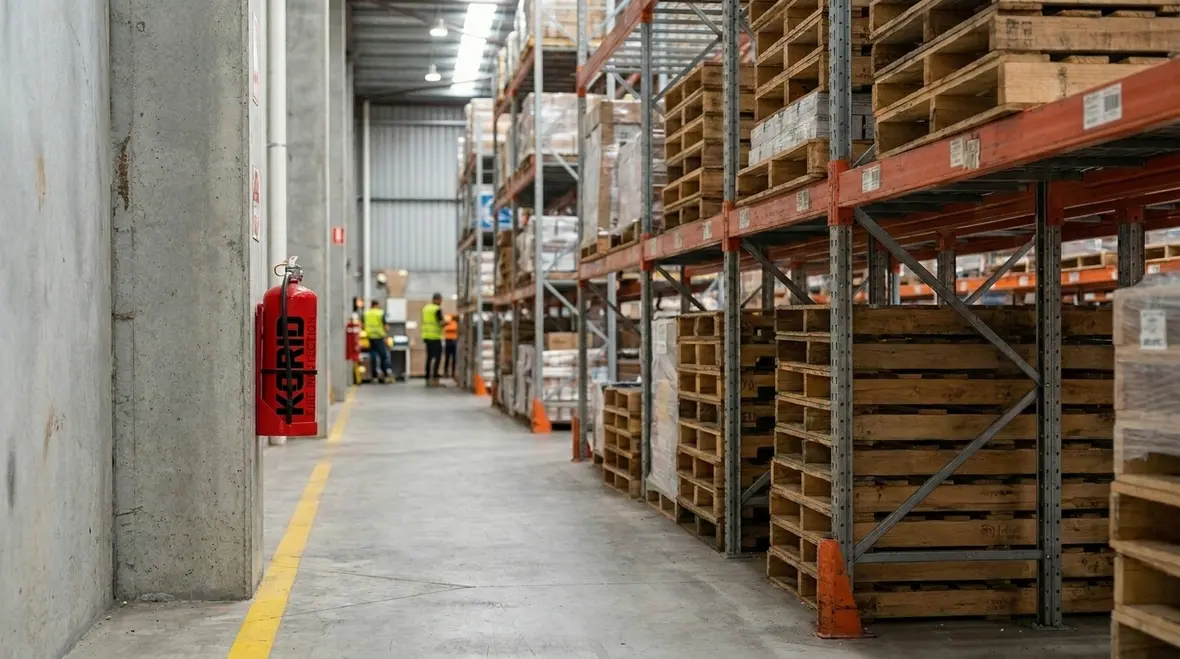
Next, they connect the hazard map to the layout. Warehouses commonly include wide aisles, narrow pick paths, loading docks, and office pockets. In each area, a person may approach from different directions. As a result, the placement should account for access and visibility from the intended travel paths. For example, extinguishers near docks should consider wind and movement that can change fire spread, while those near electrical panels should remain clear of obstructions and safely reachable.
Finally, kord fire protection can support this process as a vital partner. They bring experience that helps teams align extinguisher locations with how incidents actually unfold in industrial settings across Australia, from retail distribution centers to commercial facilities managing mixed materials.
A practical way to build a hazard map
The easiest way to start is by breaking the warehouse into usable zones instead of trying to judge the building as one giant blob of risk. Look at receiving, storage, pick faces, charging areas, workstations, offices, plant rooms, and dispatch as separate environments. Then ask simple questions that actually produce useful answers: what burns here, what sparks here, what changes here, and how quickly could someone get to an extinguisher without doing an obstacle course around stock. This method keeps the process grounded in reality rather than in a heroic belief that every area behaves the same. It does not. Warehouses are too inventive for that.
Spacing, travel distance, and access: the details that auditors look for
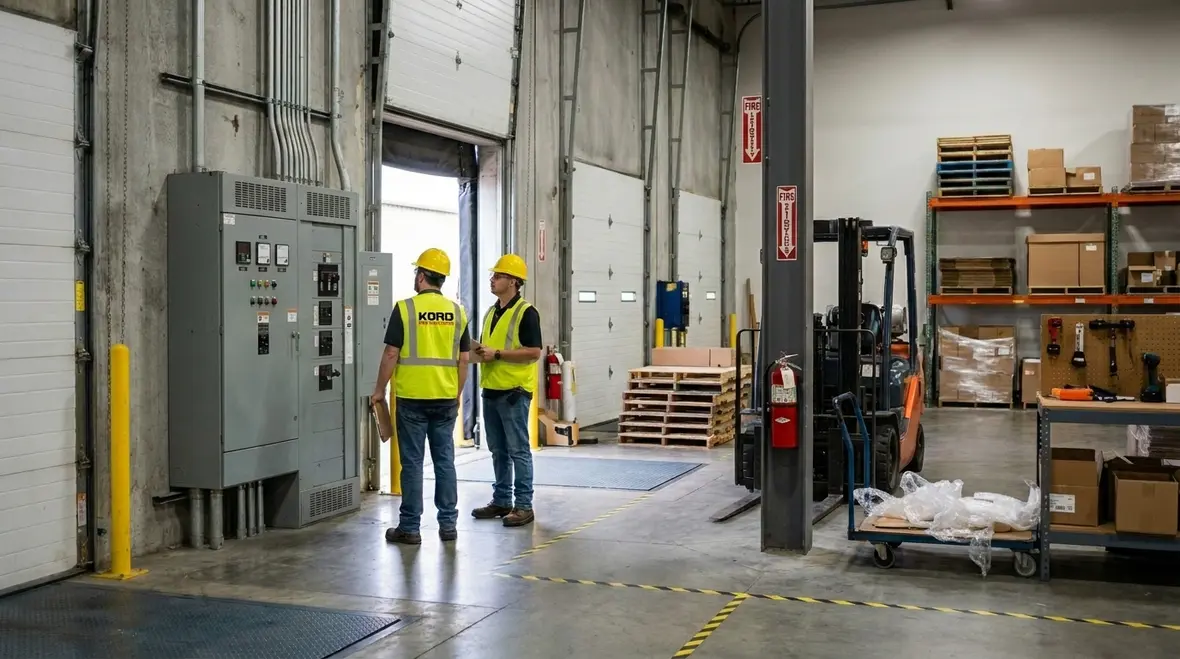
When auditors or insurers assess extinguisher placement, they tend to focus on access and coverage. Therefore, the placement plan should prevent long travel distances and avoid dead zones, especially where aisles create blind spots. Teams should also ensure extinguishers are not blocked by signage, racking modifications, seasonal displays, or temporary staging.
Access matters because a warehouse is a busy ecosystem. Forklifts move quickly, people carry loads, and visibility can drop during smoke or dust events. That is why extinguishers should be mounted and positioned so occupants can reach them without twisting through hazards. Additionally, teams should consider that doors, gates, and manned exits may be used during an emergency, so extinguishers near those locations often support faster first response.
Here is the playful truth: in an emergency, nobody stops to admire the extinguisher like it is a new piece of warehouse art. They grab it, they go, and they use it. So the plan must reflect speed and usability. kord fire protection can help facilities keep those details consistent, especially when layouts change after upgrades or seasonal remerchandising.
What people miss when measuring access
Teams often think access is solved once an extinguisher exists somewhere in the general vicinity. Unfortunately, “somewhere over there” is not a strategy. Real access means the unit can be seen, approached, grabbed, and carried without delay. Corners, swing doors, parked equipment, shrink wrap stations, temporary overflow stock, and modified racking all quietly sabotage that goal. Auditors notice those gaps because they reveal whether the placement plan was built for operations as they are, not operations as someone wishes they still were three layouts ago.
Choosing locations across different warehouse zones
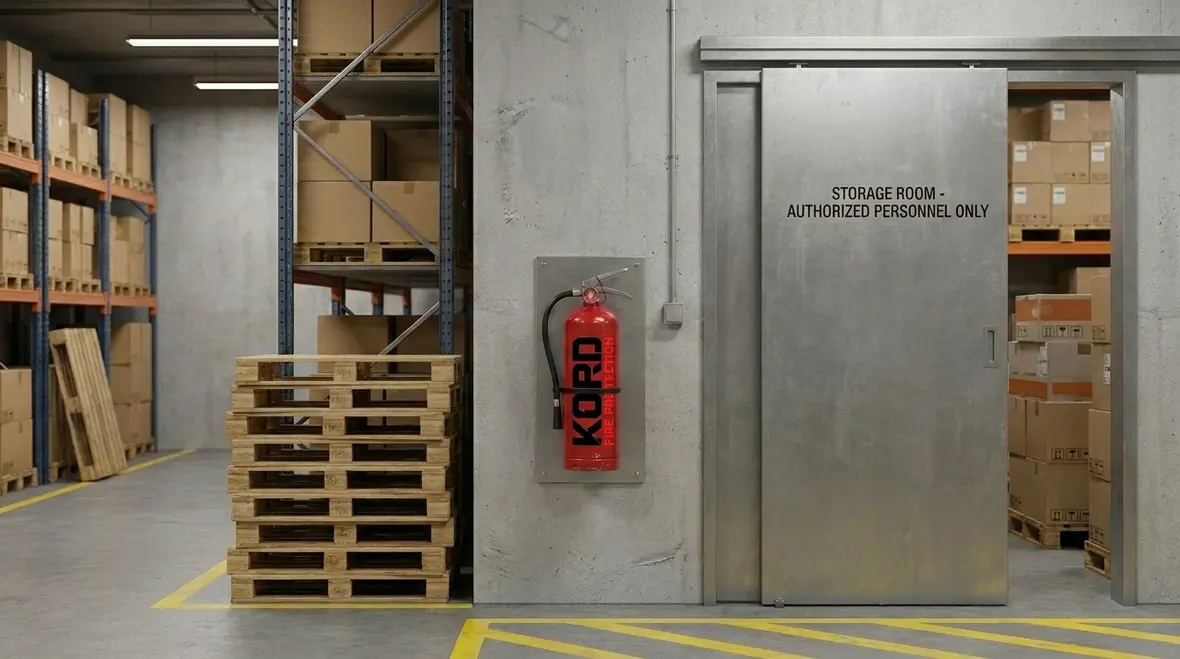
Warehouses usually contain multiple zones with different risk profiles. Therefore, placement should reflect each zone’s behavior, not one generic pattern. Consider these common areas and what placement teams typically need to account for:
- Aisles and rack bays: Place extinguishers where people can access them without pushing through blocked pathways or turning around pallets.
- Loading docks and receiving areas: Position units where they remain reachable during queueing and material movement.
- Storage rooms: Keep extinguishers close enough to support safe first response, while maintaining clear access routes.
- Electrical rooms and panel areas: Ensure placement does not compromise safe approach and remains visible.
- Battery charging and small workshops: Plan around ignition sources and keep units away from clutter and ongoing operations.
In addition, facilities should review placement after any layout shift. New shelving changes coverage. A moved workstation changes traffic flow. A new flammable cabinet changes the hazard balance. And when changes happen, placement needs to evolve, not just stay “good enough” until the next inspection. kord fire protection can act as the steady hand that keeps these adjustments under control across industrial and retail environments.
Zone planning works best when it stays flexible
One of the more frustrating truths in warehouse safety is that yesterday’s excellent placement can become today’s awkward blind spot after a simple operational change. A new mezzanine, a relocated packing bench, extra seasonal stock, a revised traffic lane, or a battery charging expansion can all alter response pathways. The fix is not dramatic. It is disciplined. Review each zone after changes, walk the routes people actually use, and check whether extinguishers still make sense in context. This keeps the system alive rather than frozen in some glorious past version of the building.
Installation, signage, and ongoing maintenance that actually holds up
Placement is only half the story. Installation quality and ongoing upkeep decide whether extinguishers stay usable. For example, extinguishers should mount securely, remain unobstructed, and keep their label readability intact. Teams should also ensure signage supports fast identification without causing clutter.
Then comes maintenance. Even a properly placed extinguisher can fail if it is unserviced, damaged, or expired. Therefore, facilities should maintain a schedule that aligns with local requirements and internal risk management practices. They should also track extinguisher condition checks so that any issues get resolved quickly rather than “rolled into the next big job.” Because the next big job is often delayed. Like the moment someone says, “We’ll fix that after peak.”
kord fire protection can become a vital partner by helping facilities manage inspections, servicing coordination, and documentation. That matters for multiple facets of Australian workplaces where operations shift throughout the year and where audits may demand clear evidence of compliance and readiness.
Common mistakes warehouses make, and how to fix them without shutting down operations
Many warehouses build their plan once and then stop thinking about it, which is a bit like locking the door and then removing the keys from the office. Common mistakes include placing extinguishers behind high piles, mounting units where racking modifications block access, and failing to update placement after process changes.
Another frequent error involves ignoring real movement patterns. If workers typically access a zone from one direction, placement should serve that reality. Similarly, teams sometimes forget that seasonal stock changes the layout overnight. If that happens, coverage can become inconsistent even though the extinguishers remain “in the same spot.”
To fix these issues, facilities can run a short internal review after any change. They can also map access routes and confirm that no new obstructions appear near units. Then, they can engage kord fire protection to verify placement, servicing needs, and coverage alignment. This approach reduces disruption while improving readiness.
FAQ
Ready to tighten coverage and reduce risk?
Warehouses in Australia move fast, and fire response needs to keep up. A smart placement plan, clear access routes, and dependable servicing reduce uncertainty and strengthen compliance. kord fire protection can help facilities review coverage, align placement with real hazards, and keep records in order.
Contact kord fire protection today to get a practical, warehouse-ready extinguisher strategy that stands up when it matters. The goal is simple: coverage that is visible, reachable, properly maintained, and ready for the day the warehouse decides to test everyone’s planning skills without warning.

Join Our Newsletter!
Get the latest fire safety tips delivered straight to your inbox From our Newsletter.