Commercial Kitchen Fire Suppression Systems in Australia
Quick Answer: Modern commercial kitchen fire suppression systems protect busy kitchens with fast detection, clean agent discharge, and dependable plumbing built for high heat and grease risk. They also pair with kitchen hood ventilation, compliant shutoffs, and staff training. A trusted partner, like Kord Fire Protection, helps facilities manage inspections and keep systems ready.
In Australia, commercial cooking creates a special kind of fire risk: grease vapors, deep fry heat, steam, and high demand for uptime. That is why commercial kitchen fire suppression systems must do more than “put out a fire.” They must detect it early, activate the right components instantly, and keep critical kitchen operations running safely in the moments that matter.
And yes, while the kitchen staff are often expected to multitask like an orchestra of chefs and forklifts, fire safety cannot be left to improvisation. The good news is that modern systems are built with real engineering behind them, and Kord Fire Protection can become a vital partner to design, install, service, and certify these systems across industrial, retail, and multi site facilities.
Near the top of the planning process, it also helps to work with a provider that can support related life safety systems. Kord Fire Protection offers full fire protection services, which makes it easier for facilities to coordinate suppression, alarms, inspections, and ongoing maintenance without juggling a whole cast of disconnected vendors.
What modern fire suppression must handle in real commercial kitchens
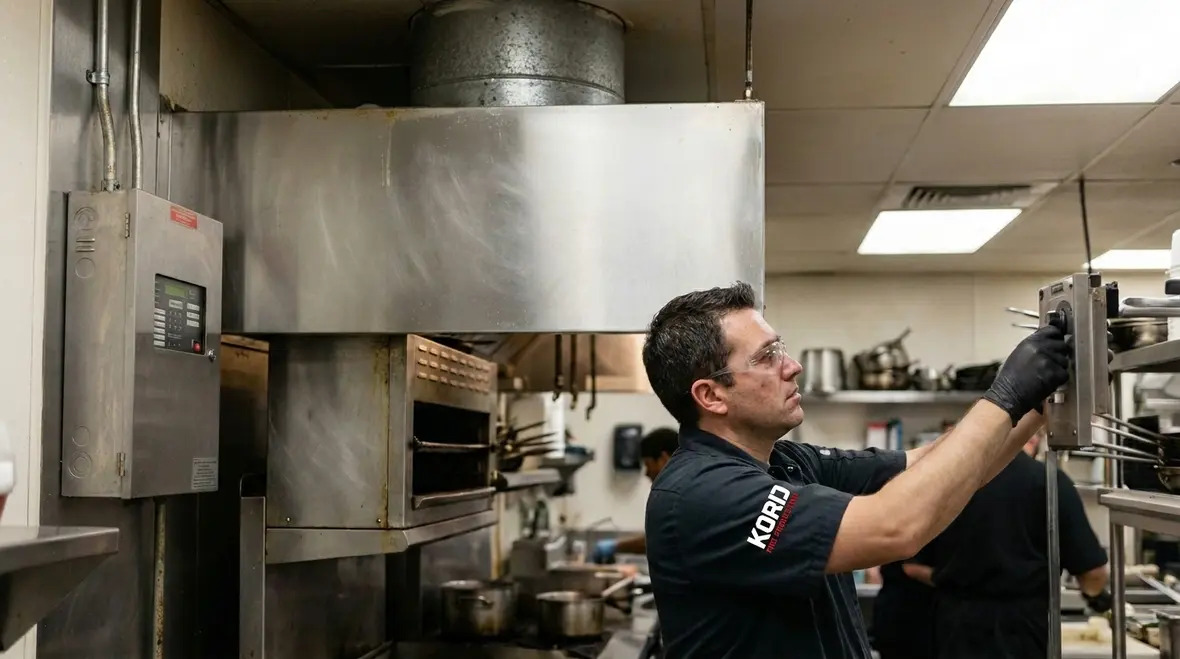
Modern commercial kitchen fire suppression systems focus on four job realities. First, they must address fast growing fires caused by grease and aerosolized vapors in hood and duct spaces. Second, they must work reliably despite greasy surfaces, humidity, and the daily chaos of cooking schedules. Third, they must activate quickly enough to protect exhaust plenums, filters, and duct runs. Finally, they must integrate with kitchen operations so the response is coordinated, not chaotic.
As a result, today’s systems typically combine detection, release, and control in one package. That way, when a sensor sees conditions like heat rise or flame, the system does not wait for a human to notice. In most kitchens, that is the difference between a small incident and a headline.
Why real kitchen conditions change the design
A commercial kitchen is not a clean lab, and it does not behave politely just because a spec sheet says it should. Heat loads shift during rushes. Menus change. Equipment gets added. Grease finds new places to travel. All of that means a suppression system has to match the actual cooking line rather than the imaginary perfect version of it. When facilities ignore that reality, they end up with systems that look compliant in a binder but feel suspiciously underprepared in real life.
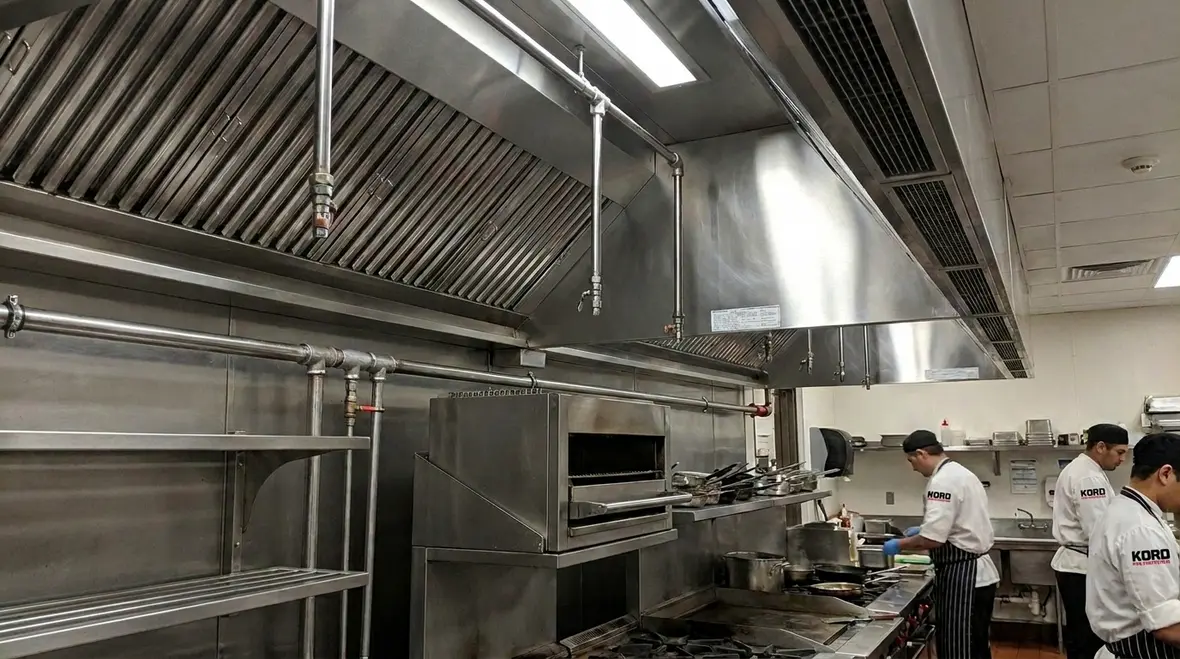
This is also why Kord Fire Protection’s content on commercial kitchen fire suppression for high volume kitchens is a useful reference. It reinforces the same practical point: hood layout, duct geometry, nozzle placement, and grease load all need to align if the system is going to perform when things get loud, hot, and expensive.
Detection and control that activate before damage grows
Detection is the brain. Many kitchen setups use fusible elements, heat triggered devices, or heat responsive detection along the hood. Then they connect to a control panel that confirms conditions and initiates discharge. After that, the system can trigger alarms and shut down selected equipment, depending on the design.
To keep it dependable, the control logic also supports reset and monitoring. Therefore, facilities gain better visibility during routine checks. Additionally, systems can be arranged so they target the correct hood zones rather than wasting discharge volume. That matters, because kitchens do not have infinite spare downtime. They also do not enjoy the “we will be closed until further notice” vibe.
Next, proper placement matters. Sensors must sit where heat and grease-laden vapors actually travel. If a system is installed “close enough,” it may look fine on paper while underperforming in the real world. Kord Fire Protection helps facilities avoid that gap by planning layouts with the kitchen’s actual cooking patterns and hood geometry in mind.
Control panels, alarms, and coordinated shutdowns
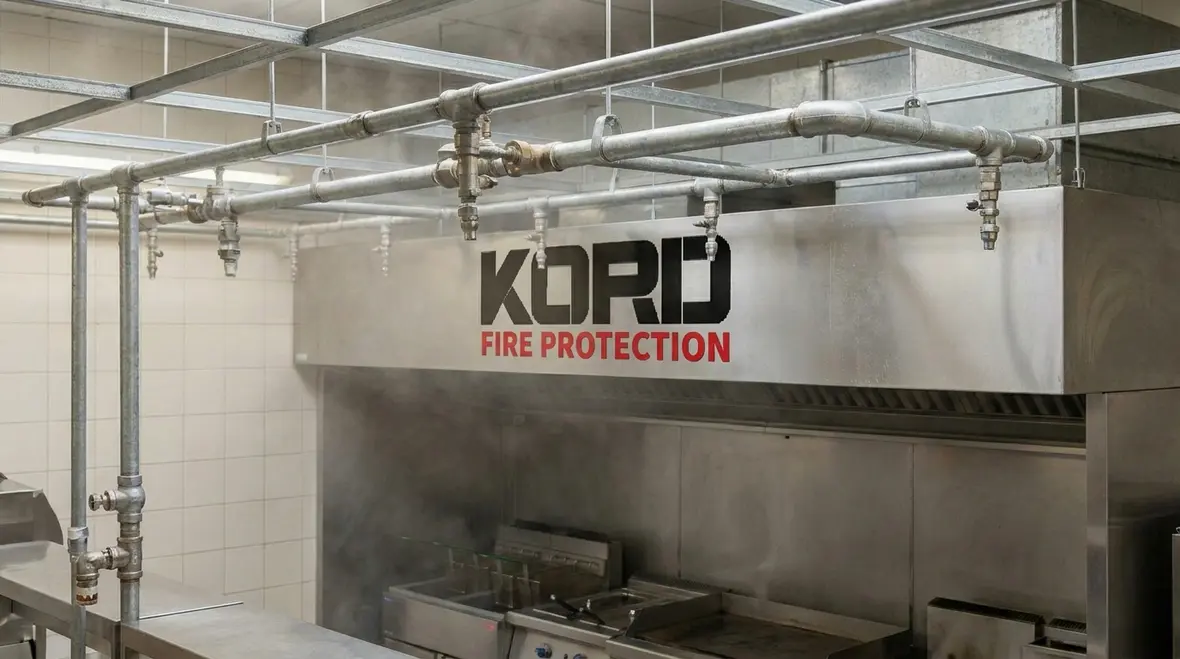
A suppression system works best when it does not act alone. Once detection confirms a fire condition, the response should coordinate with alarms, fuel shutoffs, and selected electrical disconnects where required by the system design. That coordination helps stop the hazard from getting fresh fuel while also telling nearby staff that this is no longer a drill, not that kitchens usually have time for theater anyway.
Facilities that already manage alarm infrastructure may also want connected support from Kord’s fire alarm service systems team. That kind of interlink matters because kitchen suppression performs better when its detection, notification, and operational controls are understood as one coordinated safety response instead of isolated hardware living separate lives.
Agent selection and discharge design for hood and duct protection
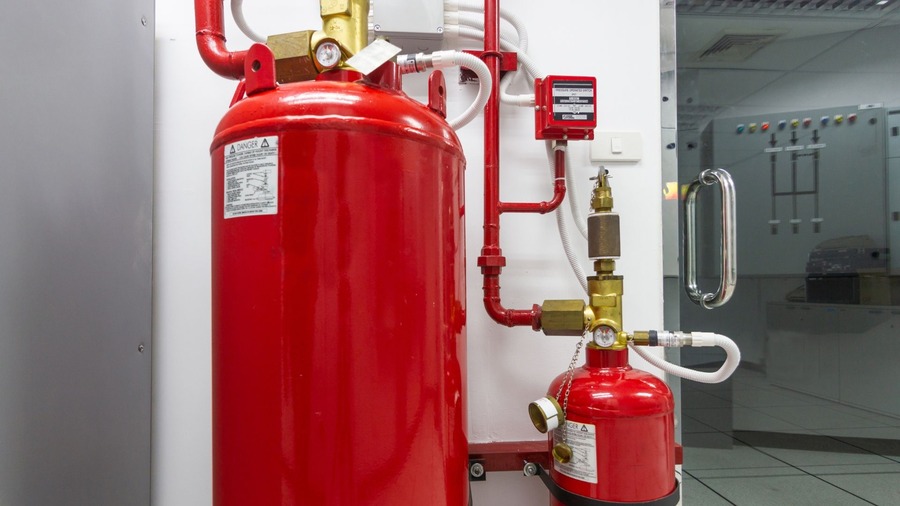
Once detection triggers, the system releases extinguishing agent into the hood and, when applicable, the duct plenum. Modern designs focus on coverage, flow rate, and reliable distribution. Common approaches include wet chemical systems built for deep fryer style grease fires, along with other code compliant agents depending on the appliance and risk profile.
The core goal stays the same. The agent must blanket the hazard area fast enough to stop grease from reigniting. Moreover, discharge design considers pipe length, nozzle selection, and protected volume. If the pipe run is too long or the nozzles do not match the hood area, the system may discharge too slowly or unevenly.
In addition, modern suppression systems often include features that help prevent accidental discharge. They also include monitoring so faults do not go unnoticed. In short, the discharge portion must be engineered, not guessed.
Coverage depends on more than the tank
People sometimes talk about suppression systems as if the cylinder is the whole story. It is not. The piping route, fittings, nozzles, blow off caps, and protected appliance layout all affect how well the agent reaches the actual hazard. A system can have the right agent on paper and still underdeliver if the distribution design is sloppy. In kitchen fire protection, “probably fine” is not a strategy. It is a future incident report.
Key components that make suppression systems dependable
Every dependable installation relies on a set of core parts working in harmony. Below are the key components that commercial teams typically rely on, and the reason each one matters.
| Component | Why it matters |
|---|---|
| Control panel and detection devices | They confirm conditions and trigger action without hesitation. |
| Storage tank and pump unit | They supply the correct agent under pressure, even after years of daily demand. |
| Pipe network, valves, and fittings | They deliver agent to the correct nozzles while staying sealed and corrosion resistant. |
| Nozzles and manifold distribution | They create the coverage needed for hood and duct hazards. |
| Actuation and release mechanisms | They ensure the system discharges at the right moment. |
| Interface with fire alarms and shutdown controls | They coordinate response so staff can act while equipment shuts down safely. |
Because commercial kitchens vary, Kord Fire Protection supports facilities across multiple Australian sectors by helping match components to each hood risk profile. That is how organizations avoid generic “one size fits none” setups.
How compliance, testing, and maintenance protect uptime
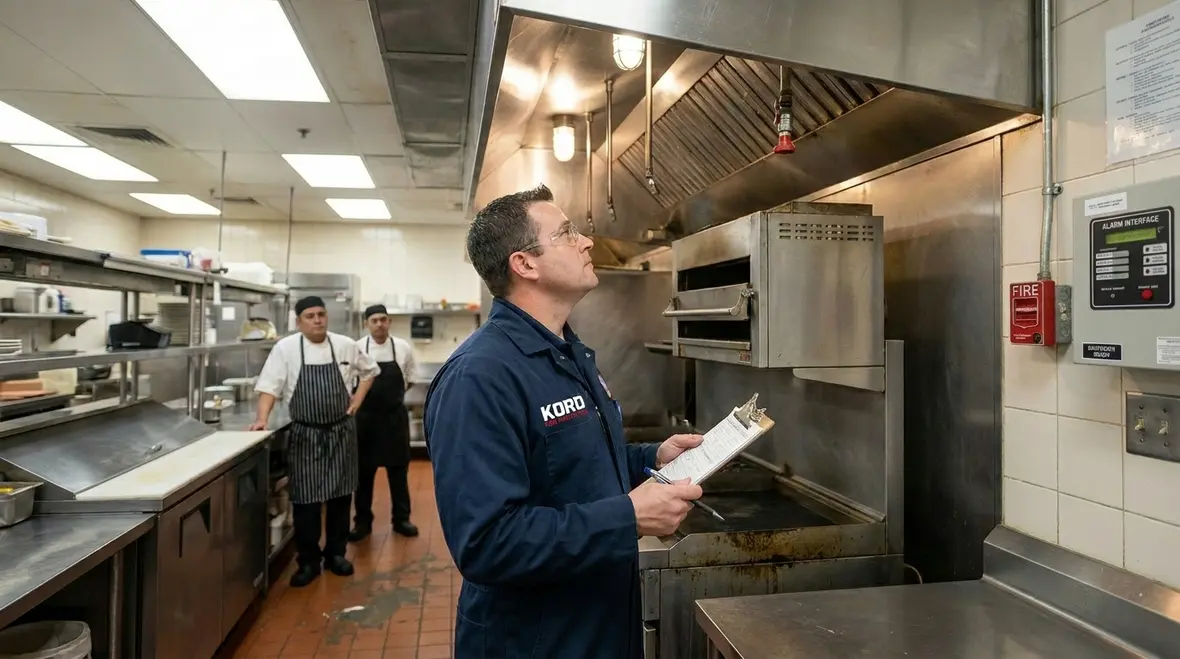
Even the best designed suppression system becomes a liability if it is not maintained. Kitchens bring grease, steam, and vibration, which can affect fittings, detection readiness, and distribution paths. Therefore, the service approach must include both inspection and correct testing.
Maintenance typically covers checking nozzles, verifying pipe integrity, testing detection and release performance, reviewing alarm outputs, and confirming the system reset works correctly. In many cases, service teams also check for corrosion, residue build up, and signs of tampering or accidental damage. Then they document outcomes so the facility can prove ongoing readiness.
Just as importantly, maintenance protects operational uptime. A system that fails inspection delays operations, creates risk, and forces urgent scheduling. Meanwhile, consistent service reduces last minute surprises. It is a bit like keeping your supply chain healthy, except the cost of failure is measured in fire, not missed deliveries.
Kord Fire Protection can become a vital partner by building service routines that match each site’s cooking schedule, asset age, and risk profile. That includes planning so inspections happen when they cause the least disruption to staff and customers.
For teams that want a more focused reference, Kord also has a helpful resource on kitchen fire suppression inspection requirements. It naturally complements this topic because reliable protection is never just about installation day. It is about what still works months later, after grease, heat, rush hours, and plenty of opportunities for small issues to become large headaches.
Integration with hood ventilation, equipment safety, and staff response
Fire suppression does not live alone. It must coordinate with the hood ventilation system, exhaust fans, and cooking appliance shutdowns when required. Proper integration can limit oxygen supply, stop fuel sources, and help keep the fire from moving into ducts.
Beyond hardware, it also requires a practical response plan. Staff must understand alarm sounds, evacuation routes, and when it is safe to attempt suppression support. Training should include what happens after activation, including cleanup expectations and how to return the kitchen to service only after system reset and verification.
Additionally, facilities should plan for operational continuity. For example, a large retail site might need a phased approach to testing or maintenance. Therefore, Kord Fire Protection can support multi site teams by standardising service practices across facilities while still accounting for differences in hood design and equipment types.
Training matters because systems do not finish the whole job
Even a perfectly functioning suppression system does not replace calm human response. Staff still need to know who calls emergency services, who stops service to the line, who keeps customers out of the affected area, and who absolutely should not try to play hero with a bad decision and a hot fryer. Good training makes the first few minutes less chaotic, which is exactly when chaos usually tries its luck.
Why Kord Fire Protection helps facilities across Australia
Australia has many kitchen types, from industrial canteens to high volume retail food halls. And because each site carries unique duct layouts and cooking loads, facilities need a partner who can handle real variations without cutting corners.
Kord Fire Protection can support commercial teams by assisting with system selection, installation coordination, and ongoing service that keeps commercial kitchen fire suppression systems ready for the moment they are needed. As a result, facilities gain a single accountable service provider rather than a scattered set of vendors. That reduces confusion, improves compliance confidence, and keeps leadership focused on running the business instead of babysitting paperwork.
Also, the best time to learn about a fire system is never during a fire. Kord Fire Protection helps facilities avoid that “trial by chaos” approach.
FAQ
Conclusion: keep the kitchen safe and the business moving
Modern commercial kitchen fire suppression systems protect more than equipment. They protect people, ducts, uptime, and public confidence. However, real protection depends on correct design, coordinated integration, and ongoing inspection and testing. Kord Fire Protection can help facilities across Australia stay compliant and ready, with service that fits the way kitchens actually run. If the kitchen is the engine, then suppression is the seatbelt.
Ready to protect your hood, duct, and team? Contact Kord Fire Protection to review your current setup and schedule the right service plan. The smartest time to tighten up a kitchen fire strategy is before the next lunch rush starts auditioning for disaster.

Join Our Newsletter!
Get the latest fire safety tips delivered straight to your inbox From our Newsletter.