Managing Fire Sprinkler System Leaks Early in Australia
Quick Answer: Early fire sprinkler leaks often show up as damp ceilings, higher water bills, sprinkler pressure drops, or “mystery” corrosion at joints. Teams can spot them early by monitoring pressure and flow, inspecting telltale areas, and testing for hidden water. Fast action helps prevent damage, downtime, and false alarms.
Managing fire sprinkler system leaks starts long before a ceiling patch or an urgent call to the maintenance team. When a sprinkler system develops a small leak, it can quietly waste water, weaken building materials, and create conditions that lead to corrosion or unexpected alarm events. In Australia’s busy industrial and retail sites, where uptime matters and trades share tight schedules, early detection becomes a real advantage. And yes, nobody wants their fire protection system behaving like a leaky tap in a sitcom. Still, leaks happen, and the best response is calm, methodical, and documented. From there, Kord Fire Protection can become a vital partner by helping facilities identify issues sooner, coordinate service safely, and keep systems compliant. Facilities that need a broader view of inspections, repairs, and long term readiness can also explore full fire protection services to see how sprinkler support fits into a complete site safety plan.
Why early leaks happen inside commercial fire systems
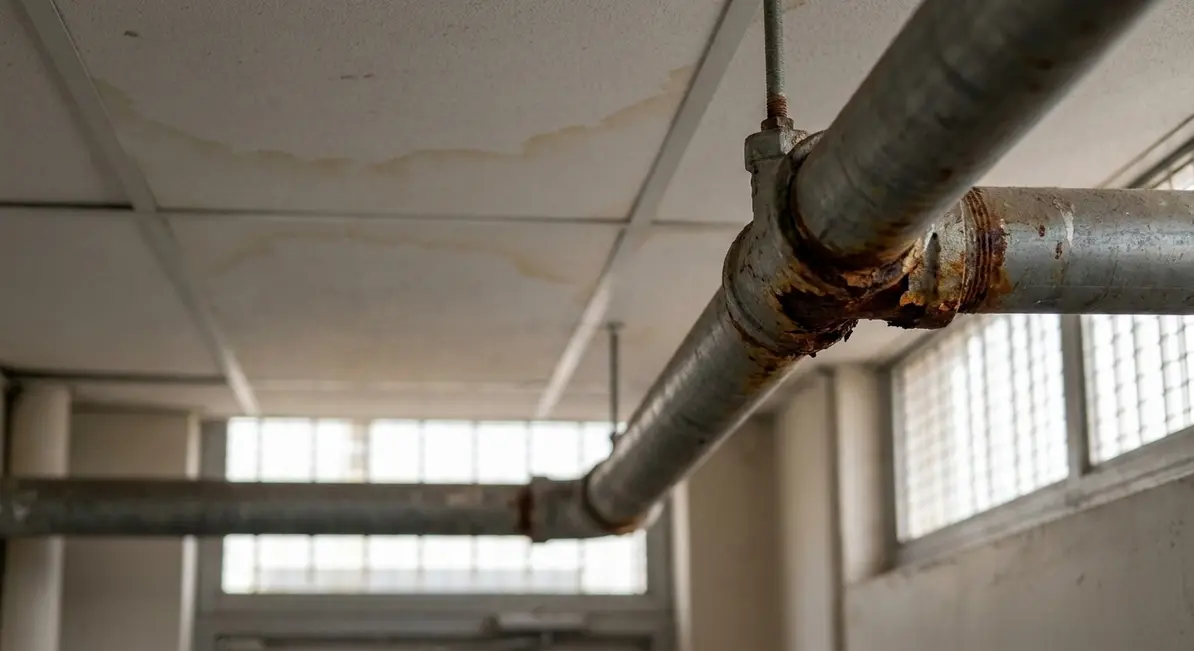
Early sprinkler system leaks do not usually start as dramatic failures. Instead, small faults build over time due to vibration, minor settlement, changes in building use, or water chemistry that leaves deposits in pipework. Furthermore, heat and humidity cycles can stress couplings and threaded joints, especially in plant rooms, loading bays, and underfloor service corridors. As a result, even a tiny issue at a fitting can turn into a bigger problem if no one catches it early.
In addition, some sites experience frequent maintenance activity near overhead pipework. When forklifts, scaffolding, or cable pulls brush against sprinkler lines, the system can shift just enough to loosen a connection over months. So while the system may look fine from the ground, the leak can start in a place only a trained eye and the right tools can reach.
Small causes, big consequences
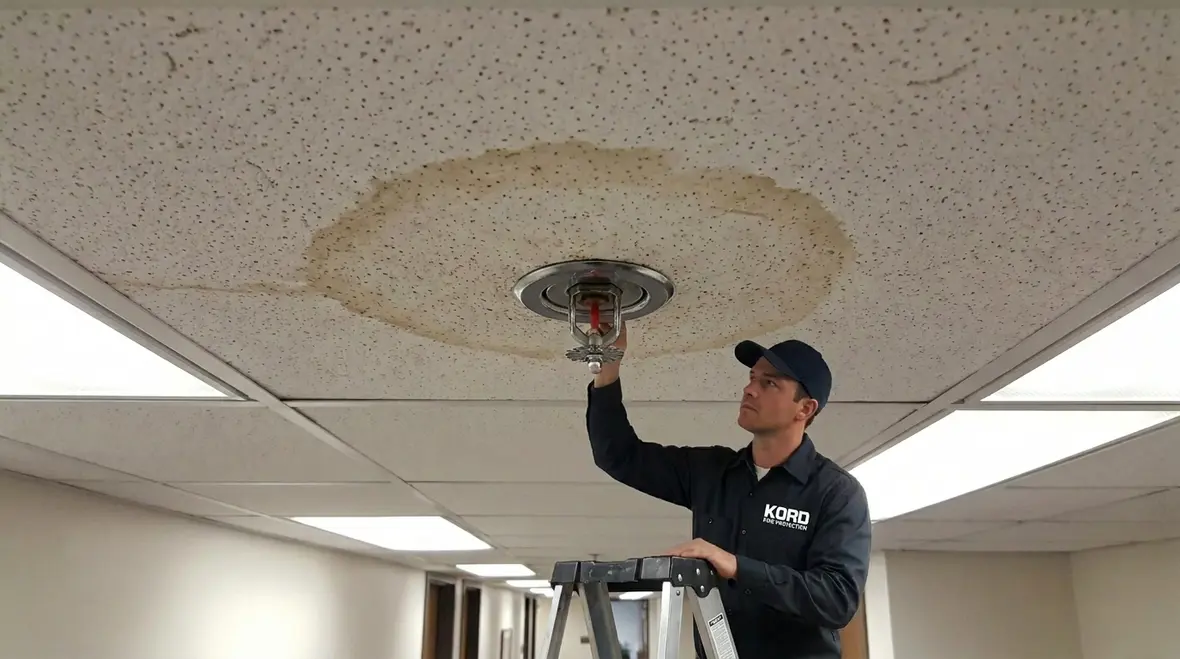
That is what makes early leaks so frustrating. The initial cause may be minor, but the consequences rarely stay minor for long. A slow drip above a suspended ceiling can soak insulation, stain tiles, and start corrosion before anyone realizes the sprinkler system is involved. By the time someone says, “That patch looks worse than last week,” the leak may have been quietly working overtime.
Signs of a leak before it becomes a shutdown
Facilities should treat subtle clues as signals, not background noise. To identify managing fire sprinkler system leaks early, teams should watch for patterns that show up repeatedly. For example, damp drywall seams, ceiling discoloration, or persistent moisture around pipe supports can point to a connection that sweats rather than fully drips. Likewise, paint bubbling or rust staining near valves and hangers often indicates water migration along metal surfaces.
Next, operational indicators matter. If water usage increases without a clear reason, or if pressure readings show small drops at certain times, the system may be losing pressure at a fitting. Also, floor drains or sumps near mechanical areas should be monitored. When they fill unexpectedly, it could be a slow leak somewhere above, not a “mystery” plumbing issue.
Here is what a facilities team typically documents during the first sweep:
- Moisture marks that grow over days, not hours
- Corrosion at joints, threaded ends, unions, or sprinkler escutcheons
- Strange wet spots behind ceilings or above suspended areas
- Valve room dampness near gauges, drain points, and test connections
- Pressure or flow changes during normal monitoring cycles
What teams should never ignore
The temptation is to explain away small symptoms. Someone blames humidity. Someone else blames cleaning. Another person shrugs and calls it old building character. That kind of optimism is charming at parties, but not especially useful around pressurized sprinkler lines. Repeated clues deserve a proper look, especially when they appear near valves, risers, or concealed service spaces.
Inspection steps that uncover hidden moisture safely
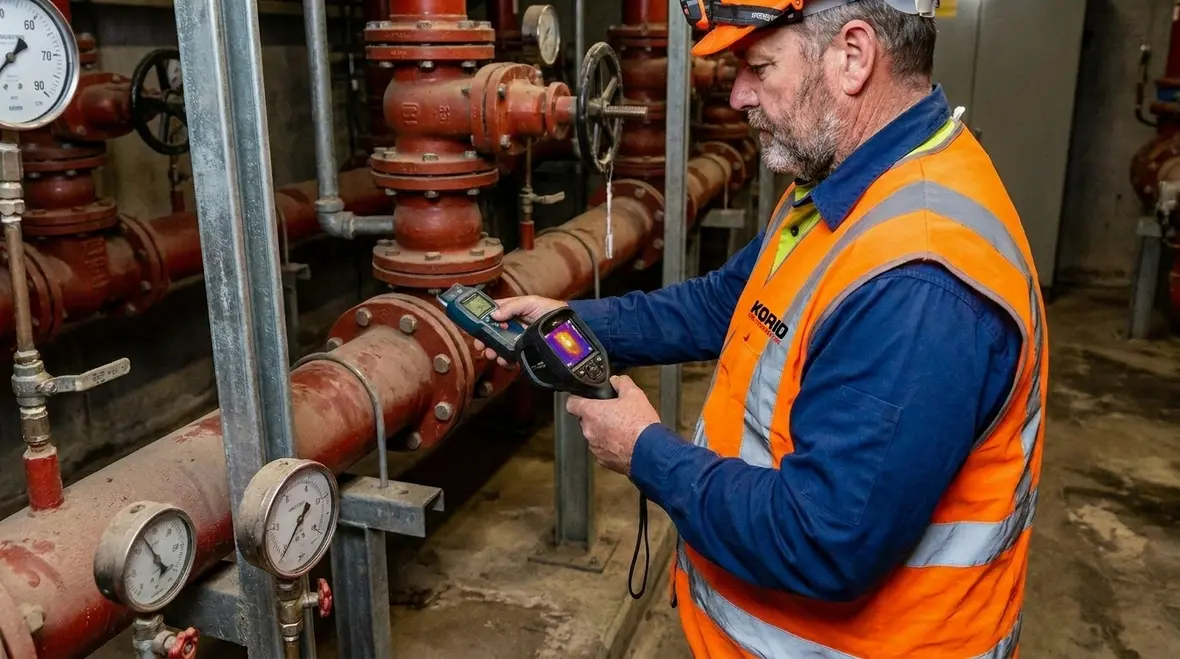
When teams check for early water loss, they should work in a sequence that reduces risk and avoids guessing. First, they should confirm system status, including recent maintenance, recent alterations, and any prior testing history. Then, they should focus on high risk areas such as risers, cross mains, valve sets, and locations where pipes connect to equipment.
After that, a targeted inspection should combine visual checks with non destructive methods. Thermal imaging can help reveal cooler wet zones under ceilings. Ultrasonic listening devices can identify leaks within pressurized pipework. Moisture meters can verify whether a surface is simply stained or actually damp. And of course, the team should verify that any investigation does not disturb sprinklers or compromise clearance requirements.
For busy sites, the most effective approach is usually phased. For instance, the facility can start with “quick wins” in accessible rooms, then move into concealed spaces only after they confirm the pattern. This avoids turning inspection into a full day of chaos. Nobody wants a fire protection audit that feels like inventory for dust bunnies.
A practical inspection rhythm
A smart sequence often starts with records, then visible signs, then instrument checks, and only then targeted access. That rhythm saves time because it narrows the likely leak zone before anyone opens panels or moves equipment. It also makes life easier for site managers who already have enough moving parts without adding a scavenger hunt for water.
How to manage leak response without turning the site upside down
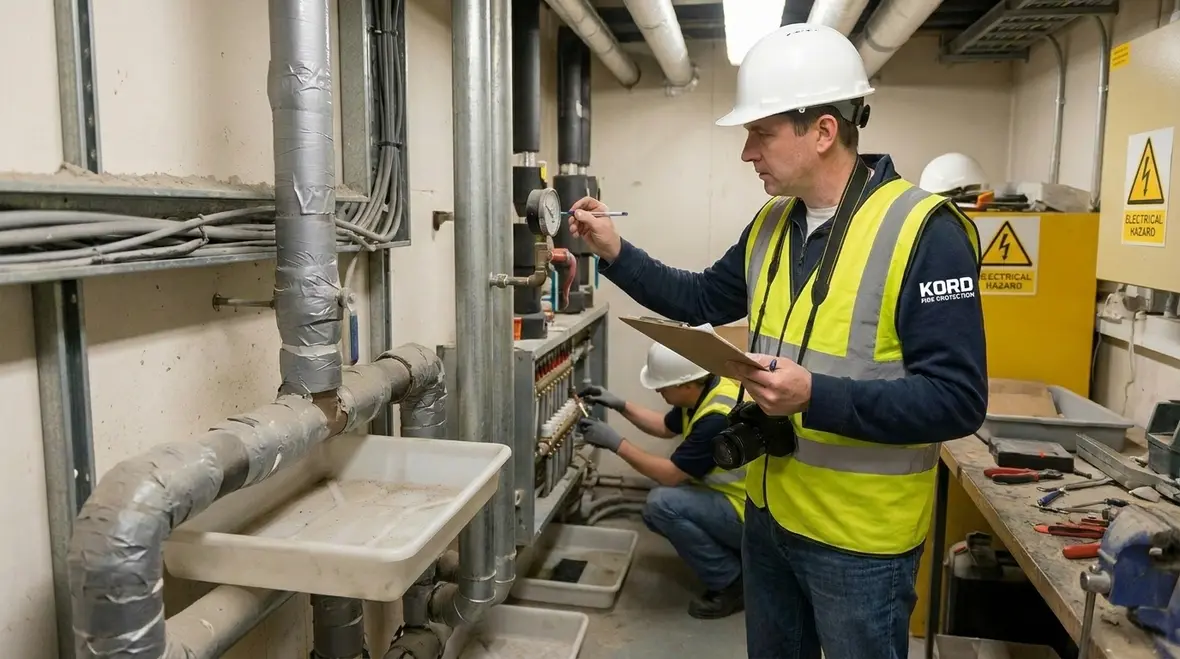
Once a suspected leak appears, managing fire sprinkler system leaks becomes a control job, not a panic job. First, isolate the affected zone if the system design allows it. Next, confirm whether any water is actively flowing into the building. Then, capture photos, measurements, and readings so the repair team can estimate scope and timeline.
Meanwhile, facilities should protect assets. Moisture can damage insulation, cables, ceiling tiles, and signage, and in plant environments it can affect product storage safety. Therefore, teams should coordinate with maintenance and safety officers to keep people away from wet electrical areas and to manage slip hazards. If a leak occurs near sprinklers, the team must follow the site procedures for fire system disturbance, so no one improvises during a moment of stress.
Finally, repairs should include more than swapping a worn component. If a fitting leaks early, it may reveal a deeper issue such as misalignment, wrong torque, poor support spacing, or corrosion in surrounding pipe sections. A complete repair plan should address cause, not only symptoms.
Response is about control, not drama
That distinction matters. When a team reacts with structure, the leak becomes a manageable defect. When a team reacts with guesswork, the leak becomes a site wide headache with wet tiles, rescheduling, and several people asking who touched what. Calm documentation wins almost every time.
Compliance, documentation, and the real cost of delaying action
Industrial and retail facilities often ask a simple question: “Is it really urgent?” In truth, the longer a small leak continues, the more expensive it becomes. Water can spread through ceiling cavities and affect multiple zones before anyone links it to a fire system connection. That means the facility may face extra drying costs, repainting, replacement of damaged materials, and potential downtime during repairs.
Moreover, documentation helps teams show due diligence. When a facility keeps maintenance records, system test results, and inspection notes, it reduces uncertainty during compliance checks and supports faster approvals for corrective actions. Also, it helps identify repeat locations that need attention, which can prevent the same issue from returning after patchwork fixes.
For facilities in Australia, working with a qualified provider supports both safe outcomes and audit readiness. This is where Kord Fire Protection becomes a vital partner. They can align inspection and rectification activities with operational realities, coordinate access, and help the facility maintain a clear paper trail.
Spot the weak points and build a smarter prevention plan
Prevention works best when it targets the places leaks like to start. Instead of broad, slow checks, facilities can build a prevention plan that follows the system’s risk map. For example, they can increase attention around joints exposed to vibrations, areas near doors that slam, and pipe runs under mechanical equipment where temperature changes occur.
They can also improve how the site manages “touch points.” If contractors frequently work near ceilings and pipe corridors, the facility should set clear rules for safe clearance and mechanical protection. This reduces accidental impacts and keeps sprinkler lines stable over time.
Where leaks start
- Valves and unions
- Supports and hanger points
- Threaded joints and couplings
- Concealed ceiling and service voids
- Areas affected by settlement or vibration
What teams should do next
- Use structured inspections and record outcomes
- Monitor pressure trends and water usage
- Apply targeted non destructive checks
- Repair with cause analysis, not patches
- Coordinate scheduling to avoid disruption
Prevention gets better when it is specific
General awareness is useful, but targeted prevention is what saves time. Teams that know which joints vibrate, which voids stay warm, and which plant areas get constant traffic can inspect more efficiently and catch trouble sooner. It is a lot easier to stop a drip at the source than to explain why the ceiling has developed its own weather pattern.
How Kord Fire Protection supports managing fire sprinkler system leaks
In many facilities, the hardest part is not spotting a possible issue, but coordinating the right response with limited access time and ongoing operations. Kord Fire Protection supports managing fire sprinkler system leaks by bringing a service workflow that is structured, documented, and safety focused. They help facilities identify early signs, inspect effectively, and plan rectification in a way that respects site production and commercial needs across Australia.
Furthermore, they support the “what comes after” stage. That includes repair follow up, verification steps, and clear recommendations that reduce repeat problems. In other words, they help turn leaks from an ongoing mystery into a solved problem. And honestly, mysteries are fine for detective shows, not for sprinkler pipework.
Teams looking for a broader overview of how Kord approaches site readiness can also review the fire protection services guide by Kord experts, which fits naturally alongside sprinkler maintenance planning and long term facility coordination.
FAQ
Conclusion and next step
Early management beats emergency action every time. A facility that watches for subtle moisture, pressure trends, and corrosion can catch leaks before they damage assets or disrupt operations. That kind of awareness keeps inspections practical, repairs focused, and surprises to a minimum. It also helps teams make decisions based on evidence instead of scrambling after visible damage has already spread.
If the site needs help identifying risk points and executing safe repairs, Kord Fire Protection can step in as a reliable partner. Contact them to plan inspections and rectification that keep your system ready and your day moving. When leaks are handled early, the building stays safer, the schedule stays steadier, and everyone gets to deal with fewer unwanted plot twists.

Join Our Newsletter!
Get the latest fire safety tips delivered straight to your inbox From our Newsletter.