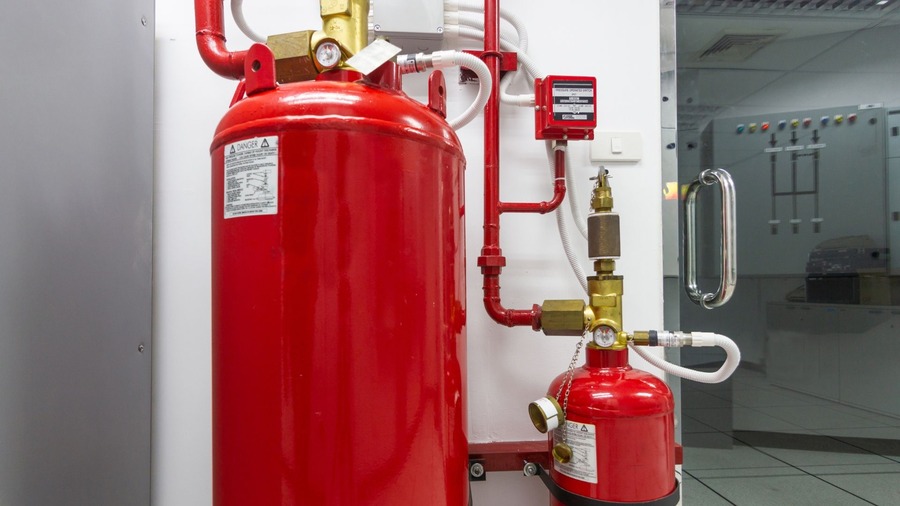
Commercial Kitchen Fire Suppression for Schools
Commercial kitchen fire suppression for schools matters because the stakes are never small. In a school dining program, a single flare up can spread fast, disrupt meal service, and, more importantly, endanger students, staff, and kitchen workers. School kitchen fire suppression systems help stop the growth of fire by controlling heat, fuel, and the fire source inside the hood and duct areas where grease and smoke love to hang out. And yes, grease can be dramatic. It behaves like it is auditioning for a cooking show, then suddenly decides to become a problem.
In the sections that follow, third person experts will walk through how these systems work, what schools should plan for, and why Kord Fire Protection can become a vital partner for this service job. After all, a system is only as good as the people who maintain it. Schools that plan early usually avoid the classic scramble that happens right before inspections, leadership walk throughs, or the first chaotic week when every tray line suddenly feels like a timed event.
What commercial kitchen fire suppression systems protect in school kitchens
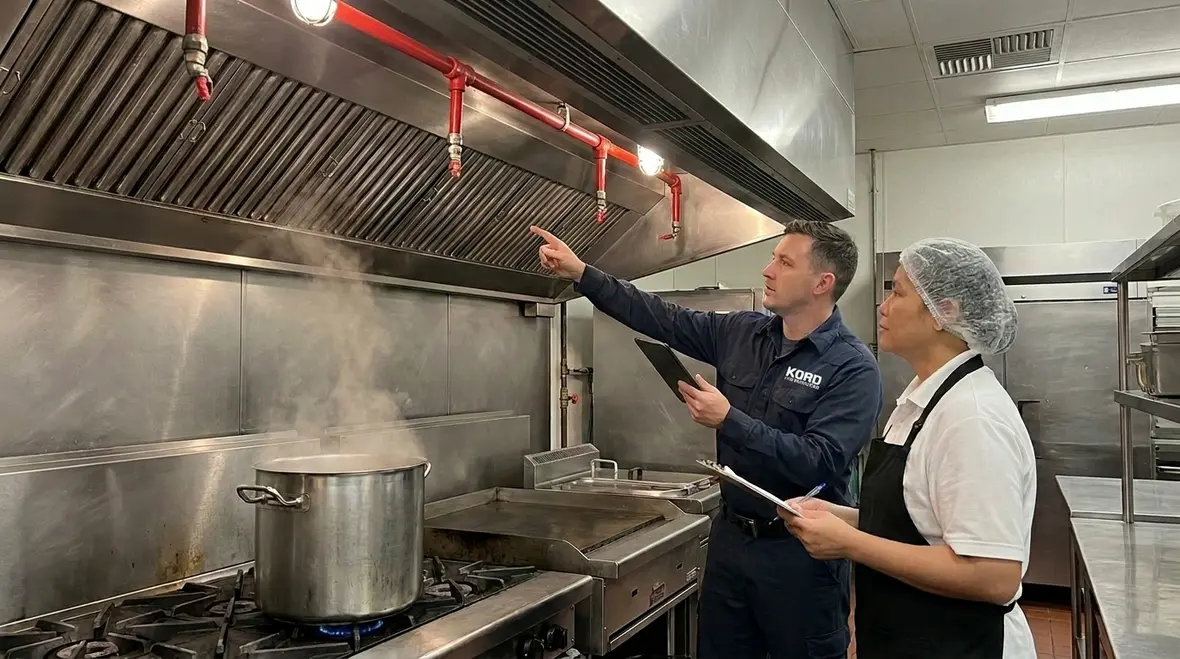
School kitchens typically cook in high volume, with frequent oil and grease use. Therefore, the risk concentrates in specific spaces rather than the entire building. Most incidents start in areas like cooking surfaces, fryer areas, and especially the ventilation path. When grease-laden vapors move into the hood and exhaust duct, they can form deposits. Those deposits can ignite later, even after the original cooking activity ends.
Commercial fire suppression targets the equipment and airflow routes where fire growth accelerates. A well designed school kitchen fire suppression setup usually focuses on hood protection, duct coverage, and the fire suppression agent discharge in the right zone. As a result, the system helps stop flames from escaping into the kitchen and into the building ventilation system. Meanwhile, it also reduces smoke damage, which can matter just as much as fire damage for school operations.
Because the kitchen environment changes daily, the system must fit real use. For example, a school that swaps menu items or runs extra events may create different heat loads and grease production patterns. That is why planning around actual cooking schedules and equipment is not optional. Teams also need to think beyond the obvious appliances. The hood plenum, duct path, and discharge points all matter because fire rarely asks permission before choosing the most inconvenient route possible.
Where the highest risk usually lives
- Fryers and griddles with recurring grease exposure
- Cooking lines operating for breakfast and lunch service
- Hood interiors where vapors collect and condense
- Duct sections that quietly build grease over time
- Equipment layouts that change without protection updates
That combination is why many operators review broader guidance on commercial kitchen fire suppression systems when planning coverage for school kitchens. It helps connect the equipment layout to the actual hazard instead of assuming one hood means one simple answer. ([kordfire.com](https://kordfire.com/commercial-kitchen-fire-suppression-systems-explained/?utm_source=openai))
How fire suppression works during a hood or duct event
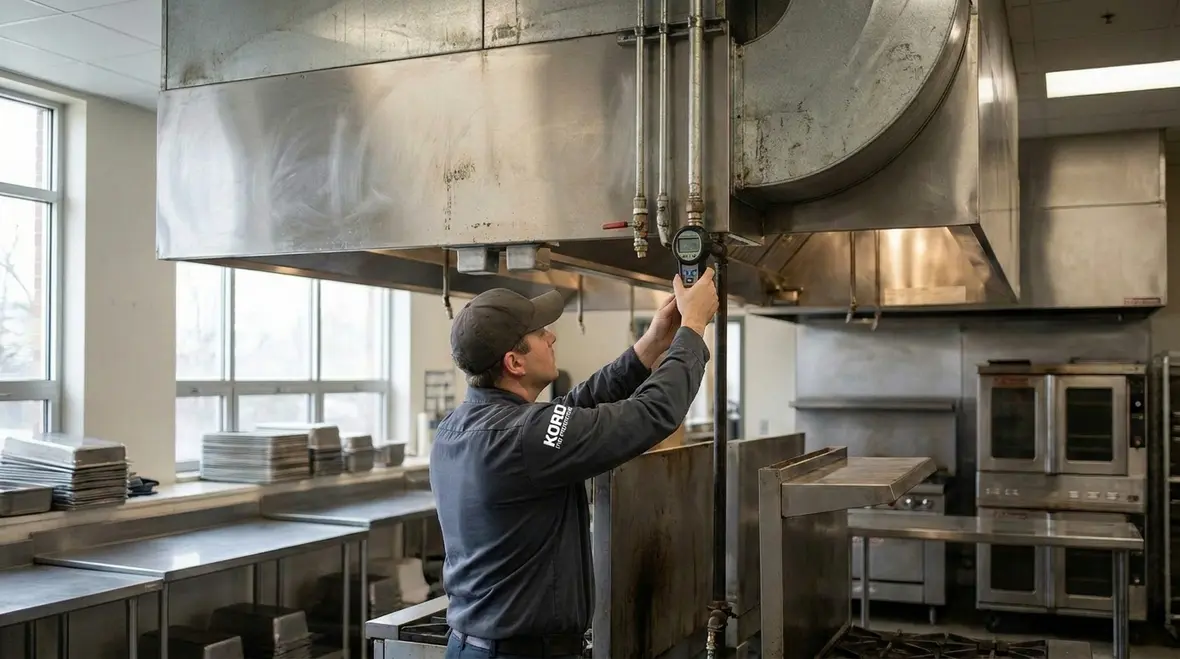
When the temperature rises past a safe threshold, the system detects heat in the protected area. Then, it releases a suppression agent designed for cooking grease fire risks. Depending on the system design, the discharge can be tailored to hood zones and may include duct endpoints. In plain terms, the goal is to break the chain that lets fire feed on grease and oxygen while limiting spread.
In schools, quick response matters because kitchen workers often continue normal duties until the first alarms trigger. Therefore, a properly designed system supports fast action by reducing fire intensity before it grows out of control. At the same time, local alarm and control features help staff follow evacuation and shut down steps.
Also, the system must match the hood design and duct layout. If the coverage does not align with the actual hood configuration, protection gaps can form. And gaps invite Murphy’s Law, the same one that shows up right when the principal is trying to taste test the new meatballs.
Why modern systems focus on grease fires
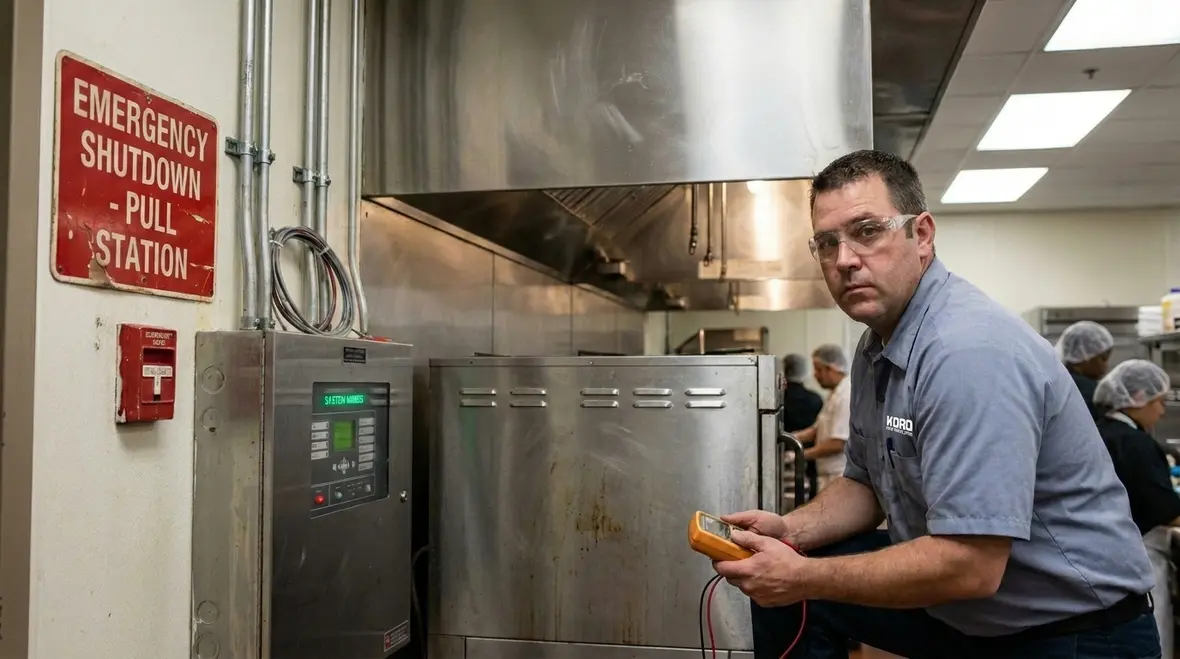
Kord Fire Protection’s UL 300 guidance explains that modern kitchen systems are designed around wet chemical discharge, targeted nozzle placement, automatic detection, manual pull stations, and fuel shutoff integration. That approach matters in school kitchens because high temperature cooking oils and closely arranged appliances increase the chance of fast fire growth and re ignition if the system is outdated or incomplete. ([kordfire.com](https://kordfire.com/ul-300-restaurant-hood-fire-suppression-guide/?utm_source=openai))
Key requirements for school kitchen fire protection planning
Fire suppression for schools cannot be treated like a one size purchase. Schools run on strict budgets, but they also face strict safety expectations. To plan correctly, third party teams typically consider the hood type, duct diameter, cooking equipment style, and how the kitchen ventilation system moves air.
Additionally, the system must integrate with daily operations. That includes staff training for what to do after discharge, how to secure the area, and how to coordinate with emergency services. It also includes clear instructions for restarting cooking equipment only after inspection and clearance.
Schools also need a maintenance calendar that fits the academic calendar. Summer breaks help, but kitchens still need attention during the school year. The best approach schedules inspections at times that reduce disruption to meal programs.
Finally, documenting compliance supports smooth transitions with district leadership, contractors, and inspectors. When records are organized, approvals move faster and surprises get smaller. Nobody wants a missing inspection record to become the star of a meeting that was supposed to be about cafeteria improvements.
Planning details that deserve attention early
- Exact appliance lineup under each hood
- Duct route and endpoint protection needs
- Manual activation location for staff access
- Fuel or electrical shutoff coordination
- Inspection timing around school breaks and busy service periods
Maintenance and inspection that keep systems ready all year
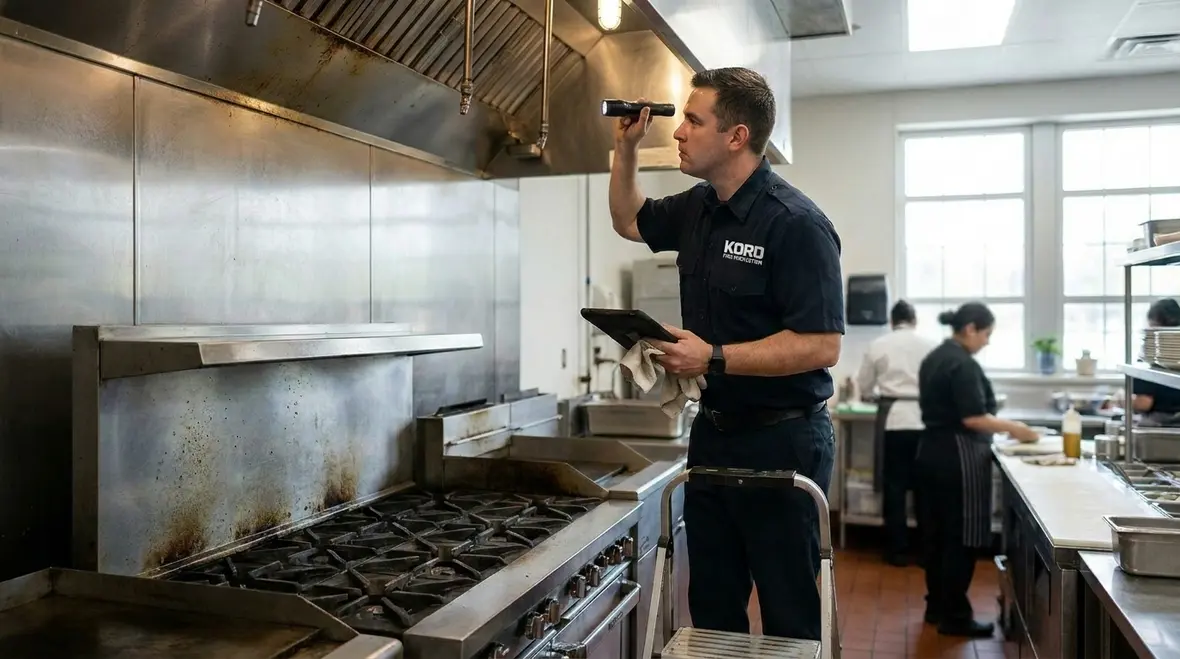
A suppression system can look perfect on day one and still fail if the details slip over time. Therefore, school teams should treat inspections like routine safety. Regular servicing helps confirm detection capability, agent integrity, component condition, and cleanliness of the protected surfaces.
After discharge events, even minor ones, systems need inspection and sometimes component replacement. Schools often underestimate this step, thinking a small flare up means “nothing happened.” However, detection and discharge can trigger cleanup and verification that cannot be skipped.
In addition, hoods and ductwork need proper cleaning. Grease accumulation can reduce effectiveness, increase fire load, and raise risk during later cooking. Transition from deep cleaning to routine maintenance should stay consistent, especially for high frequency cooking schedules.
Good practice also includes making sure the right people know where the shutdown controls sit and who can authorize system reset. Because after a busy lunch rush, the last thing anyone wants is a scavenger hunt for the correct procedure.
Kord Fire’s service pages emphasize inspection, testing, installation, and maintenance across suppression systems, while its kitchen suppression resources repeatedly point to the importance of keeping hood, duct, and appliance protection aligned with actual kitchen conditions. That makes ongoing service less of a formality and more of a reliability plan. ([kordfire.com](https://kordfire.com/all-fire-suppression/?utm_source=openai))
Why Kord Fire Protection becomes a vital partner for school jobs
Even the best designed suppression system needs ongoing support. Kord Fire Protection can become a vital partner with this service job by helping schools plan, install, and maintain protection that fits real kitchen layouts and real use patterns. Instead of treating the project as a box to check, the team focuses on system readiness and long term performance.
That partner value shows up in multiple ways. First, they support installation planning so coverage matches hood and duct conditions. Next, they assist with inspection schedules that align with school operations. Then, they help with service readiness so districts can respond quickly when questions arrive from leadership or inspectors.
In a busy school environment, communication counts. Kord can help coordinate service steps so kitchens can keep running while safety work stays on track. And when something needs attention, the process should stay clear and not feel like decoding a cafeteria menu in ancient script.
When schools build a relationship with a fire protection partner, they reduce guesswork and avoid last minute scrambling before an inspection. Kord’s own service and about pages describe dedicated kitchen hood fire suppression support as part of a broader protection program, which makes that partnership especially useful for districts juggling safety, scheduling, and documentation at the same time. ([kordfire.com](https://kordfire.com/about-fire-protection/?utm_source=openai))
Budget, scheduling, and minimizing disruption to meal service
Schools often worry that fire suppression work will interrupt meal programs. That concern is reasonable. Therefore, the best planning includes timing decisions that fit cooking schedules, staff availability, and district calendars.
For many districts, summer projects reduce disruption because fewer meals are served and staffing may shift. Still, some maintenance and inspections happen during the school year. The key is to coordinate access to hood systems, control areas, and mechanical spaces so the kitchen can continue operating safely where possible.
Additionally, schools can reduce cost surprises by planning for common service needs like inspections, cleaning coordination, and replacing worn parts. Preventive attention typically costs less than emergency response. Also, the district benefits from predictable scheduling when Kord Fire Protection supports the work with documented service processes.
Here is a practical way to think about it: if the kitchen is the heart of the campus day, fire protection is the steady rhythm. When the rhythm fails, everything else feels the impact. Budget planning works better when leaders treat inspections, service calls, cleaning coordination, and upgrades as part of the kitchen’s operating reality rather than an occasional surprise guest appearance.
Helpful Kord Fire resources schools can review
Schools comparing options may also want to review Kord’s article on what kitchen fire suppression covers and does not cover, since it helps clarify expectations around hoods, ducts, appliances, and the limits of the system itself. For campuses evaluating upgrades or newer kitchen equipment, Kord’s UL300 restaurant systems service page is also a strong reference point near project planning time. ([kordfire.com](https://kordfire.com/kitchen-fire-suppression-what-it-covers-and-does-not-cover/?utm_source=openai))
Frequently asked questions about school kitchen fire suppression
Commercial Kitchen Fire Suppression for Schools: a smart next step
Commercial kitchen fire suppression for schools protects more than equipment. It protects learning days, family trust, and daily operations that move on a tight clock. When a district builds a plan that includes proper design, maintenance, and inspection, risk drops and confidence rises. Kord Fire Protection can help schools move from “we should” to “we are ready” with service that fits real kitchen schedules.
If a school kitchen fire suppression system is due for evaluation, the next practical step is to review Kord Fire Protection’s fire suppression services and schedule a safety review. It is a smart way to connect school kitchen needs with a team that already works in kitchen hood protection, inspections, and long term service support. ([kordfire.com](https://kordfire.com/fire-suppression/?utm_source=openai))

Join Our Newsletter!
Get the latest fire safety tips delivered straight to your inbox From our Newsletter.