
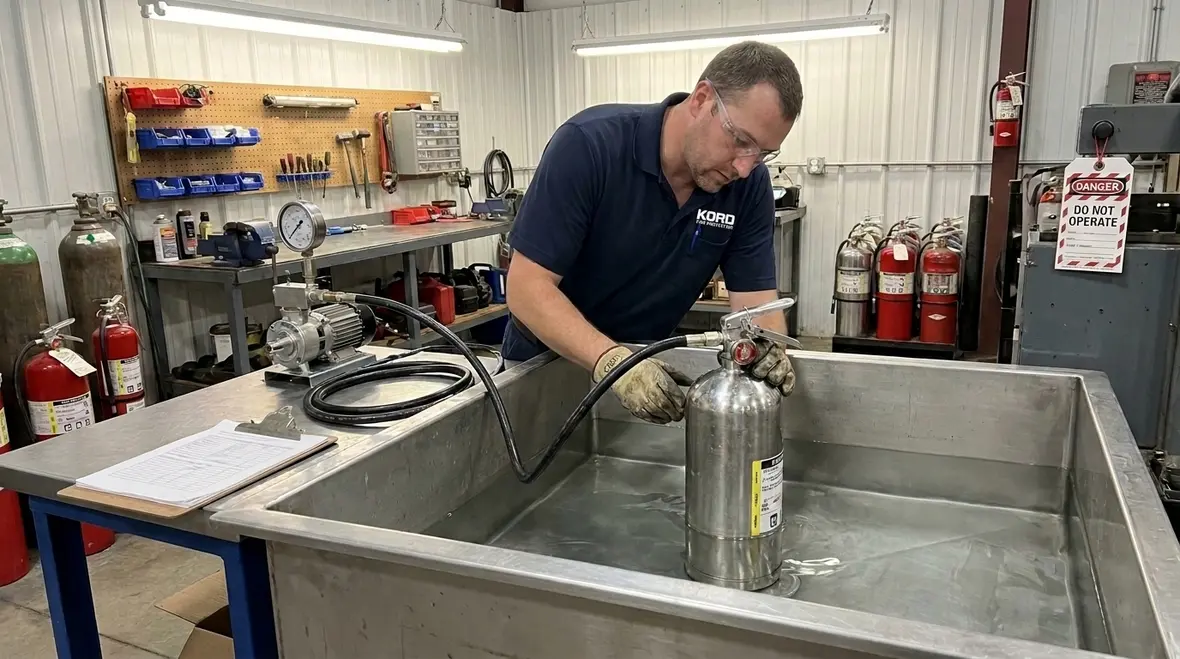
NFPA 10 Section 8.5: Hydrostatic Testing Procedures Step by Step
NFPA 10 Section 8.5 Hydrostatic Testing Procedures Step by Step
Quick Answer: NFPA 10 Section 8.5 defines the approved hydrostatic testing workflow for portable extinguishers. This NFPA 10 hydrostatic testing procedures guide emphasizes safe water filling, controlled pressurization, thorough leak detection, and rigorous documentation to maintain reliable performance and ongoing compliance for commercial, industrial, and retail facilities.
For businesses that need certified testing and documentation support, hydrostatic testing services fit naturally into a broader extinguisher compliance program.
Understanding the Scope of NFPA 10 Section 8.5
Section 8.5 outlines the authorized methods to conduct hydrostatic tests on extinguishers and the acceptance criteria. It guides technicians on test pressure selection, duration, leak evaluation, and where to apply test water. For commercial sites, this scope aligns with ongoing maintenance programs that minimize downtime and meet insurance requirements.
It also connects well with broader compliance resources like NFPA 10 portable fire extinguishers guidelines, especially when teams want the bigger picture instead of treating testing like a one-off paperwork ritual.
Step by Step Hydrostatic Testing Procedures
Field Workflow Overview
- Step 1: Identify cylinders that require hydrostatic testing, verify rating and service history, and confirm the extinguisher type.
- Step 2: Isolate the device from the system and depressurize safely, ensuring all residual pressure is released before handling.
- Step 3: Inspect the cylinder shell, valves, handles, and neck for corrosion, dents, or other damage that could compromise the test.
- Step 4: Prepare the test setup with clean water, calibrated equipment, and appropriate containment to prevent spills during the test.
- Step 5: Attach the hydrostatic testing apparatus and ensure all fasteners and connections are secure before applying pressure.
- Step 6: Apply the test pressure per the cylinder rating and manufacturer guidelines, using a calibrated gauge and controlled ramp rate.
- Step 7: Maintain the test pressure for the duration defined by NFPA 10 Section 8.5 and the cylinder specification, monitoring for deviations.
- Step 8: Inspect for leaks, bulges, or any structural changes during the hold period; document observations immediately.
- Step 9: Release pressure carefully, drain water, dry the cylinder, and reinstall or replace any damaged components as needed.
- Step 10: Refill with the appropriate extinguishing agent, recharge per manufacturer instructions, and apply the hydro test label with date and next due date.
Compliance, Documentation and Commercial Standards
In commercial facilities the test results feed into the facility maintenance plan and risk management program. Documentation includes cylinder serial numbers, test date, test pressure, results, and the next due date. Per the NFPA 10 hydrostatic testing procedures guide, accurate recordkeeping supports inspections by code officials and insurance providers and reduces liability for property owners. Kord Fire Protection emphasizes that precise documentation and traceable test records are essential for audits and ongoing coverage in multi site portfolios.
Equipment, Test Setup and Best Practices
What Helps the Test Go Smoothly
High quality equipment reduces variability and enhances safety during hydrostatic testing. Use a calibrated pump and gauge, compatible hoses, and a secure mounting frame. Use clean water and prevent contamination; maintain water quality as specified by the extinguisher manufacturer. Regularly inspect test equipment for wear and verify calibration in accordance with national standards. For commercial facilities, Kord Fire Protection recommends partnering with a qualified contractor to ensure consistent results and documentation.
Common Failure Points and Troubleshooting
- Valve seals or neck seals failing under pressure due to age or improper seating.
- Corrosion or pitting on the shell that undermines integrity during pressurization.
- Leak pathways at threads, gaskets, or connection points not detected during pre test checks.
- Air entrapment or poor purging leading to false readings or misinterpretation of results.
- Inadequate drainage or drying allowing corrosion to initiate post test.
Frequently Asked Questions
Conclusion and Partner Support
NFPA 10 Section 8.5 hydrostatic testing is essential for lasting extinguisher reliability in commercial facilities. Kord Fire Protection delivers qualified technicians, precise testing, and complete documentation to support ongoing compliance and readiness for audits. Partner with Kord for scheduling, field or shop tests, and a structured maintenance plan that minimizes downtime and protects your asset portfolio. Contact us today to start the process.

Join Our Newsletter!
Get the latest fire safety tips delivered straight to your inbox From our Newsletter.


