
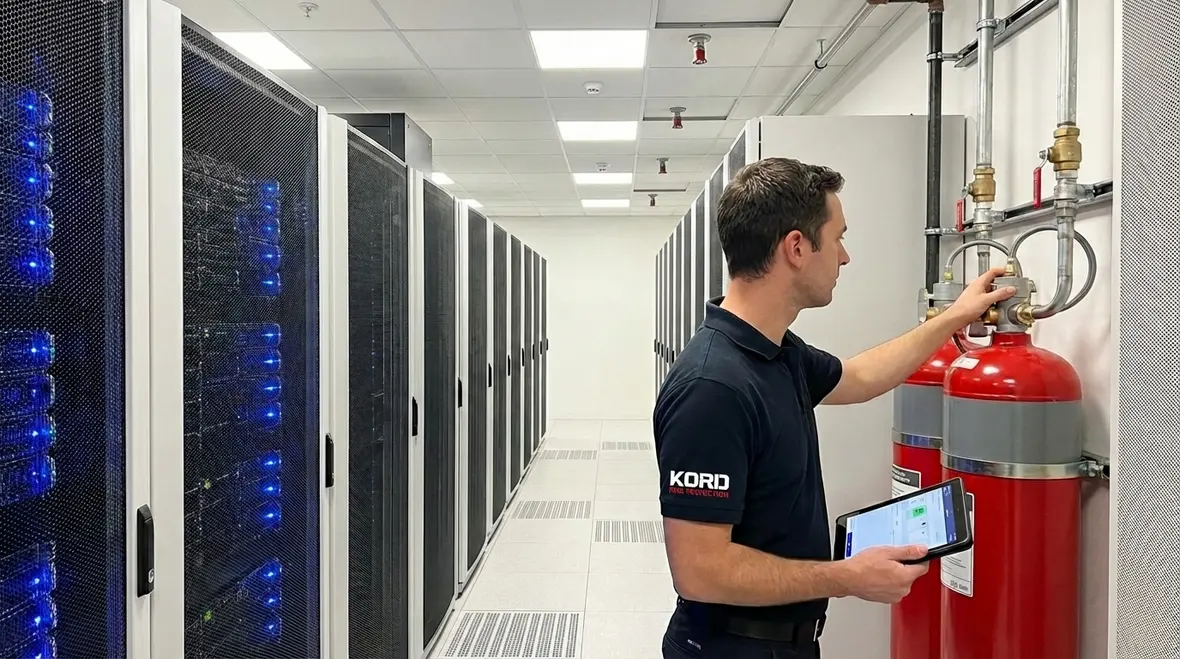
Clean Agent Systems for Data Center Fire Protection
Why Clean Agent Systems Are Critical for Data Center Fire Protection
In the world of blinking lights and humming servers, data center fire suppression is not a luxury. It is a necessity woven into every rack, cable tray, and cooling aisle. Within the first seconds of an electrical fault, the future of a company can hang in the balance. That is why modern facilities rely on clean agent systems as the backbone of their protection strategy. As Kord Fire Protection technicians often explain to clients, protecting digital assets requires more precision than simply spraying water and hoping for the best. Servers are not houseplants. They do not thrive under a sprinkler.
Today, businesses depend on continuous uptime. Therefore, fire protection in server rooms must move fast, act cleanly, and avoid causing more damage than the fire itself. Clean agent systems do exactly that. And while the topic might sound as thrilling as watching paint dry, the reality is far more dramatic. Think less office supply closet and more mission control at NASA.
The High Stakes Environment Inside a Data Center
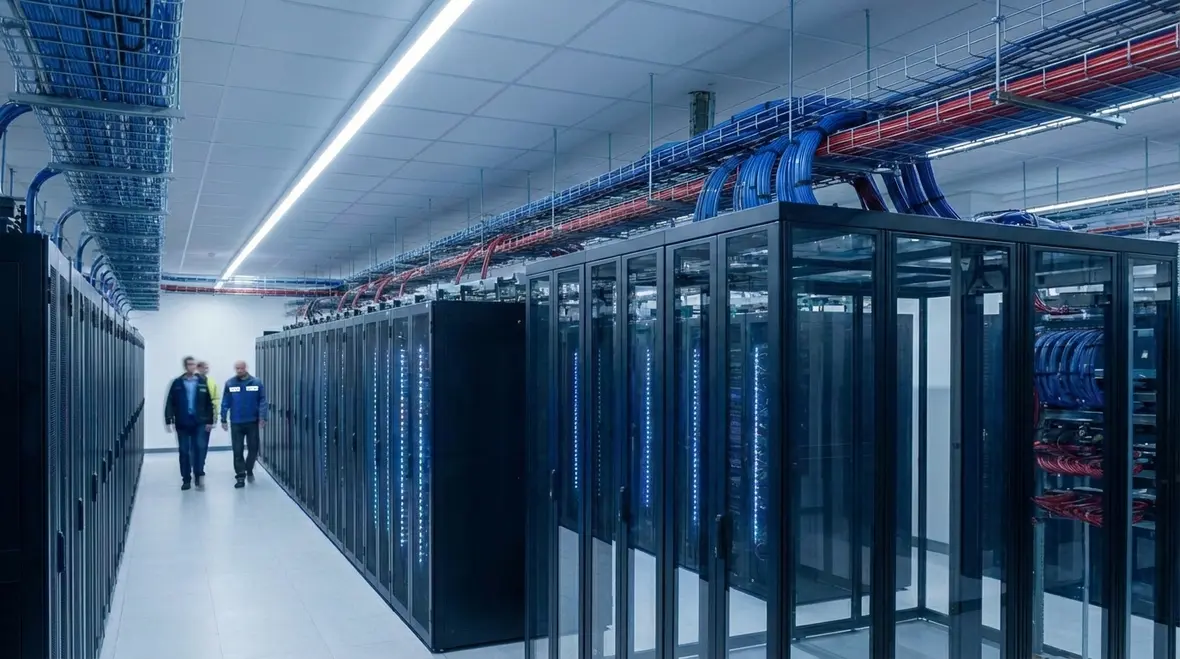
A data center is a concentrated hub of electrical power, airflow management, and sensitive electronics. Consequently, even a minor ignition source can escalate quickly. Power distribution units, lithium ion batteries, and overloaded circuits present real risks. Meanwhile, hot and cold aisle containment keeps air moving in specific patterns. When fire disrupts that airflow, heat builds fast.
Unlike traditional commercial buildings, these facilities cannot afford downtime. Financial institutions, healthcare providers, and cloud service companies rely on continuous access. Therefore, any fire event threatens not just equipment but operations, revenue, and reputation.
Kord Fire Protection technicians frequently describe this environment as controlled chaos. Everything operates at high capacity, yet every component depends on the next. Because of this tight interconnection, fire protection must be equally refined. Clean agent systems meet that demand by suppressing flames without collateral damage.
For a deeper dive into how these systems are engineered around real data hall conditions, many facility teams reference Kord Fire’s Data Center Clean Agent Fire Suppression Guide, which walks through design, testing, and maintenance specifically for server environments.
Why Water Based Systems Alone Fail
Water has long been the hero of fire fighting. However, in a data center, that hero can quickly become the villain. While sprinkler systems control many types of fires, they introduce significant risks when used as the sole method of data center fire suppression.
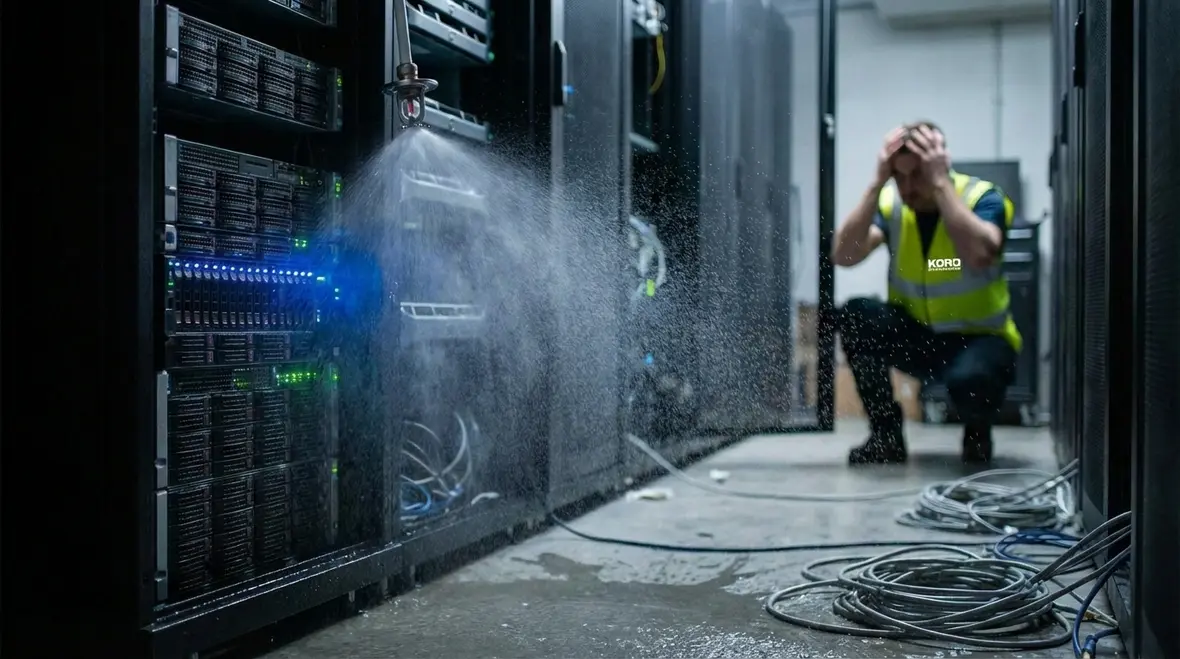
First, water conducts electricity. When it contacts live equipment, it can create short circuits and arc faults. As a result, a small electrical fire may turn into widespread equipment failure. Second, water spreads. It seeps into raised floors, cable bundles, and power supplies. Even after cleanup, corrosion can linger.
Kord Fire Protection technicians often explain that sprinklers operate on heat thresholds. By the time a sprinkler head activates, temperatures have already climbed significantly. Therefore, suppression may begin only after damage has started.
Water based systems still play a role in overall building protection. However, relying on them alone in mission critical environments leaves a gap. Clean agents fill that gap by acting faster and leaving no residue behind.
If you are weighing different suppression strategies, Kord Fire’s overview of Clean Agent Fire Suppression System Services is a practical companion piece to help compare clean agents alongside water based options in high value spaces.
Electronics Damage Risks in Server Rooms
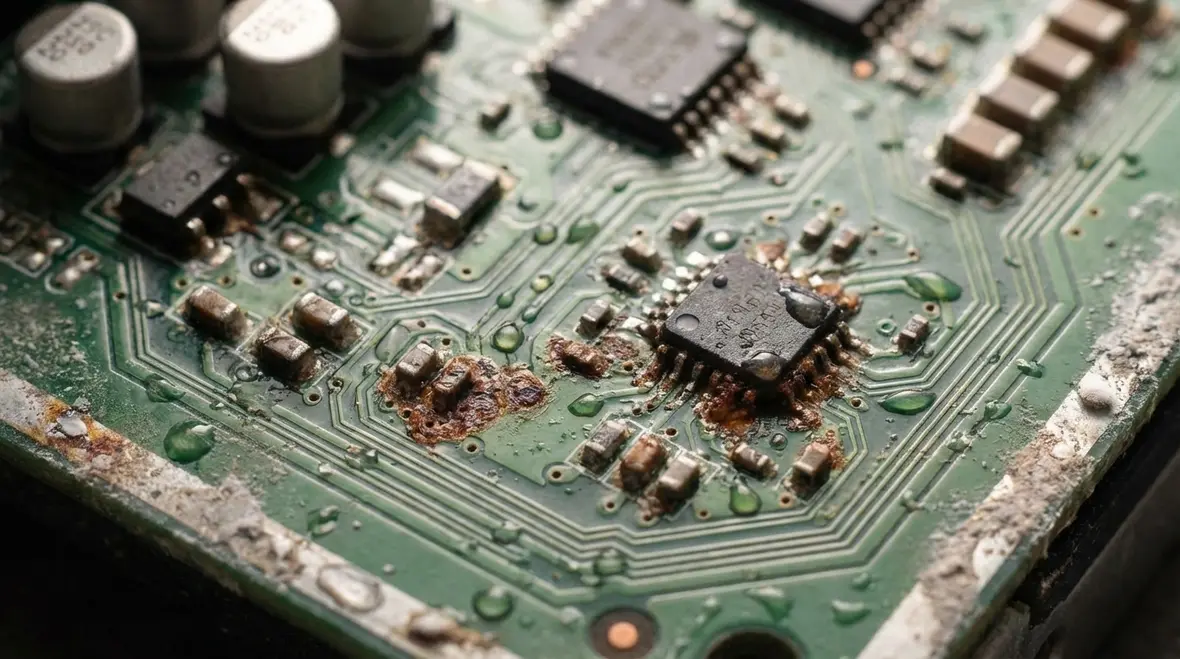
Electronics do not tolerate moisture, soot, or chemical residue. In fact, even microscopic particles can interfere with circuit boards. Consequently, traditional suppression methods that leave behind foam or powder can cause as much harm as the flames.
Consider the delicate architecture inside a server. Tiny pathways etched into silicon carry data at incredible speeds. Introduce moisture or corrosive residue, and those pathways fail. Moreover, cleanup becomes complex and expensive. Equipment often requires full replacement rather than repair.
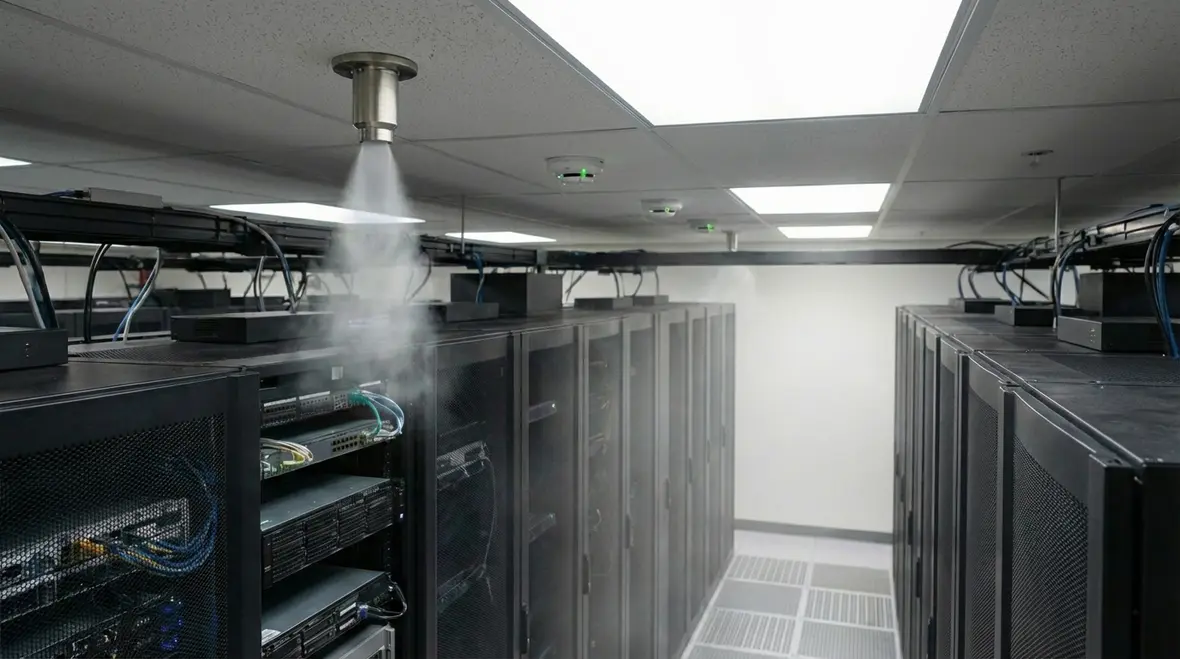
Clean agent systems discharge gas that absorbs heat or interrupts the chemical reaction of fire. Because the agent evaporates without residue, technicians can restore operations faster. That difference can mean hours of downtime instead of weeks.
Kord Fire Protection technicians emphasize this point during walkthroughs. They often say, with a knowing smile, that computers prefer dry humor. It is a lighthearted way of reinforcing a serious truth. Electronics and water simply do not mix.
Clean Agents and Industry Standards
Behind every clean agent system is a framework of standards that define what “safe for electronics” really means. Kord Fire’s article on NFPA 2001 guidelines for clean agent fire suppression systems explains how agents are classified as nonconductive, residue free, and appropriate for occupiable, technology rich spaces like data centers and control rooms.
Speed of Suppression vs Detection
In fire protection, seconds matter. However, detection and suppression are not the same. Early warning systems identify smoke particles at incipient stages. Yet detection alone does not extinguish flames.
Clean agent systems integrate with advanced detection technologies. Once sensors confirm a threat, the system releases agent rapidly and evenly throughout the protected space. As a result, flames are suppressed before they spread beyond the source.
Traditional sprinklers depend on heat to trigger activation. Therefore, suppression may lag behind detection. In contrast, clean agents respond to signals from smoke detection systems, not just rising temperature.
This coordinated response defines modern data center fire suppression. It pairs intelligence with speed. Kord Fire Protection technicians often compare it to a well rehearsed orchestra. Detection cues the system. The agent enters at precisely the right moment. And the fire, rather unceremoniously, exits the stage.
Real World Failure Scenarios
Fire protection strategies should never rely on theory alone. Real incidents reveal where systems succeed and where they fall short. Over the years, industry reports have documented cases where water discharge caused more downtime than the fire itself.
In some facilities, accidental sprinkler activation flooded server racks without an actual fire. Consequently, companies faced equipment replacement costs and extended outages. In other cases, delayed suppression allowed flames to spread within cable trays before water reached the seat of the fire.
By contrast, facilities equipped with clean agent systems often contained fires within a single cabinet. Because the agent dispersed quickly, damage remained localized. Operations resumed sooner, and data loss was minimal.
Kord Fire Protection technicians draw on these lessons during system design. They analyze airflow patterns, enclosure integrity, and equipment layout. Therefore, the system performs as intended under real conditions, not just on paper.
Room Integrity: The Hidden Variable
Clean agents only work if they stay in the room long enough to keep the fire out. That is why periodic enclosure testing matters. Kord Fire’s guide to Room Integrity Testing for Clean Agent Systems walks through how door fan tests verify that your data hall can actually hold agent at the required concentration instead of letting it leak away through forgotten penetrations.
Water Systems vs Clean Agents in Data Center Fire Suppression
Column One: Water Based Protection
• Activates primarily through heat
• Leaves moisture that can damage electronics
• May cause electrical short circuits
• Cleanup can require equipment replacement
• Suitable as building level backup protection
Column Two: Clean Agent Protection
• Activates through integrated smoke detection
• Leaves no residue after discharge
• Safe for sensitive electronics when properly designed
• Supports faster return to operation
• Designed specifically for mission critical spaces
This comparison highlights why many engineers specify layered protection. Water systems protect the structure. Clean agents protect the technology. Together, they create a comprehensive approach to data center fire suppression without sacrificing equipment integrity.
How Clean Agent Systems Support Business Continuity
Business continuity plans often focus on backups and redundancy. However, physical protection forms the foundation. After all, redundant servers do little good if both primary and backup sites suffer fire damage.
Clean agent systems help preserve infrastructure so digital recovery plans can function. Because suppression occurs quickly and cleanly, companies avoid prolonged shutdowns. Furthermore, insurance claims often resolve more smoothly when damage remains limited.
Kord Fire Protection technicians work closely with facility managers during commissioning. They verify enclosure tightness, confirm detection calibration, and conduct discharge testing when required. As a result, the system performs reliably when it matters most.
Although no one enjoys thinking about fire scenarios, preparation offers peace of mind. In a setting where uptime defines success, clean agent systems quietly stand guard. They may not wear capes, yet they consistently save the day.
What is the best fire protection method for a data center?
The most effective approach combines early detection with clean agent suppression, supported by building level sprinklers for structural safety.
FAQ
Conclusion: Protect What Powers Your Business
Every server rack holds more than hardware. It holds transactions, patient records, research, and trust. Therefore, choosing the right data center fire suppression strategy is not optional. Clean agent systems deliver speed, precision, and protection where it counts most. Kord Fire Protection technicians stand ready to design and maintain solutions that keep operations running. When uptime matters, act before smoke ever rises.
If your facility is evaluating options or planning an upgrade, explore Kord Fire’s dedicated page for Clean Agent Fire Suppression for Los Angeles Data Centers or connect directly through their Clean Agent Fire Suppression System Services. Reach out today and secure the future your data deserves with a protection strategy built specifically for mission critical environments.
Know Your Weapon Before You Fight the Flame
Kord Fire Protection is your go-to when it comes to all things fire protection. For over 20 years, we’ve been serving Southern California with the quality service and equipment to keep your home or business safe at all times. Our competitive prices reflect our unwavering commitment to protecting what matters most in the event of a fire emergency. Give us a call, send an email, or use that form!

Join Our Newsletter!
Get the latest fire safety tips delivered straight to your inbox From our Newsletter.


