
Claremont Egress Lighting Requirements Guide
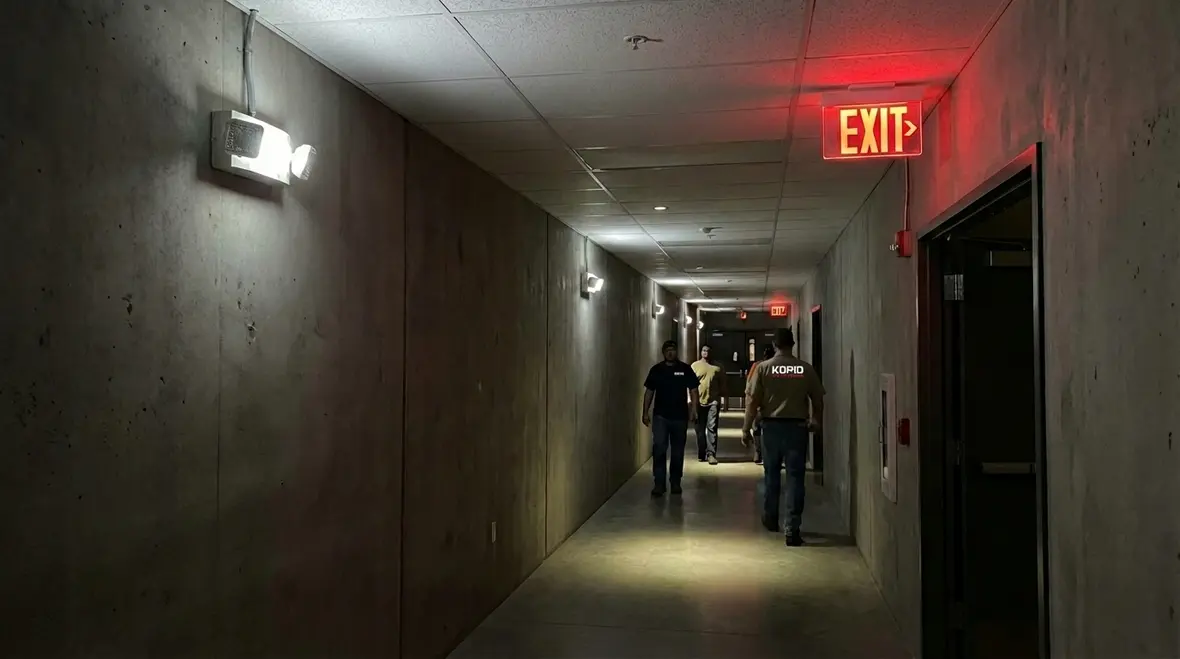
In every building, there is a quiet promise made to the people inside. If something goes wrong, there will be a clear way out. That promise depends heavily on Claremont egress lighting. Within the first few seconds of an emergency, lights that guide occupants to safety can mean the difference between calm order and total confusion. Property owners across the city rely on properly designed and maintained exit illumination systems to meet code and protect lives. As Kord Fire Protection technicians often explain, egress lighting is not just a checklist item. It is a life safety system that must perform flawlessly when the power fails and tension rises.
Therefore, understanding local requirements is not just wise. It is essential.
Understanding Egress Lighting Requirements in Claremont Buildings
Claremont follows California Building Code and Fire Code standards, which in turn reference national life safety guidelines. However, local enforcement and inspection practices add another layer of accountability. As a result, building owners must pay attention not only to installation but also to testing and documentation.
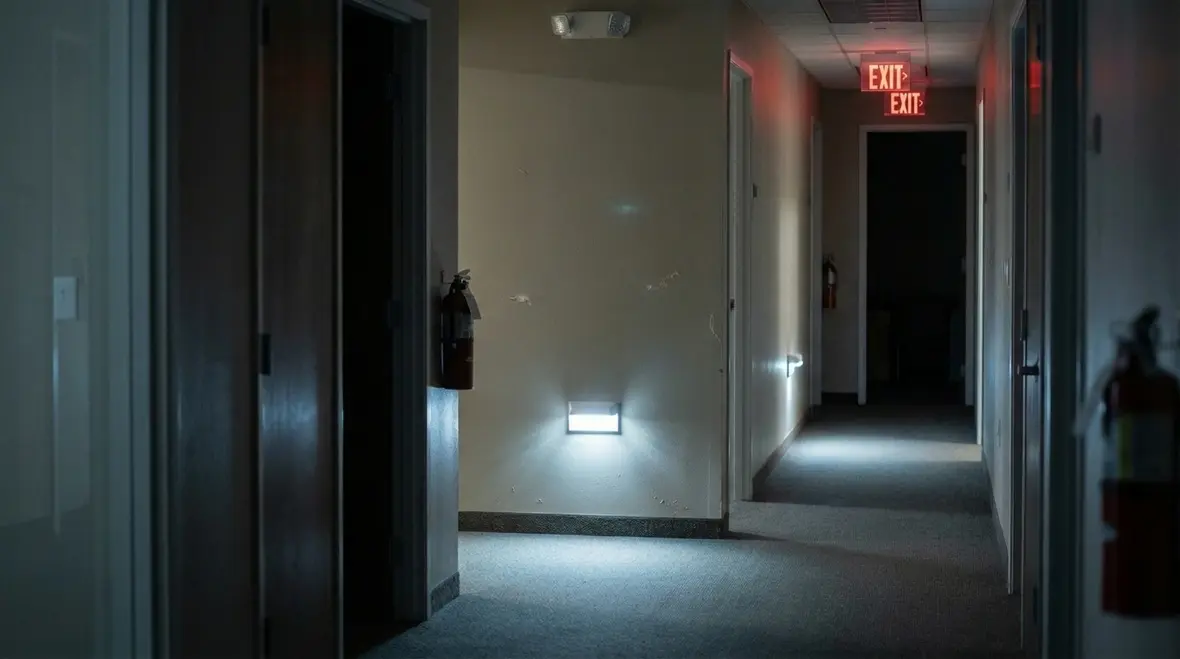
Egress lighting must illuminate exit paths, stairwells, corridors, ramps, and exit discharge areas. In simple terms, if people need to walk there to get out, it needs light. Moreover, the system must activate automatically when normal power fails.
According to code, illumination levels along the means of egress should average at least one foot candle at floor level. Although that number may sound technical, Kord Fire Protection technicians like to simplify it. They often tell clients, “If you cannot clearly see where you are placing your next step, it is not enough light.” It is not poetic, but it is accurate.
Additionally, emergency lighting must remain operational for a minimum of ninety minutes during a power outage. That duration ensures that even during extended evacuations, occupants are not left navigating in darkness.
For owners who want to see how these concepts play out across broader exit illumination and signage, Kord Fire’s overview of emergency exit requirements in California vs NFPA connects means of egress, signage, and lighting into one clear picture of compliance.
What Areas Must Be Covered by Claremont Egress Lighting?
Property managers often ask where exactly emergency illumination is required. The short answer is this: more places than most people expect.
Specifically, the following areas require compliant exit pathway lighting:
• Exit access corridors
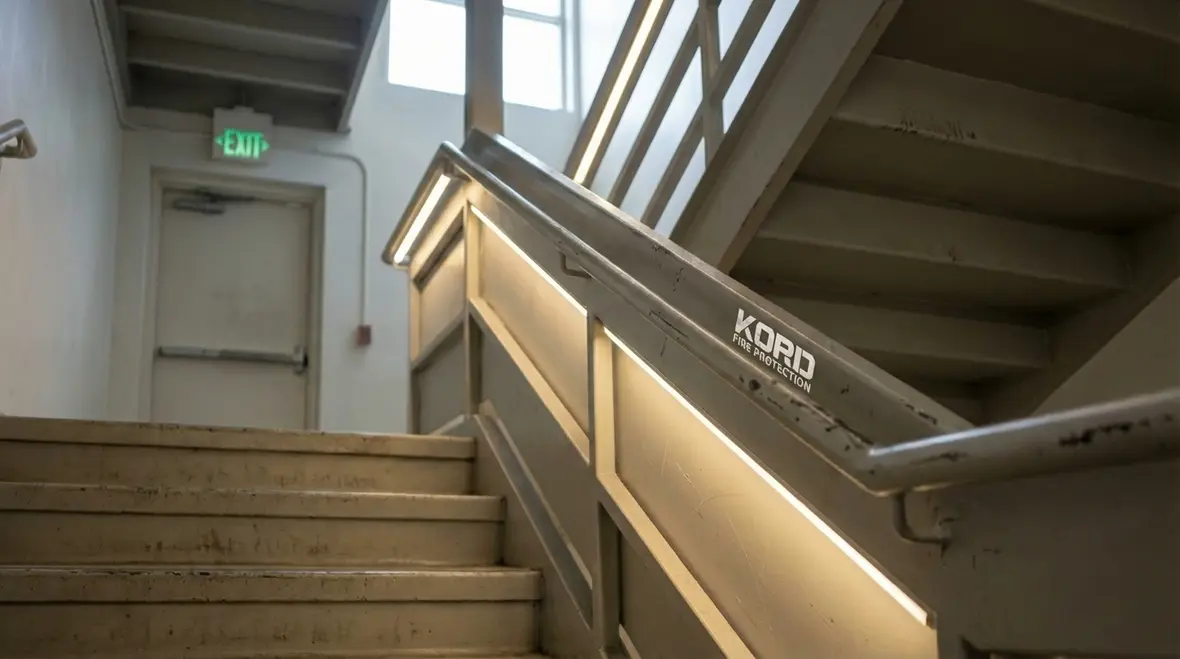
• Interior and exterior stairways
• Exit doors and exit signs
• Ramps and escalators used for egress
• Public restrooms in assembly occupancies
• Electrical and mechanical rooms that require routine maintenance
Furthermore, high occupancy buildings such as schools, medical facilities, and event venues may have additional requirements. Because Claremont includes a mix of historic buildings and modern developments, retrofitting older properties can present unique challenges. However, compliance is not optional simply because a building has character. Even charming brick walls must follow the rules.
Kord Fire Protection technicians routinely evaluate older structures and design solutions that respect architecture while still meeting safety standards. They often remind owners that safety upgrades can blend in quietly. The goal is protection, not spotlight stealing.
How Bright Should Emergency Exit Lighting Be?
This is the question many owners type into search engines late at night. The answer is clear, and fortunately, not overly complicated.
Emergency illumination must provide an average of one foot candle along the egress path, with no point less than 0.1 foot candle. Additionally, the maximum to minimum illumination ratio should not exceed 40 to 1. In plain language, the lighting should be even. No dramatic spotlight effects. This is safety, not a Broadway audition.
Moreover, exit signs must remain clearly visible and internally or externally illuminated. They must also connect to backup power. When normal electricity fails, these signs must glow with unwavering confidence.
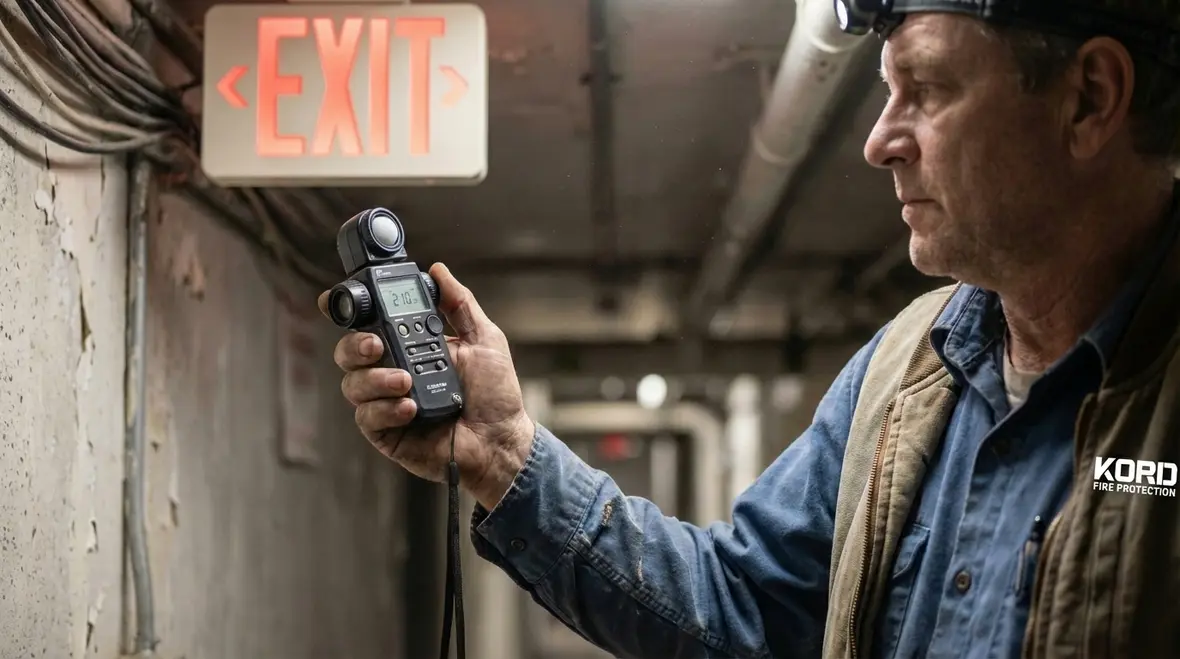
Kord Fire Protection technicians emphasize regular testing to ensure brightness levels remain compliant. Batteries degrade over time. Bulbs dim. Dust collects. Therefore, routine inspection prevents unpleasant surprises during fire marshal visits.
Power Sources and Backup Systems That Keep Buildings Safe
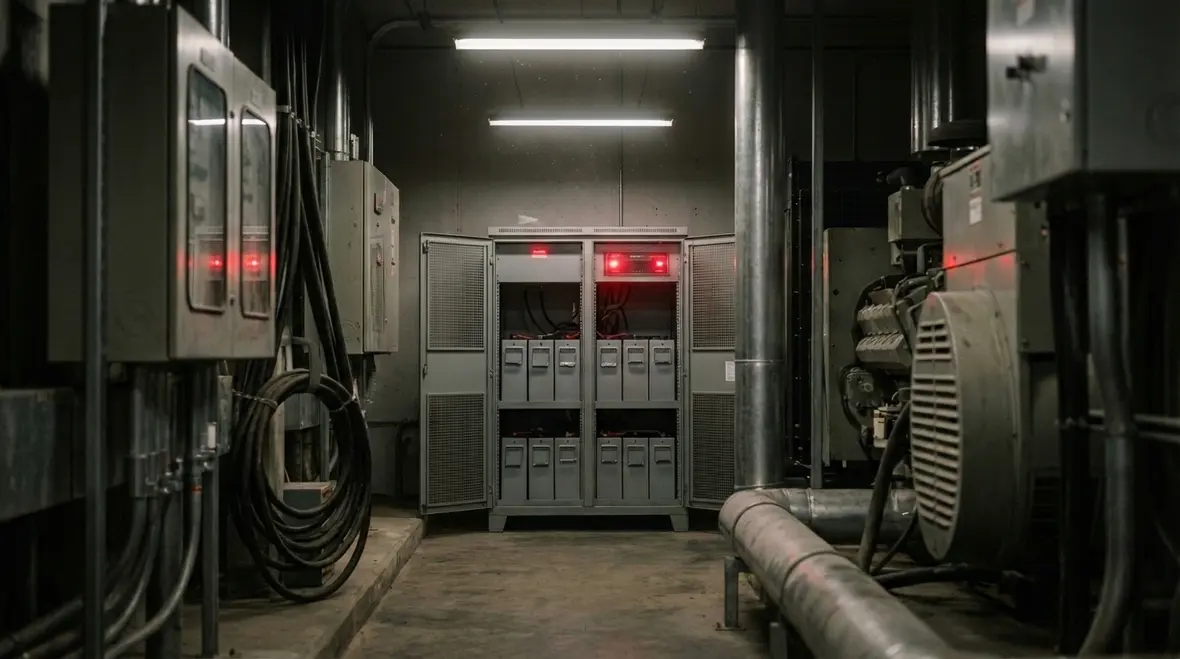
Behind every reliable emergency lighting system stands a dependable backup power source. In Claremont buildings, this typically means battery backed fixtures, central battery systems, or generators.
Battery backed units are common in smaller properties. They contain internal batteries that charge during normal operation and activate during outages. On the other hand, larger commercial buildings often use central inverter or generator systems. These systems support multiple fixtures at once and may also power fire alarms and communication systems.
Importantly, backup systems must activate within ten seconds of power loss. That short window ensures occupants are not left standing in darkness wondering if they should hum a theme from a suspense movie.
Kord Fire Protection technicians inspect transfer times, battery capacity, wiring integrity, and fixture placement. Because every component must work together, a single weak link can compromise the system. Therefore, professional maintenance is not just recommended. It is critical.
Inspection, Testing, and Documentation Responsibilities
Compliance does not end after installation. In fact, that is when the real work begins.
Claremont building owners must conduct:
• Monthly functional tests of at least 30 seconds
• Annual tests lasting a full 90 minutes
• Written documentation of all testing activities
During monthly checks, staff verify that fixtures illuminate when normal power is interrupted. During annual tests, systems must operate for the full required duration. If a unit fails at minute 72, it fails. Close does not count in life safety.
Furthermore, records must remain accessible for fire authority review. Organized documentation demonstrates diligence and can prevent costly fines.
Kord Fire Protection technicians often assist property managers by conducting formal inspections and maintaining detailed logs. As they explain, documentation is the quiet hero of compliance. It may not glow like an exit sign, but it protects businesses just the same.
Common Compliance Gaps in Local Properties
Even well managed buildings can fall short in subtle ways. Over time, renovations change floor layouts. Walls move. Doors shift. However, lighting placement does not always adapt.
One frequent issue involves blocked or obstructed fixtures. Decorative elements, storage items, or new partitions may reduce light coverage along exit paths. Additionally, aging batteries often go unnoticed until inspection day.
Another concern involves mismatched color temperatures that create uneven illumination. While this may seem cosmetic, it can impact visibility in smoke filled conditions. Therefore, consistency matters more than style.
Kord Fire Protection technicians conduct thorough site evaluations to identify these hidden gaps. They approach each building with fresh eyes, understanding that assumptions can be dangerous. After all, an exit route only works if people can clearly see it.
Design Considerations for New Construction and Renovations
When developers plan new projects, integrating compliant egress illumination from the start simplifies everything. Early coordination between architects, electrical engineers, and fire protection professionals ensures proper fixture spacing and power supply design.
Moreover, energy efficient LED fixtures now dominate the market. They offer longer lifespans, lower maintenance, and consistent brightness. As a result, they reduce long term operating costs while improving reliability.
For renovations, careful photometric analysis helps determine whether existing fixtures still meet required light levels. Simply adding a new wall without adjusting lighting can create shadowed areas. Therefore, each change in layout should trigger a review of the exit pathway lighting plan.
Kord Fire Protection technicians frequently collaborate during remodels, ensuring that safety evolves alongside design. Because trends come and go, but code compliance remains steady, their guidance keeps projects aligned with both style and regulation.
At a Glance Requirements and Best Practices
Code Requirements
• Minimum one foot candle average illumination
• Ninety minute emergency duration
• Activation within ten seconds
• Monthly and annual testing
• Illuminated and powered exit signs
Best Practices
• Use LED emergency fixtures
• Maintain clear, unobstructed paths
• Keep detailed maintenance logs
• Schedule professional inspections
• Review lighting after renovations
Together, these standards and practices create a dependable safety net for occupants throughout Claremont.
Frequently Asked Questions
Lighting the Path Forward
Safety rarely announces itself with fanfare. Instead, it waits quietly in ceiling fixtures and glowing exit signs, ready to guide people when they need it most. Properly installed and maintained systems protect businesses, employees, and visitors alike. Kord Fire Protection technicians stand ready to evaluate, upgrade, and maintain every component with precision and care. Schedule a professional assessment today and ensure every path to safety in your building shines bright when it matters most.
If your property is in the area, explore dedicated Claremont fire protection services for integrated support that pairs egress lighting, fire sprinklers, alarms, and extinguishers under one coordinated program.
For multi-site portfolios or facilities beyond Claremont, Kord Fire’s full fire protection services deliver a single, reliable partner for inspection, testing, repairs, and new installations. From emergency exit lighting to complex suppression and alarm systems, their team keeps your buildings compliant, documented, and ready for the next inspection – and the next emergency.
Know Your Weapon Before You Fight the Flame
Kord Fire Protection is your go-to when it comes to all things fire protection. For over 20 years, we’ve been serving Southern California with the quality service and equipment to keep your home or business safe at all times. Our competitive prices reflect our unwavering commitment to protecting what matters most in the event of a fire emergency. Give us a call, send an email, or use that form!

Join Our Newsletter!
Get the latest fire safety tips delivered straight to your inbox From our Newsletter.


