
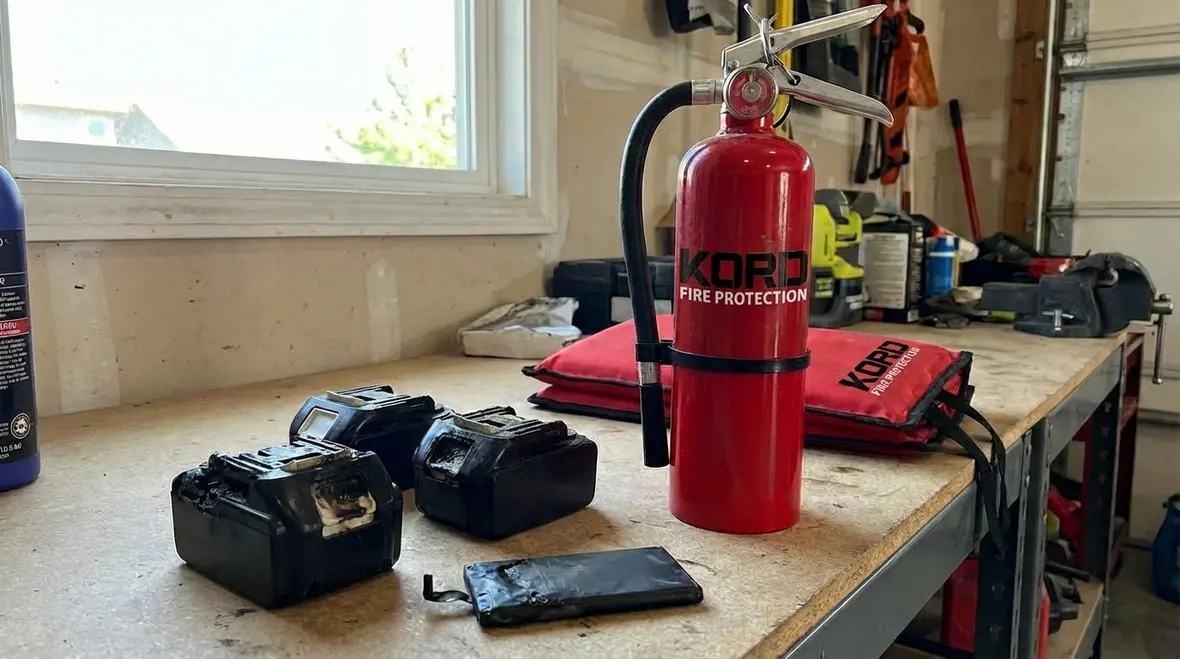
Best Fire Extinguisher for Lithium Ion Battery Fires
There is a quiet hum in modern life. It comes from phones on nightstands, laptops on desks, e bikes in garages, and power tools waiting patiently for the next project. Inside each of them sits a lithium ion battery. And while these batteries power the world with remarkable efficiency, they can also pose a serious fire risk when damaged or improperly charged. That is where a fire extinguisher for lithium ion battery fires enters the conversation. Not all extinguishers are created equal, and choosing the wrong one can turn a small incident into a five alarm headline. Kord Fire Protection technicians often explain that understanding what works, what does not, and why, makes all the difference between control and chaos.

The Growing Risk Behind Everyday Devices
Lithium ion batteries have become the backbone of modern convenience. However, with convenience comes responsibility. When these batteries fail, they do not simply burn. Instead, they can enter a state known as thermal runaway. In simple terms, that means the battery heats up, releases flammable gases, and feeds its own fire.
Because of this chain reaction, lithium battery fires behave differently than traditional Class A or Class B fires. For example, a couch fire might be suppressed by cooling and smothering. A lithium battery, on the other hand, may reignite even after it appears to be out. As Kord Fire Protection technicians often explain to facility managers and homeowners alike, the chemistry inside the battery continues to react even after flames disappear.
Moreover, these fires burn hotter and faster than many people expect. That sleek electric scooter in the garage can reach temperatures above 1,000 degrees Fahrenheit if the battery fails. Consequently, standard fire response plans need an upgrade.
For building owners beginning to think beyond just one extinguisher on the wall, resources like Kord Fire’s fire extinguisher mounting height guide and their fire extinguisher requirements for Los Angeles businesses show how placement, type, and code compliance all work together to support lithium ion battery safety across a property.
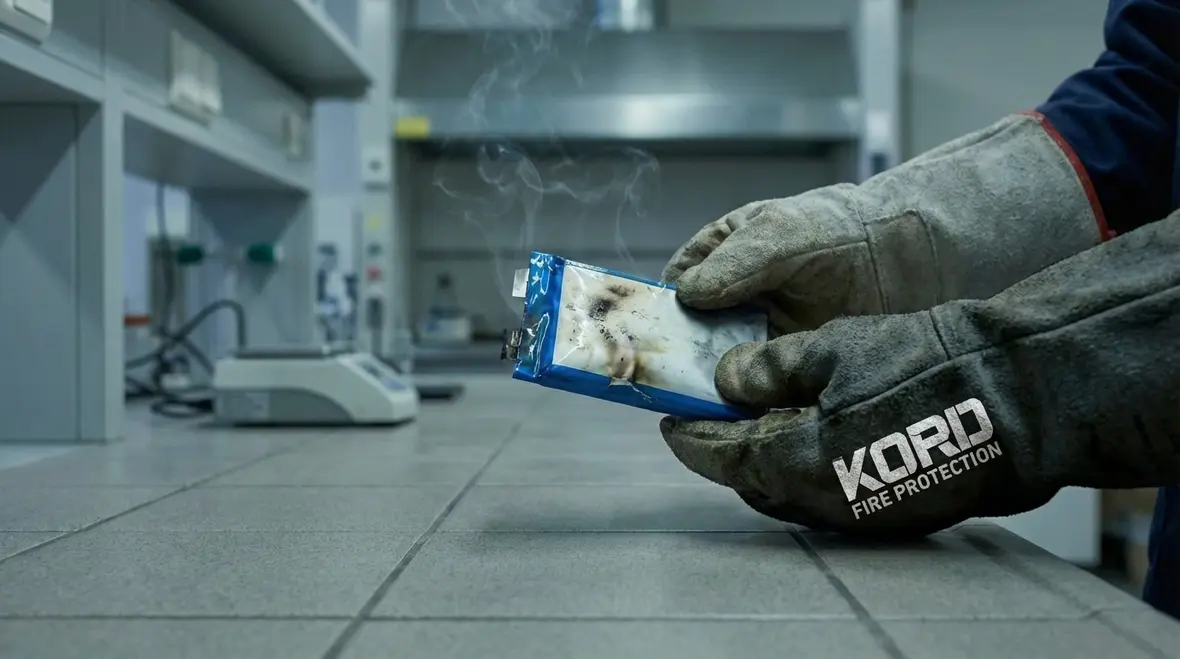
What Actually Happens During a Lithium Ion Battery Fire
To choose the right suppression method, it helps to understand the science. When a lithium ion battery becomes damaged, overcharged, or exposed to high heat, the internal cells break down. As a result, they release oxygen and flammable gases. This internal oxygen supply means the fire does not rely entirely on the air around it.
Therefore, simply starving the fire of outside oxygen may not stop it. Additionally, the heat generated can cause neighboring cells to ignite in a domino effect. Think of it as a line of matchsticks. Once one catches, the others often follow.
Kord Fire Protection technicians frequently describe this as a self sustaining reaction. Because of that, extinguishing lithium battery fires requires both cooling and controlling the chemical reaction. In other words, it is not just about putting out flames. It is about stopping the chain reaction beneath the surface.
Why traditional fire strategies are not enough
Traditional fire strategies often focus on removing one side of the fire triangle: heat, fuel, or oxygen. Lithium ion battery fires complicate that picture because the “fuel” and “oxygen” both live inside the battery structure itself. So, even when flames disappear, the internal reaction may be quietly preparing a sequel.
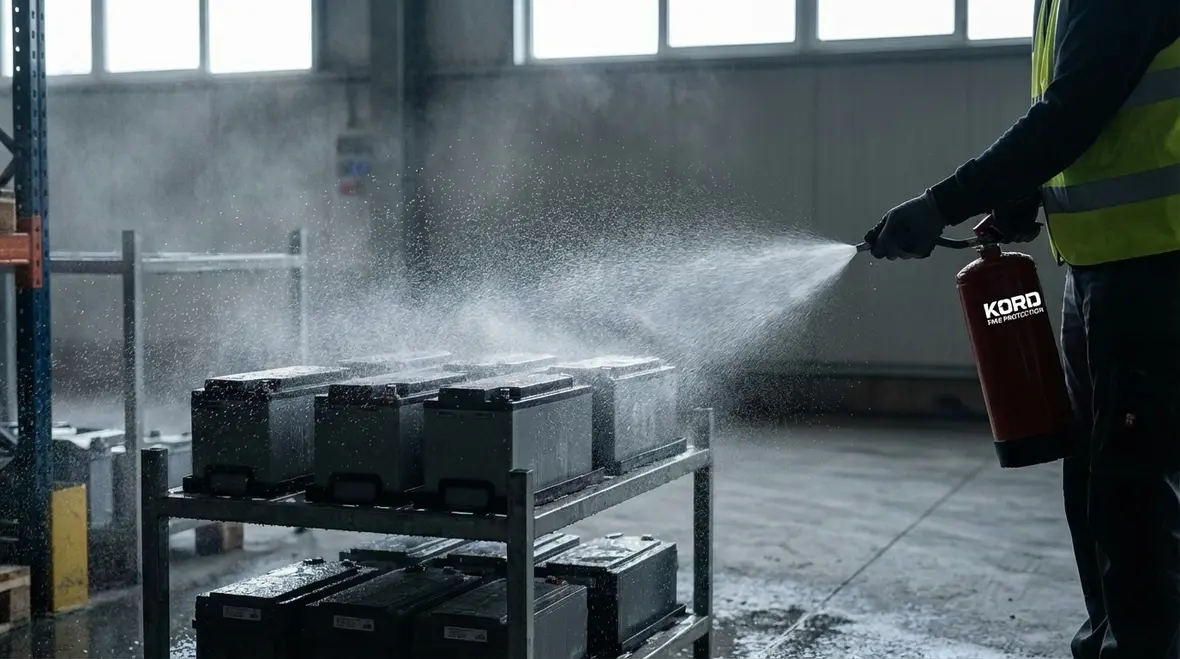
Fire Extinguisher for Lithium Ion Batteries: What Works
When clients ask what type of extinguisher handles lithium battery incidents, the answer depends on the size and setting of the fire. There is no one size fits all solution, despite what a flashy online ad might suggest.
Water Based Suppression
Surprisingly to some, water can be highly effective for lithium ion battery fires. Water cools the cells and helps stop thermal runaway. In larger settings, such as warehouses or manufacturing facilities, sprinkler systems play a crucial role in temperature control.
However, it is important to note that this applies to lithium ion batteries, not loose lithium metal. The distinction matters. Kord Fire Protection technicians emphasize this point often because confusion between lithium ion and lithium metal leads to poor extinguisher choices.
ABC Dry Chemical Extinguishers
For small lithium battery fires, an ABC extinguisher can knock down visible flames. It works by interrupting the chemical reaction and smothering the fire. Yet, while it may suppress the fire initially, it might not fully cool the battery cells. Consequently, reignition remains a risk.
This is why professionals recommend monitoring the battery after extinguishment. As any seasoned technician will say, walking away too soon is like leaving a campfire smoldering in dry woods.
Class D Extinguishers
Class D extinguishers are designed for combustible metals. They are effective for lithium metal fires. However, for lithium ion batteries, they are not always the primary solution. Since lithium ion batteries contain only small amounts of lithium in compound form, the fire behavior differs from pure metal fires.
In industrial environments where both battery types may be present, fire risk assessments become essential. Kord Fire Protection technicians conduct these evaluations to match the extinguisher type with the actual hazard.
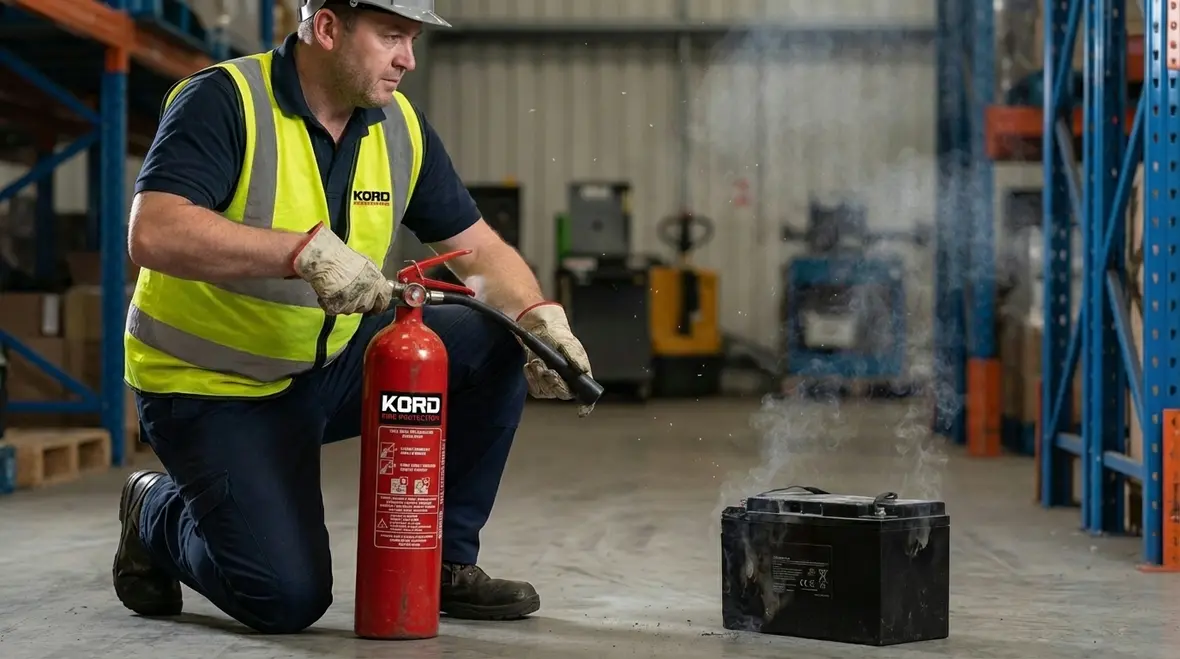
What Does Not Work and Why It Can Make Things Worse
Now comes the part that saves property and possibly lives. Some suppression attempts can worsen the situation.
Using the Wrong Extinguisher Type
Although grabbing any extinguisher feels proactive, using one that does not address the battery chemistry may only provide temporary relief. For example, a CO2 extinguisher can displace oxygen. However, since lithium ion batteries release their own oxygen, CO2 may not fully suppress the reaction. Furthermore, it does little to cool the cells.
Covering and Ignoring the Problem
Throwing a blanket or non rated cover over a burning battery might reduce visible flames. Still, it will not stop thermal runaway inside the cells. As a result, the battery can reignite once oxygen reenters the area.
Using Water on Lithium Metal
While water works for lithium ion batteries, it reacts dangerously with lithium metal. This is where clear labeling and training matter. Kord Fire Protection technicians stress the importance of knowing exactly what type of battery is present before choosing a response method.
Side by Side Comparison of Extinguisher Options
Below is a simple comparison often shared during training sessions.
| Extinguisher Type | Best Use Scenario |
|---|---|
| Water Based Systems | Cooling and controlling thermal runaway in lithium ion battery packs |
| ABC Dry Chemical | Small, contained lithium ion battery fires with close monitoring |
| Class D | Lithium metal fires in industrial settings |
| CO2 | Limited effectiveness on lithium ion batteries, mainly for surface flames |
Although this chart simplifies the topic, it reinforces a key point. Matching the extinguisher to the hazard is not optional. It is essential.
How to Choose the Right Fire Extinguisher for Lithium Ion Battery Fires
When business owners search for a fire extinguisher for lithium ion battery fires, they often ask for a clear recommendation. The real answer begins with a risk assessment.
First, identify the battery types on site. Are they small consumer electronics, large battery storage systems, or industrial equipment packs. Next, evaluate storage conditions. Are batteries stacked, charging, or stored individually.
Then, consider the environment. For example, a data center requires a different approach than a home garage. Additionally, local codes and insurance requirements may influence the choice.
Kord Fire Protection technicians typically perform site visits to evaluate these factors. They review layout, ventilation, and existing suppression systems. Afterward, they recommend extinguishers and, when needed, specialized suppression systems designed for battery storage areas.
Training also plays a role. Even the best equipment fails if no one knows how to use it. Therefore, many facilities pair extinguisher upgrades with staff training sessions. Because in an emergency, clarity beats guesswork every time.
Prompt Style Questions People Ask About Lithium Battery Fire Safety
What is the best way to put out a lithium ion battery fire?
The best approach involves cooling the battery and controlling thermal runaway. Water based systems are highly effective for lithium ion batteries, while ABC extinguishers can manage small fires with close monitoring.
Can a regular fire extinguisher handle a lithium battery fire?
Sometimes. An ABC extinguisher can suppress small lithium ion battery fires. However, it may not prevent reignition. Therefore, monitoring and follow up are critical.
Why do lithium battery fires reignite?
They reignite because internal cells continue to generate heat and release flammable gases. Unless the cells are fully cooled, the reaction can restart.
Are lithium ion and lithium metal fires the same?
No. Lithium ion batteries contain lithium compounds, while lithium metal batteries contain free lithium metal. Each requires a different suppression approach.
Prevention Is Still the Strongest Defense
Of course, the best fire is the one that never starts. Proper charging practices reduce risk significantly. Using manufacturer approved chargers, avoiding physical damage, and storing batteries away from heat sources all help.
Additionally, facilities that handle large battery volumes often install detection systems that identify heat buildup early. Early detection allows intervention before flames appear.
Kord Fire Protection technicians often remind clients that prevention costs less than recovery. It is a simple truth. Replacing a charger is cheaper than rebuilding a warehouse.
Conclusion: Take Control Before the Spark
Lithium ion batteries power modern life, yet they demand informed protection. Choosing the right extinguisher, understanding battery chemistry, and training staff create a layered defense against serious loss. Kord Fire Protection technicians stand ready to assess risks and recommend practical solutions tailored to each environment.
Do not wait for smoke to raise questions. Contact Kord Fire Protection today and make sure your safety plan matches the technology that powers your world. For buildings that rely on extinguishers across multiple occupancies, exploring Kord Fire’s fire extinguisher requirements for Los Angeles businesses and broader full-service fire protection solutions is a smart next move.
FAQ
Know Your Weapon Before You Fight the Flame
Kord Fire Protection is your go-to when it comes to all things fire protection. For over 20 years, we’ve been serving Southern California with the quality service and equipment to keep your home or business safe at all times. Our competitive prices reflect our unwavering commitment to protecting what matters most in the event of a fire emergency. Give us a call, send an email, or use that form!

Join Our Newsletter!
Get the latest fire safety tips delivered straight to your inbox From our Newsletter.


