Avalon Fire Safety Guidelines for Coastal Properties
Fire Safety Guidelines for Coastal Properties in Avalon
In Avalon, the ocean breeze is both a gift and a quiet accomplice to risk. Salt air corrodes. Winds shift quickly. Dry brush waits patiently. That is why Avalon fire safety guidelines are not just suggestions pinned to a corkboard. They are a living framework designed to protect coastal homes, rental properties, and commercial spaces from preventable disaster. Within the first steps of planning, property owners are urged to consider defensible space, corrosion resistant systems, and professional inspections. As Kord Fire Protection technicians often explain, coastal fire protection is not about fear. It is about preparation with precision.
And yes, while the sunset over the Pacific may look like a scene from a blockbuster film, nobody wants the sequel to involve sirens and smoke.
Understanding the Unique Fire Risks of Coastal Living
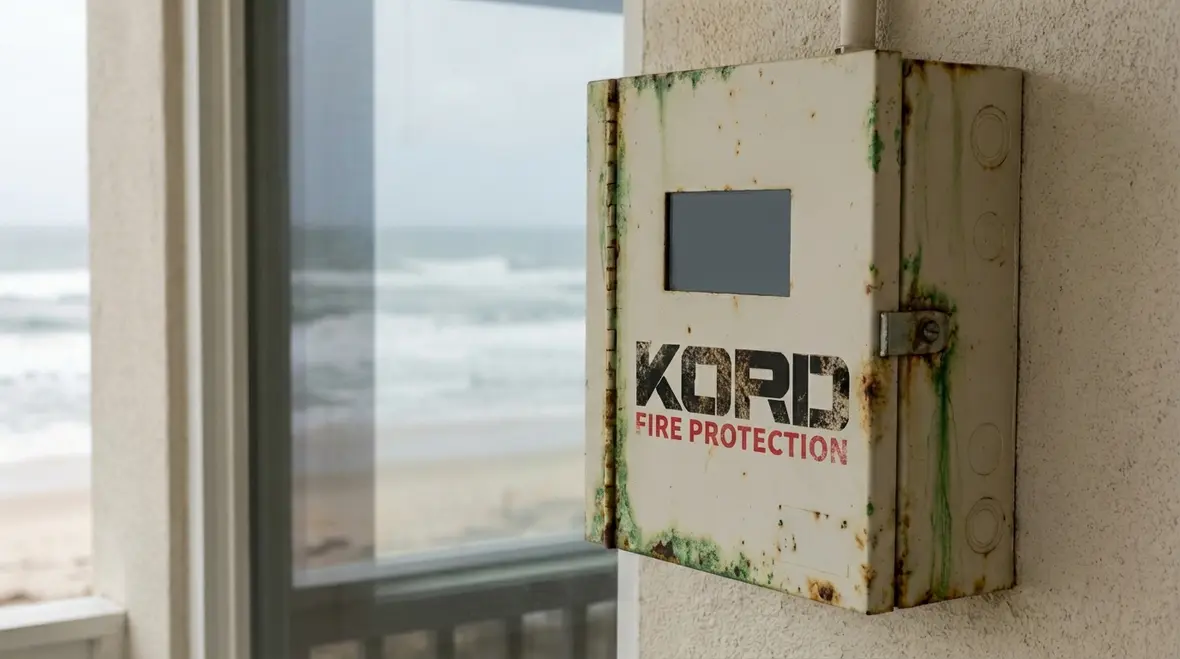
Coastal properties in Avalon face a different fire profile than inland homes. First, salt laden air accelerates corrosion in alarm systems, sprinkler heads, and electrical panels. Over time, this corrosion weakens the very systems designed to protect the building. Consequently, equipment that appears functional may fail during an emergency.
Additionally, strong seasonal winds can carry embers from nearby brush fires directly toward structures. Even a small ignition source can travel faster than expected. Therefore, Avalon fire safety guidelines emphasize routine system checks and exterior risk management.
Kord Fire Protection technicians often describe it in simple terms. The ocean is beautiful, but it never sleeps. It leaves a thin layer of salt on metal surfaces every single day. Without maintenance, that layer slowly wins. And fire, much like a villain in a comic book, only needs one weak spot.
If you manage multiple buildings or mixed–use properties, pairing this awareness with a comprehensive service partner like Kord Fire’s full fire protection services helps ensure that corrosion control, alarm testing, and sprinkler inspections all move together on a predictable schedule.
Coastal conditions that quietly undermine safety
- Persistent humidity and salt attack exposed metal components 24/7.
- Wind driven debris can clog roof drains and gutters, creating hidden fuel beds.
- Tourist traffic and short term rentals mean unfamiliar occupants during emergencies.
- Evacuation routes may be limited by narrow roads and steep slopes.
How to Fireproof a Coastal Home in Avalon
Many property owners search for a clear plan. They ask what steps truly matter. The answer begins with structure hardening.
1. Choose corrosion resistant fire sprinkler and alarm components
First, install corrosion resistant sprinkler systems specifically rated for marine environments. Stainless steel components last longer and maintain pressure integrity. Likewise, marine grade alarm panels, weatherproof enclosures, and coated conduit give you better performance in salty air.
2. Block embers before they enter your home
Seal all vents with ember resistant mesh. This simple barrier prevents wind driven embers from entering attic spaces. It is one of the least glamorous upgrades and one of the most effective. Pair this with screening under decks and around raised foundations so sparks can’t build hidden nests in structural cavities.
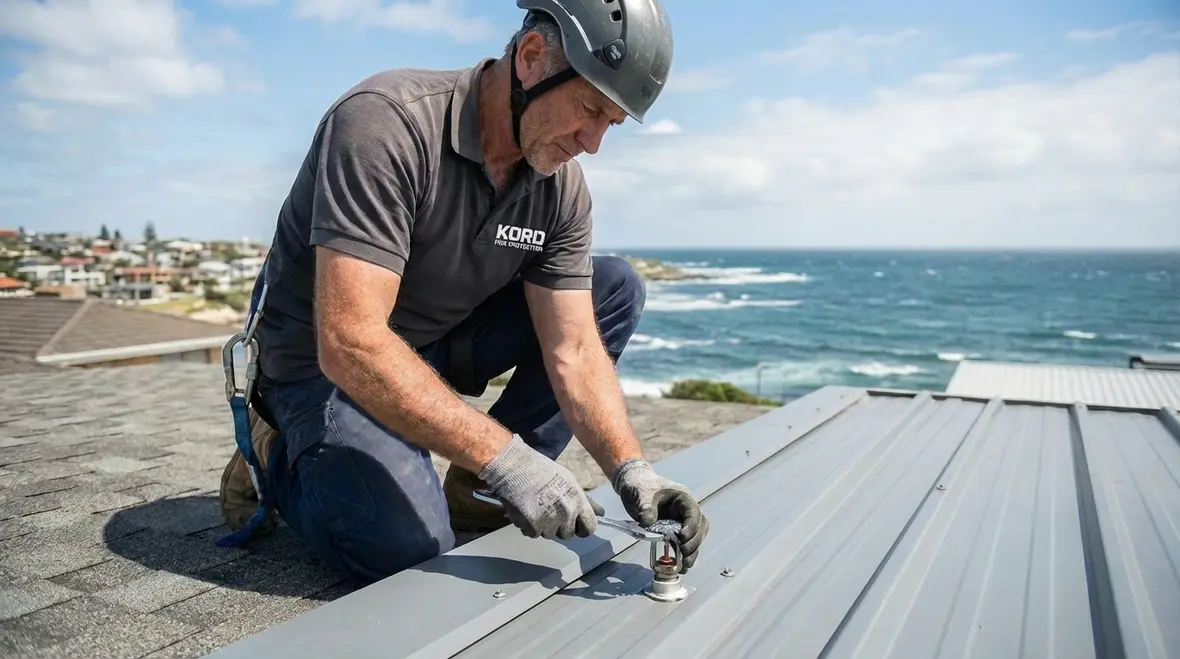
3. Upgrade to Class A roofing and noncombustible exterior finishes
Roofing materials should carry a Class A fire rating. Tile, metal, and certain treated shingles provide superior resistance. Wooden shake roofs may look charming, but charm fades quickly when sparks land. When possible, pair your roof upgrade with noncombustible siding and ignition resistant trim for a truly hardened exterior.
4. Elevate electrical systems above flood and splash zones
Kord Fire Protection technicians also recommend elevating electrical systems above potential flood zones. While water and fire seem like opposites, flood damaged wiring often becomes a future ignition hazard. Therefore, integrating electrical safety with fire planning creates a stronger defense.
In short, protecting a coastal home is less about dramatic upgrades and more about smart, layered improvements tailored to your specific site and structure.
Defensible Space Planning Under Avalon Fire Safety Guidelines
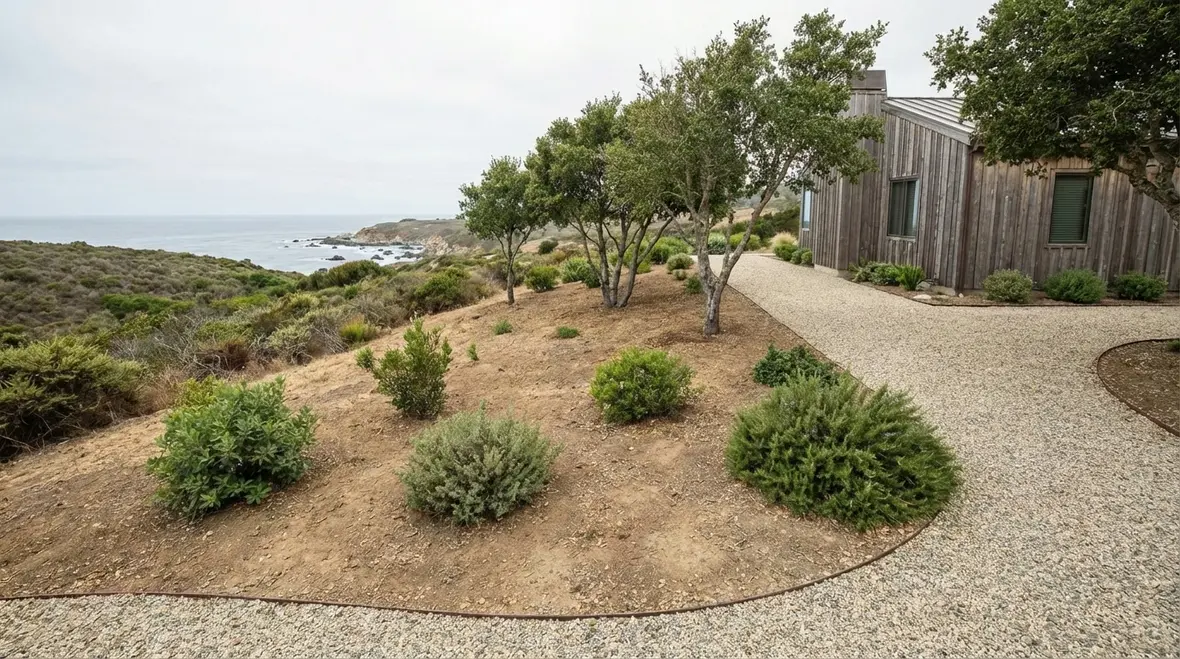
Defensible space is not a trendy phrase. It is a proven method that slows fire spread and gives emergency crews room to work.
According to Avalon fire safety guidelines, property owners should maintain a buffer zone around structures. This zone reduces combustible material and limits flame contact. However, it must be done with intention.
Practical defensible space zones for Avalon coastal properties
| Zone | Recommended Action |
|---|---|
| 0 to 5 feet from structure | Remove dead plants, use gravel or stone, avoid wood mulch, keep furniture noncombustible. |
| 5 to 30 feet | Trim shrubs, space trees apart, clear fallen branches, remove ladder fuels beneath tree canopies. |
| 30 to 100 feet | Reduce dense vegetation, remove dry brush, thin out wild grasses and coastal scrub. |
Because coastal winds can shift quickly, maintaining these zones is critical. Furthermore, regular inspections ensure that seasonal growth does not undo previous efforts.
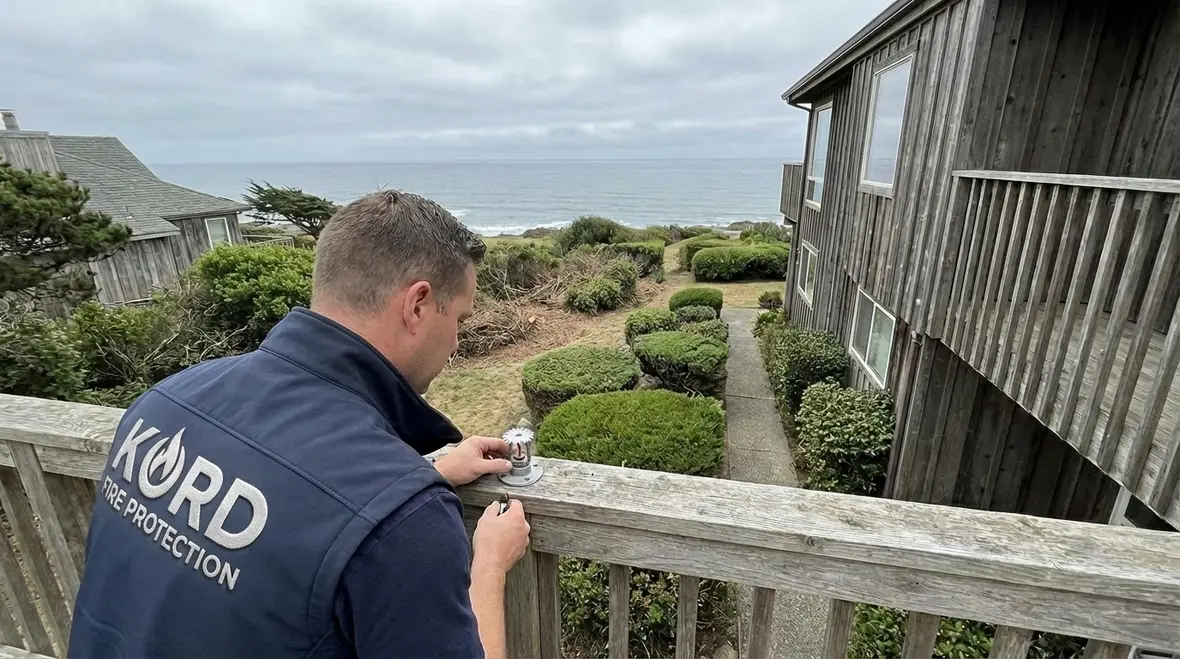
Kord Fire Protection technicians often walk properties with owners, pointing out overlooked hazards. A decorative wooden bench too close to a wall. A stack of firewood tucked under a deck. A potted plant that has quietly turned into a thatch of dry fuel. Small details, yet powerful consequences.
Linking outdoor planning with professional inspections
When defensible space work is tied into scheduled fire system service, it becomes easier to keep up with both. During your annual inspection, for example, your technician can note vegetation issues or combustible storage and help you prioritize corrections before the next high wind event.
What Fire Systems Work Best in a Marine Climate?
This is the one question property owners frequently ask, and it deserves a direct answer.
Marine rated systems built for Avalon’s salty air
Marine rated fire alarm systems and sprinkler components perform best in Avalon’s salty air. These systems use sealed electronics and corrosion resistant materials that withstand moisture exposure. Additionally, heat detectors often outperform traditional smoke detectors in areas with high humidity, where false alarms can become common.
If you are unsure which combination of sprinklers, alarms, and suppression systems fits your coastal building, reviewing Kord Fire’s fire alarm services and broader life safety offerings is a good starting point before you design or retrofit.
Testing, documentation, and staying inspection ready
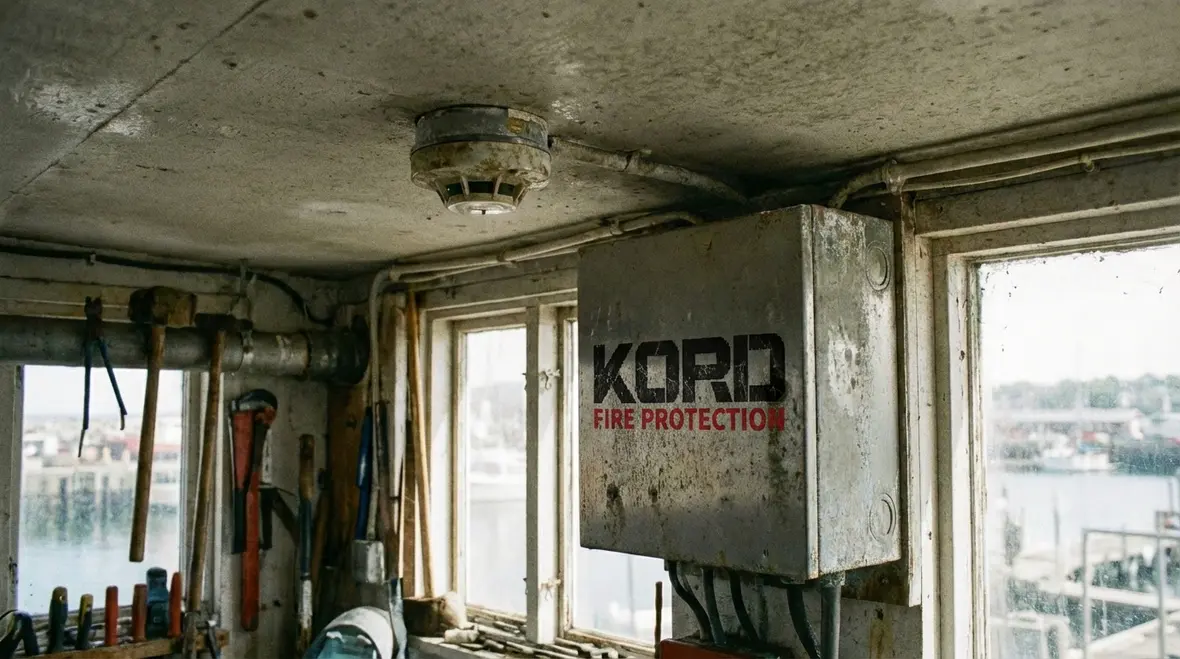
However, installation is only half the equation. Routine testing ensures reliability. Kord Fire Protection technicians schedule periodic inspections to verify pressure levels, sensor calibration, and battery strength. They also document compliance with local coastal fire regulations, which simplifies insurance reviews.
In many cases, technicians discover minor corrosion long before it becomes dangerous. As they like to say, catching a problem early is far cheaper than starring in a cautionary news segment.
Commercial Coastal Properties and Compliance Responsibilities
Hotels, restaurants, and rental properties in Avalon carry added responsibility. Not only must they protect the building, but they must also safeguard guests who may not know evacuation routes.
Therefore, Avalon fire safety guidelines for commercial structures require:
- Clearly marked exits with illuminated signage
- Emergency lighting with battery backup
- Fire extinguishers rated for kitchen and electrical fires
- Documented inspection logs for all life safety systems
- Staff training in evacuation procedures and extinguisher use
Moreover, commercial kitchens near the waterfront must install hood suppression systems designed to handle grease fires. Salt exposure can degrade nozzles and piping, so frequent servicing is essential.
Kord Fire Protection technicians often conduct on site demonstrations for staff. They show how to operate extinguishers using the classic PASS method. Pull, Aim, Squeeze, Sweep. Simple, memorable, and effective. Because when a stovetop flares up, nobody has time to scroll through a manual.
Short term rentals and guest heavy properties
For coastal vacation rentals, it is wise to treat every new guest as if they have never seen your building before. Post simple evacuation maps on each level, label stairwells clearly, and keep outdoor cooking rules obvious. A one page in unit safety guide can quietly lower risk without scaring anyone away from the ocean view.
Integrating Technology with Traditional Fire Prevention
Modern technology now enhances coastal fire prevention strategies. Smart monitoring systems send real time alerts to property owners and emergency contacts. Consequently, response times improve dramatically.
Remote monitoring also allows technicians to identify pressure drops or sensor failures without waiting for an annual inspection. This proactive approach aligns closely with local coastal fire protection standards.
Additionally, weather integrated alert systems can notify owners when high wind conditions increase fire risk. During such periods, extra caution with outdoor grills, fire pits, and electrical equipment becomes vital.
Kord Fire Protection technicians embrace these tools, yet they emphasize that technology supports, not replaces, physical maintenance. A sensor cannot trim dry brush. It cannot tighten a corroded fitting. Human oversight remains essential.
Maintenance Schedules That Actually Work
Consistency separates protected properties from vulnerable ones. While installing quality systems matters, maintaining them ensures performance.
A practical coastal maintenance rhythm
- Monthly visual inspections of alarms, sprinklers, and extinguishers
- Quarterly testing of sprinkler valves and water flow
- Biannual defensible space clearing and vegetation trimming
- Annual full system inspection by certified professionals
Because coastal exposure accelerates wear, skipping even one cycle can create risk. Furthermore, documented maintenance supports insurance claims and regulatory compliance.
Kord Fire Protection technicians provide detailed service reports after each visit. These records outline system condition, recommended repairs, and compliance status. Property owners gain clarity instead of confusion. And clarity, much like a calm sea, brings peace of mind.
FAQ About Fire Safety for Avalon Coastal Properties
Final Thoughts and a Call to Action
Fire protection in Avalon is not about reacting to danger. It is about respecting the environment and preparing with care. By following Avalon fire safety guidelines and working with experienced professionals like Kord Fire Protection technicians, property owners strengthen their defenses before trouble appears.
Schedule a comprehensive inspection, review maintenance records, and upgrade vulnerable systems. For broader coverage beyond Avalon, you can also explore regional offerings like Temecula Fire Protection Services to understand how Kord Fire adapts its approach to different high risk communities.
If your property sits along the coast, the next calm, sunny day is the ideal time to act. Walk your defensible space zones, note corrosion on visible devices, and line up an expert visit. In a coastal town where beauty meets unpredictability, preparation is the quiet hero every property deserves.
Know Your Weapon Before You Fight the Flame
Kord Fire Protection is your go-to when it comes to all things fire protection. For over 20 years, we’ve been serving Southern California with the quality service and equipment to keep your home or business safe at all times. Our competitive prices reflect our unwavering commitment to protecting what matters most in the event of a fire emergency. Give us a call, send an email, or use that form!

Join Our Newsletter!
Get the latest fire safety tips delivered straight to your inbox From our Newsletter.