Anaheim Fire Life Safety Codes and NFPA Compliance
In Anaheim, safety is not left to chance, luck, or crossed fingers. It rests firmly on the foundation of the Anaheim Fire Life Safety Codes, which draw heavily from nationally recognized NFPA standards. These codes shape how buildings are designed, maintained, and inspected. They guide how alarms sound, how sprinklers flow, and how people exit safely when seconds matter most. Throughout the city, trained professionals such as Kord Fire Protection technicians help property owners understand these standards in plain language. Because when it comes to fire and life safety, clarity saves lives. And frankly, nobody wants their emergency plan to be “run fast and hope for the best.”

How Anaheim Utilizes NFPA Fire Life Safety Codes
Anaheim adopts and enforces fire safety regulations that align closely with the National Fire Protection Association standards. These NFPA codes serve as the blueprint for fire prevention, detection, suppression, and safe egress. However, the city does not simply copy and paste a national rulebook. Instead, it integrates those standards into local ordinances, inspections, and enforcement procedures tailored to the community.
For example, NFPA 13 governs the installation of sprinkler systems. In Anaheim, that standard shapes how sprinklers are designed in commercial buildings, apartments, and industrial facilities. Likewise, NFPA 72 guides fire alarm systems, ensuring devices communicate clearly during an emergency. Meanwhile, NFPA 101, the Life Safety Code, influences exit routes, occupancy limits, and emergency lighting.
Because Anaheim includes a mix of hotels, theme parks, restaurants, warehouses, and residential communities, the city applies these codes with careful attention to occupancy type. A high rise hotel near a busy convention center faces different risks than a small retail shop on a quiet street. Therefore, enforcement reflects those differences while staying anchored to NFPA guidance.
Kord Fire Protection technicians often explain to clients that the codes are not abstract rules sitting in a binder. Instead, they are practical tools. They determine how wide a hallway must be, how often alarms need testing, and how quickly a sprinkler head activates under heat. In short, they turn safety from theory into action.
How Do Fire Safety Regulations in Anaheim Protect Different Types of Buildings?
The answer begins with classification. Every building falls into an occupancy category. Residential, assembly, business, industrial, and healthcare spaces each carry unique risks. Consequently, Anaheim applies fire and life safety regulations based on how people use the space.
Assembly Occupancies: Moving Crowds Safely
In assembly occupancies such as theaters or event venues, the focus centers on crowd movement and rapid evacuation. Exit signs must remain visible even during power loss. Doors must swing in the direction of egress when occupant loads exceed specific limits. Furthermore, emergency lighting must activate immediately.
Residential Properties: Protecting Where People Sleep
In residential properties, especially multi family housing, working smoke alarms and properly maintained sprinkler systems play a critical role. Landlords must schedule routine inspections. Additionally, they must ensure tenants have clear access to exits without blocked hallways or locked gates.
Industrial & Special Hazards
Industrial spaces often require specialized suppression systems. For instance, facilities that store flammable liquids may need foam based systems rather than standard sprinklers. Therefore, Anaheim inspectors evaluate hazards before approving occupancy.
Kord Fire Protection technicians frequently walk property managers through these differences. They translate code sections into real world steps. As a result, owners gain confidence that their building meets Anaheim fire prevention standards without guessing or cutting corners.

What Business Owners in Anaheim Need to Know About Compliance
Business owners often ask a simple question. What does compliance actually look like day to day? The answer is both straightforward and detailed.
From Plans to Final Approval
First, systems must be installed according to approved plans. That means permits, inspections, and documented acceptance tests. Second, ongoing maintenance cannot be ignored. Fire alarms require regular testing. Sprinkler systems need annual inspections, and in some cases quarterly checks. Fire extinguishers must remain accessible and properly tagged.
Documentation and Recordkeeping
Moreover, documentation matters. Anaheim officials may request inspection records at any time. Therefore, keeping organized reports is not just good practice. It is essential.
Kord Fire Protection technicians often remind clients that compliance is not a one time event. It is a cycle. Install, inspect, maintain, document, repeat. While that may sound repetitive, it prevents costly violations and unexpected shutdowns. And let us be honest, nothing ruins a grand opening faster than a red tag on the door.
Renovations, Changes, and Re-Reviews
Additionally, renovations trigger new reviews. If a business changes its layout or occupancy type, fire protection systems may need upgrades. For example, adding walls can affect sprinkler coverage. Increasing occupant load can change exit requirements. Consequently, early coordination with fire professionals prevents delays later.

Inside the Systems That Keep Anaheim Safe
Fire life safety systems operate like a well rehearsed orchestra. Each component plays a part, and timing matters. When Anaheim enforces NFPA based standards, it ensures these systems perform together.
Fire Alarm Systems
Modern alarm systems detect smoke, heat, or flame and send signals to occupants and monitoring centers. They must meet NFPA 72 requirements for placement, audibility, and reliability. Furthermore, backup power supplies ensure operation during outages.
Automatic Sprinkler Systems
Sprinklers activate individually when exposed to heat. Contrary to Hollywood myth, they do not all discharge at once because someone burned toast. Instead, each head responds to temperature at its location. NFPA 13 design criteria determine spacing, pipe sizing, and water supply needs.
Fire Extinguishers
Although simple, extinguishers must match the hazard class. A grease fire in a restaurant kitchen demands a different extinguisher than a paper fire in an office. Therefore, proper selection and placement matter.
Emergency Lighting and Exit Signs
During smoke filled conditions, clear pathways save lives. NFPA 101 standards require illumination levels and signage visibility that guide occupants toward safety.
Kord Fire Protection technicians emphasize that these systems require routine care. Even the most advanced equipment fails without maintenance. As they sometimes joke, a fire alarm with a dead battery is about as helpful as a flashlight with no bulb.
Common Inspection Points Under Anaheim Fire Prevention Standards
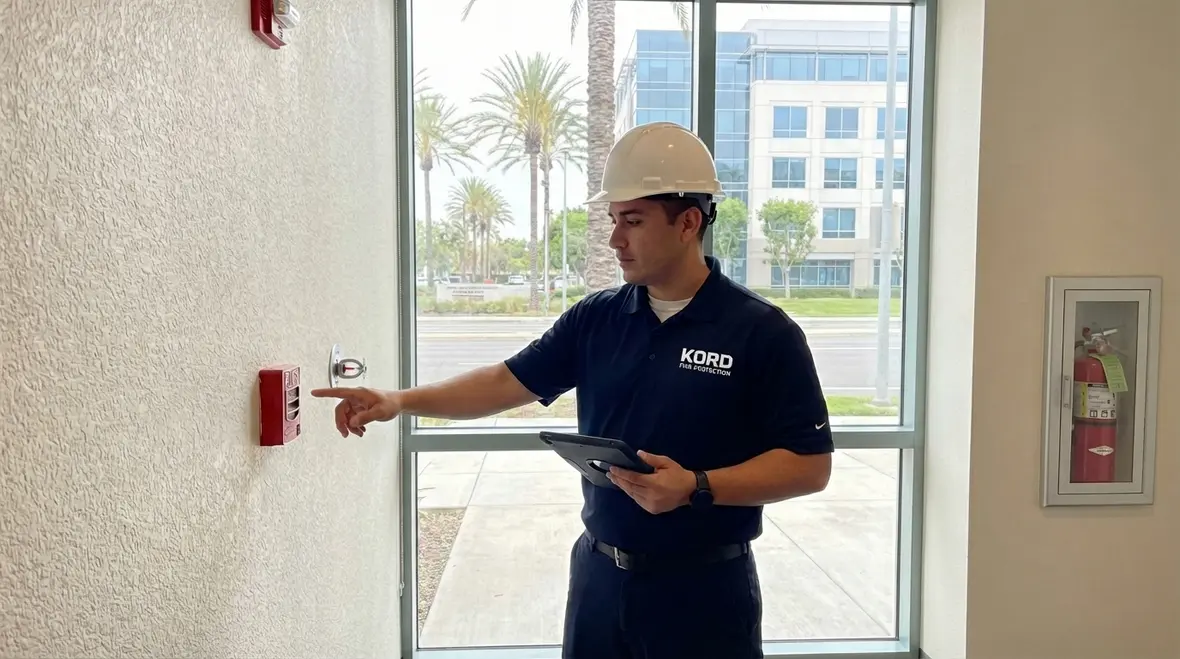
When inspectors evaluate compliance with local fire safety codes, they focus on practical conditions. They check whether exit doors open freely. They verify that sprinkler valves remain accessible and supervised. They test alarm panels for trouble signals.
Inspectors Look For
- Clear and unobstructed exits
- Proper sprinkler coverage
- Functional alarm notification devices
- Up to date inspection tags
- Correct fire extinguisher placement
Property Owners Should Prepare
- Maintenance records organized
- Staff trained on emergency procedures
- Electrical panels labeled
- Storage kept below sprinkler deflectors
- Access provided to all fire equipment
Because inspections can occur annually or more often depending on occupancy, preparation becomes routine. Fortunately, proactive service providers help eliminate surprises. Kord Fire Protection technicians often conduct pre inspection checks, which allows owners to address minor issues before an official visit.
The Role of Professional Technicians in Explaining the Codes
Fire codes contain technical language. However, effective communication turns complexity into clarity. That is where experienced professionals make a difference.
Kord Fire Protection technicians regularly sit down with building owners, contractors, and facility managers. They explain why certain sprinkler heads must maintain specific clearances. They outline how alarm circuits need supervision. Additionally, they clarify testing intervals so that nothing falls through the cracks.
Rather than overwhelming clients with code citations, they focus on outcomes. They describe how compliance reduces risk, protects investments, and safeguards lives. Consequently, clients understand the purpose behind each requirement.
They also stay current with updates. NFPA standards evolve, and local amendments may change enforcement details. Therefore, ongoing education ensures that guidance reflects the latest expectations within Anaheim.
In many ways, technicians act as translators between dense code books and real world construction. They replace confusion with confidence. And while they may not wear capes, they do prevent small oversights from becoming large disasters. That is a quiet kind of heroism.
Long Term Benefits of Following Anaheim Fire Life Safety Codes
Compliance offers more than passing inspections. It builds resilience. When buildings meet established fire protection standards, they reduce the chance of catastrophic loss. Insurance providers often look favorably on well maintained systems. Moreover, tenants and customers feel safer in spaces where visible safety measures exist.
Businesses that prioritize adherence to Anaheim fire safety regulations also avoid costly shutdowns. Violations can lead to fines or temporary closures. However, proactive maintenance keeps operations steady.
Additionally, strong safety practices protect reputations. In today’s connected world, news travels fast. A preventable incident can damage public trust. Conversely, a record of compliance demonstrates responsibility.
Kord Fire Protection technicians frequently note that investing in proper fire protection costs far less than rebuilding after a major incident. That statement may sound obvious, yet history shows many lessons learned the hard way. Therefore, consistent attention to the city’s adopted NFPA based standards pays dividends over time.
FAQ About Fire and Life Safety Compliance in Anaheim
Protect What Matters Most
Safety in Anaheim does not happen by accident. It follows structure, discipline, and the steady guidance of proven standards. The Anaheim Fire Life Safety Codes, rooted in NFPA principles, shape buildings that protect lives and property every day. Property owners who work with knowledgeable professionals such as Kord Fire Protection technicians gain clarity and confidence. Schedule an inspection, review current systems, and take action today. Because when preparation meets purpose, everyone sleeps a little better at night.
If you oversee property anywhere in Orange County, you do not have to navigate compliance alone. Explore regional support through Anaheim Fire Protection Services and broader coverage via Orange County Fire Protection services. From fire alarms and sprinklers to suppression systems and exit lighting, Kord Fire Protection can help you align with Anaheim’s NFPA based codes and keep your buildings inspection ready year round.
Know Your Weapon Before You Fight the Flame
Kord Fire Protection is your go-to when it comes to all things fire protection. For over 20 years, we’ve been serving Southern California with the quality service and equipment to keep your home or business safe at all times. Our competitive prices reflect our unwavering commitment to protecting what matters most in the event of a fire emergency. Give us a call, send an email, or use that form!

Join Our Newsletter!
Get the latest fire safety tips delivered straight to your inbox From our Newsletter.