
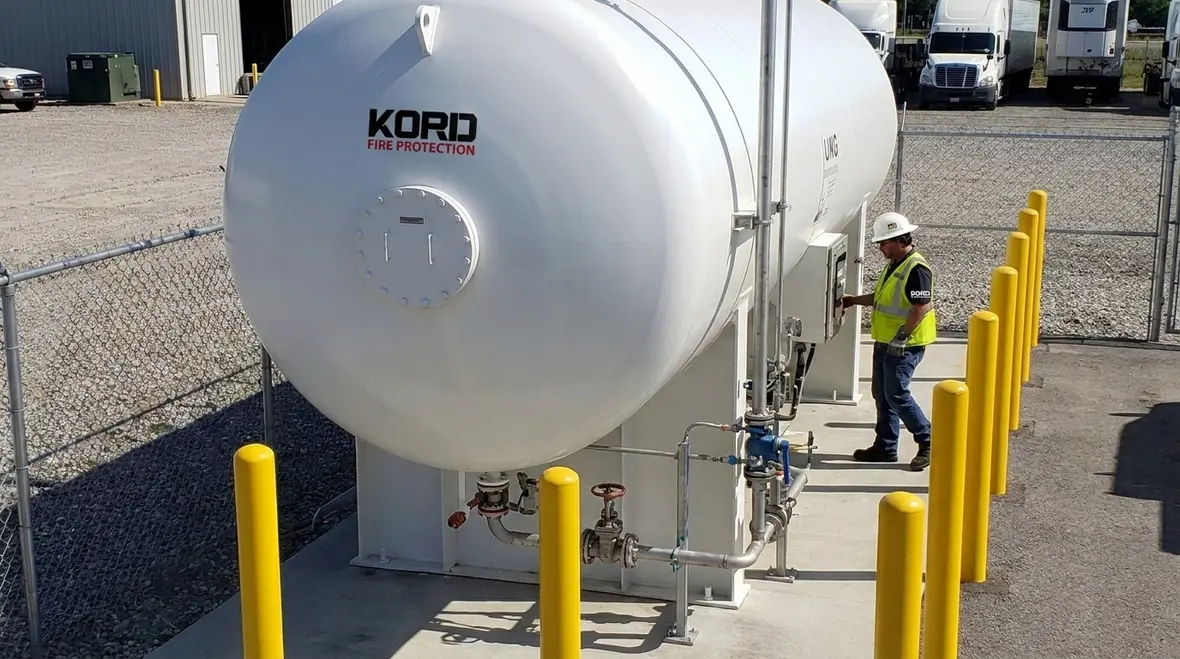
NFPA 52 Section 21.5: Installing ASME LNG Containers
Quick Answer: NFPA 52 Section 21.5 sets placement, site configuration, protection, and operational readiness requirements for ASME LNG containers. Compliance hinges on container positioning, vapor control, separation from ignition sources, and documented inspection and maintenance. Facility operators must verify markings, valves, relief pathways, and commissioning readiness before service.
Why NFPA 52 LNG container installation requirements matter on commercial sites
Commercial, industrial, and retail properties often underestimate how quickly a small installation defect becomes a life safety and operational risk. NFPA 52 LNG container installation requirements focus on preventing ignition and controlling the consequences of LNG release scenarios. For ASME LNG containers, the installation is not only about “setting the unit in place.” It includes ensuring that relief mechanisms discharge safely, that overpressure and vapor pathways do not create hidden hazards, and that site conditions remain compatible throughout the container’s service life.
From a fire safety and code compliance standpoint, the biggest practical challenges typically include maintaining required clearances in constrained yards, coordinating civil work with fire and gas detection, and keeping access routes, spill management, and protective barriers unobstructed over time. These issues grow more complex when a site later adds landscaping, fencing, temporary storage, or new electrical equipment near the container.
For teams building a stronger long term documentation process around installation and follow-up inspections, fire protection compliance auditing guidance fits naturally into this conversation and helps connect site conditions with audit-ready records.
What Section 21.5 expects during installation planning
NFPA 52 Section 21.5 governs how ASME LNG containers get installed to function safely as part of a complete LNG system. A compliant installation plan typically covers the following planning checkpoints.
1) Container siting, orientation, and service access
The container must be installed to maintain required separation distances and to provide safe access for operations and inspection. Installing with blocked access is a frequent nonconformance. Technicians need access to service panels, valves, and control components, and first responders need an unobstructed ability to reach the container area under emergency conditions.
In practice, many sites attempt to “optimize real estate” and place the container near grade changes, retaining walls, or utilities. That can create interference with relief discharge routing, restrict visual inspections, or complicate safe shutdown and maintenance procedures.
2) Integration with the surrounding hazard environment
Section 21.5 requirements must be reconciled with the site’s ignition sources, electrical classification approach, and expected traffic patterns. LNG installations demand a controlled approach to how vapor may migrate. Wind exposure, low points, and nearby openings can influence vapor behavior even when the container itself appears properly placed.
Facility teams should treat LNG container siting like a hazard engineering problem, not a placement task. The goal is to prevent accumulation pathways and to ensure that any release consequences do not expose occupied structures, fueling infrastructure, or public access routes.
3) Commissioning readiness and documentation support
Installation compliance does not end at mechanical completion. Operators should ensure that commissioning documentation supports ongoing verification. Common gaps include missing as-built drawings, incomplete valve and relief device records, and absent evidence of system leak testing or verification of protective features.
Core compliance elements for ASME LNG containers under Section 21.5
NFPA 52 LNG container installation requirements generally emphasize predictable performance of the container and its direct protection features. The following elements represent frequent inspection and audit focus areas.
Relief device discharge direction and survivability
Relief pathways must discharge in a manner that avoids impingement on the container, prevents accumulation of vapor near ignition sources, and maintains safe distances from exposures. Installers must verify discharge routing against both the container manufacturer’s configuration and the site layout.
A common failure point involves discharge terminations that later become obstructed, redirected, or partially blocked by modifications such as fencing expansions, added equipment, or snow management hardware. Operators should implement a document-controlled change process for anything that could alter the discharge environment.
Leak control interfaces, valves, and isolation strategy
Section 21.5 includes installation expectations that enable the LNG container to perform as a controlled pressure vessel system. That means installers must ensure correct connections, secure mounting, and correct valve function. Isolation components and control interfaces should remain accessible and protected from damage.
Practically, leaks often originate at interfaces created during installation or maintenance. Poor torque practices, incorrect gasket selection, misaligned piping, or vibration-related loosening can result in chronic seepage that is easy to overlook during routine walkthroughs.
Protection from physical damage and vehicle interface risks
Commercial and industrial sites frequently include forklifts, trucks, carts, and occasional contractor activity. NFPA 52 LNG container installation requirements do not operate in a vacuum. The container area must be protected against mechanical impacts that could damage piping, control components, or protective panels.
Operators should ensure that protective barriers and curbing systems remain intact and are not treated as optional. Damage can be subtle, such as scraped insulation, dented covers, or compromised protective guards, and that partial damage can degrade safety performance over time.
Environmental and operational conditions that affect safety performance
Installation success depends on remaining within expected operating conditions. Heat transfer influences LNG behavior, and site conditions influence vapor dispersion. Wind exposure, sheltered areas, and nearby structures can all affect the likelihood of vapor accumulation.
Facility teams should coordinate HVAC or enclosure concepts, exterior lights, and electrical infrastructure placement with the LNG hazard approach. Even if code requirements are met at the moment of installation, later changes may introduce new ignition sources or alter vapor migration paths.
Inspection, testing, and maintenance after installation
Section 21.5 compliance requires an installation that will remain safe, verifiable, and serviceable after turnover. The most common compliance breakdowns occur when maintenance becomes reactive instead of systematic.
What to verify during acceptance and periodic inspections
- Container markings and identification: Confirm that labels, identification plates, and operational markings remain readable and consistent with installation records.
- Relief discharge routes: Verify pathways remain clear of obstructions and that any protective structures do not interfere with discharge behavior.
- Valve positions and operator interfaces: Confirm access and correct positioning per operating procedures.
- Piping and connection integrity: Look for evidence of seepage, icing patterns inconsistent with normal operation, and signs of mechanical stress.
- Physical protection systems: Inspect barriers, guardrails, and curbing for stability and coverage.
Common failure points seen during commercial site audits
Across commercial facilities, the repeat offenders typically include incomplete “as found” documentation, changes made by other contractors without coordination, and maintenance that does not include verification of external protective elements. Another frequent issue is inadequate housekeeping in the LNG area, such as stored materials, debris accumulation, or temporary equipment that encroaches into required clearances.
For more guidance related to ongoing fire protection system performance, facility teams can reference Kord Fire Protection’s approach to compliance support and maintenance planning through streamlined maintenance schedules for compliance.
Installation coordination challenges on retail, industrial, and mixed-use properties
ASME LNG container installations often occur in operational facilities where construction must avoid disrupting revenue or creating new hazards. That reality creates coordination complexity that can directly impact compliance.
Maintaining access and clearance during staged construction
During installation and follow-on work, sites frequently use temporary fencing, mobile scaffolding, and material staging. Even if final layout meets requirements, temporary encroachment can lead to missing clearance documentation or delayed corrective actions before commissioning.
Managing change control for nearby equipment and traffic patterns
In retail and fueling environments, routine operational updates can inadvertently affect the LNG hazard profile. Lighting retrofits, new generators, signage structures, or additional loading docks can create new ignition sources or change how vapor might behave during an abnormal event.
Operators should implement a change control workflow that routes any exterior modifications near the LNG container area through a fire safety and code review before work begins.
Training for operators and maintenance technicians
Even with correct installation, performance depends on correct operations. Personnel should understand isolation steps, emergency shutdown expectations, and the importance of preserving the relief discharge environment.
Frequently Asked Questions
Conclusion and next step
NFPA 52 Section 21.5 demands more than placement. It requires correct siting, safe relief discharge behavior, protected interfaces, and a documented inspection and maintenance program that stays aligned with the as-installed condition. To protect people, operations, and schedule stability, facility teams should review current installation records, confirm discharge and clearance conditions, and implement a change control workflow. Contact Kord Fire Protection to assess your NFPA 52 LNG container installation requirements compliance posture and build a practical ongoing verification plan.

Join Our Newsletter!
Get the latest fire safety tips delivered straight to your inbox From our Newsletter.


