
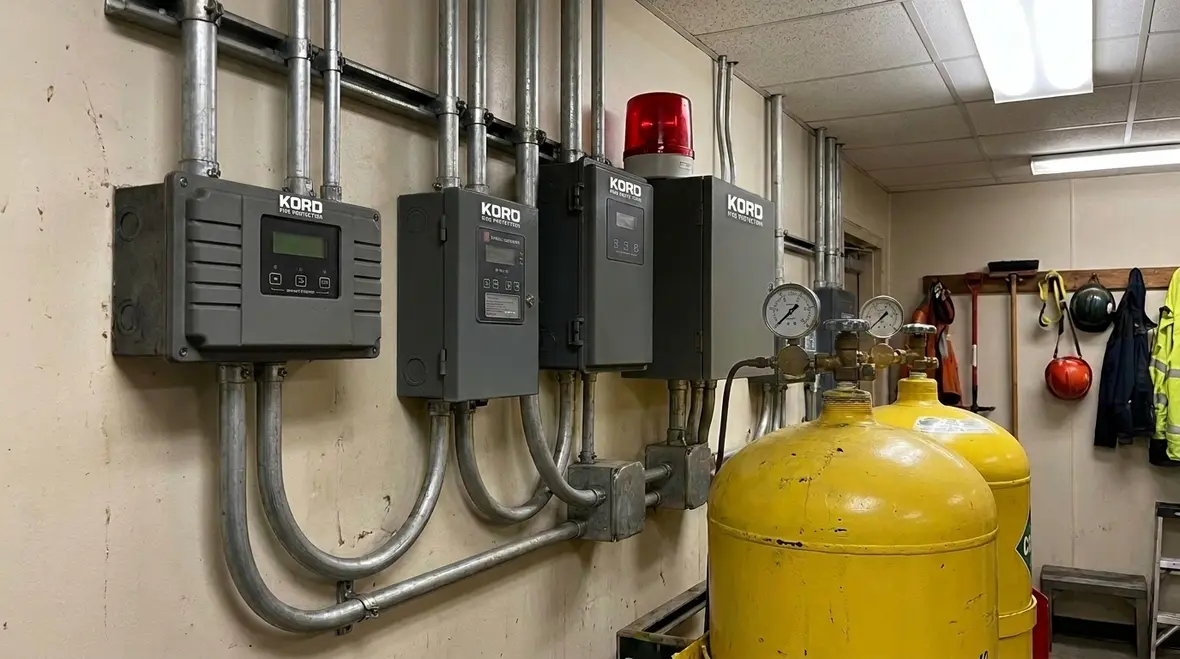
NFPA 52 Section 6.2: CNG Supplemental Gas Detection and Alarm Requirements
Quick Answer: NFPA 52 Section 6.2 sets performance expectations for supplemental CNG gas detection and alarm coverage beyond baseline requirements. It focuses on where detection is needed, how alarms must annunciate, and how systems stay functional through inspection, testing, and maintenance.
Facilities managing detection, alarms, and broader life safety coordination can also explore commercial fire alarm services in Southern California for support with inspections, testing, maintenance, repairs, monitoring, upgrades, and installations.
Why Section 6.2 Matters for CNG Facilities
Commercial CNG sites often operate in environments where gas release can develop faster than ignition risk controls alone. NFPA 52 Section 6.2 addresses this by requiring supplemental gas detection and alarm provisions where baseline coverage is not sufficient for the site hazards. This approach helps prevent “blind spots” such as dead air pockets, off-axis release points, or locations affected by ventilation changes.
Facilities that treat supplemental detection as a one time installation commonly run into compliance gaps during inspections. Auditors usually look for evidence that supplemental detectors are properly located, correctly interfaced with alarms, and kept in reliable service through documented testing and maintenance. For many teams, the practical compliance challenge is not only meeting the initial design, but proving operational integrity over time.
When planning NFPA 52 CNG gas detection alarm supplemental requirements, organizations should treat Section 6.2 as a lifecycle obligation tied to commissioning, verification, and continuous maintenance.
What NFPA 52 Section 6.2 Requires for Supplemental Detection
NFPA 52 Section 6.2 focuses on supplemental gas detection and alarm behavior that supports the overall safety strategy for CNG systems. Supplemental detectors supplement the primary system so that detection remains effective where specific conditions create additional risk.
1) Supplemental detector placement aligned to credible release scenarios
Supplemental detectors must be positioned to sense gas accumulation where it can collect and where personnel and equipment are exposed. Common commercial placement issues include:
- Detectors installed based on general layouts instead of actual piping runs, valve manifolds, and connection points
- Locations selected without accounting for ventilation patterns and airflow restrictions
- Use of mounting heights that do not match the hazard geometry and expected gas movement
- Detectors placed where normal operations create chronic sensor contamination or mechanical damage
2) Alarm annunciation that supports immediate action
Supplemental detection must drive alarms in a manner that enables timely recognition and response. This includes ensuring that alarm signals reach responsible personnel and align with site operating procedures, such as evacuation, shutdown sequences, or activation of designated controls.
In practice, compliance reviews often focus on the end to end path: detector output, control equipment logic, annunciator behavior, and what operators can actually observe in real time. A sensor that alarms locally but does not provide the required audible or visual notification for the operational area may fail the intent of supplemental alarm requirements.
System Components and How Supplemental Alarms Function
Supplemental gas detection systems typically include sensors, wiring and junction components, a control panel or interfacing device, and alarm notification appliances. Section 6.2 requirements become enforceable when each component works together as designed.
Detectors and sensing technology risks
Different detector technologies react differently to environmental stressors. Commercial facilities should anticipate issues such as:
- Sensor drift over time affecting alarm setpoint accuracy
- Impact of dust, oil mist, or corrosion on sensing surfaces
- Failure of electronics or power supply instability in harsh electrical environments
- Inadequate airflow around detectors leading to delayed response
During inspections, teams often discover that supplemental detectors were added later without updating commissioning documentation, response verification, and alarm action mapping. That missing documentation can be as problematic as the hardware.
Control panel interfacing and alarm mapping
Supplemental alarms must map to the correct alarm levels, zones, and response actions. A frequent failure mode is improper labeling or incorrect zone assignment, which causes alarm signals to route to the wrong operational area or wrong response role.
Commercial facilities also need to verify that trouble signals (such as fault, sensor failure, or wiring issues) are treated as actionable conditions rather than overlooked system status. NFPA 52 strategies rely on detection reliability, not just alarm presence.
Testing, Inspection, and Maintenance to Stay Compliant
For organizations managing multiple sites, the largest risk to compliance is operational drift. Section 6.2 supplemental coverage only helps if the system remains accurate and responsive.
Commissioning verification and evidence of performance
After installation or modifications, facilities should complete verification that includes:
- Confirmation of detector placement relative to site hazard pathways
- Alarm functionality checks for audibility, visibility, and intended response areas
- Documentation that interfaces and control logic respond correctly
- Recording baseline readings and configuration settings
Ongoing maintenance and common failure points
NFPA 52 CNG gas detection alarm supplemental requirements are not satisfied by periodic “pass fail” status checks alone. Strong programs include both preventive and corrective maintenance, such as:
- Routine bump testing or performance checks in accordance with the system manufacturer and applicable standards
- Calibration and sensor replacement schedules that account for environmental exposure
- Inspection of wiring integrity, conduit condition, and termination tightness
- Functional alarm response checks after any change in ventilation, control systems, or operating layout
Facilities that renovate support rooms, reconfigure equipment, or add temporary barriers often unintentionally change airflow and detector effectiveness. Kord Fire Protection commonly helps clients manage these change impacts by tying detection maintenance to operational and construction updates, not just annual schedules.
Commercial Implementation Challenges and How Kord Fire Protection Helps
Supplemental gas detection tends to be expanded incrementally as fleets grow, new bays are added, or process layouts change. That evolution can create compliance gaps if the facility cannot demonstrate that supplemental detectors still match the current hazard profile.
Typical gaps seen in commercial audits
- Outdated as built drawings that do not reflect added supplemental sensors and alarm locations
- Detector placement not validated after HVAC or ventilation changes
- Alarm devices that are obstructed, disconnected, or inaudible in real operating conditions
- Maintenance logs that lack sensor performance results and corrective actions
Service partnership approach
Kord Fire Protection supports commercial, industrial, and retail customers with field verification, documentation, and maintenance programs that align with the intent of NFPA 52 CNG gas detection alarm supplemental requirements. This includes structured testing, detailed inspection reporting, and practical guidance for keeping supplemental detection reliable between formal compliance cycles.
To further strengthen your program, facilities can also benefit from reviewing related guidance on gas detection system performance and alarm reliability at Flamefast gas safety and fire protection systems explained.
NFPA 52 CNG Supplemental Requirements: Practical Compliance Checklist
Use the following checklist to support internal readiness and reduce last minute findings during inspections.
| Area | What to verify for supplemental detection and alarms |
|---|---|
| Placement | Supplemental detectors align with credible release points, airflow patterns, and accumulation areas |
| Alarm mapping | Supplemental alarms annunciate in the correct operational zones and support the required response actions |
| Notification devices | Audible and visible appliances are unobstructed, functional, and verified under real site conditions |
| Documentation | As built layouts, wiring references, configuration notes, and test records match the installed system |
| Testing | Scheduled performance checks verify response and alarm function for supplemental sensors |
| Maintenance | Sensor cleaning, calibration, and component replacement align with environmental exposure and manufacturer guidance |
| Change control | Renovations, ventilation changes, and equipment moves trigger re evaluation of supplemental coverage |
Frequently Asked Questions
Conclusion and Call to Action
NFPA 52 Section 6.2 requires that supplemental CNG gas detection and alarm coverage remains effective through correct placement, verified alarm annunciation, and consistent testing and maintenance. Facilities that keep as built documentation current and treat supplemental detection as a living system reduce inspection findings and improve operational safety. Kord Fire Protection can support your ongoing compliance with field verification, testing, and maintenance programs designed for commercial CNG environments. Contact Kord Fire Protection today to assess your supplemental coverage readiness.

Join Our Newsletter!
Get the latest fire safety tips delivered straight to your inbox From our Newsletter.


