
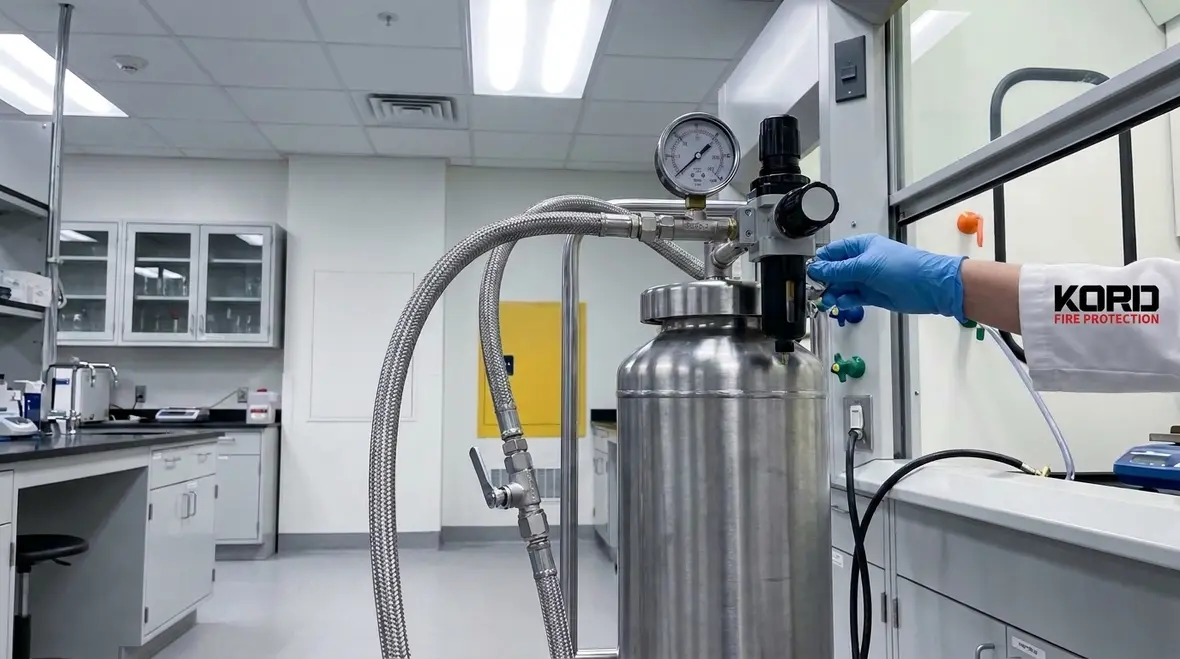
NFPA 45 Section 9.4: Pressurized Liquid Dispensing Containers (PLDC)
Quick Answer
NFPA 45 Section 9.4 sets performance and compliance requirements for pressurized liquid dispensing containers, focusing on safe design, proper installation, leak control, and inspection readiness. Facilities must manage hazards created by pressure, product compatibility, and emergency response access to protect occupants and property.
NFPA 45 pressurized liquid dispensing containers play a critical role in laboratories, industrial operations, and retail environments where flammable or combustible liquids are dispensed under pressure. Section 9.4 addresses how these containers must be selected, used, maintained, and verified so pressure-related hazards do not compromise life safety or facility continuity.
Facilities building a broader compliance program around inspection readiness often benefit from a structured inspection, testing, and maintenance approach that supports documentation, recurring field checks, and corrective action planning.
What NFPA 45 Section 9.4 Requires for PLDCs
NFPA 45 Section 9.4 centers on controlling the specific risks tied to pressurized dispensing. Compared with gravity-fed or manually poured systems, PLDCs introduce additional failure modes, including regulator malfunction, hose and connection degradation, valve packing wear, and unintended release during handling or transfer.
In practical terms, compliance requires facilities to ensure PLDCs are appropriate for the intended liquid, properly connected, and maintained to prevent leaks or unsafe operating conditions. Many compliance gaps appear not at the time of initial purchase, but later when equipment is moved, modified, or serviced without a controlled process.
To support an auditable program, facilities typically align Section 9.4 expectations with internal procedures covering selection, installation verification, inspection frequency, documentation, and replacement criteria. Kord Fire Protection helps commercial sites translate the standard into a workable inspection and maintenance workflow aligned with day-to-day operations.
Key Compliance Elements Facilities Must Get Right
Section 9.4 expects PLDC systems to remain safe throughout their service life. The most common areas that drive compliance outcomes include the following.
1) Container and pressure system suitability
Facilities must ensure the PLDC configuration matches the physical and chemical requirements of the liquid being dispensed. Product compatibility impacts seal materials, valve seats, hose liners, and regulator components. A container that works for one liquid can fail prematurely with another due to swelling, permeation, or loss of elastomer integrity.
2) Secure connection integrity
Most leak incidents originate at interface points: fittings, couplings, threaded joints, valve outlets, and hose terminations. Pressure cycling increases looseness over time, and vibration can accelerate wear. A compliance-ready program includes verification that connections are correctly assembled, torqued, and protected from mechanical stress.
3) Leak control and release prevention
Section 9.4 expectations typically translate into a standard of “no uncontrolled release.” Facilities must address micro leaks and seepage, not just visible drips. Even small releases can create ignition sources for maintenance workers, operators, or building occupants.
4) Dispensing operation controls
Operational practices matter. Improper use, such as over-pressurizing, using damaged hoses, or forcing couplings, increases failure risk. A compliant program trains personnel on correct handling and restricts substitutions that bypass the intended system design.
How PLDCs Work: Failure Points That Inspections Must Catch
Understanding the mechanisms behind PLDC operation helps a facility focus inspection effort where it matters most. Most PLDCs rely on controlled pressure regulation, sealed valves, and flexible transfer components.
Regulators and pressure relief behavior
Regulators maintain dispensing conditions. Wear, contamination, and incorrect installation can cause unstable output pressure, which increases stress on seals and can contribute to leak formation at downstream components. Pressure relief devices, where part of the system design, require readiness and proper setpoint behavior.
Valves, seals, and packing wear
Valve packing and seat surfaces experience repeated cycling and exposure to the product. As materials degrade, the valve may seep when “closed,” or fail to fully seal during use. Inspections should account for both active dispensing leaks and static seepage.
Hoses, couplings, and permeation
Hoses are among the most failure-prone components because they endure flexing, abrasion, and chemical exposure. Permeation can occur even when no external leak is visible. Couplings can loosen from vibration or impact. A robust program uses visual checks, careful handling verification, and replacement criteria based on age and condition.
Common “real world” triggers
- Container movement without re-checking connections
- Temporary hoses used beyond their intended duty cycle
- Swapping parts between systems without compatibility validation
- Damaged external protective covers that expose components to impact
Kord Fire Protection supports facilities in building inspection methods that capture these triggers through consistent field verification and documentation practices.
Inspection and Maintenance: Turning Section 9.4 into Field Work
Facilities typically meet Section 9.4 expectations through structured inspection and maintenance. The goal is to ensure PLDCs remain fit for service, not merely “checked once.”
Inspection planning for commercial facilities
A practical inspection plan identifies each PLDC location, product served, and the equipment configuration. For multi-tenant or high-turnover retail spaces, the plan should reflect changes in workflow and responsibility handoffs. For industrial sites, it should account for vibration sources and mechanical traffic patterns that affect hoses and couplings.
What inspectors should document
Effective records typically include container identification, product type, inspection date, component condition observations, and corrective actions. Documentation should show when components were repaired or replaced, and when the system was returned to service. This matters during internal audits and external compliance reviews.
Maintenance and corrective action approach
When degradation is found, facilities should avoid partial repairs that leave unknown material compatibility or sealing performance. A compliant approach evaluates whether the failure relates to product compatibility, installation method, maintenance history, or component age. Replacement decisions should consider the specific failure mode, not just cosmetic condition.
For facility teams that need a repeatable compliance process, Kord Fire Protection offers ongoing support for inspections, maintenance coordination, and documentation practices. For additional guidance on related fire protection compliance requirements, see commercial fire suppression systems and services.
Installation, Segregation, and Operational Controls
Section 9.4 compliance does not stop at the container itself. Safe dispensing depends on the surrounding setup and how operators manage transfer activities.
Placement and protective measures
PLDCs should be installed and arranged to reduce impact risk and limit exposure to damage. Areas with forklift traffic, overhead work, or cleaning procedures that could abrade hoses typically require extra protective measures and strict housekeeping expectations.
Ventilation and ignition source management
Even when leaks are controlled, facilities must assume occasional releases can occur during connection changes, valve cycling, or maintenance events. Maintaining appropriate ventilation practices and controlling ignition sources supports risk reduction consistent with the intent of NFPA 45 requirements.
Training and change control
Commercial and industrial facilities often add or swap products over time. A change control process ensures compatibility and dispensing configuration remain compliant. Operator training should include correct connection procedures, signs of wear, and the stop-work trigger for leaks or abnormal operating behavior.
Frequently Asked Questions
Conclusion and Next Step
NFPA 45 Section 9.4 requires more than basic visual checks for NFPA 45 pressurized liquid dispensing containers. Facilities must verify system suitability, connection integrity, leak prevention, and ongoing maintenance performance with repeatable documentation. Kord Fire Protection can help commercial teams implement an inspection and maintenance program that aligns with how PLDCs fail in the field. Schedule a compliance review to identify gaps and build a practical corrective action plan.

Join Our Newsletter!
Get the latest fire safety tips delivered straight to your inbox From our Newsletter.



