
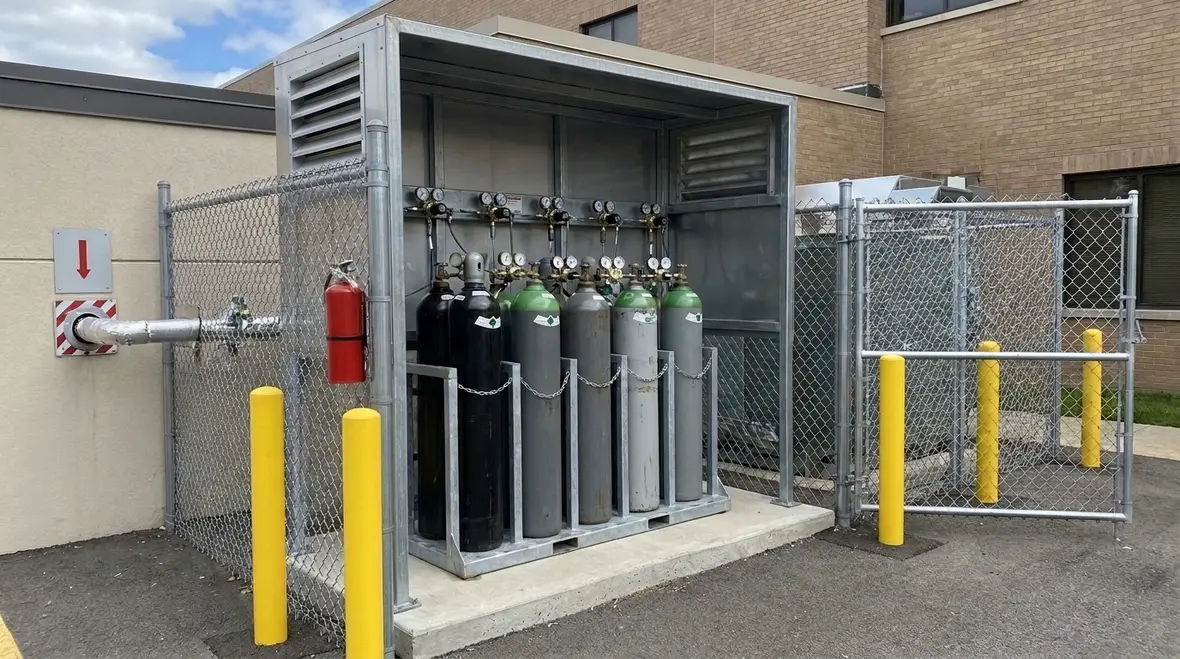
NFPA 45 Section 10.3: Outdoor Cylinder Installations Servicing Lab Areas
Quick Answer: NFPA 45 Section 10.3 sets requirements for outdoor gas cylinder installations that serve laboratory areas. The standard focuses on safe siting, cylinder protection, secure supports, separation from ignition sources, and inspection and maintenance practices. Facilities must also align procedures with their hazard classification and use conditions.
Facilities managing laboratory hazards often also benefit from broader fire suppression system services that support code compliance, inspections, and long term protection across special hazard environments.
What NFPA 45 Section 10.3 Requires for Outdoor Cylinder Installations
NFPA 45 Section 10.3 governs outdoor gas cylinder installations that supply lab areas. The intent is to prevent release hazards from escalating into fire, explosion, or toxic exposure events. For compliance teams, the key is not only meeting minimum physical placement requirements, but also ensuring the installed system performs safely throughout routine operations and maintenance cycles. When facilities plan or modify an NFPA 45 outdoor gas cylinder installation, they must treat the full installation as a lifecycle risk, not a one time placement task.
In practice, many compliance gaps arise after installation, during regulator swaps, valve maintenance, hose routing changes, and landscaping or construction work that inadvertently alters clearances. A strong program addresses both the initial design and ongoing verification.
Where the Standard Applies: “Servicing Lab Areas” in Real Facilities
Section 10.3 applies to outdoor cylinder installations that support laboratory use. “Servicing” typically includes situations where cylinders feed regulated gas supplies for lab equipment, bench systems, pilot systems, burners, calibration setups, and other controlled processes. Even if cylinders sit outdoors, the operational consequence lands inside the lab boundary.
Commercial and industrial facilities frequently face these complexity drivers:
- Multiple process gases stored at once, often in shared loading or utility corridors.
- Frequent changeouts due to lab scheduling, cylinder rotation practices, and vendor delivery cycles.
- Shared infrastructure where piping routes traverse other protected areas or pass near equipment heat sources.
- Temperature and exposure effects that impact regulators, valves, and seals over time.
Effective compliance requires aligning cylinder installation controls with how gas is actually used indoors, including operating schedules, abnormal conditions, and emergency response capability.
Siting and Protection: Designing the Safe Outdoor Setup
NFPA 45 outdoor gas cylinder installation compliance starts with siting and protection. Inspectors generally evaluate whether cylinders and associated equipment remain safe from mechanical damage, environmental exposure, and ignition capable conditions. Facilities also must consider how the outdoor location interacts with vehicle traffic, loading activity, snow removal operations, and access control.
Core practical controls facilities should verify
- Cylinder stability and secure support: Cylinders should rest on stable, purpose designed supports to prevent tipping, rolling, or load transfer to valves and regulators.
- Protection from physical impact: Where the area is exposed to vehicle movement or maintenance activity, the installation should incorporate barrier protection aligned with traffic patterns and access routes.
- Clear access for inspection and emergency action: Technicians must reach valves and shutoff points without hazards from obstructions, clutter, or locked access that delays response.
- Separation from ignition and heat sources: Outdoor cylinder stations should account for nearby boilers, electrical cabinets, heaters, hot work areas, and exhaust systems where applicable.
- Environmental suitability: Equipment selection and installation practices should support wind, corrosion, precipitation, and UV exposure consistent with the local conditions.
Common failure points include missing or damaged valve guards, supports that loosen over time, barriers that do not align with current traffic patterns, and outdoor enclosures that trap moisture and accelerate corrosion.
Connections, Regulators, and Piping: Where Violations Commonly Appear
Even with correct siting, noncompliance often emerges at the interface between the cylinder and the gas delivery system. NFPA 45 Section 10.3 expectations extend to maintaining safe connection practices, protecting components, and ensuring the installation remains suitable for the gas service and operating pressures.
Operational mechanisms that deserve close attention
- Regulator integrity: Regulators and gauges must remain serviceable and properly installed. Leaking seals or damaged gauges can create undetected release conditions.
- Valve and connection hardware condition: Worn fittings, cracked protective caps, and improperly seated connections increase leak probability.
- Hose or tubing routing and restraint: Components must avoid chafe points, excessive bending, and contact with sharp edges or hot surfaces.
- Identification and labeling: Gas identity and flow direction markings should stay legible and consistent with the piping scheme.
- Encroachment control: Construction, cable trays, and temporary equipment can alter clearances or obstruct access, especially during lab renovations.
Facilities should also confirm that the installation aligns with the actual cylinder service arrangements, including changeout frequency, backflow or pressure considerations, and any required shutoff sequencing used by lab procedures.
Inspection, Testing, and Maintenance: Keeping the Installation Compliant Long Term
NFPA 45 compliance is operational, not just installation day paperwork. For outdoor gas cylinder installations servicing lab areas, maintenance practices directly affect risk outcomes. A robust program assigns responsibility for inspections, leak checks, component verification, and documentation control.
What a good inspection and maintenance workflow typically covers
- Routine visual checks for corrosion, physical damage, damaged guards, missing fasteners, and deteriorated protective components.
- Operational verification of regulator performance indicators and pressure readings, when applicable to the system design.
- Leak detection and correction based on the gas type and installation design, supported by documented test results.
- Post maintenance verification after cylinder changeouts, regulator swaps, hose replacements, or valve servicing.
- Condition based decisions to retire components showing wear signs before they fail during service.
Commercial facilities often struggle with tracking the “who and when” for post changeout verification, especially when cylinders come from multiple vendors or when labs manage their own maintenance requests. Centralized oversight with field supported documentation improves reliability.
Kord Fire Protection supports commercial compliance through practical inspection planning, documentation readiness, and ongoing maintenance support aligned to lab gas systems. For facilities building a stronger lifecycle compliance program, Kord Fire Protection can help coordinate recurring checks that reduce drift from original design intent.
Compliance Challenges for Commercial, Industrial, and Retail Labs
Indoor laboratories create unique pressure on outdoor infrastructure. The cylinder station may look “simple,” but lab operations introduce frequent schedule changes, workload peaks, and short turnaround maintenance demands. These conditions increase the likelihood of procedural shortcuts that undermine safe installation performance.
High risk challenges commonly seen during field assessments
- Inconsistent cylinder changeout practices across departments, leading to variable quality of connection checks and labeling.
- Seasonal maintenance impacts such as snow removal striking supports or barriers, and landscaping changes shifting access clearances.
- Shared emergency response interfaces where responders must identify shutoffs quickly but signage is faded or obstructed.
- Regulator and enclosure corrosion due to trapped moisture in outdoor cabinets or inadequate drainage management.
- Documentation gaps where test and inspection records do not match the current configuration after modifications.
Facilities that treat NFPA 45 outdoor gas cylinder installation requirements as part of an integrated fire and life safety program reduce these failures. This includes coordinating with facilities management, lab leadership, purchasing, and contractors responsible for gas related equipment.
Facilities dealing with sensitive lab environments may also find value in understanding clean agent fire suppression for labs, especially where protection strategies must support equipment continuity and controlled environments.
Frequently Asked Questions
Take Action: Verify Your Outdoor Cylinder Setup Against NFPA 45
Facilities that rely on outdoor gas cylinder supply for laboratory operations should schedule a focused compliance review of their NFPA 45 outdoor gas cylinder installation, including siting, protection, connections, and post maintenance verification. Engage Kord Fire Protection to help validate inspection readiness, close documentation and configuration gaps, and support an ongoing maintenance cadence that maintains safe performance between cylinder changeouts.

Join Our Newsletter!
Get the latest fire safety tips delivered straight to your inbox From our Newsletter.



