
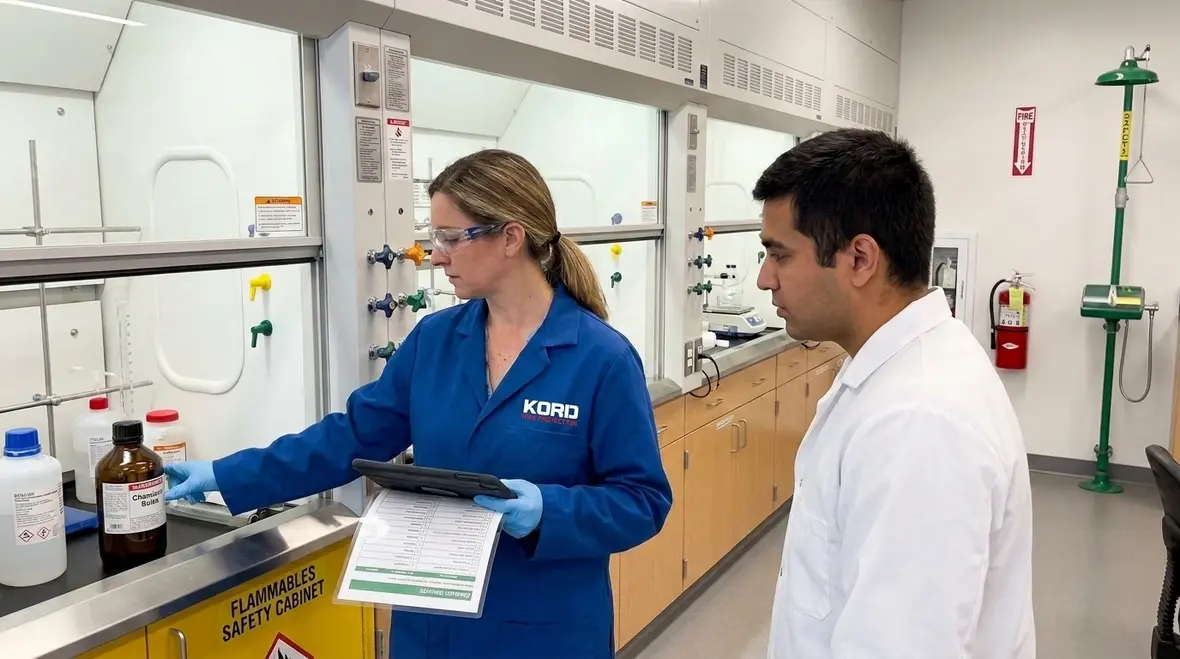
NFPA 45 Section 13.1 General: Overview of Laboratory Hazard Identification
Quick Answer: NFPA 45 Section 13.1 sets the baseline expectations for how laboratories identify hazards associated with chemicals, processes, and operations. It establishes a structured approach to hazard recognition so facilities can prevent incidents, support emergency response, and maintain compliant protective systems.
Facilities refining lab fire protection strategy often pair hazard identification with clean agent fire suppression for labs, especially when ventilation, enclosure conditions, and equipment sensitivity all need to work together instead of arguing with each other.
What NFPA 45 Section 13.1 Requires at a Glance
Within many commercial, industrial, and retail laboratory spaces, day to day work introduces evolving risk. NFPA 45 hazard identification general language in Section 13.1 focuses on building a consistent process for identifying hazards tied to laboratory materials and activities. The objective is not only documentation, but also operational visibility so staff can make safer decisions and so engineered controls remain aligned with actual conditions.
In practical terms, Section 13.1 drives a disciplined inventory mindset. Facilities typically must account for hazardous chemicals, anticipated reaction hazards, storage and handling risks, and the impact of routine and non routine operations. A hazard identification process becomes the foundation for selecting safeguards, maintaining them, and validating that they continue to function as intended.
How Hazard Identification Gets Built: Scope, Inputs, and Ownership
Laboratory hazard identification general work begins with clearly defined scope. Facilities should define which areas are included, such as wet labs, chemical storage rooms, preparation benches, shared fume hood spaces, and utility corridors that host ventilation equipment. Ownership matters: the process should include cross functional participation from lab leadership, EHS professionals, maintenance technicians, and building operations.
Core inputs that typically must feed Section 13.1
- Chemical inventories and safety data sources used for routine operations
- Descriptions of processes that generate hazardous atmospheres, residues, or byproducts
- Schedules and triggers for non routine activities, including maintenance outages and changeovers
- Information on temperature, pressure, ignition sources, and concentrations where applicable
- Relevant equipment and control systems that influence hazard mitigation, such as ventilation and detection systems
Commercial compliance teams commonly encounter a gap here: inventories exist, but they do not stay synchronized with procurement cycles or with experimental workflows. Section 13.1 style expectations push facilities to close that gap through ongoing input and periodic validation.
Turning Hazard Recognition Into Operational Controls
Hazard identification becomes valuable when it translates into specific safeguards. For laboratories, the most common operational controls often include ventilation strategies, segregation and storage practices, ignition control concepts, and emergency preparedness alignment.
Ventilation and confinement alignment
Laboratory hazards often manifest through airborne transport of chemicals and particulates. Facilities typically rely on engineering controls, including hoods and ventilation systems, to keep exposures and flammable or toxic atmospheres from reaching unsafe conditions. When the hazard identification process updates based on new chemicals or new procedures, the ventilation assumptions must be revisited.
A common failure point involves hood usage patterns. For example, a new procedure may require longer hood residence times, higher volatility handling, or different airflow requirements. Without hazard identification driven review, the ventilation control can drift out of the originally intended configuration.
Storage and handling based on hazard categories
Section 13.1 style identification supports decisions about where and how materials are stored. Facilities must match storage approach to hazards that include flammability, oxidizer behavior, incompatibilities, and corrosivity. Hazard identification general work helps ensure that segregations are practical and that container condition and secondary containment expectations remain consistent over time.
Maintenance realities frequently complicate this area. Spill response supplies expire, compatible containment kits are removed during renovations, and labeling becomes incomplete when containers transfer between rooms. A mature program treats those issues as compliance inputs, not housekeeping afterthoughts.
Where these hazards connect to system performance, teams may also benefit from reviewing room integrity testing for clean agent readiness, since enclosure behavior and ventilation changes have a funny way of humbling assumptions.
Inspection, Documentation, and Ongoing Validation Challenges
NFPA 45 hazard identification general expectations work best when the organization treats hazard identification as an ongoing management system rather than a one time exercise. Commercial facility teams often struggle with maintaining documentation accuracy, ensuring that staff use the information, and proving that changes trigger the right control updates.
What to verify during periodic compliance checks
- Are chemical inventories current and reconciled to actual locations and containers?
- Do process descriptions reflect real operating conditions, including start up, shutdown, and abnormal modes?
- Do safety controls referenced in hazard documentation match installed equipment status?
- Do training records align with identified hazards and new or modified procedures?
- Have recent renovations, room reassignments, or equipment replacements changed hazard assumptions?
Local enforcement and internal audits typically look for consistency between what the facility documents and what staff demonstrates in operations. If detection systems, ventilation setpoints, or emergency resources have not been validated against updated hazard profiles, compliance efforts can stall.
Common Failure Points That Undermine Section 13.1 Compliance
Even well funded laboratories can experience compliance drift. The failure mechanisms usually fall into predictable categories that commercial teams can address proactively.
1) Change not captured: new chemicals or workflows
Procurement and experimentation move fast. If the hazard identification process does not trigger review for new purchases, it results in controls that lag behind real hazards. This can affect storage conditions, hood performance assumptions, and emergency response planning.
2) Controls installed, but not maintained to the hazard basis
Hazard identification drives the basis for which engineered controls are selected. When those controls degrade or are taken offline for maintenance, the facility needs a documented path to maintain safety or manage risk until the systems return to service.
3) Incomplete cross training across shifts and contractors
Commercial labs often use visiting contractors, rotating staff, and shared research spaces. Hazard identification general programs can fail when only one group understands the hazard basis. This creates operational variability during maintenance, sampling, or incident response.
How Kord Fire Protection Supports Ongoing Hazard Control Readiness
Laboratory hazard identification depends on engineered and administrative controls staying aligned with the hazard basis over time. Kord Fire Protection supports commercial facilities with practical compliance services that help maintain readiness across inspection cycles, equipment performance validation, and system reliability.
For organizations building a defensible approach to laboratory fire and life safety readiness, Kord Fire Protection can help integrate documentation discipline with field verification and maintenance planning. Facilities can start with broader fire suppression system services and use that support to reinforce a structured, repeatable compliance posture.
Frequently Asked Questions
Next Step: Build a Defensible Hazard Identification Program
Facilities should evaluate how effectively their current process supports NFPA 45 hazard identification general expectations in daily operations. Assign clear ownership, ensure change triggers work, and verify that ventilation, storage practices, and emergency planning align with updated hazard profiles. Then partner with Kord Fire Protection to strengthen ongoing testing, maintenance alignment, and compliance readiness. Start with a gap review of documentation and field conditions, and close priority control mismatches first.

Join Our Newsletter!
Get the latest fire safety tips delivered straight to your inbox From our Newsletter.



