
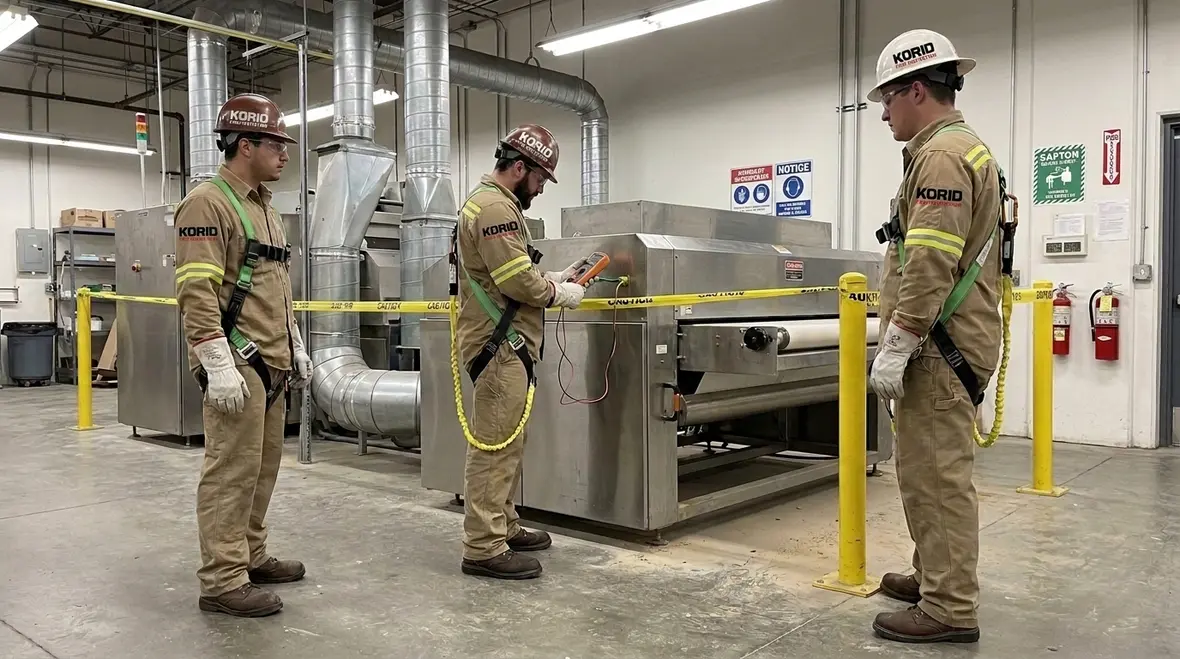
NFPA 34 Section 11.7: Personnel Safety in Electrostatic Detearing Operations
Quick Answer: NFPA 34 Section 11.7 sets safety expectations for workers conducting electrostatic detearing. It focuses on controlling ignition hazards, maintaining safe equipment condition, preventing unsafe buildup, and ensuring trained, protected personnel follow required operating and maintenance practices.
If your team is tightening inspection routines around electrically sensitive process areas, fire protection inspection, testing, and maintenance programs can help reinforce the documentation and discipline that keep safety systems from turning into expensive wall decor.
Why Section 11.7 matters for NFPA 34 electrostatic detearing personnel safety
Electrostatic detearing operations combine particulate handling with electrostatic charge generation. That combination increases the risk of ignition if proper controls fail. NFPA 34 electrostatic detearing personnel safety requirements address the human and operational factors that reduce the likelihood of an incident, including safe work practices, equipment integrity, and compliance verification for commercial, industrial, and retail facilities.
In practice, many compliance gaps occur not from a lack of written policies, but from drift: poor housekeeping leading to abnormal deposits, missed inspections after component replacement, inadequate grounding continuity checks, and worn or damaged protective equipment. Section 11.7 is intended to prevent those failure modes by requiring robust personnel safety measures that align with the equipment and the process.
What Section 11.7 typically requires on the plant floor
Although facilities interpret Section 11.7 through their documented operating procedures and electrical classification approach, the intent remains consistent: personnel must be protected from foreseeable electrostatic ignition and electrical hazards during detearing tasks. The standard expectation typically spans several practical control categories.
1) Hazard awareness and task-specific training
Training must connect worker activities to ignition and shock risks. Personnel should understand what conditions increase hazard potential during electrostatic detearing, such as:
- Abnormal dust or debris accumulation near equipment openings, ducting, and discharge areas
- Observed loss of grounding continuity, damaged cables, or missing bonding straps
- Operating outside the approved detearing parameters documented for the unit
- Bypassing interlocks or operating with known faults
Commercial compliance programs often fail when training remains generic. Section 11.7 alignment requires task-specific instruction tied to the equipment configuration installed in that facility.
2) Safe operation of electrostatic generation and discharge systems
Electrostatic detearing systems rely on controlled charge generation and safe discharge or attraction performance. Personnel safety depends on consistent system behavior. Facilities should treat performance deviations as safety signals, not as “production issues only.” Common examples include:
- Unexpected arcing or sparking during operation
- Unusual noise or smell consistent with electrical discharge
- Changes in detearing efficiency that correlate with altered airflow or power output
- Intermittent grounding faults that reappear after maintenance
3) Maintenance and inspection accountability
Personnel safety in electrostatic detearing operations depends on equipment condition. A robust compliance program assigns inspection responsibility and defines what constitutes “safe to operate.” That includes verification of:
- Grounding and bonding continuity for frames, housings, and conductive components
- Integrity of conductors, insulators, and protective cable routing
- Condition of shields, covers, and guards that prevent accidental contact with hazardous parts
- Operational condition of alarms, interlocks, and monitoring sensors used to detect unsafe states
Where facilities commonly struggle with electrostatic detearing personnel safety
Even well managed sites can miss key details during shift transitions, after routine repairs, or when contractors support the line. Below are frequent compliance pressure points that directly affect NFPA 34 electrostatic detearing personnel safety.
Grounding and bonding gaps after maintenance
The most common real world issue is a grounding path that becomes intermittent or fails after component replacement. Causes include loose connections, incorrect torque, corrosion under clamps, cable damage from pinch points, or the use of nonconforming replacement parts.
To prevent recurrence, facilities should standardize bonding hardware, verify contact surfaces, document acceptance criteria, and confirm the system remains electrically stable after work completion.
For a deeper look at why these details matter, Kord Electric’s guide to grounding and bonding for commercial electrical safety is a useful companion read.
Housekeeping that does not match the ignition risk profile
Accumulated dust can alter airflow patterns, increase surface area for charge retention, and contribute to ignition propagation potential. Personnel often focus on immediate product recovery and overlook residue on adjacent structures, duct bends, and access panels. NFPA 34 alignment expects housekeeping to support safe operation, not just visual cleanliness.
Protective equipment and work practice mismatch
Workers may wear personal protective equipment that addresses impact or chemical exposure but does not address the electrostatic and electrical hazards present. Where the task requires specific barriers, gloves, or clothing controls, compliance must reflect the electrostatic nature of the process, not just general PPE policy.
Inspection and testing practices that support compliance
To maintain credible NFPA 34 electrostatic detearing personnel safety controls, facilities should treat inspections and tests as operational systems, not sporadic events. A practical program includes routine verification, periodic deeper checks, and documented corrective actions.
Operational checks for personnel safety
Supervisors and trained operators should confirm that key safety states align with procedure before allowing the unit to run. These checks usually include:
- Visual inspection of wiring paths, connectors, and protective covers
- Confirmation that grounding components are present, intact, and secure
- Verification that guards and access panels remain closed during operation
- Observation for abnormal electrical behavior, including signs of arcing
Performance and condition verification
Facilities should document testing results that demonstrate the electrostatic system operates within safe tolerances. That typically involves verifying monitoring functions, comparing baseline behavior to current readings, and confirming that any drift triggers maintenance review. When a unit shows repeated deviations, personnel safety requires a controlled stop and root cause analysis rather than continued operation.
Maintenance program design: the failure points to watch
Electrostatic detearing systems depend on precise electrical and mechanical conditions. Over time, wear and contamination can degrade performance and safety. A strong maintenance program prevents unsafe states before personnel encounter them.
Common degradation mechanisms
- Corroded or oxidized grounding contact points leading to higher resistance or intermittent continuity
- Damaged or stiffened conductors and insulation from heat cycles or abrasion
- Contaminated electrodes, shields, or discharge surfaces reducing predictable operation
- Airflow changes from blocked filters or duct buildup that indirectly increases hazard conditions
Documented corrective action and equipment release criteria
When issues appear, release to service should only occur after completing corrective actions and verifying that the system returns to safe operating condition. This is where many sites fall short. Technicians complete repairs, but release criteria do not require verification of the exact safety parameters tied to electrostatic control and personnel protection.
How Kord Fire Protection supports ongoing NFPA 34 compliance
Commercial and industrial facilities often need more than a one time review. They need recurring verification, testing documentation, and practical maintenance oversight that supports both operations and safety leadership. Kord Fire Protection works with facilities to support compliant inspection readiness, evaluate safety equipment performance, and help establish disciplined maintenance workflows that protect personnel during electrostatic detearing activities.
For related guidance on maintaining protected systems and staying aligned with applicable codes and inspection expectations, visit Kord Fire Protection for service information and compliance support.
Frequently Asked Questions
Call to action
Assess your current electrostatic detearing workforce training, inspection routine, and grounding verification workflow against NFPA 34 electrostatic detearing personnel safety expectations. If you need ongoing support, contact Kord Fire Protection to strengthen your maintenance discipline, documentation quality, and compliance readiness for the realities of day to day operations.

Join Our Newsletter!
Get the latest fire safety tips delivered straight to your inbox From our Newsletter.



