
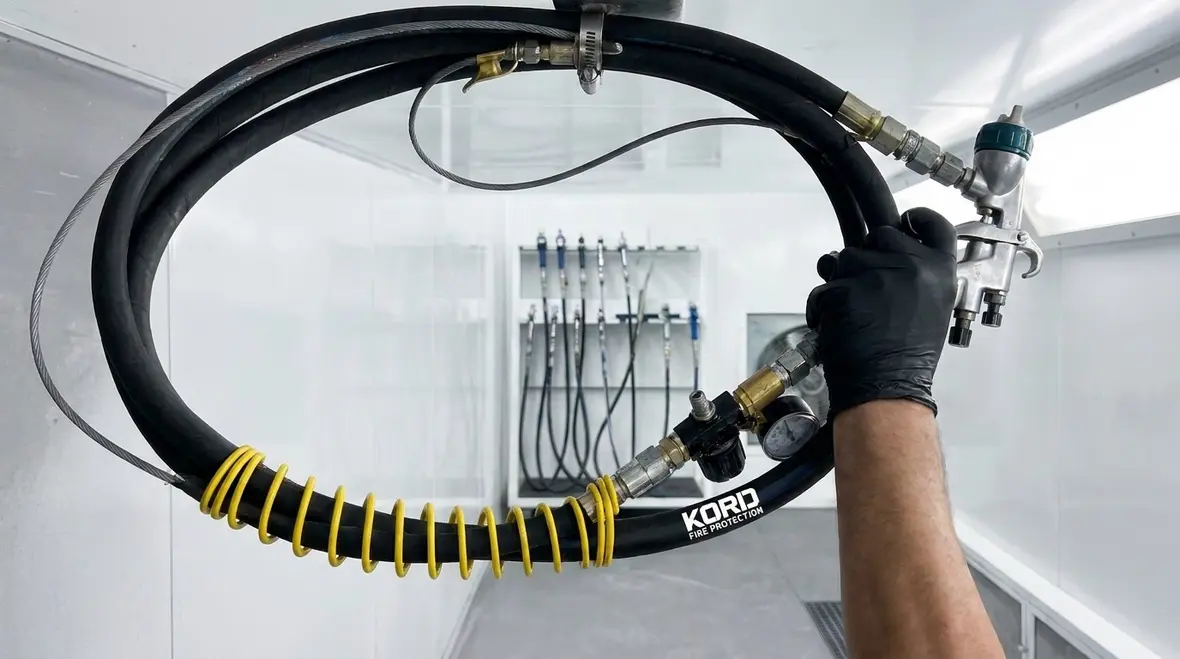
NFPA 33 Section 10.4: High-Pressure Hose Lines in Spray Operations
Quick Answer: NFPA 33 Section 10.4 sets core safety expectations for using and maintaining high-pressure hose lines in spray operations. Facilities must control ignition hazards, verify hose condition and rating, manage electrical bonding and grounding where required, and follow disciplined inspection and maintenance to sustain safe performance.
Why NFPA 33 Section 10.4 matters for spray line safety
Spray operations depend on pressure, flow, and consistent atomization. High-pressure hose lines transport coatings, solvents, or other flammable or combustible materials under operating conditions that can create severe hazards if the hose system degrades or is mismanaged. The NFPA 33 high-pressure hose line spray requirements focus on preventing failures that can lead to leaks, spray discharge anomalies, electrostatic ignition sources, and uncontrolled release of hazardous vapors.
Commercial, industrial, and retail facilities often underestimate how quickly hose assemblies can degrade due to abrasion, chemical attack, improper routing, and repeated flexing. A compliance program must treat hose lines as safety-critical components, not expendable accessories.
Facilities reviewing the broader standard first may also want to start with NFPA 33 Section 1.1 on what spray operations the standard covers, since scoping errors often create downstream hose line compliance gaps.
What Section 10.4 targets in high-pressure spray systems
Section 10.4 centers on the safe use of high-pressure hose lines in spray applications. While exact scope can vary by process and equipment configuration, the intent is consistent: hose line components must remain capable of withstanding service pressures, remain in acceptable condition, and be managed to reduce ignition and leak risks.
Key compliance risk areas facilities typically get wrong
- Hose mismatch: Installing hose assemblies not rated for the material, temperature range, or working pressure.
- Routing and protection: Allowing kinks, tight bend radii violations, or contact with sharp edges that accelerate wear.
- Unauthorized repairs: Using improper fittings, hose clamps, tape repairs, or field modifications that compromise pressure integrity.
- Inadequate inspection frequency: Performing cursory checks instead of following documented inspection criteria.
- Grounding and bonding oversights: Missing electrical continuity checks where spray operation creates electrostatic concerns.
How compliant hose line operation reduces ignition and leak hazards
Safe hose line performance depends on both mechanical integrity and hazard control. Compliance is not just paperwork. It is a repeatable set of operational behaviors and verified engineering controls.
1) Pressure rating and working limits
NFPA 33 Section 10.4 expectations align with disciplined control of hose operating limits. Facilities should ensure each hose assembly has a clearly defined working pressure rating and that the system design stays within that envelope under normal and transient operating conditions.
Operational controls typically include pressure regulator settings, relief strategies where applicable, and documented startup and shutdown procedures. Even short periods of overpressure can damage crimp joints, internal reinforcement, or coupling seals.
2) Proper coupling integrity and leak prevention
Couplings and connection points drive many of the real-world failures. Hose assemblies can pass pressure tests yet still leak at couplings due to mismatched threads, seal material incompatibility, or improper torque during installation.
Facilities should standardize connection procedures, require trained personnel for assembly and reassembly, and maintain a traceable record of hose replacement and coupling changes.
3) Electrostatic hazard controls through bonding and grounding
In spray operations, atomization and fluid movement can contribute to electrostatic charge generation. Hose line metallic components and connected system parts need to maintain appropriate electrical continuity when bonding and grounding are required for the process setup.
Common failure points include damaged braid, corrosion at termination points, and modifications that isolate conductive paths. A compliance program should include scheduled continuity checks and verification that bonding jumpers and grounding connections remain secure.
4) Mechanical protection against abrasion and flex fatigue
Hose lines see repeated bending cycles and potential abrasion from racks, floors, and workbench edges. Facilities that route hoses through tight openings or allow hose contact with hot surfaces create hidden failure modes.
Compliant maintenance includes confirming that protective sleeves, guards, and hose routing guides remain intact and that bend radius limits are respected throughout normal operations.
Inspection, maintenance, and documentation: what “compliant” looks like in the field
NFPA 33 compliance for high-pressure hose lines depends on a verifiable inspection and maintenance workflow. This is where commercial facilities often struggle, especially across multiple shifts, vendors, or mobile spray contractors.
Inspection elements to standardize
- Visual condition checks: Cuts, blisters, cracking, blistering at cover, abrasion points, and coupling damage.
- Flex and fatigue signs: Flattening at high flex zones, kinks, and uneven wear patterns.
- Connection integrity: Evidence of seepage, loose fittings, damaged seals, and corrosion.
- Electrical continuity verification: Where required, confirm bonding and grounding paths remain intact.
- Labeling and rating verification: Confirm the hose assembly identification supports the actual service.
Pressure testing and replacement criteria
Facilities often treat pressure testing as optional. Under a robust NFPA 33 program, pressure testing and replacement decisions should follow manufacturer guidance, internal procedures, and documented criteria. Replacement should not wait for a visible failure when performance degradation can precede visible damage.
For spray operations with frequent changeovers, a tight asset management process should link hose usage history, replacement dates, and inspection outcomes to the specific spray line configuration.
Operational training and change control for hose line compliance
Hose line safety fails most often due to human factors: rushed changeovers, improper hose selection, and bypassing maintenance steps. A reliable compliance strategy requires training plus change control.
Training that matches real work
- How operators verify hose ratings and correct installation before use.
- How operators recognize early warning signs such as coupling seepage, abnormal pressure behavior, or spray pattern changes.
- How operators secure hoses during idle periods to prevent abrasion and accidental kinking.
Change control for upgrades and vendor replacements
Commercial facilities commonly replace hoses through maintenance vendors. Without documented change control, replacements may not match original specifications. That creates a gap between the intended design basis and the installed reality.
A practical approach includes requiring product documentation for new hose assemblies, verifying working pressure rating and material compatibility, and recording installation and inspection outcomes.
Where Kord Fire Protection fits: ongoing verification for Section 10.4 readiness
NFPA 33 high-pressure hose line safety is not a one-time checklist item. Facilities need a service partner that can support inspection discipline, maintenance documentation, and process readiness across shifts and equipment changes. Kord Fire Protection helps commercial operations maintain hose line integrity through structured compliance support that aligns with NFPA 33 expectations and facility operational realities.
If your facility uses spray operations across multiple lines, Kord Fire Protection can also help implement consistent inspection criteria and maintenance records so that compliance remains audit-ready and operationally practical.
For facilities that need broader support beyond this specific issue, commercial fire protection services in Southern California can fit naturally into a wider compliance and maintenance plan.
For related fire safety guidance, see Kord Fire Protection for commercial service capabilities and compliance support.
Frequently Asked Questions
Take action now to keep your spray operations audit-ready
Review your high-pressure hose line inspection practices, verify hose ratings and routing protections, and confirm bonding and grounding continuity where required. Then schedule ongoing compliance support to keep your program consistent across equipment changes and shifts. Contact Kord Fire Protection to strengthen NFPA 33 readiness with practical, documented verification that matches how your facility operates day to day.

Join Our Newsletter!
Get the latest fire safety tips delivered straight to your inbox From our Newsletter.



